A compact CNC machining center carries real load — hundreds to several thousand kilograms depending on configuration — through a smaller footprint than a large-format gantry machine, which means its guide rails, ball screws and ATC hardware work under proportionally higher stress relative to machine size. Skipping maintenance here shows up faster than it would on a larger, less densely loaded machine.
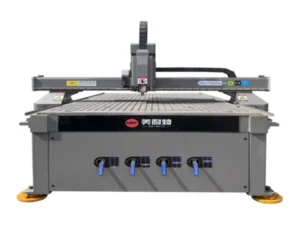
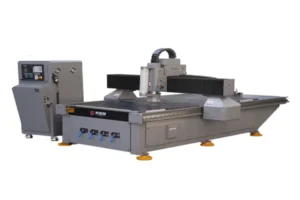
Machines like the M1631 combine a zoned vacuum table with standard ATC tooling on a compact footprint, built to handle parts ranging from lighter panel work up to several tonnes depending on configuration. That range of duty is exactly why guide rail and ball screw maintenance matters more here than it might on a lighter-duty router — the same machine platform needs to hold accuracy whether it’s running a light job or a heavy one.
This checklist covers the maintenance items that keep a compact machining center accurate and reliable under its full working load range.
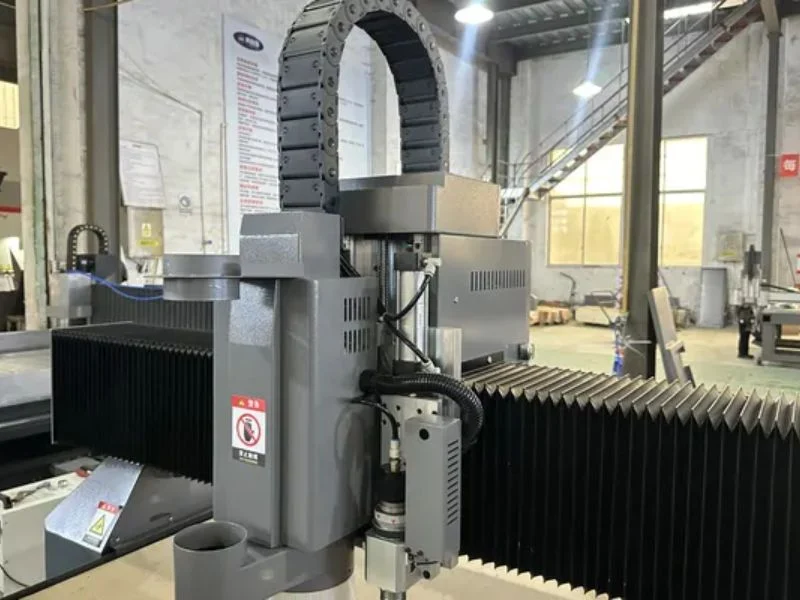
Lubricate Guide Rails on Schedule
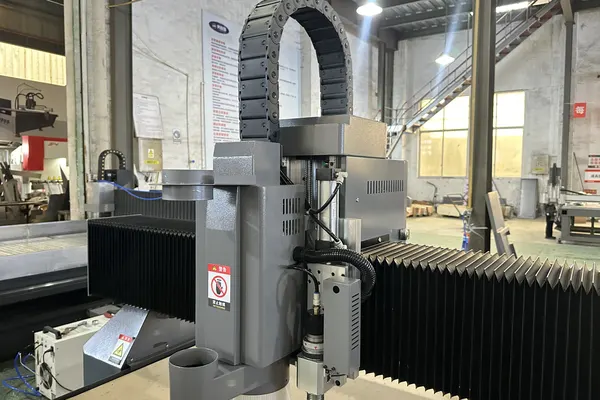
Lubricate linear guide rails on the interval your manufacturer specifies, and more frequently if the machine is running near its maximum load capacity regularly — under-lubrication accelerates wear faster under heavy load than under light load, and wear here directly reduces positioning accuracy.
Use the lubricant type specified for your machine, and check for even coverage across the full travel range on both axes. A dry section anywhere along the travel introduces a repeatable positioning error at that specific location, and heavy-load work makes that error more likely to show up in the finished part.
Inspect Ball Screws Monthly
Inspect ball screws monthly for smooth motion, unusual noise, or play — on a machine handling heavier loads, ball screw wear develops faster and has a more direct effect on positioning accuracy than it would on a lighter-duty machine.
Check preload and confirm smooth motion through full travel without binding. A ball screw that’s developed backlash needs prompt adjustment or replacement — this is a core precision component, not one to run marginal, especially on configurations carrying several tonnes of part weight.
Check the Zoned Vacuum Table
Clean vacuum channels and inspect zone gaskets regularly — independently switched vacuum zones let the machine concentrate suction where material actually sits, and this matters as much for heavier panel work as it does for lighter jobs, since inadequate hold-down under a spinning tool risks both part quality and safety.

Check that each zone switches cleanly and seals properly when active. A worn or cracked gasket lets air bypass into the working zone, reducing suction exactly where it’s needed — clean and inspect gaskets on a regular schedule rather than waiting for a visible suction problem to appear.
Warm Up the Spindle Before Every Shift
Run a low-RPM spindle warm-up cycle before the first cut of each shift, especially after the machine has been idle overnight — a cold spindle bearing has tighter clearance and thicker grease than a warmed-up one, and jumping straight to full RPM shortens bearing life regardless of machine size or load capacity.
Two to three minutes at reduced RPM, ramping toward working speed, is enough for most spindles to stabilize. Listen for the sound to even out before starting production — a spindle that still sounds uneven after warm-up needs a bearing inspection rather than more warm-up time.
Care for ATC Tool Holders
Wipe down tool holder tapers daily and inspect them for wear weekly — standard industrial tool holders and collets mean replacement parts are widely available, but that doesn’t reduce the need for regular cleaning, since a clean taper is what lets the automatic tool changer seat each tool accurately and repeatably.
Check collet condition each time you swap tooling, and keep the tool magazine itself free of dust and debris — a slot with debris in it can prevent a tool from seating fully during an automatic change, which either throws a fault or lets the machine proceed with a tool that isn’t fully secured.
Manage Dust and Debris Control
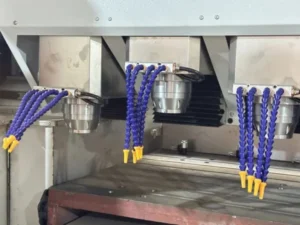
Check dust extraction airflow daily and clean or replace filters on schedule — on a compact machine handling a range of material types and part weights, debris control affects both cut quality and vacuum table performance, since settled dust reduces the same suction the working zones depend on.
Check ducting for leaks at joints, which quietly reduce extraction efficiency at the cutting head even when the extractor itself is running fine. Clear debris from the worktable between jobs — trapped debris under a heavier workpiece changes its effective seating height more noticeably than it would under a lighter one.
Back Up Controller Files and Machine Parameters
Back up job files, tool library and machine parameters weekly, and immediately after any parameter change — rebuilding dialed-in tool offsets and fixture data from memory after an unplanned reset costs far more time than a scheduled backup would have.
Keep at least two backup generations rather than relying on the most recent one alone, since a backup taken right after a bad change captures the mistake along with everything else.
Review Machine Guarding Monthly
Inspect guards, interlocks and emergency stops monthly, and immediately after any guard has been removed for service — this matters especially on a machine handling heavier parts, where a defeated interlock carries more risk than it would around lighter material. See OSHA’s machine guarding requirements for the general standard most shops are already working against.
Maintenance Schedule at a Glance
| Task | Daily | Weekly | Monthly |
|---|---|---|---|
| Guide rail lubrication | Per manufacturer schedule | ||
| Ball screw inspection | ✔ | ||
| Vacuum table / gasket check | ✔ | ||
| Spindle warm-up cycle | ✔ | ||
| ATC tool holder cleaning | ✔ | ||
| ATC tool holder wear inspection | ✔ | ||
| Dust extraction airflow check | ✔ | ||
| Controller / parameter backup | ✔ | ||
| Guarding & interlock review | ✔ |
See the full M1631 / MC1631 CNC Machining Center specifications, or our M1631 vs M3015 vs M4020 comparison for how this compact configuration fits against larger-format machining centers.
Frequently Asked Questions
Does a heavier load capacity change maintenance frequency?
Yes for guide rails and ball screws specifically — wear develops faster under sustained heavy load, so machines running near their maximum capacity regularly benefit from more frequent lubrication and inspection than the baseline schedule.
Are replacement parts hard to source for standard ATC tooling?
No — standard industrial tool holders and collets are widely available, which keeps replacement straightforward. That doesn’t reduce the need for regular cleaning and inspection, though, since a clean taper is what tool-change accuracy depends on.
Why does vacuum zone maintenance matter for heavier parts?
Adequate hold-down under a spinning tool is both a quality and safety issue — inadequate suction risks part movement during a cut, which matters more as part weight and cutting forces increase.
How often should ball screws be inspected on a machine handling heavy loads?
Monthly as a baseline, checking for smooth motion, noise or play — machines running frequently near maximum load capacity may warrant more frequent checks given faster wear development under sustained heavy use.
What should be backed up before making parameter changes?
Job files, tool library and machine parameters, keeping at least two backup generations — a backup taken right after a bad change captures the mistake along with everything else.
Does debris control affect vacuum table performance?
Yes — dust that settles into vacuum channels reduces the same suction the working zones depend on, which is why dust extraction and vacuum table maintenance are connected rather than separate concerns.