
Automotive Interior Cutting Machine for Soft Trim Suppliers
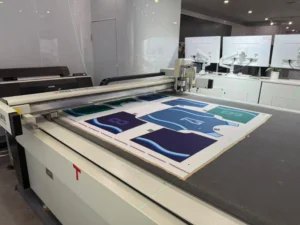
If you cut seat trim, headliner fabric, floor carpet, car mats or NVH felt for vehicle interiors, your cut list changes every model year and every trim level — and every change on a die press is a new steel-rule die. MNT (MEINAITE) C-series digital knife cutters cut the flat soft-trim parts of an interior from a CAD file on one vacuum table.
- Leather, coated fabric, foam, carpet and felt on one table — tool swap, not machine swap
- A new model year or trim variant is a new nest file, not a new die
- Up to 50 mm cutting depth for mat and felt stacks · 300–1800 mm/s
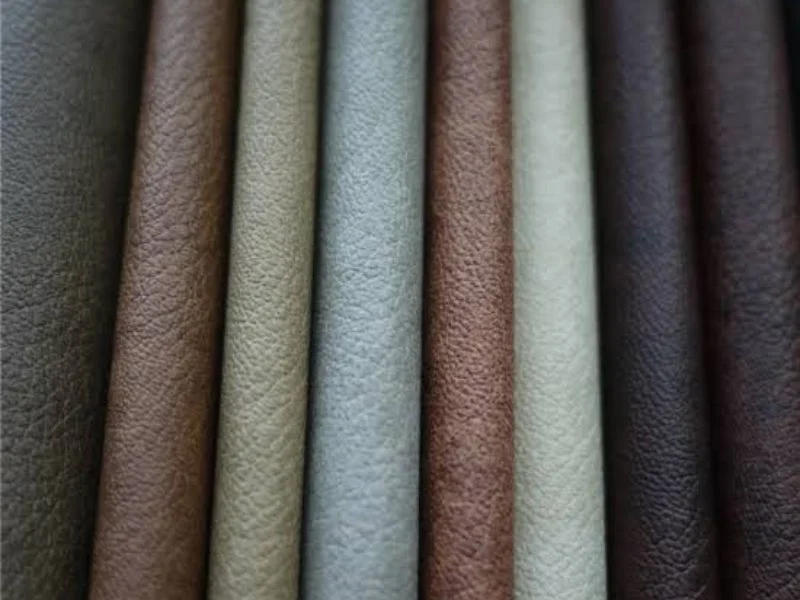
Why Automotive Trim Suppliers Are Moving Off the Die Press
This page is written for three kinds of shop: Tier-2 soft-trim suppliers cutting seat, headliner and floor parts for a seat or interior integrator; aftermarket seat-cover and car-mat makers who carry patterns for hundreds of vehicle models; and bus, RV and specialty-vehicle interior shops that build in tens, not tens of thousands.
Most of them cut the same way today: a steel-rule die per part on a clicker or beam press for the volume parts, and a hand knife for everything else. That works until the cut list moves. Every facelift, trim level and colour-and-material change is another die to order, store and scrap — and in aftermarket work, where one mat pattern exists for each model and body style, the die rack becomes the business. Hand cutting fills the gaps, but it is where yield on leather and repeatability on notches are lost.
Where a digital knife fits. A vehicle interior is mostly flat, soft material before it is sewn, laminated or moulded: coated fabric, leather, PU foam, needled felt, tufted carpet, EVA mat foam. All of it cuts cold on an oscillating knife, from a CAD pattern, with no die. It is not the right tool for everything in the cabin: moulded headliner and door-panel shells are trimmed on a five-axis router, which we also build, while airbag cushions and window film belong to other machines entirely — the boundary is set out further down. Acoustic parts are a good example of how much of an interior is soft goods: NVH specialists such as Autoneum build whole product lines from felts, fibres and foams that start as flat stock.
If your question is one upholstered part — the cover, foam and backing cut together — our upholstery cutting page covers that job. This page is about the whole cut list a vehicle interior supplier runs: seat trim, headliner face fabric, floor carpet and mats, NVH felt and composite trim.
Automotive Interior Materials We Cut — and Where Each Is Covered
Each card says what the material does under a knife in an interior-trim shop, and links to the page where that material is covered in depth.
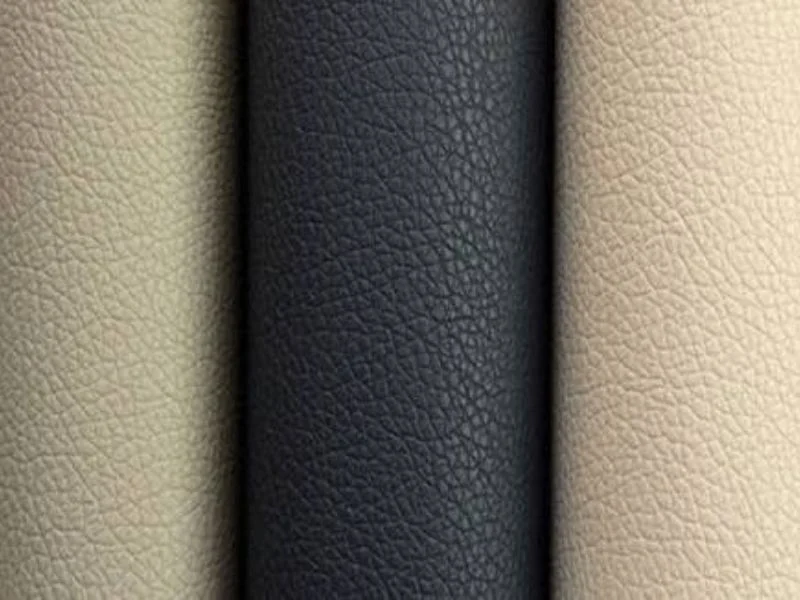
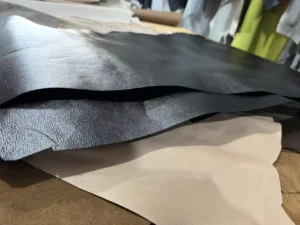
Seat Leather, PVC and PU Vinyl
- Formats: automotive hides, splits, perforated leather, PVC and PU coated fabric
- Watch out: hide is the most expensive material in the cabin — every panel nested badly is paid for in scrap, and a laser scorches the grain
- How we cut it: cold oscillating knife, panels nested around hide defects; material detail on the leather page
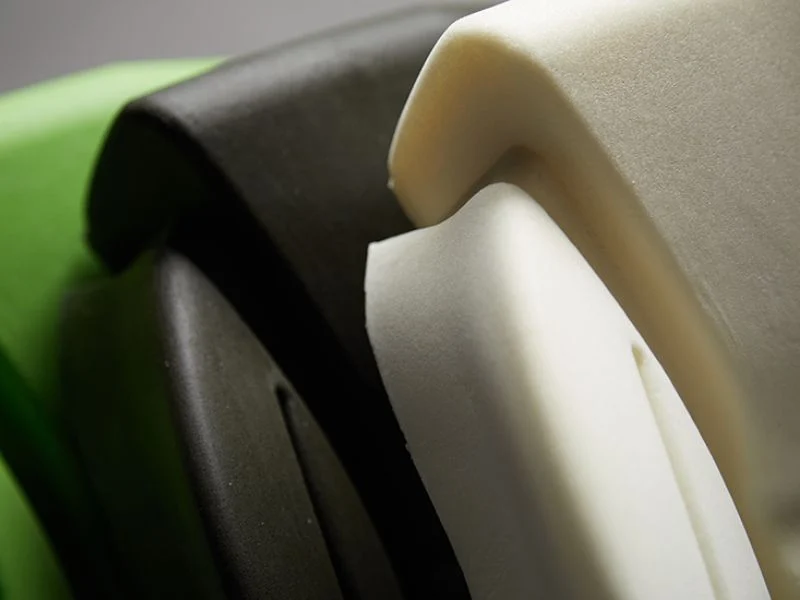
Seat Fabric and Foam-Laminated Trim
- Formats: woven and knit seat fabric, 3–10 mm foam-laminated trim, scrim-backed composites
- Watch out: laminated trim compresses under a drag blade and comes out undersized at the seam
- How we cut it: oscillating knife through face, foam and scrim in one pass; the multi-layer job is on the upholstery page
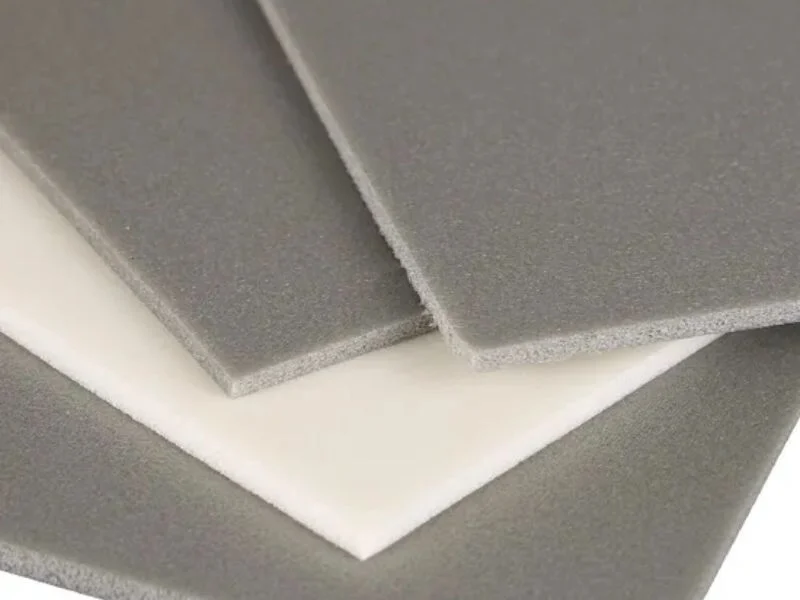
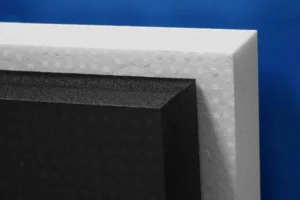
EVA, XPE and PU Foam for Mats and Seating
- Formats: EVA and XPE mat foam, PU seat foam and bolster inserts, up to 50 mm
- Watch out: hot-wire and laser melt foam edges — a sealed edge will not bond to carpet or cover
- How we cut it: cold knife, square unmelted edge ready to laminate; foam grades on the EVA and PE foam page
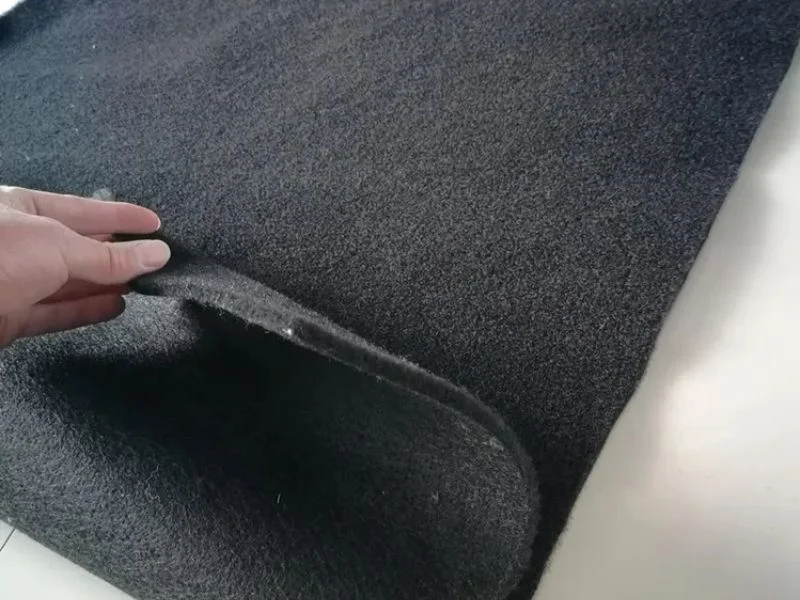
Carpet, Needled Felt and NVH Non-Wovens
- Formats: tufted and needle-punch carpet, PET and cotton shoddy felt, acoustic pads
- Watch out: dense felt drags the blade and loose fibre builds up in the table, so parts drift out of size mid-sheet
- How we cut it: pneumatic oscillating knife for dense stock, strong zone vacuum, and a sample cut of your felt before we quote
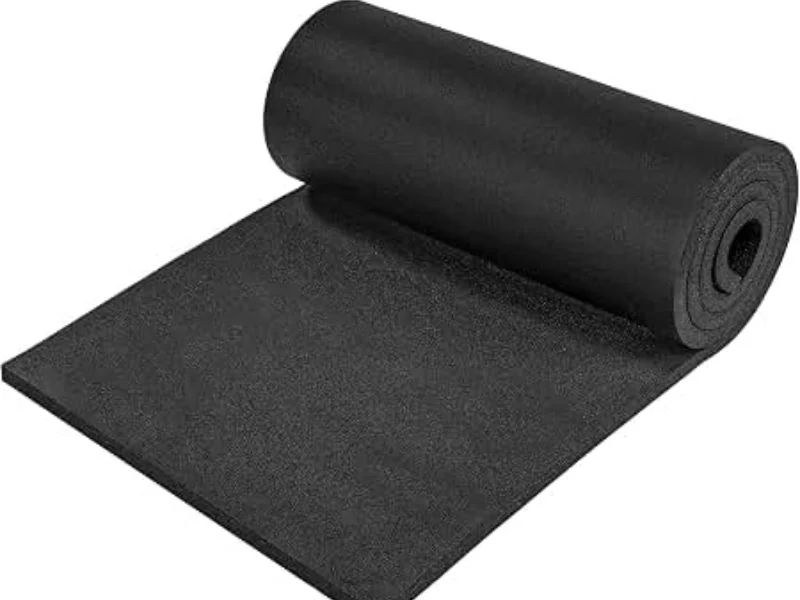
Rubber and Neoprene Seals and Mat Backing
- Formats: EPDM and sponge rubber seals, rubber-backed mats, neoprene pads
- Watch out: rubber grips a drag blade and tears at tight corners
- How we cut it: oscillating knife to 30 mm with no heat and no water; grades and thicknesses on the rubber page
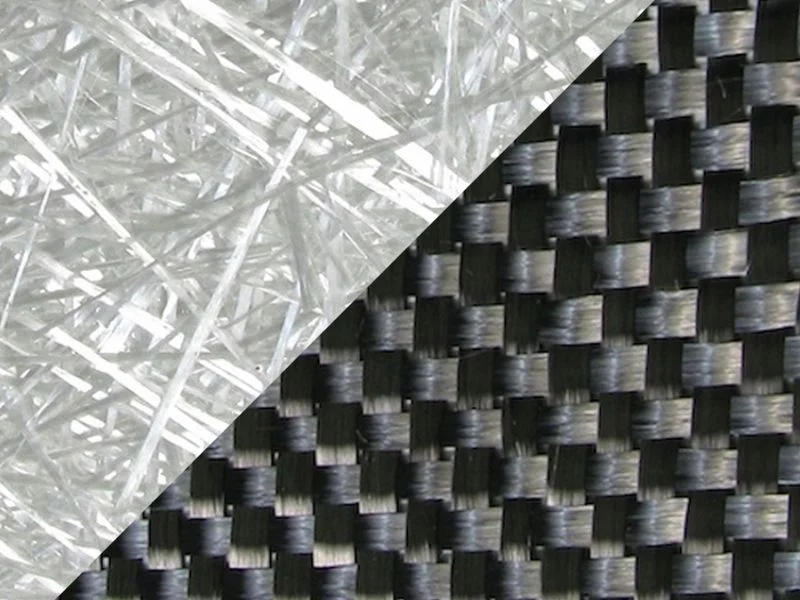
Carbon and Glass Fibre for Composite Trim
- Formats: carbon and glass prepreg and dry fabric for trim panels and consoles
- Watch out: cut plies fray and lose fibre orientation if the cut is not clean — a scrap ply is the most expensive offcut you will make
- How we cut it: kit-cut on the knife before layup; the composite side is covered on the carbon fiber page
Cut behaviour verified on MNT C-series knife tables at Hangzhou Chaohan; material detail on each linked page.
Automotive Interior Parts Cut Without a Die
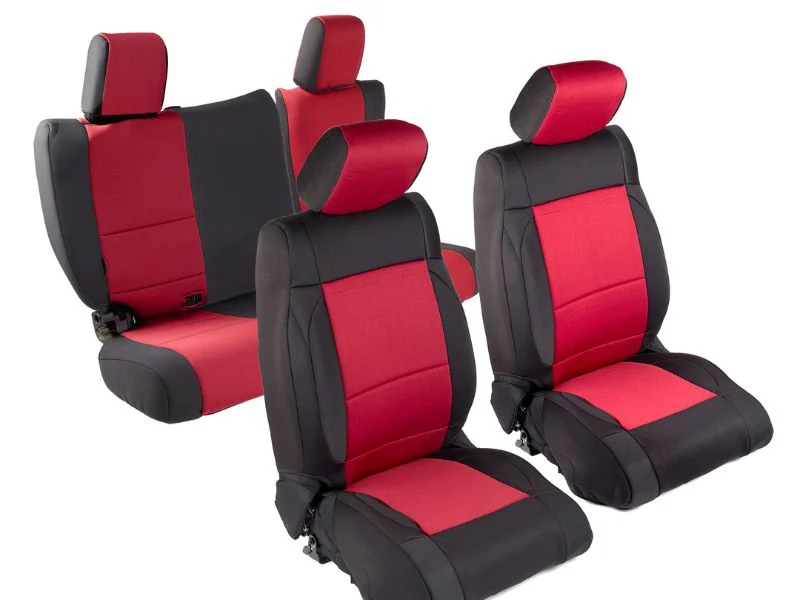
Seat Covers and Seat Trim Kits
- Parts: cushion and back panels, side bolsters, headrest covers — OEM trim sets and aftermarket custom-fit covers
- The hard part: dozens of panels per seat, every one in several colours and materials, with sew notches that must line up
- What you get: a full seat nested in one file, notches cut with the panel — a new trim level is a new file
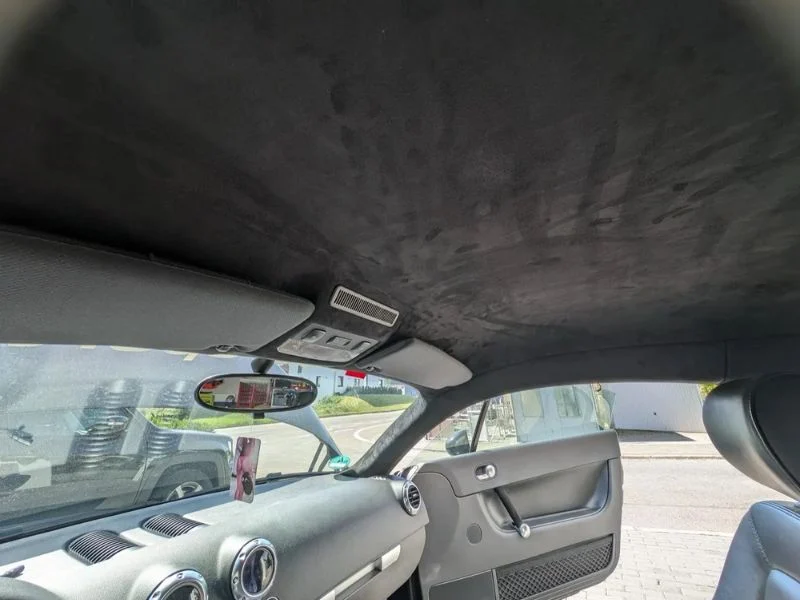
Headliner and Pillar Face Fabric
- Parts: headliner face fabric and backing blanks, A/B/C-pillar and sun-visor covers
- The hard part: wide, soft knit fabric that stretches as it is handled, cut before lamination and moulding
- What you get: flat blanks cut to size on vacuum, ready for the laminating line — the moulded shell is trimmed elsewhere
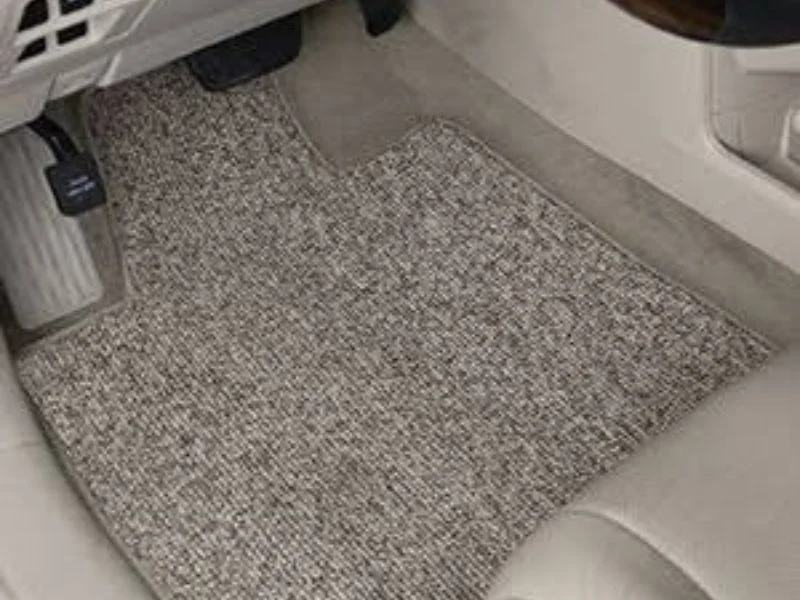
Car Mats and Floor Carpet
- Parts: custom-fit mats, EVA and XPE mats, carpet sets and trunk mats
- The hard part: one pattern per model and body style — hundreds of patterns, each ordered in small numbers
- What you get: every pattern stored as a file; cut the one you need that day, no die rack
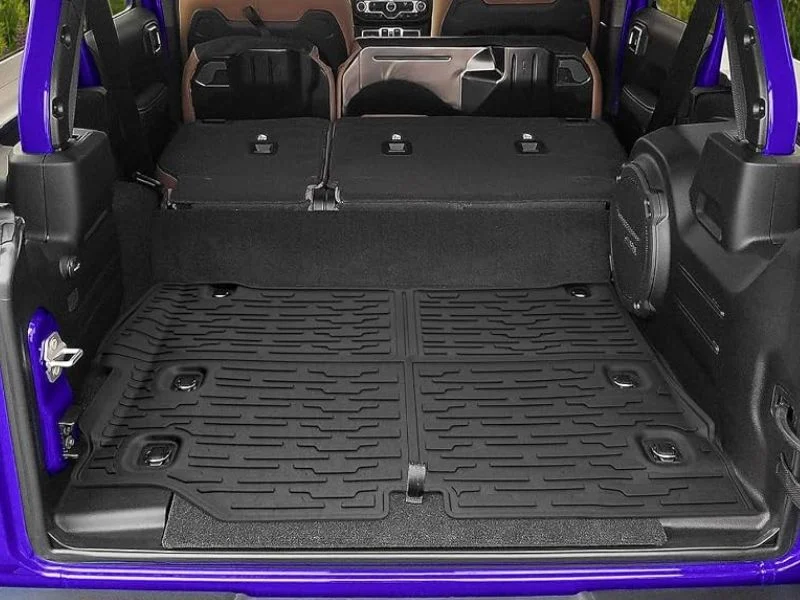
Trunk Liners, Door Inserts and NVH Pads
- Parts: trunk and load-floor covers, door-panel inserts, wheel-arch and dash acoustic pads
- The hard part: thick, dense felts and laminated carpet that tear or crush under a drag blade
- What you get: a pneumatic knife through the full stack with a square edge for bonding
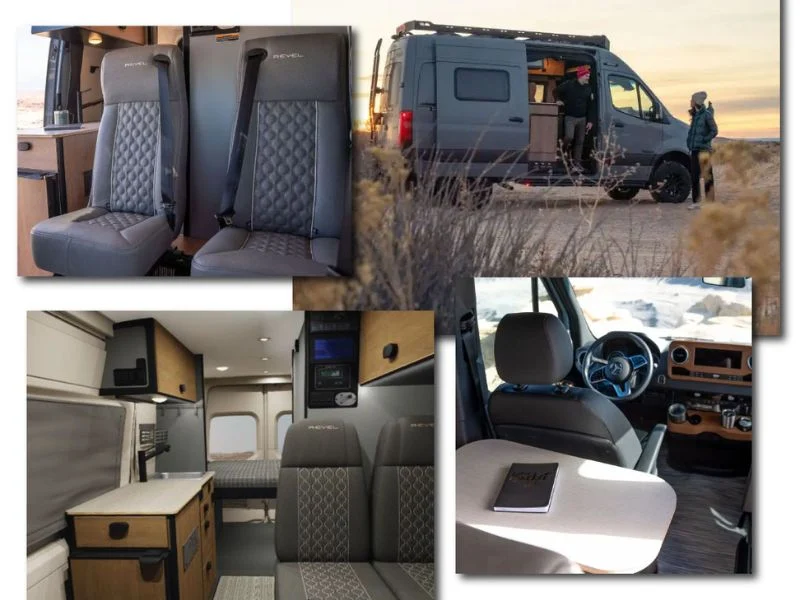
Bus, RV and Specialty Vehicle Interiors
- Parts: coach and RV seating, wall and ceiling trim, flooring for low-volume vehicles
- The hard part: every build is slightly different — a die is never worth making
- What you get: one table cuts the full interior from the drawing, including one-offs
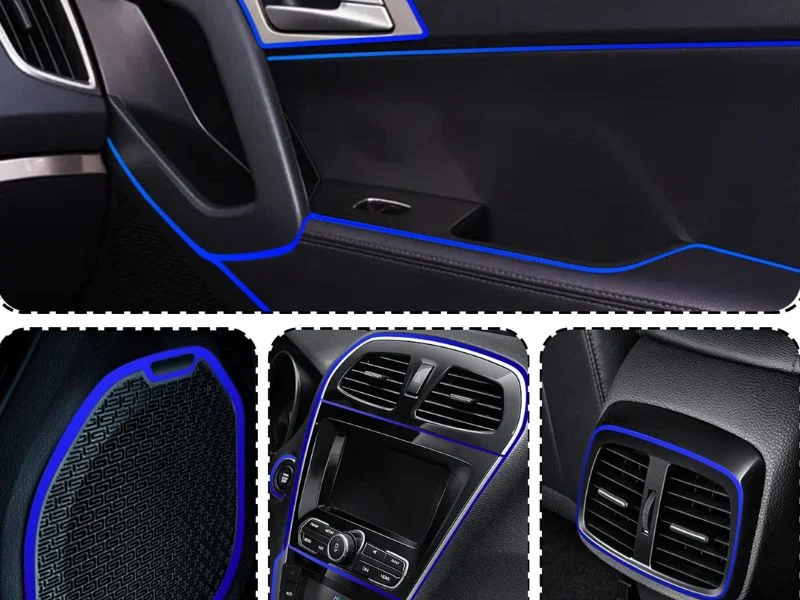
Trim Samples and Pattern Development
- Parts: prototype trim, colour-and-material samples, pattern proofs for a new programme
- The hard part: patterns change daily during development, so every hand-cut proof is slightly different
- What you get: a proof cut that matches the CAD exactly, so the fitting problem is in the pattern, not the cutting
Part list drawn from MNT installs in seat-trim, mat and specialty-vehicle shops; tooling per C-series build sheets.
Recommended MNT Automotive Interior Cutting Machines
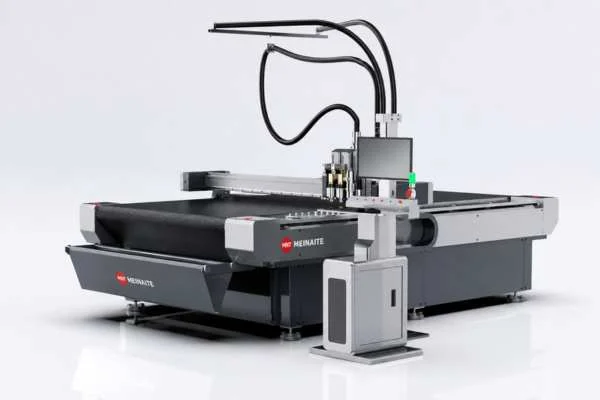
C2516T Digital Cutting Machine
- Cuts: seat leather and fabric, laminated trim, carpet, felt and mat foam
- Specs: 2500 × 1600 mm · EOT oscillating + drag + milling spindle · vacuum · belt auto-feed
- Best for: production soft-trim cutting from roll and hide
- Price: From $16,900
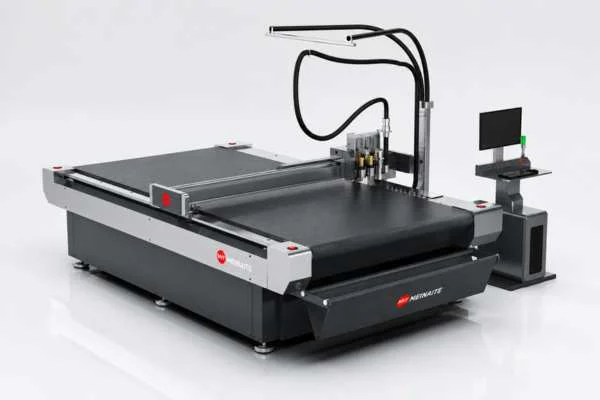
C3232 Digital Cutting Machine
- Cuts: wide carpet, headliner fabric, felt and full-width roll goods
- Specs: 3200 × 3200 mm · POT pneumatic + EOT oscillating · vacuum · belt auto-feed
- Best for: floor carpet, headliner blanks and material wider than 1600 mm
- Price: From $11,555
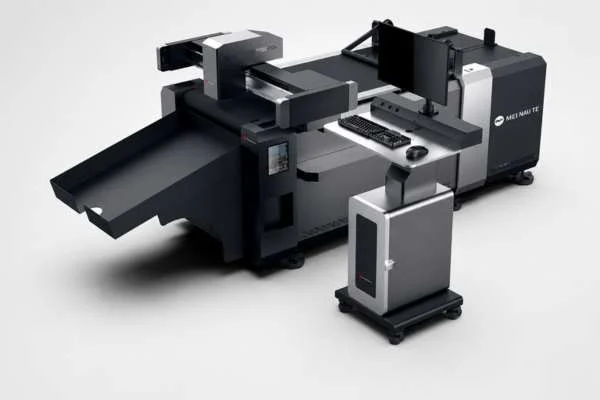
C6090 Digital Cutting Machine
- Cuts: trim samples, pattern proofs and small parts
- Specs: 600 × 900 / 600 × 1200 / 900 × 1200 mm · EOT + creasing · vacuum
- Best for: pattern rooms, sample development and small aftermarket runs
- Price: From $12,000
Specifications from MNT C-series build sheets; one platform, software and tool range — Hangzhou Chaohan.
How an Automotive Soft Trim Cutting Line Runs
Four stations, one of which is software. The machine is the fast part; most of the time you save comes from the first and last steps.
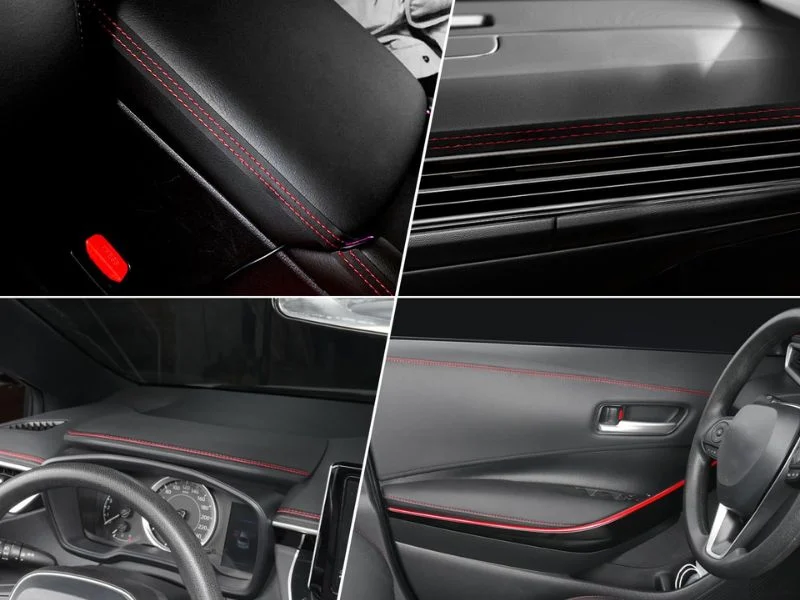
Patterns and Nesting
Your pattern files — from the OEM, your own CAD or digitised from a template — go straight to the cutter. Nesting is where the money is: leather and carpet are paid for by the square metre, and a tighter nest is margin you keep on every job. Auto-nesting software is an option on every C-series table.
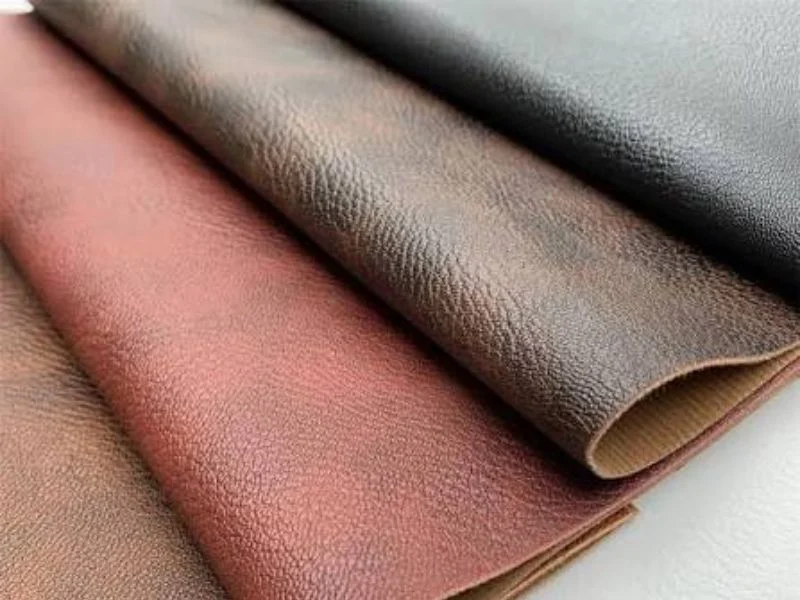
Roll and Hide Feeding
Fabric, carpet and felt feed from the roll on the conveyor belt, so the table cuts continuously while the operator unloads. Hides are laid by hand, one at a time — a hide is irregular and every one is nested on its own.
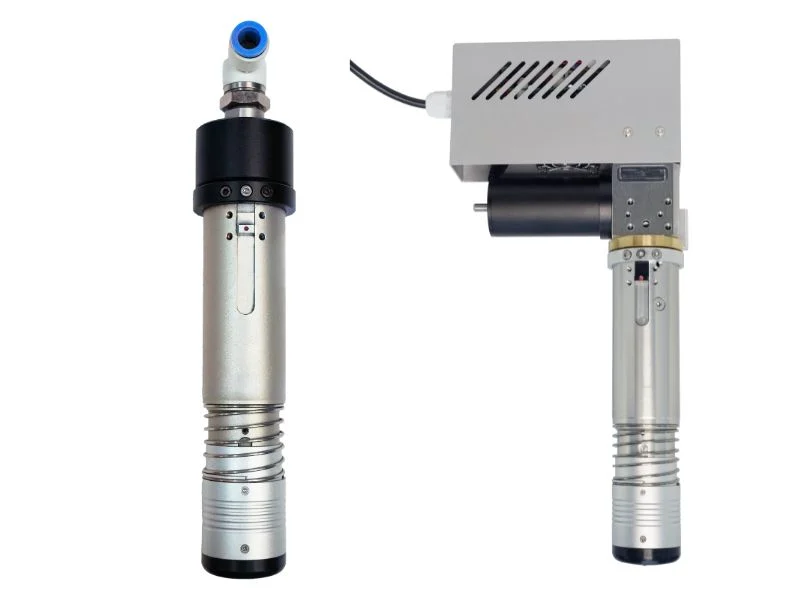
Cutting and Tool Changes
One head carries more than one tool. The electric oscillating knife handles leather, coated fabric and laminated trim; the pneumatic knife drives through dense felt and tufted carpet. Changing material is a tool swap in the program, not a changeover on the floor.
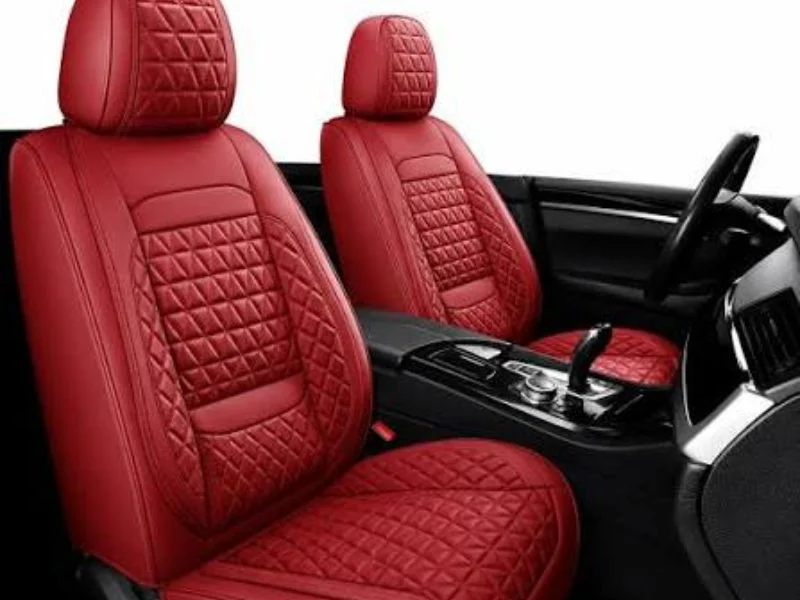
Unloading and Kitting
Cut parts come off the belt in the order they were nested, so a seat or a mat set is kitted as it is unloaded rather than sorted from a pile. That is where a knife line saves the labour a die press never did.
Where a Knife Is the Wrong Tool in an Automotive Interior
An interior supplier’s cut list includes some parts a flatbed knife should not cut. We would rather tell you now than sell you the wrong machine.
Airbag Cushions
Airbag fabric is nylon 6.6, and it is normally laser cut because the beam seals the edge against fraying — a safety requirement, not a cosmetic one. MNT does not build CO2 lasers. We cut the rest of the seat; the airbag cushion belongs on a dedicated laser line.
Moulded Headliners and Door-Panel Shells
A flatbed knife cuts the flat face fabric and backing before moulding — not the rigid 3D shell after it. Once a headliner or door panel is moulded, a vacuum table has no flat face to hold, and the edges and openings are trimmed by robotic waterjet, a trim press or a five-axis router. MNT builds the five-axis router for exactly that job.
Window Tint and Paint Protection Film
Tint and PPF are cut on roll-fed plotters with vehicle pattern databases, a different machine at a different price point. A vacuum knife table is the wrong tool for thin film on a liner, and we do not sell it for that job.
One Part Number at Very High Volume
If a single part runs unchanged in very large numbers for years, a steel-rule die on a press is still the cheapest cut per piece. The knife wins when you run many part numbers, variants and revisions — which describes most aftermarket and specialty-vehicle work, and more OEM trim every model year.
Why Automotive Trim Shops Choose the C-Series
In automotive trim the machine earns its keep on changeovers, not headline speed — the cost you remove is the die, the die rack and the hand cutter who fills the gaps. About MNT (MEINAITE) — who builds it and where. Carrying the line? Territory and spare-parts terms are on our partnership page.
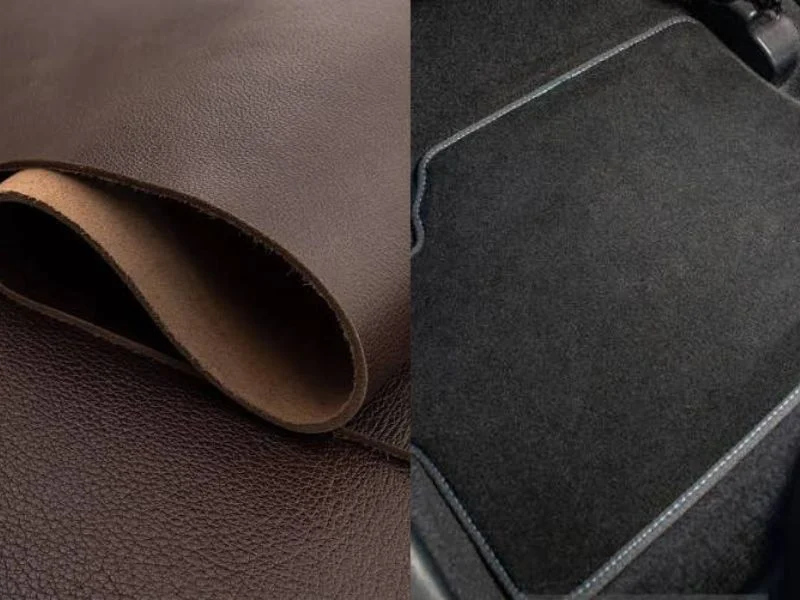
The Whole Interior Kit on One Table
- Leather, fabric, foam, carpet and felt on the same table, switched by tool, not by machine
- Seat, floor and NVH parts nested per vehicle, so a kit comes off the belt together
- For distributors: trim shops cluster around OEM, bus and RV plants — one reference install near a plant is the easiest sale you will make to the next shop, and blades are a steady repeat order
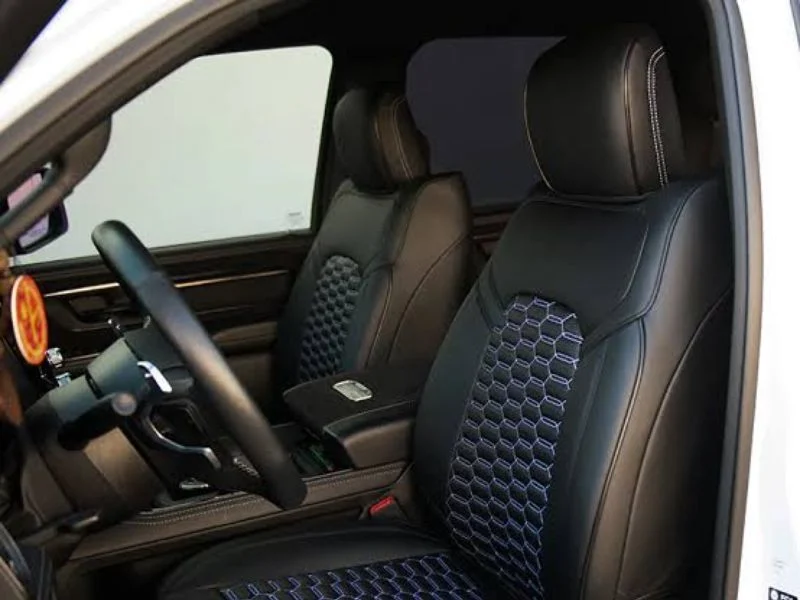
Model-Year Changes Without Die Changes
- A facelift or new trim level is a pattern file, cut the day it arrives
- Aftermarket patterns for every model live in software, not on a die rack
- Distributors: territory, spare-parts stock and training terms are set out on our partnership page
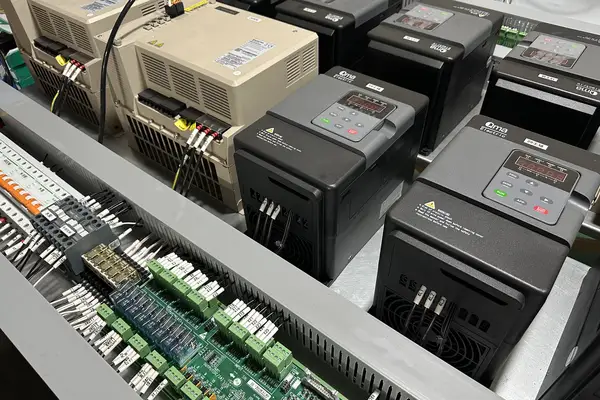
The Factory That Builds Your Trim Cutter — Down to the Control Cabinet
- Frames, gantries and electrical cabinets are built and wired in our Hangzhou plant, not bought in and badged
- A trim line runs shifts; the C2516T moves on Inovance servo drives — standard industrial parts, not proprietary boards
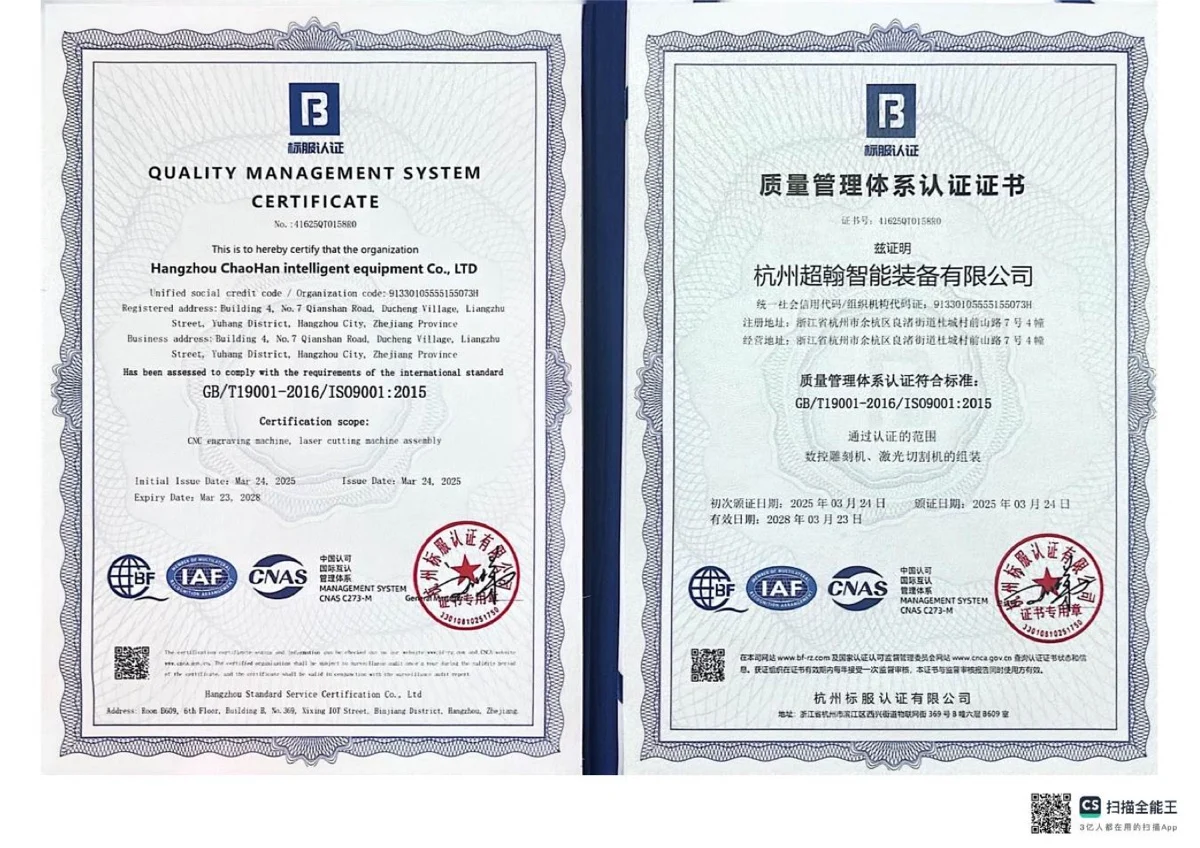
CE + ISO — Send Your Trim Kit for a Free Cut
- CE marked and built under an ISO 9001:2015 certified quality system
- Send your leather, carpet or felt and a pattern file — we cut it and send back the parts and the cycle time
CE-marked (EU 2006/42/EC), ISO 9001:2015; 8 patents incl. 1 invention patent; built by Hangzhou Chaohan, not traded.
Frequently Asked Questions
How much does an automotive interior cutting machine cost?
MNT C-series knife tables start from about $11,500 to $17,000 depending on table size and tooling: the C3232 from $11,555, the C6090 from $12,000 and the C2516T from $16,900. A production line with belt auto-feed, auto-nesting software and a second tool head is quoted against your cut list — send the materials and part count and we price the configuration, not a brochure.
When does a digital knife cutter beat a steel-rule die press for car trim?
When you run many part numbers in short runs. A die press is cheapest per piece on one part that runs unchanged for years; the knife wins as soon as trim levels, colour variants, facelifts or aftermarket fitments multiply the die count — because every one of those is a new die to buy and store, and on the knife it is a new file.
Can one machine cut leather, foam, carpet and felt for a car interior?
Yes. The C-series head carries more than one tool: an electric oscillating knife for leather, coated fabric and laminated trim, and a pneumatic knife for dense felt and tufted carpet, up to 50 mm deep. Changing material is a tool change in the program, so seat, floor and NVH parts can be cut on the same table in the same shift.
How many hand cutters does one table replace?
Typically three to seven, in industry-typical figures: a knife table cuts at roughly four to six times hand-cutting speed and keeps cutting while the operator unloads. The bigger saving is usually material — a nested hide or carpet roll wastes less than one cut by eye.
Can it trim moulded headliners and door panels?
Not on the flat knife table — it cuts the face fabric, foam and backing before they are laminated and moulded. After moulding, a headliner or door panel is a 3D shell with no flat face to hold on vacuum, and it is trimmed on a five-axis router instead. MNT builds one, the M1515-2 five axis CNC router, for moulded interior trim and thermoformed parts.
Can it cut airbag cushions?
No. Airbag cushions are nylon 6.6 fabric and are normally laser cut, because the laser seals the edge against fraying. MNT does not build CO2 lasers, so we do not offer airbag cutting — we cut the seat trim, foam and backing around it.
Can it cut window tint or paint protection film?
No — that is a roll-plotter job. Tint and PPF are cut on roll-fed plotters working from vehicle pattern databases, a different class of machine. A flatbed vacuum knife table is built for soft trim, carpet and felt, not for thin film on a release liner.
Does the cutting machine need to be IATF 16949 certified?
No — IATF 16949 certifies the quality system of the part maker, not the equipment builder. What an automotive auditor will look at is whether your cutting process is repeatable and your programs are controlled. MNT builds under ISO 9001:2015 and CE marking, and every part is cut from a stored, versioned file rather than by hand. The standard itself is administered by the IATF.
Automotive Interior Cutting — Technical Guides
The guides behind the recommendations on this page.
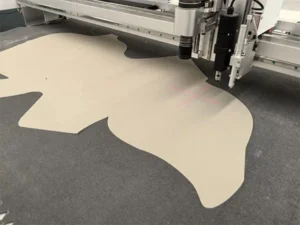
Cutting Leather for Automotive Interiors and Footwear
How automotive trim shops cut hide and coated trim — the registration and nesting decisions that decide yield.
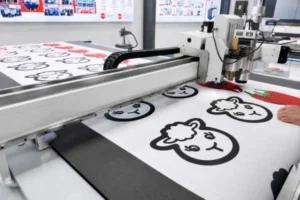
Oscillating Knife vs Laser Cutting for Leather: Which Should You Choose?
Why a cold knife beats a laser on seat leather and coated fabric: no scorched grain, no carbonised coating, no fumes at the bond line.
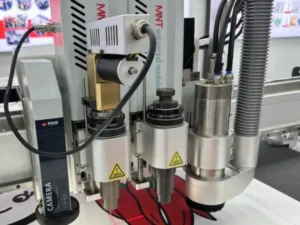
Oscillating Knife Blade Selection Chart by Material & Thickness
Which blade for which interior material — leather, laminated trim, felt, carpet and mat foam.