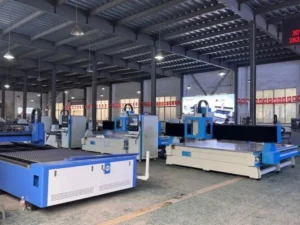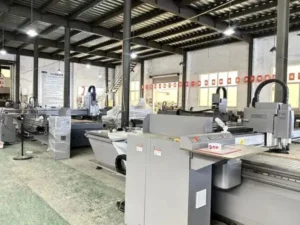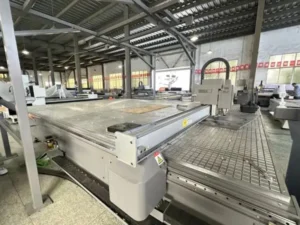
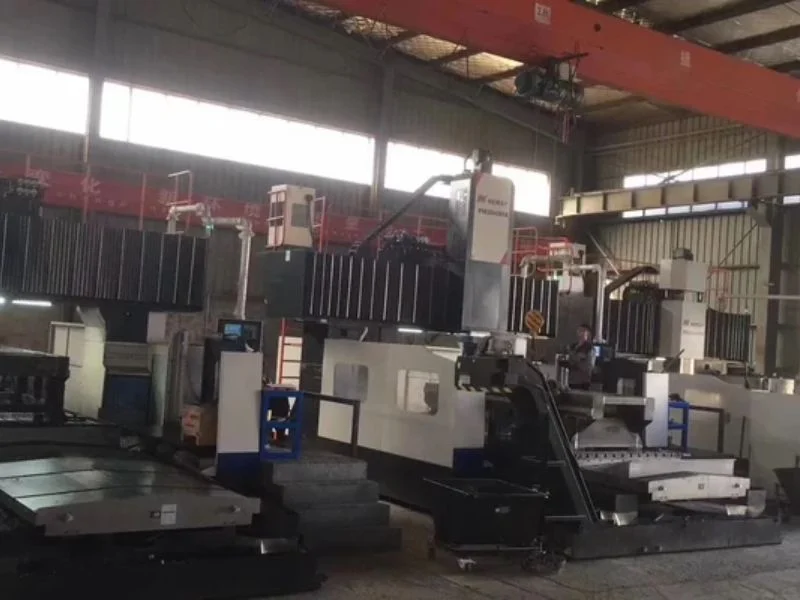
Three machining centers, three different reasons a shop would buy each one. The M1631 exists for parts that are heavy or tall — up to 5,000 kg on the moving-gantry MC1631 configuration. The M3015 exists for precision — direct-drive axes with no belt in the drivetrain, holding ±0.02mm positioning accuracy. The M4020 exists for size — a 4000×2000 mm bed for panels that don’t fit anywhere else in the line, running at 60 m/min, the fastest in the M series.
Comparing these three on a single spec sheet misses the point: each one is the answer to a different production constraint, not a tier in a single upgrade path. A shop choosing based on price alone, or on whichever spec sounds most impressive, often ends up with a machine that’s over-built for one dimension of their work and under-built for the one that actually matters.
This comparison covers working envelope, load capacity, drive architecture and tool magazine type across all three, and which production case fits each model.
The Short Answer
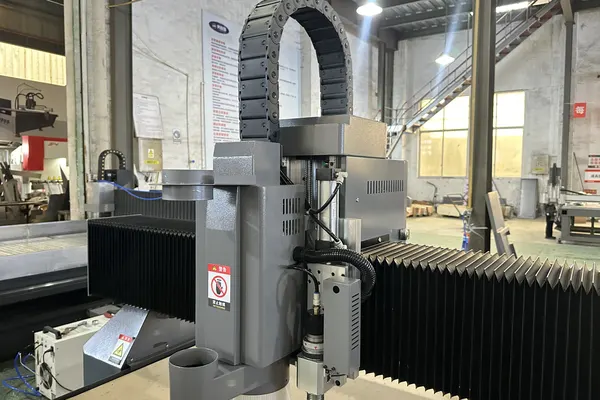
Choose the M1631 (or moving-gantry MC1631) when part weight or height is the limiting factor — up to 5,000 kg on MC1631. Choose the M3015 when positioning accuracy is the priority and you’re comparing against dedicated machining centers, not routers. Choose the M4020 when bed size is the constraint — panels too large for the other two configurations.
| M1631 / MC1631 | M3015 | M4020 | |
|---|---|---|---|
| Bed / working envelope | 3000×1500×150 (M1631) or 1600×3100×270 (MC1631) | 3000×1500 | 4000×2000 |
| Load capacity | 800 kg (M1631) / 5,000 kg (MC1631) | Not the primary spec — precision-focused | Not the primary spec — format-focused |
| Drive architecture | Moving table or moving gantry, standard ATC drive | Direct-drive XYZ, no belt in drivetrain | Rack dual-drive moving gantry |
| Positioning accuracy | ±0.025mm full travel | ±0.02mm positioning / ±0.01mm repeatability | ±0.025mm / ±0.01mm repeatability |
| Speed | Standard | Standard | 60 m/min — fastest in the M line |
| Tool magazine | ATC, standard | 8-station disc-type | 8-station disc-type |
| Vacuum zones | 4-zone | 4-zone | Multi-zone |
| Starting price | USD 32,600 | USD 34,100 | USD 37,050 |
M1631 / MC1631: Built for Part Weight, Not Just Footprint
The M1631’s defining spec isn’t bed size — both configurations share a 3000-class working envelope with the M3015 — it’s load capacity: 800 kg on the moving-table M1631, up to 5,000 kg on the moving-gantry MC1631, which is the dividing line from every router in the line. A part that’s heavy or tall enough to matter — cast or forged components, thick tooling blocks, dense composite tooling boards — needs this load rating regardless of how the footprint compares to other machines.
The choice between M1631 and MC1631 configurations comes down to a single question: how heavy and how tall is the part? Moving-table designs suit lighter parts with simpler fixturing; moving-gantry designs handle the heavier, taller work the 5,000 kg rating exists for. Ask about your specific part weight and height before defaulting to one configuration over the other.
M3015: Direct-Drive Precision for Machining-Center-Grade Work
The M3015’s direct-drive XYZ axes — no belt anywhere in the drivetrain — are what separate it from a standard router’s precision ceiling, holding ±0.02mm positioning and ±0.01mm repeatability that puts it in the comparison set against dedicated machining centers, not general-purpose CNC routers.
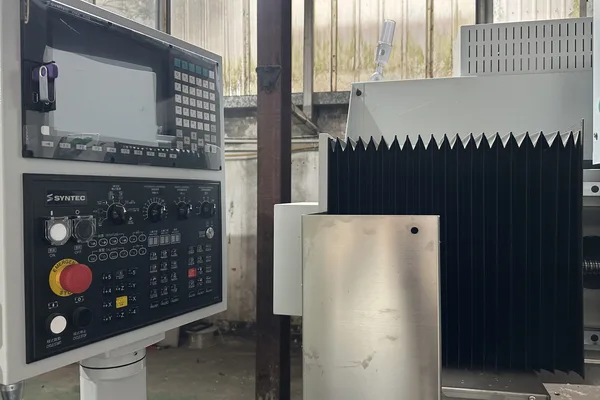
A belt drive introduces compliance and backlash that a direct-drive system doesn’t have, which is why the M3015 holds tighter repeatability than machines with otherwise comparable specs. This matters specifically for aluminum machining, mold work and precision parts where dimensional consistency across a production run — not just on the first part — is the actual requirement.
M4020: Large Format at the Fastest Speed in the Line
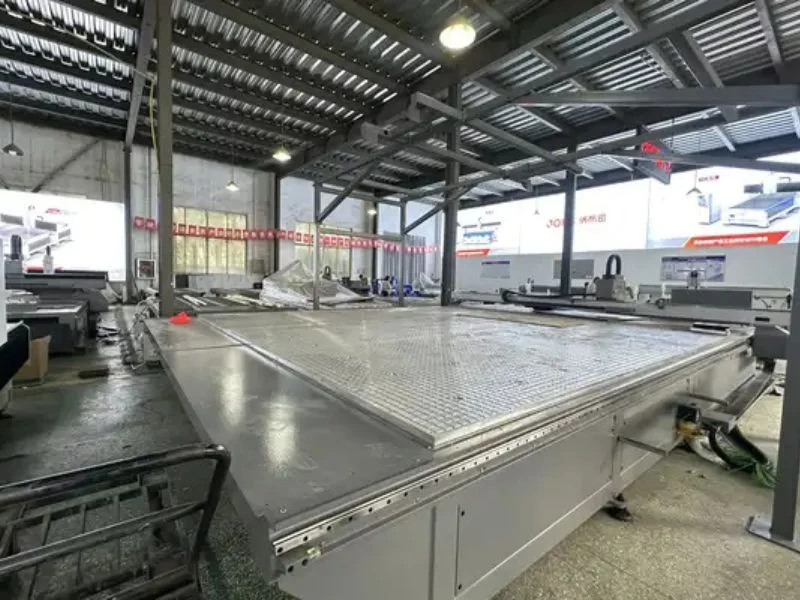
The M4020’s 4000×2000 mm bed exists for one reason — panels too large for the M1631 or M3015’s working envelope — and its 60 m/min rapid rate, the fastest in the M series, keeps large-panel cycle times reasonable despite the increased travel distance a bigger bed requires.
Buyers considering the M4020 are usually choosing it because their part genuinely doesn’t fit anywhere else in the line, not because of a marginal capability difference. If your panel sizes fit comfortably within the M3015’s or M1631’s envelope, the M4020’s larger bed and higher speed don’t add value proportional to their added cost — but if your parts are already routinely getting cut down to fit a smaller bed, the M4020 removes that constraint entirely.
Tool Magazine: Disc-Type ATC on M3015 and M4020
Both the M3015 and M4020 use an 8-station disc-type tool magazine, which handles a broader tool rotation than a simpler linear changer without the larger footprint of a bigger carousel magazine — a reasonable middle ground for shops running multiple operations per part without needing a very large tool inventory on the machine.
This standardization across the two larger M-series machines means an operator moving between an M3015 and M4020 doesn’t need to relearn tool-change workflow — the magazine type and operation are consistent, even though bed size, load focus and drive architecture differ substantially between the two.
A Worked Example: Matching Machine to Part
A shop machining a 400 kg cast aluminum housing that needs to hold tight tolerance across a production run is squarely M3015 territory — direct-drive precision matters more than bed size or load capacity here. A shop cutting 3800×1800 mm composite tooling boards needs the M4020’s bed size regardless of how light the material is. A shop machining a 3,000 kg forged bracket needs the MC1631’s load rating regardless of how small the actual part footprint is.
Run your own parts against this logic rather than comparing spec sheets in isolation — the three machines rarely compete for the same job, because the limiting factor on any given part is usually clearly one of weight, precision, or size, not an ambiguous mix of all three.
See the full M1631 / MC1631, M3015 and M4020 product pages for complete specifications.
Frequently Asked Questions
What’s the main difference between the M1631 and MC1631?
Both share a similar working envelope class, but the moving-gantry MC1631 handles up to 5,000 kg versus 800 kg on the moving-table M1631 — the choice depends on part weight and height, not footprint.
Why does the M3015 cost more than the M1631 despite a similar bed size?
The M3015’s direct-drive XYZ axes eliminate belt-drive compliance and backlash, delivering tighter positioning and repeatability than a standard ATC drive — that precision investment, not bed size, is what the added cost reflects.
Is the M4020 just a bigger version of the M3015?
No — the M4020 prioritizes bed size and speed (4000×2000 mm, 60 m/min), while the M3015 prioritizes direct-drive precision. They’re optimized for different constraints, not different tiers of the same design.
Do the M3015 and M4020 use the same tool magazine?
Yes — both use an 8-station disc-type ATC magazine, which keeps tool-change workflow consistent for operators moving between the two machines.
How do I know if I need the MC1631’s 5,000 kg load capacity?
If your parts are heavy or tall castings, forgings, or dense tooling blocks that exceed what a standard router or the M1631’s 800 kg rating comfortably handles, the MC1631’s moving-gantry design and load rating are built specifically for that work.
Can the M4020 hold the same precision as the M3015?
The M4020 is rated at ±0.025mm positioning versus the M3015’s ±0.02mm — both hold ±0.01mm repeatability, but the M3015’s direct-drive architecture is the machine built specifically to prioritize positioning precision over bed size.