
Fiberglass Cutting Machine
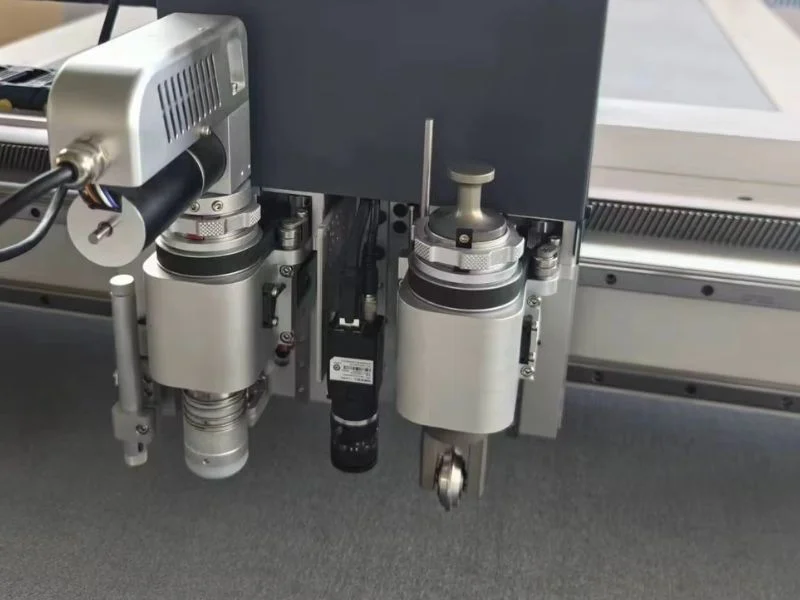
MNT (MEINAITE) C-series digital knife cutters ply-cut glass reinforcement — woven roving, chopped strand mat, glass prepreg and non-crimp fabric — vacuum-held, nested, labelled, ready for layup.
- Oscillating & drag knife — sheared edges with no fraying on roving or CSM, and no heat-affected zone
- Zone vacuum + conveyor — holds lofty, springy mat and wide marine plies flat through the cut
- Nesting that runs at volume — glass is cheap and high-throughput, so blade life and speed decide the cost, not yield
Two Jobs Get Called “Fiberglass Cutting” — Only One Is a Knife Job
Search for a fiberglass cutting machine and you get two unrelated answers, because two unrelated jobs share the name. Cutting the reinforcement before layup — woven roving, chopped strand mat, glass prepreg and non-crimp fabric — is a knife job. Trimming or grinding a cured FRP panel after cure is a spindle job on a router, not a knife job — and we build that machine too: see our CNC router for G10, FR-4 and epoxy glass laminate. A machine that is excellent at one is useless at the other.
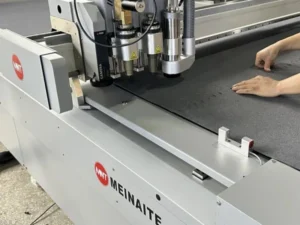
This page is the first job. The C-series is a digital knife cutter: a vacuum table, a conveyor, and a head carrying an oscillating or drag blade that shears the fabric against the belt. If you need to cut a cured GRP part, we will tell you that plainly rather than sell you the wrong machine.
Glass is the high-volume, low-cost cousin of carbon in the composites shop. That changes what the machine has to be good at: not squeezing every gram out of an expensive prepreg, but holding wide, lightweight mat flat, cutting fast, and surviving an abrasive material that eats blades. Reinforcement makers such as Owens Corning and core suppliers like Gurit publish the areal weights and binder types that set your realistic throughput.
Machine specifications compared. Glass fabric wears blades faster than it resists them. Depth is rarely the limit — edge fray and blade consumption are, which is why the rotary wheel tool matters more than table size on thin broadgoods. Above 3200 mm goods, the C3232 is the only one that nests a full width.
| Specification | C6090 | C2516T | C3232 |
|---|---|---|---|
| Cutting area | 600 × 900 / 600 × 1200 / 900 × 1200 mm | 2500 × 1600 mm | 3200 × 3200 mm |
| Glass fabric & technical textile | ≤ 10 mm | ≤ 10 mm | ≤ 10 mm |
| Rotary wheel tool | Optional | Optional | Optional |
| Pneumatic oscillating tool (POT) | Optional | Optional | Standard |
| Cutting speed | 300–1800 mm/s | 300–1800 mm/s | 300–1800 mm/s |
| Hold-down | Aluminium honeycomb, vacuum | Vacuum adsorption | Vacuum adsorption |
| Continuous belt feeding | Yes | Yes | Yes |
| Typical glass-fabric job | Samples, small kits | Ply kitting, mixed materials | Full-width broadgoods |
Glass Reinforcements We Cut
Glass reinforcement behaves nothing like the finished panel it ends up in. Dry cloth frays, chopped strand mat springs back off the table, and wet layup fabric loads the blade with resin — three different hold-down problems before any of them is a cutting problem.
Woven Roving & Fiberglass Cloth
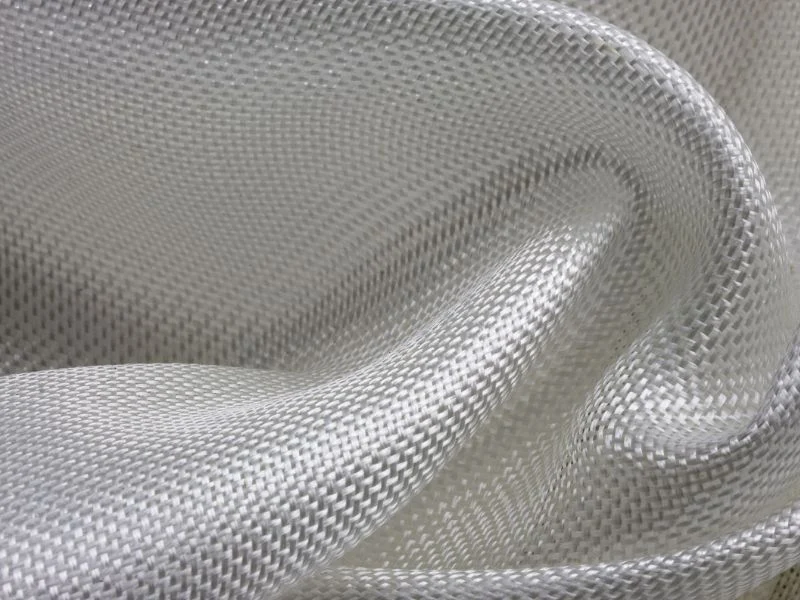
- Formats: E-glass and S-glass plain, twill and satin weave, roughly 100–850 g/m², in rolls up to 3200 mm wide.
- Watch out: a cut selvedge unravels the instant it is lifted, and glass is abrasive — it blunts a passive blade far faster than textile, so blade cost is a real line item.
- How we cut it: a drag blade shears the weave against the belt so it comes off sealed, not pulled; blades are treated as a scheduled consumable, not an afterthought.
Chopped Strand Mat (CSM)
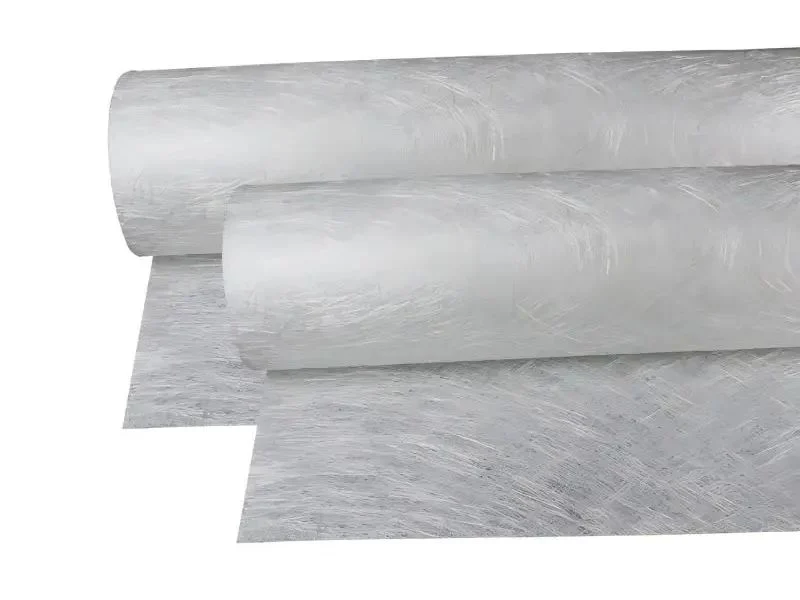
- Formats: emulsion- and powder-bound CSM from 225 to 600 g/m², the workhorse of hand-laid marine and FRP work.
- Watch out: mat is lofty and springy — it lifts off a plain table and the cut wanders, and the binder dust is abrasive enough to matter for the vacuum pump.
- How we cut it: zoned vacuum pulls the mat flat only where material sits, and an oscillating blade slices it in one pass without dragging the loose strands.
Glass Prepreg & Wet Layup Fabric
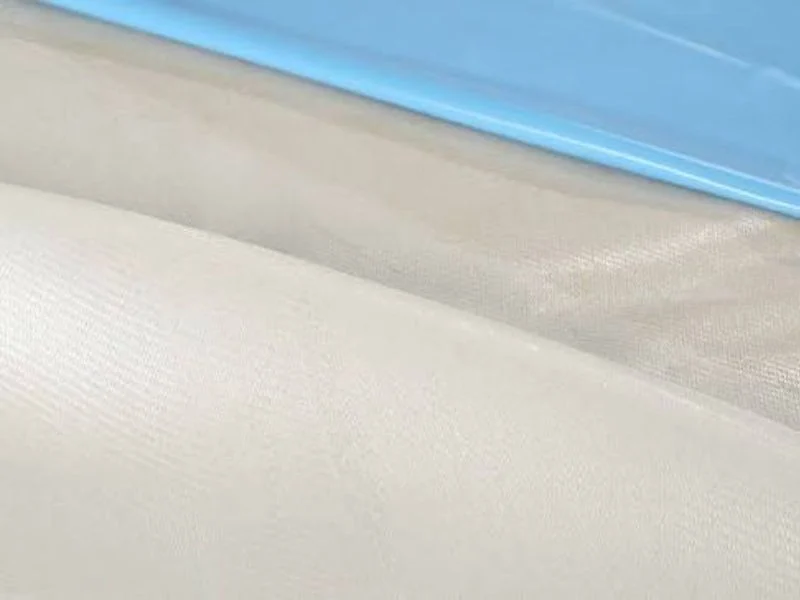
- Formats: glass prepreg, pre-catalysed and resin-film-infused fabric for wind, tooling and semi-structural parts.
- Watch out: tacky resin builds up on a blade that drags, and out-life runs from the moment it leaves the freezer — the table has to keep pace with the kit, not the reverse.
- How we cut it: the blade shears rather than drags so resin stays off the tool, and plies come off nested and labelled in kit order to protect the clock.
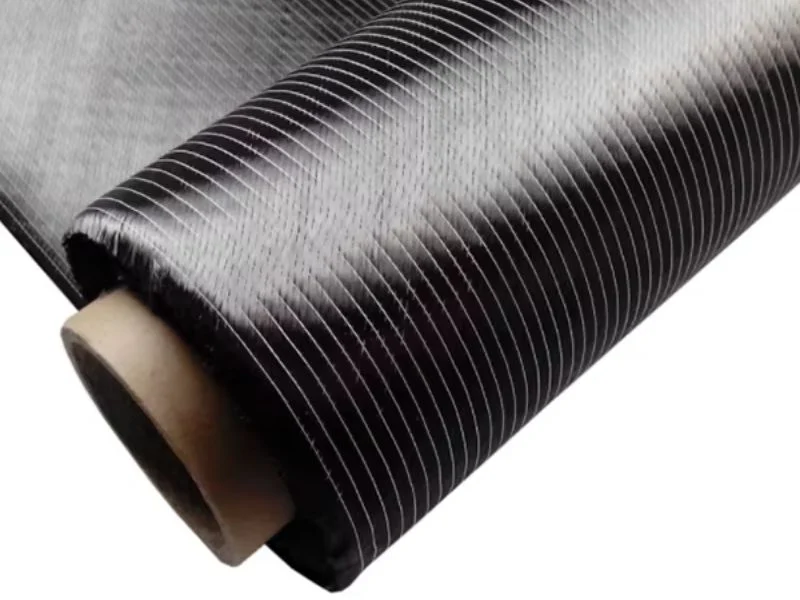
Non-Crimp Fabric & Core Materials
- Formats: multiaxial non-crimp glass, plus the PVC/PET foam core, balsa and peel ply that go into the same lay-up.
- Watch out: stitched multiaxials distort if they shift under the blade, and core sheet needs a deeper tool — running them on separate machines splits your kit across processes.
- How we cut it: one table carries oscillating, drag and deeper knife tools, so the reinforcement and the core it wraps come off the same nest.
Formats and thicknesses cut and vacuum-held on the MNT C2516T (2500×1600 mm, zone vacuum + conveyor).
Who Cuts Fiberglass This Way
Glass reinforcement runs at volume where carbon runs at value: the same knife platform, but the money is in throughput, blade life and holding wide, lightweight material flat — not in saving every gram of an expensive prepreg.

Marine & Boatbuilding
- Parts: hull and deck skins, bulkheads and stringers in woven roving and CSM, cut as numbered kits per hull.
- The hard part: plies are wide and lofty, hand-cutting is slow and inconsistent, and offcuts on cheap mat still add up when you lay hundreds of them a week.
- What you get: a kit that drops into the mould in layup order, with repeatable ply weight that shows up in finished hull consistency.

Wind Energy & Blade Shells
- Parts: long glass and non-crimp plies for blade shells, spar caps and root laminates, often several metres per piece.
- The hard part: the plies are longer than most tables, and a shell that mis-nests wastes fabric measured in whole rolls, not scraps.
- What you get: conveyor feed that cuts continuous roll goods to length, and table widths sized for the plies rather than the plies sized for the table.
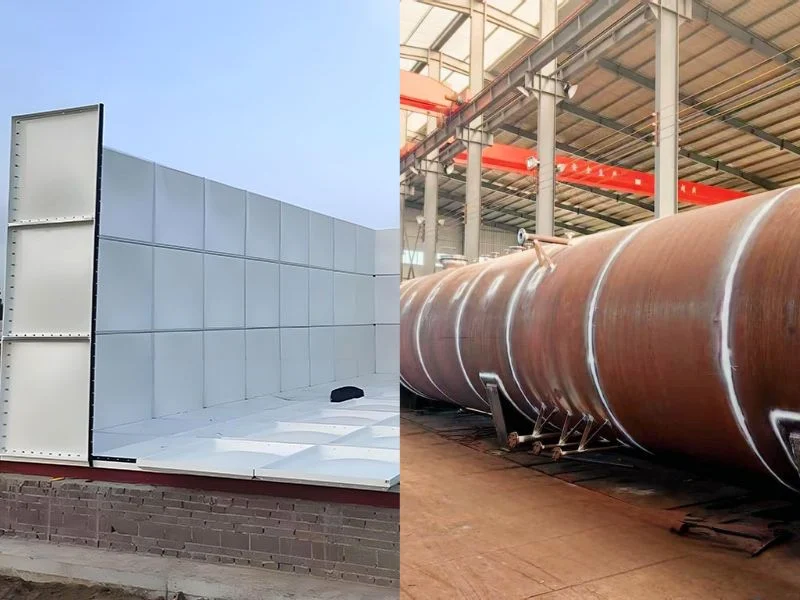
FRP / GRP Panel & Tank Fabrication
- Parts: reinforcement kits for FRP panels, storage tanks, ducting and pultrusion pre-forms.
- The hard part: repeat production of the same kit demands identical plies every shift, and glass abrasion eats blades faster than any textile you have run.
- What you get: file-driven kits that repeat to ±0.1 mm, with blade replacement budgeted like a laser’s gas rather than discovered mid-run.

Transport, Rail & Industrial Composites
- Parts: body panels, covers and enclosures in glass laminate for rail, truck and industrial equipment, in short revision-heavy runs.
- The hard part: designs change between batches, and a steel-rule die for every revision is dead tooling cost the moment the drawing moves.
- What you get: a changed ply is a changed file, never a new die — the reason die-less cutting replaced steel rule on short composite runs.
Table widths from 900 mm to 3200 mm; marine and wind ply sizes verified on the C3232 (3200×3200 mm).
Recommended MNT Glass Cutting Machines
All C-series machines share one platform, software and tool range — the difference is working width and which tools come fitted. Glass work usually lands on the wider beds because the plies are large and the material is cheap enough that throughput, not yield, sets the model.
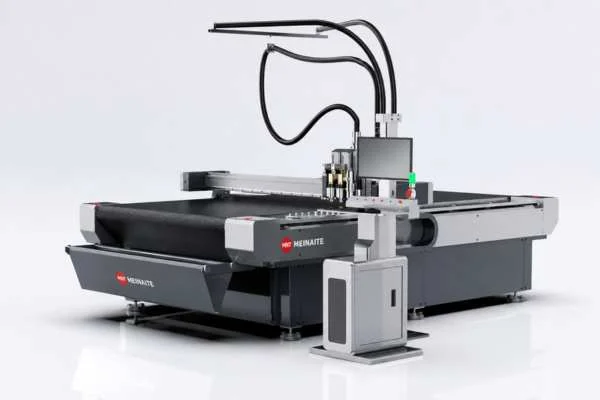
C2516T Digital Cutting Machine
- Cuts: woven roving, CSM, glass prepreg, non-crimp fabric and core materials
- Specs: 2500 × 1600 mm · EOT oscillating knife + drag knife + milling spindle · zone vacuum · conveyor feed
- Best for: production glass kitting where roll goods feed continuously
- Price: From $16,900
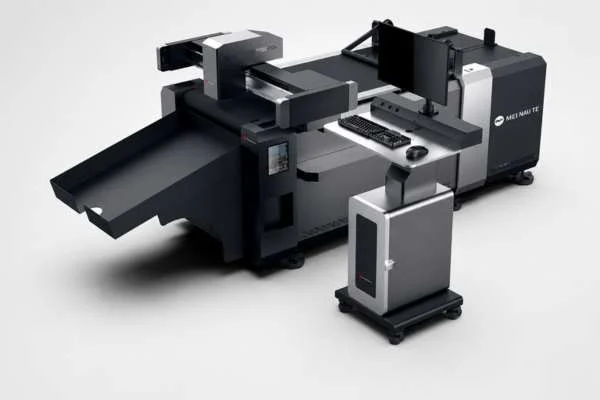
C6090 Digital Cutting Machine
- Cuts: single-ply glass cloth, prepreg samples, patterns and templates
- Specs: 600 × 900 / 600 × 1200 / 900 × 1200 mm · EOT + creasing · vacuum table
- Best for: R&D, prototyping and sample rooms rather than the production floor
- Price: From $12,000
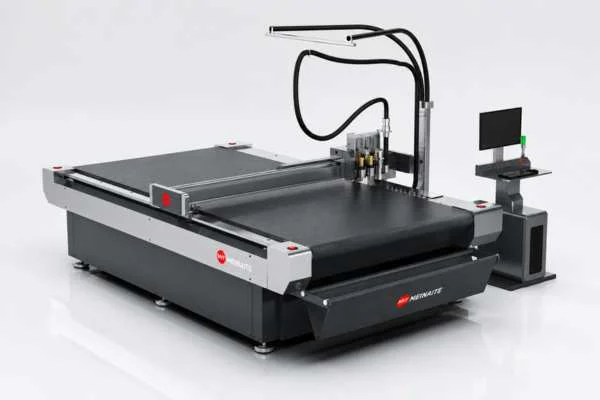
C3232 Digital Cutting Machine
- Cuts: large glass and non-crimp plies, wide-roll reinforcement, core sheet
- Specs: 3200 × 3200 mm · POT pneumatic knife + EOT oscillating knife · zone vacuum
- Best for: marine, wind and any ply too wide for a 1600 mm table
- Price: From $11,555
Specs from the shipping C-series build (Hangzhou Chaohan, self-manufactured); table sizes and tool heads verified per model.
Where a Knife Beats Grinding on Fiberglass — and Where It Doesn’t
Search for a fiberglass cutting machine and half the results are grinders, waterjets and diamond saws. That is because two unrelated jobs share the name — and only one of them is a knife job.
| Glass reinforcement (dry / wet fabric, CSM) | Cured FRP / GRP laminate | |
|---|---|---|
| Right process | Oscillating / drag knife | Diamond blade, router or abrasive waterjet |
| Why | Material is flexible — a blade shears it with zero kerf loss | Material is a hard abrasive solid — a knife cannot enter it |
| Typical thickness | 0.2–25 mm single ply or stacked | 2–40 mm cured laminate |
| What sets the cost | Throughput and blade life — glass is abrasive and volume is high | Tooling wear and dust extraction — cured glass is brutal on edges |
| Edge condition | No fraying if held down and cut in one pass | Risk of chipping and delamination |
| Dust | Minimal — fibres are sheared, not ground | Heavy respirable glass dust, extraction mandatory |
| MNT machine | C-series digital knife cutter — this page | Not a knife job — we will say so |
If your work is trimming and grinding a cured FRP part, a knife table is the wrong purchase — you need diamond tooling or waterjet, and we would rather say that now than after a machine ships. If your work is cutting glass reinforcement before it goes in the mould, a knife table is the only process that costs you nothing in kerf.
Where fiberglass differs from carbon fiber
These two pages are close cousins — the same C-series cuts both — but the economics are opposite, and buyers get it wrong. On carbon fiber and prepreg the material is the expensive thing on the floor, so nesting yield decides profit. On glass, the fabric is cheap and the volume is high, so blade life, throughput and holding wide lightweight mat flat are where the machine earns its keep. Glass is also more abrasive than carbon on the cutting edge — budget blades accordingly. Reinforcement suppliers such as Owens Corning publish areal weight and binder type per product, and those two numbers set your realistic cutting throughput.
Why Fiberglass Shops Choose the C-Series
On glass reinforcement the machine earns its keep at the vacuum table and the blade budget, not at headline cutting speed. If you sell into this market, talk to us about becoming a distributor or OEM partner.
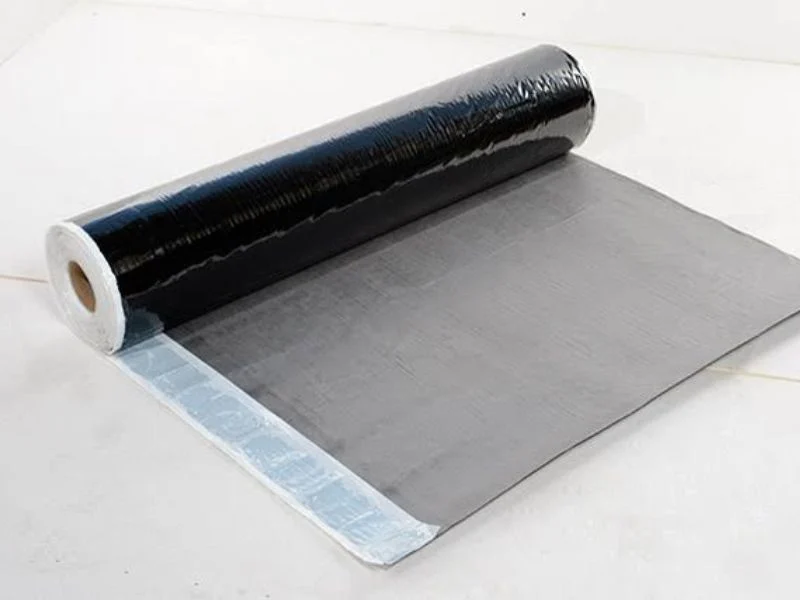
Hold-Down Built for Springy Mat and Wide Rolls
- Zoned vacuum — suction only where material sits, so lofty CSM holds instead of lifting
- Conveyor feed for roll goods; wide marine and wind plies never get repositioned mid-cut
- Abrasive glass dust sealed away from drives and the control cabinet
- For distributors: FRP, marine and wind shops cluster regionally and buy at volume — once a shop standardises on your table, blades and cutting underlay become a recurring annuity, not a one-off sale
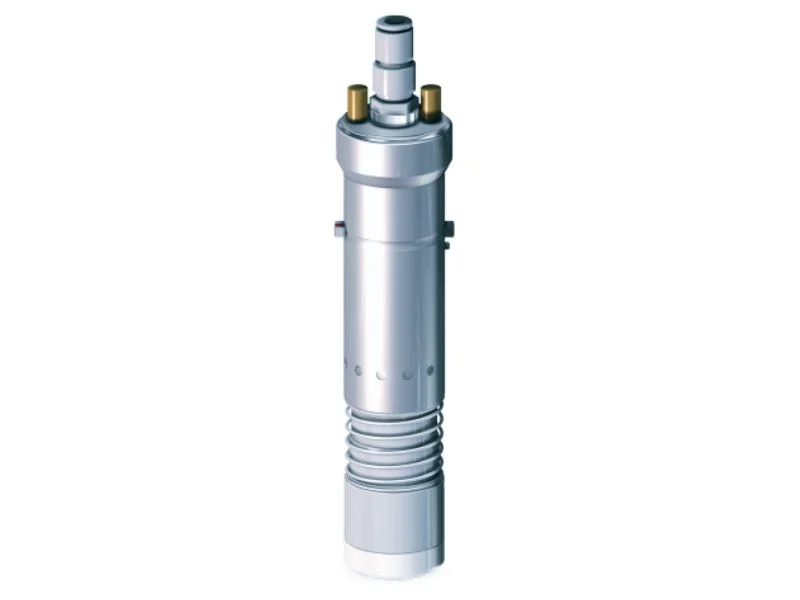
One Head Cuts the Whole Glass Kit
- Oscillating knife, drag knife, deeper core tool and marking on one platform
- Plies come off numbered and in layup order — the part that actually saves hours
- Nesting software rated on throughput, because glass runs by the hundreds of plies
- For distributors: spare-parts commitment, territory and technical training are what decide whether a machine is worth carrying — all three are set out on our partnership page
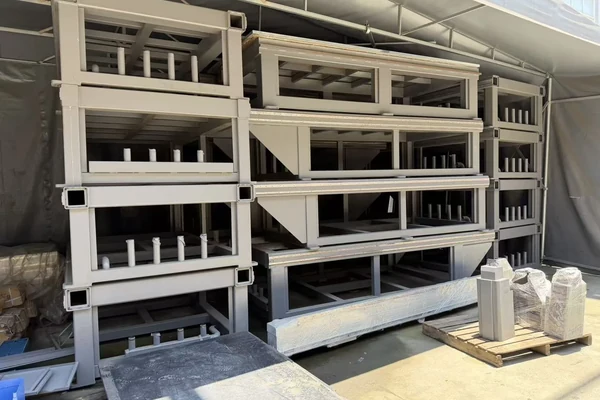
The Factory That Builds Your Glass Ply Cutter
- Heavy frames, gantries and vacuum tables built in-house by Hangzhou Chaohan
- Wide-bed rigidity matters on 3200 mm glass tables — the frame is where it comes from
- Every machine run-tested and calibrated before it ships

CE + ISO — Send Your Glass Fabric for a Free Ply Cut
- CE-marked and ISO 9001:2015 certified, built by Hangzhou Chaohan
- Send your roving, mat or prepreg with a ply drawing — we cut it free and return the plies and edge photos
- 12-month warranty, lifetime software updates, on-site commissioning and training
Built by Hangzhou Chaohan (self-manufactured, not traded): CE-marked, ISO 9001:2015, run-tested before shipping.
Frequently Asked Questions
Can this machine cut cured fiberglass (FRP / GRP) panels?
No. A knife shears flexible material; a cured FRP laminate is a hard abrasive solid the blade cannot enter. Cured glass panels are cut with a diamond blade, router or abrasive waterjet. A digital knife cutter is for the reinforcement before it goes in the mould — woven roving, chopped strand mat, glass prepreg and non-crimp fabric. Getting this distinction wrong is the most expensive mistake in the category.
Why not laser-cut fiberglass fabric?
Because heat destroys the resin bond and the glass itself. A laser melts and beads the glass filaments, burns any binder or resin, and releases fumes — leaving a compromised edge where the ply meets its neighbour. It also burns away a kerf. A blade removes nothing, adds no heat, and leaves the glass chemistry untouched.
Does fiberglass wear out the blades faster?
Yes — glass is abrasive, and it consumes cutting edges faster than textile, leather or foam work, though not quite as fast as aramid. Budget blade replacement into running cost the way you would budget nitrogen on a laser. Anyone who tells you blade life is a non-issue on glass has not run production volumes of chopped strand mat.
How does it hold lightweight chopped strand mat flat?
Zoned vacuum. CSM is lofty and springs back, so a plain table lets it lift and the cut wanders. The table applies suction only in the zones where material sits, pulling the mat flat, and the oscillating blade cuts it in a single pass without dragging the loose strands. Hold-down matters more than the blade on this material.
How thick a stack of glass can it cut?
An oscillating knife handles roughly 0.2 mm single ply up to about 25 mm of stacked or compressed material, depending on fabric weight and blade. Most production glass work is single-ply or shallow stacks, because ply-by-ply accuracy matters more than stacking throughput — a stack that shifts costs more than it saves.
How much does a fiberglass cutting machine cost?
A production digital knife cutter with vacuum table and conveyor runs roughly USD 12,000 to 40,000 depending on table size, tool head configuration and whether camera registration is fitted. A small sample-room table sits near the bottom; a 3200 mm wide marine or wind table with multiple heads near the top. Send your fabric list, ply sizes and monthly volume for a factory-direct quote.
Which C-series model fits fiberglass work?
All C-series machines share one platform, software and tool range — the difference is working size. The C6090 suits sample rooms; the C2516T suits production kitting from roll goods; the C3232 exists for marine and wind plies too wide for a 1600 mm table. See the full digital cutting machine range.
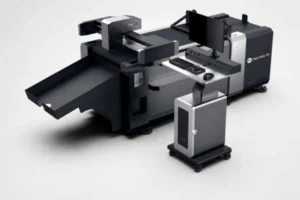
Fiberglass Cutting — Technical Guides
Knife or diamond tool, dry or cured — the process-selection logic behind every recommendation on this page.
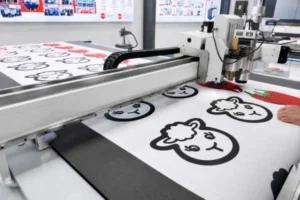
Oscillating Knife vs Laser Cutting for Leather: Which Should You Choose?
Why a blade beats a beam on any resin-bearing material: no melted edge, no fumes, no compromised bond line — exactly why glass prepreg is never laser cut.
CNC Router vs Waterjet for Thick PTFE Plate
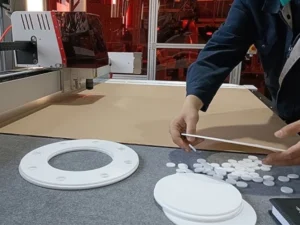
The same process-selection logic that decides how a cured FRP part gets trimmed once it leaves the mould.