
Cabinet Making CNC Machine
MNT (MEINAITE) ATC routers nest, bore and cut cabinet parts from full sheets — carcass panels, doors, drawer boxes and shelving, from one file.
- Nesting from the full sheet — parts laid out to maximise yield, because panel cost is most of a cabinet’s cost
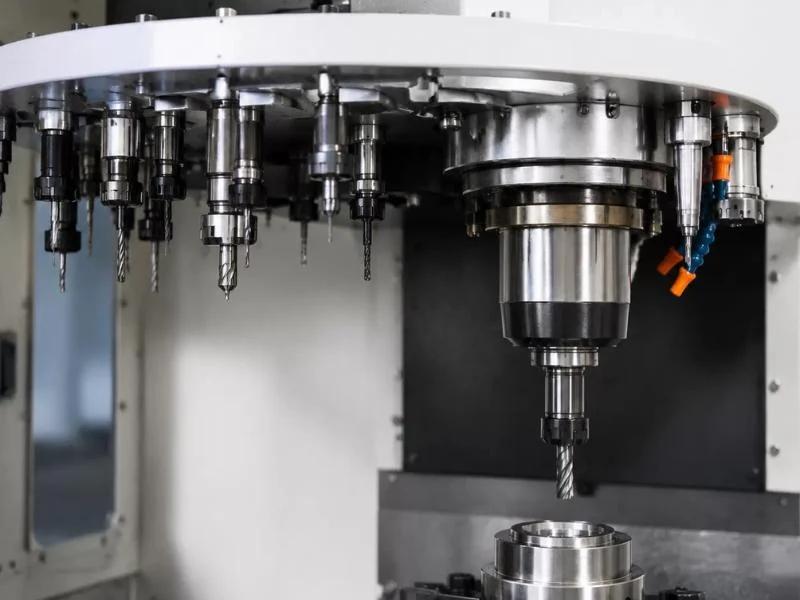
- Automatic tool change — cut, groove, bore and chamfer inside one program instead of four setups
- Labelled parts, no marking out — every panel comes off the table identified and in assembly order
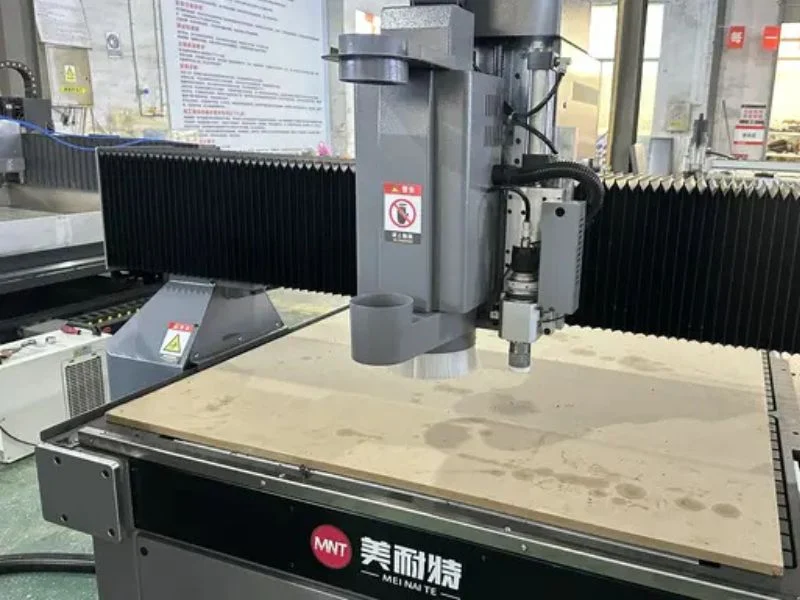
What a Cabinet Making CNC Machine Actually Changes
A cabinet shop without CNC spends most of its day on the same three things: marking out, cutting on a panel saw or track saw, then drilling shelf pins and hinge cups on a jig. Each of those steps carries its own error, and the errors stack. The door that will not sit flush is almost never a bad door — it is three small errors that met at the same corner.
A nesting CNC replaces all three with one operation. The sheet goes on the table, the program cuts every part, grooves every dado, bores every hole and labels every panel. What you buy is not cutting speed — it is the elimination of the accumulated error between operations.
Where the money actually comes back
- Sheet yield. Nesting software lays parts out far tighter than a human on a panel saw. On a shop running 20 sheets a week, a few percent of yield is a real number at the end of the year.
- Labour, but not the way people expect. The saving is not in the cutting — it is in not marking out, not re-measuring, and not re-cutting the part that came out 2 mm short.
- One-off cabinets cost like batch cabinets. A custom size is a changed dimension in the file, not a new setup. This is what lets a small shop quote bespoke work profitably.
- Parts that assemble. Every hole is referenced off the same datum, so the carcass goes together square without shimming.
A cabinet making CNC is not the same purchase as a hobby router. It needs a bed that takes a full sheet, a vacuum table strong enough to hold small parts as they are cut free, and an ATC so the program does not stop for tool changes. Any one of those missing and the machine becomes a bottleneck instead of a multiplier.
Machine specifications compared. A cabinet shop buys tool stations. Nesting a carcase means drilling, grooving, rebating and profiling in one pass — every extra manual tool change is a stopped machine. The T6 covers a four-tool cycle; the T7 runs nine and adds a knife for backing board and edge material.
| Specification | T6 | T7 | T5 |
|---|---|---|---|
| Working area | 1300 × 2500 mm | 1300 × 2500 mm (T7-1325) · 2000 × 3000 mm (T7-3020ATC) | 1300 × 2500 mm |
| Tool changer | 4-tool linear ATC | Linear · 9 stations (T7-1325), 6 (T7-3020ATC) | — |
| Spindle | 9 kW air-cooled, or 7.5 / 11 kW water-cooled | Water-cooled, 40,000 RPM | 5.5 kW water-cooled |
| Bed | Inline welded, stress-relieved, gantry-milled | — | Inline welded, stress-relieved, gantry-milled |
| Drive motor | Servo (X/Y/Z) | Leadshine servo (X/Y/Z) | Servo (X/Y/Z) |
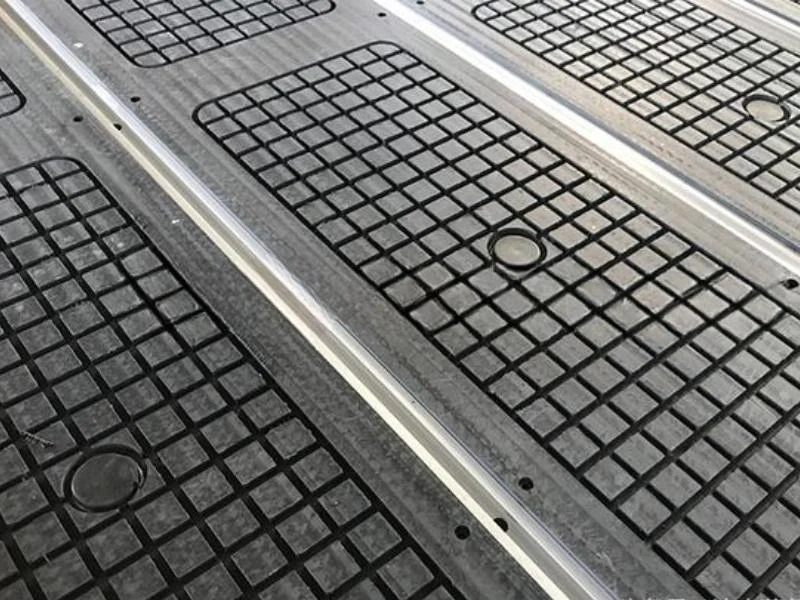
| Worktable | Vacuum hold-down | 4-zone vacuum, 500 kg load | Vacuum hold-down |
| Net weight | 2000 kg | — | 1500 kg |
Panel Materials We Machine
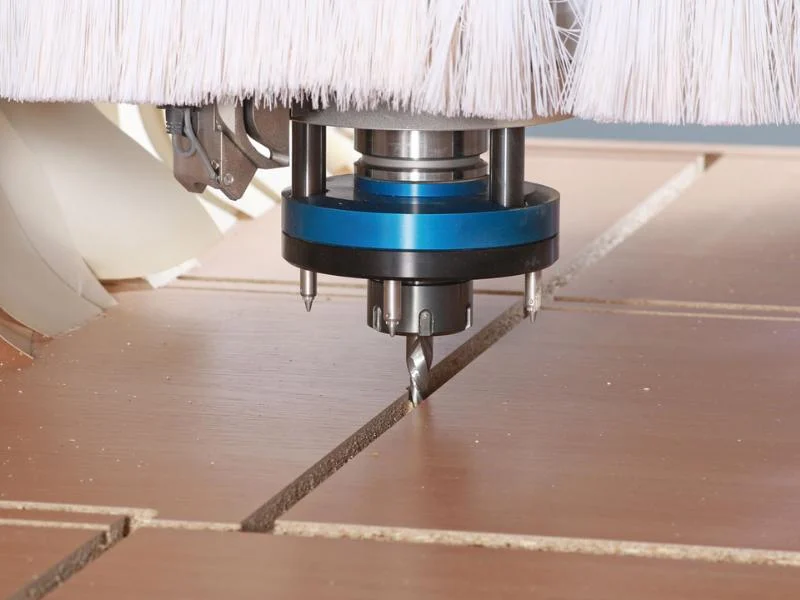
Melamine & Particleboard
- Formats: 16 and 18 mm melamine-faced chipboard, full 1220 × 2440 mm sheets
- Watch out: The melamine face chips the moment the cutter lifts fibres on the exit side — and a chipped edge on a visible cabinet part is scrap, not rework
- How we cut it: Compression spiral tooling cuts down on the top face and up on the bottom, so both surfaces stay clean in a single pass
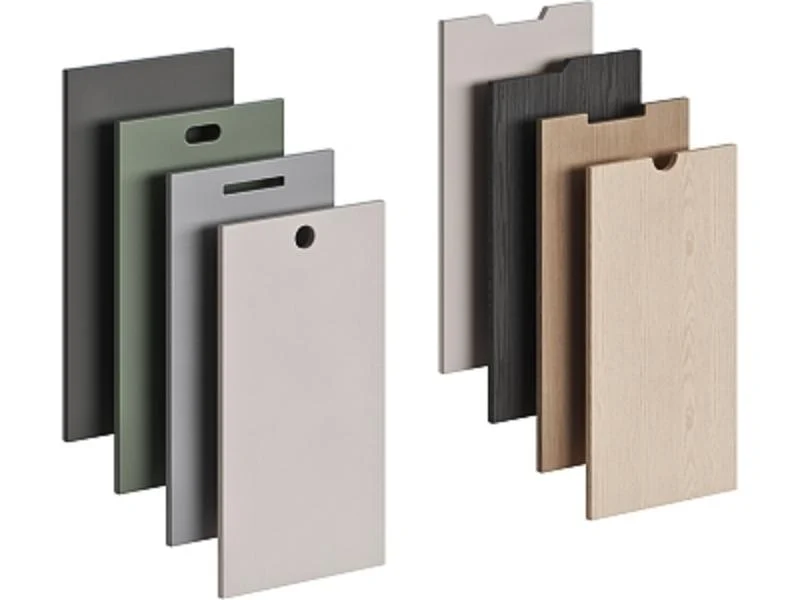
MDF & Painted Panel
- Formats: 9–25 mm standard, moisture-resistant and pre-primed MDF
- Watch out: MDF machines beautifully and then absorbs paint unevenly at the edge, so a routed door profile shows every fuzzy fibre after the first coat
- How we cut it: Sharp tooling at the right chip load leaves an edge that seals with one primer coat instead of three
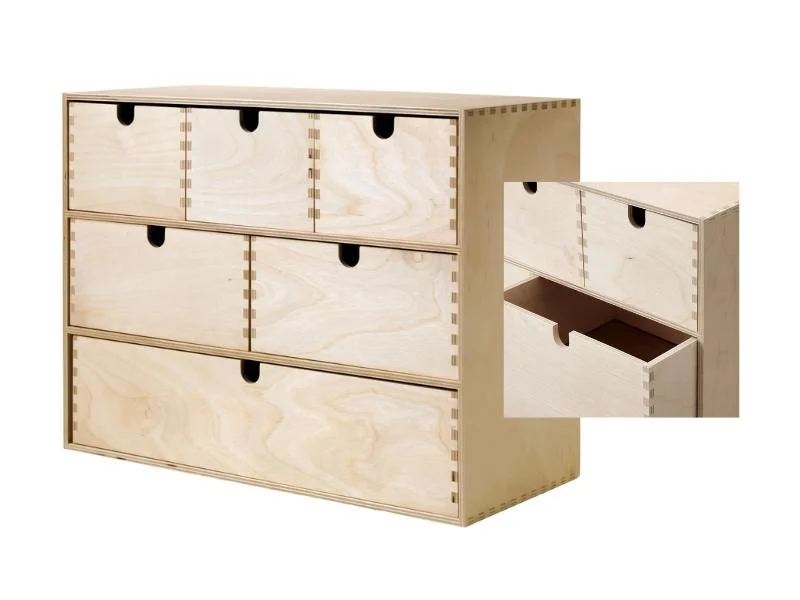
Plywood & Birch Ply
- Formats: 12–25 mm birch, poplar and hardwood ply for carcasses and drawer boxes
- Watch out: Ply moves. Voids and internal stress mean a part cut oversize on Monday is not the same size on Friday, and small parts break free of the vacuum as the cut completes
- How we cut it: Zoned vacuum plus onion-skin tabs hold small parts until the program finishes, then they lift out clean
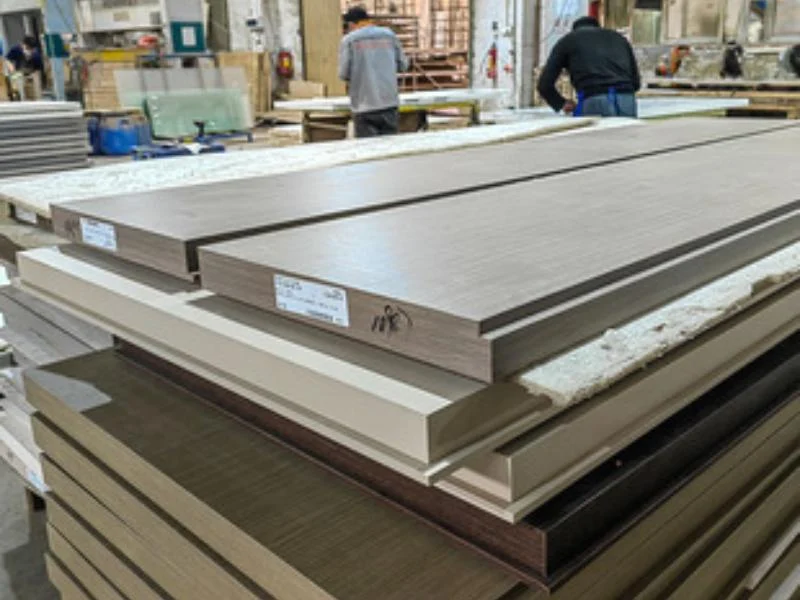
Solid Timber & Hardwood
- Formats: Solid stock for face frames, rails, stiles and shaped doors
- Watch out: Grain direction decides everything — climb cut with the grain and it is glass-smooth, against it and you tear out a strip that cannot be sanded away
- How we cut it: Toolpaths set per grain direction, with a spindle that holds rpm under load so feed stays constant through hard sections
Cabinet Parts Cut From One File
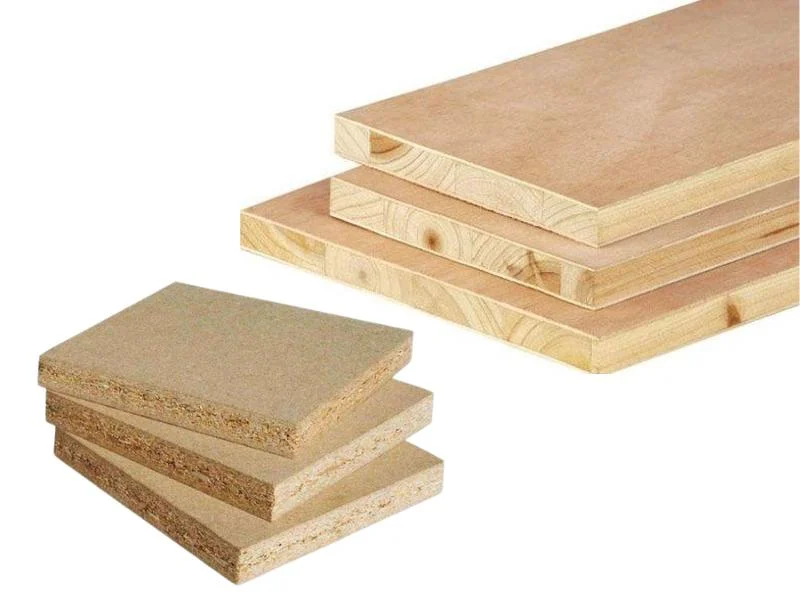
Carcass Panels & Shelving
- Parts: Sides, tops, bottoms, backs and adjustable shelving, nested from full sheets
- The hard part: Every shelf-pin row drilled on a jig inherits the jig’s error, and a carcass that is 1 mm out of square shows up at the door, not at the box
- What you get: Panel outline, dados and pin holes all referenced off one datum, so the carcass assembles square without shimming
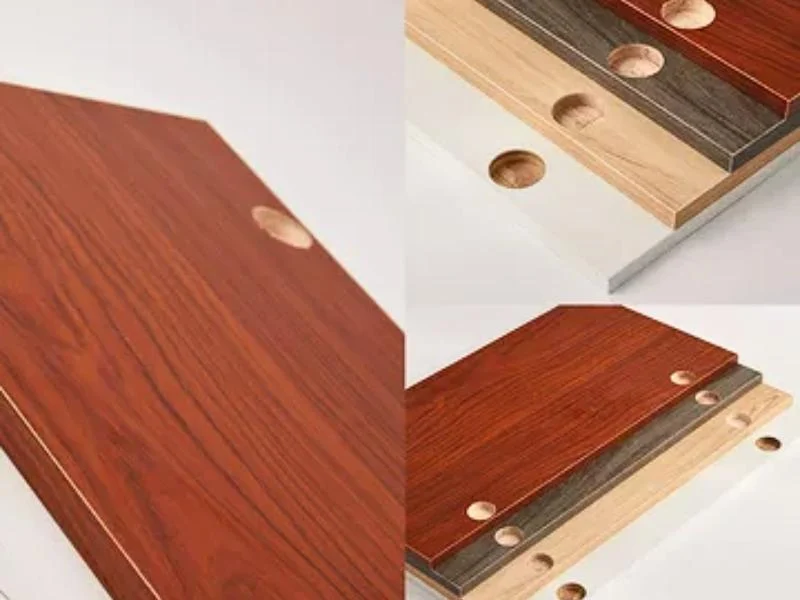
Cabinet Doors & Drawer Fronts
- Parts: Slab, shaker and profiled doors; matching drawer fronts in the same run
- The hard part: Hinge cups bored on a separate machine are the classic source of doors that sit proud or bind — and a customer sees a door before anything else
- What you get: Door profile and hinge cups machined in the same setup, so the reveal is even across a whole run of kitchens
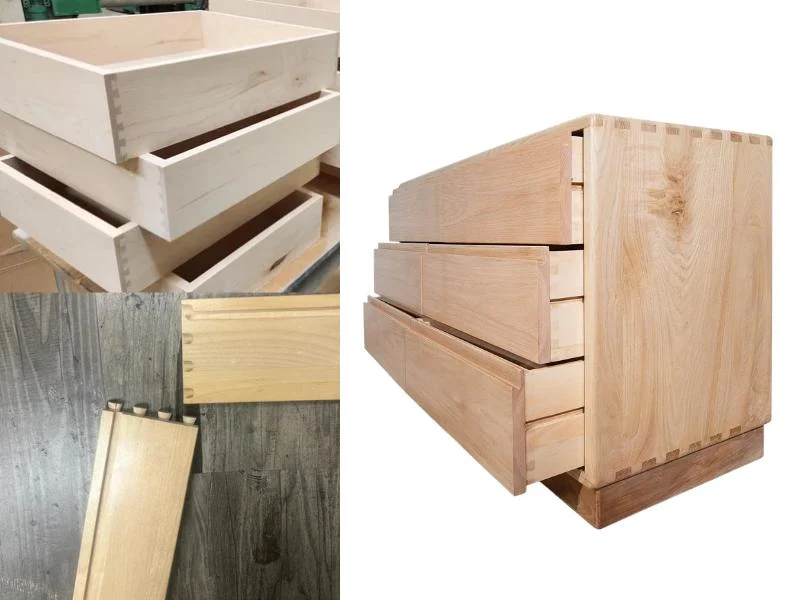
Drawer Boxes & Joinery
- Parts: Dovetail, rebate and tongue-and-groove drawer boxes, plus finger joints
- The hard part: Cutting joinery on a table saw needs a jig per size, and a bespoke drawer height means building a new jig for one box
- What you get: Joint geometry lives in the file, so a one-off drawer costs the same setup time as a batch of fifty
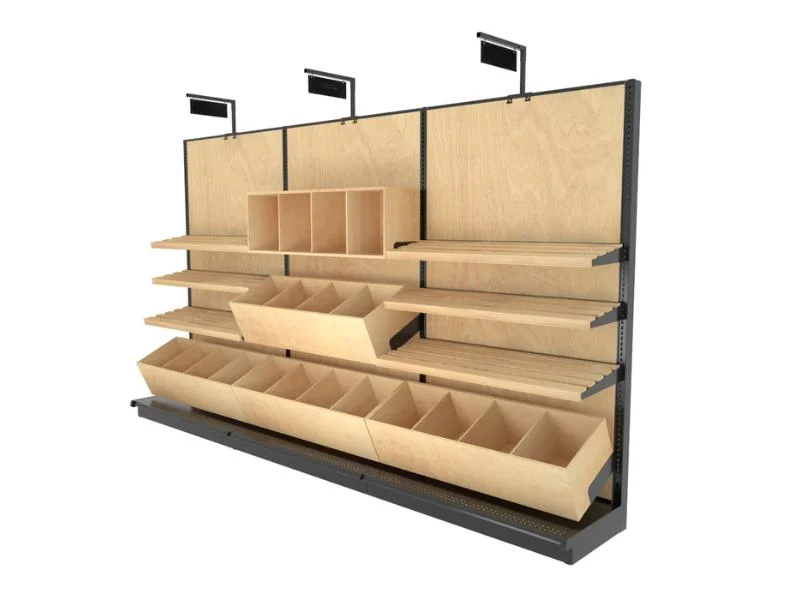
Shopfitting & Retail Fixtures
- Parts: Display units, counters, slat panels and shop-fit joinery in short runs
- The hard part: Retail rollouts change design between stores, and any tooling or jig you build is obsolete by the second location
- What you get: A design revision is a file revision — the machine does not care that store 3 is 40 mm narrower than store 2
Recommended MNT Cabinet Making Machines
Cabinet work needs three things from a machine: a bed that takes a full sheet, vacuum that holds small parts, and an ATC so the program never stops. Pick by volume and by whether you also do doors.
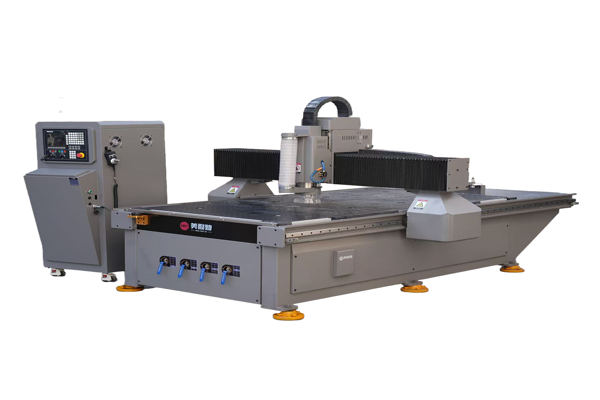
T6 ATC Engraving & Processing Center
- Cuts: Melamine, MDF, plywood, solid timber and acrylic panel
- Specs: Full-sheet bed · automatic tool changer · zoned vacuum · rack-and-pinion drive · dust hood
- Best for: The mainstream cabinet-shop choice — nesting, grooving and boring in one program
- Price: From $11,100
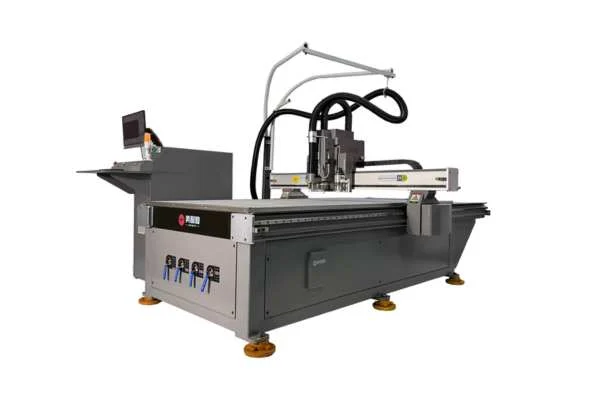
T7 Digital Engraving & Cutting Machine
- Cuts: Panel plus knife-cut materials — board, plastics, foam and gasket stock
- Specs: ATC spindle and oscillating knife head · vision registration · full-sheet bed
- Best for: Shops doing cabinets alongside signage, display or upholstery work
- Price: From $17,800
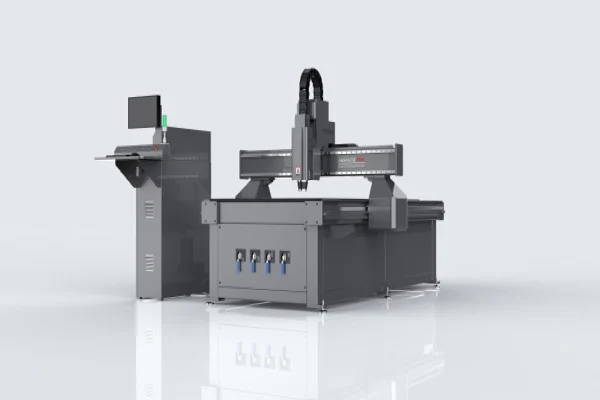
T5 Precision CNC Router
- Cuts: Panel, acrylic and aluminium composite for lighter cabinet and fixture work
- Specs: Precision-class frame · high-speed spindle · vacuum table · compact footprint
- Best for: Smaller shops and fixture work rather than full kitchen throughput
- Price: From $8,900
Why a Hobby Router Cannot Do Cabinet Work
The most expensive mistake in this category is buying on price and discovering the machine cannot run a shop’s daily volume. The gap is not spindle power — it is the three things nobody demonstrates at a trade show.
| Hobby / entry router | Cabinet making CNC | |
|---|---|---|
| Sheet handling | Part sheets, cut down first | Full 1220 × 2440 mm on the bed |
| Workholding | Clamps and screws | Zoned vacuum — small parts stay put as they cut free |
| Tool changes | Manual, program stops | ATC — program runs unattended |
| Boring | Separate jig and drill | Same datum as the cut |
| Dust | Shop vacuum | Ducted extraction sized for MDF |
| Duty cycle | Hours per week | Hours per day, for years |
Three things cabinet shops underestimate
- The software is half the purchase. A cabinet CNC without cabinet-specific CAM is a very expensive way to cut rectangles. Budget for the nesting and cabinet-design package, and for someone to learn it.
- Dust extraction is not an accessory. MDF dust is fine, abundant and a genuine health issue. Plan the ducting before the machine arrives, not after the first sheet. Panel suppliers publish the dust and formaldehyde data that governs this — the Composite Panel Association is the reference for particleboard and MDF grades in North America, and the KCMA certification standards are what most cabinet buyers actually specify against.
- Vacuum capacity decides what you can cut. Small parts, thin parts and the last part on a nest are all held by suction alone. Undersized pumps are the most common reason a machine ‘throws parts’.
Why Cabinet Shops Choose MNT Routers
On panel work the frame and the vacuum decide whether the machine still holds tolerance in year three. About MNT (MEINAITE) — who builds it and where.
Distributor or OEM partner? Territory, spare-parts commitment and technical training are what decide whether a machine is worth carrying. Talk to us about partnership.
Built for Daily Sheet Volume
- Heavy welded frame, stress-relieved and machined after annealing
- Rack-and-pinion drive with helical gearing — speed across a full sheet without chatter
- Zoned vacuum sized for small parts, not just for full panels
- For distributors: cabinet shops read return-on-investment fluently — sheet yield and labour hours are numbers they already track, so you are not explaining what CNC is, only what this one saves
One Program, No Operator Standing By
- Automatic tool changer — cut, groove, bore and chamfer without stopping
- Part labelling so panels arrive at assembly identified and in order
- Dust hood and ducting included, specified for MDF rather than as an upsell
- For distributors: spare-parts commitment, territory and technical training are the three things that decide whether a machine is worth carrying — all three are set out on our partnership page
The Factory That Builds Your Nesting Router
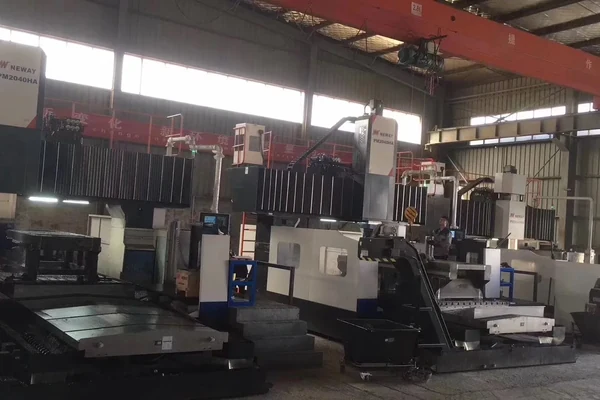
- Frames welded, annealed and machined in-house by Hangzhou Chaohan
- Every machine run-tested and calibrated before shipping

CE + ISO — Send a Cutting List for a Free Nesting Test
- CE-marked and ISO 9001:2015 certified, built by Hangzhou Chaohan
- On-site installation plus operator training until your team runs it unaided
- 12-month warranty, lifetime support and free software updates
Specs are the standard MNT ATC router build: full-sheet bed, zoned vacuum, 8–12 tool ATC. Every machine run-tested before shipping.
Frequently Asked Questions
How much does a cabinet making CNC machine cost?
A production nesting router with a full-sheet bed, ATC and zoned vacuum runs roughly USD 25,000 to 90,000, depending on bed size, tool changer capacity, vacuum pump and whether a labelling printer and dust system are included. Machines advertised well below that are usually part-sheet beds without an ATC — capable of cabinet parts, but not of a cabinet shop’s daily volume. Send your sheet size and weekly throughput for a factory-direct quote.
Will it pay for itself in a small shop?
It depends far more on how many different cabinets you build than on how many. A shop doing repeat kitchens saves mostly on yield and labour; a shop doing bespoke one-offs saves on the thing that actually costs them — setup. The break-even case is usually a shop cutting 10–20 sheets a week with a lot of size variation. Below that, the software learning curve tends to outweigh the saving in year one.
Do I need an ATC, or can I change tools by hand?
You can run cabinet work without an ATC, but the program stops at every tool change and someone has to be standing there. A typical carcass needs a compression cutter, a groove cutter and at least one drill diameter — that is three stops per sheet. On more than a few sheets a day, the ATC is what makes the machine run unattended, which is where the labour saving actually is.
What software do I need?
Two layers: cabinet design software that generates the parts list, and nesting/CAM software that lays them out and posts the toolpaths. Some packages do both. Budget for it explicitly — a cabinet CNC without cabinet-specific CAM is an expensive way to cut rectangles, and the software is where most of the learning time goes. We help specify a package that matches your existing workflow.
Can it drill hinge cups and shelf pins?
Yes — with the router spindle and the right bits, bored off the same datum as the cut. That datum is the whole point: hinge cups drilled on a separate jig inherit the jig’s error, which is the classic reason doors sit proud or bind. If your volume justifies it, a dedicated boring block speeds up multi-hole rows, but it is not required to get the accuracy.
How do small parts stay on the table?
Zoned vacuum plus onion-skin tabs — the program leaves a thin skin of material holding each part until the nest is finished, then the parts lift out. Vacuum capacity is what decides how small a part you can cut safely, and undersized pumps are the most common reason a machine throws parts. Tell us your smallest typical part when enquiring so the pump is specified correctly.
What about dust and extraction?
MDF and particleboard produce fine dust in quantity, and it is a genuine health issue rather than a housekeeping one. The machine ships with a dust hood; you need ducting and a collector sized for the spindle. Plan the ducting run before the machine arrives — retrofitting it around an installed machine is far harder than it looks.
Can the same machine cut acrylic and aluminium composite?
Yes, with the right tooling and feeds — many cabinet shops also do shopfitting and signage work. For plastics specifically see our CNC router for acrylic page, and for solid aluminium see CNC router for aluminum, which needs a more rigid platform than panel work does.
What power and space does it need?
Three-phase power for the spindle and vacuum pump, plus compressed air for the ATC and pop-up pins. Allow the bed footprint plus a full sheet’s clearance on the loading side and room to walk the other three. Request the installation drawing when enquiring — the vacuum pump and dust collector often need more planning than the machine itself.
Cabinet CNC — Technical Guides
Machine selection, drive types and upkeep for panel processing.
Nesting Software and Panel Yield: Where the Money Actually Is
How nesting decides sheet yield, and why a few percent matters more than cutting speed on a panel shop’s P&L.
How to Choose an ATC CNC Router for Multi-Tool Production
When an automatic tool changer pays back, worked through on multi-tool production runs.
Direct Drive vs Rack and Pinion CNC Machines
Drive types and where each belongs — why panel machines use rack and pinion across a full sheet.
ATC CNC Router Maintenance Checklist
Keeping an ATC router accurate: collets, tool holders, vacuum seals and the checks that protect edge quality.
CNC Router vs Waterjet for Thick PTFE Plate
How process choice shifts with material and thickness — the same reasoning applied to non-panel jobs.
Send Us a Cabinet Drawing for a Free Nesting Test
Send a cabinet drawing or a cutting list with your sheet size and weekly volume. We nest it, show you the yield, and quote the machine that matches your actual throughput.