
Sheet Metal Laser Cutting Machine
MNT (MEINAITE) fiber laser cutters process flat sheet and plate — carbon steel, stainless, aluminium, copper and brass — on a 3000 × 1500 mm bed at 0.05 mm positioning.
- 3 kW or 6 kW — power sized to the thickness you actually run, not the thickest you might
- Rack-and-pinion dual-drive gantry — heavy annealed frame, 60 m/min travel without chatter
- Cuts reflective metals — copper and brass, where a CO2 source cannot follow
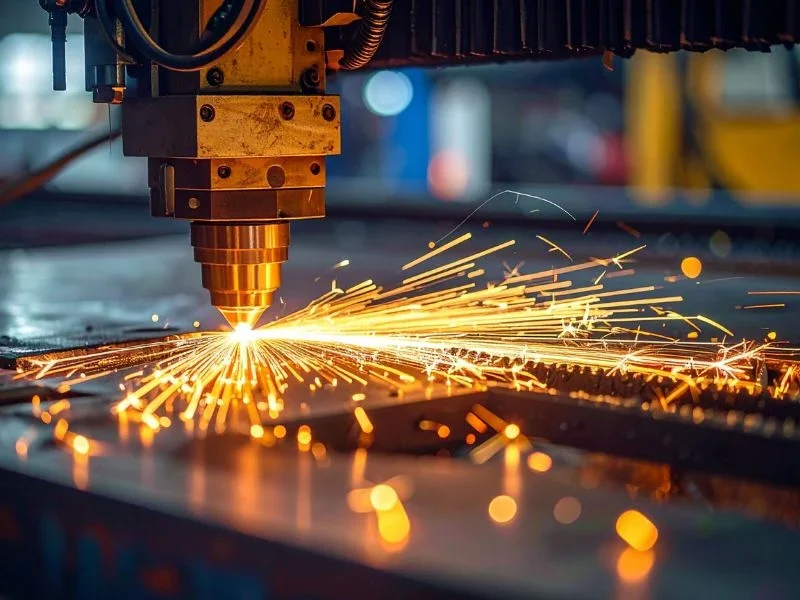
Sizing Laser Power by Thickness, Not by Brochure
The two questions that decide a sheet metal laser purchase are always the same: what thickness and material do you actually run, and what is the budget. Everything else follows from those two answers, and getting the first one wrong is what leaves shops paying for power they never use.
A 3 kW source cuts the mild steel, stainless and aluminium thicknesses that make up the majority of fabrication work, and it does so at lower running cost. Stepping to 6 kW buys speed on mid-range thickness and headroom on thick plate — worth it when the machine runs two shifts, hard to justify when it does not. We would rather size it correctly than sell the bigger number.
Tube and profile is a different machine, not a different setting — see the tube laser cutting machine page for round, square and structural section. This page is flat sheet and plate only.
Materials and thickness
| Material | 3 kW typical | 6 kW typical |
|---|---|---|
| Mild / carbon steel | up to ~16 mm | up to ~22 mm |
| Stainless steel | up to ~8 mm | up to ~14 mm |
| Aluminium | up to ~6 mm | up to ~12 mm |
| Brass | up to ~4 mm | up to ~8 mm |
| Copper | up to ~3 mm | up to ~6 mm |
Figures are working ranges for production-quality edges, not maximum pierce capability — a machine can always cut thicker than it can cut well. Send a drawing and your material list and we confirm the right power before quoting.
Grade matters as much as thickness. Stainless grade and surface finish — Outokumpu publishes the full range — decides whether a nitrogen-cut edge passes inspection downstream, and what mills such as Nucor actually stock often decides the thickness you run rather than the one you specified. For aluminium we work from the Aluminum Association alloy designations.
Aluminium with depth rather than aluminium sheet? A laser cuts through — it does not pocket, step, chamfer or tap. The moment the drawing has a feature with a Z dimension, the job moves off this page and onto a spindle: see CNC router for aluminum. Flat profiles and holes in volume stay here, where no tool wears and no chips are produced.
Machine specifications compared. Power is the wrong first question on sheet metal. The X5 at 3 or 6 kW is the general-purpose plate cutter; the X6040 runs a quarter of that power but on a marble frame at 1.5 G, which is what actually produces thin-gauge parts fast and to ±0.02 mm; the X6 is a tube machine and cuts no flat sheet at all.
| Specification | X5 | X6040 | X6 |
|---|---|---|---|
| Working format | 3000 × 1500 mm sheet | Thin-gauge sheet, high speed | Tube & profile, to 6000 mm |
| Laser power | 3000 W / 6000 W | 1500 W | 6000 W |
| Positioning accuracy | 0.05 mm | ±0.02 mm | Within 0.15 mm over full length |
| Repeatability | — | ±0.005 mm | ±0.02 mm |
| Max speed | 60 m/min travel · 15–35 m/min cutting | 40 m/min | 50 m/min (Y-axis) |
| Max acceleration | — | 1.5 G | — |
| Frame / drive | Rack-and-pinion dual-drive moving gantry | Marble frame, dual-drive slide module | Imported screw + L6 rack |
| Rated power | 5 kW | 3 kW (excl. chiller and laser) | 10 kW |
| Net weight | 2000 kg | 1000 kg | 3500 kg |
Sheet Metals We Cut
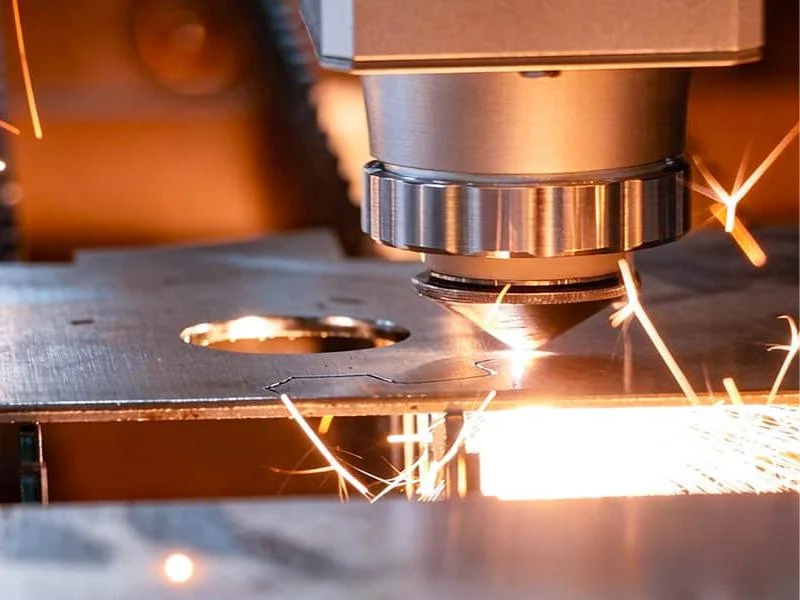
Carbon & Mild Steel
- Formats: Hot and cold rolled sheet and plate, 0.5–22 mm depending on source power
- Watch out: Oxygen cutting is fast on thickness but leaves an oxide skin that has to be pickled or blasted before coating — a whole extra process most quotes forget to price
- How we cut it: Nitrogen on the thinner end for an oxide-free edge that goes straight to powder coat; we set the gas by where the part is going, not by habit
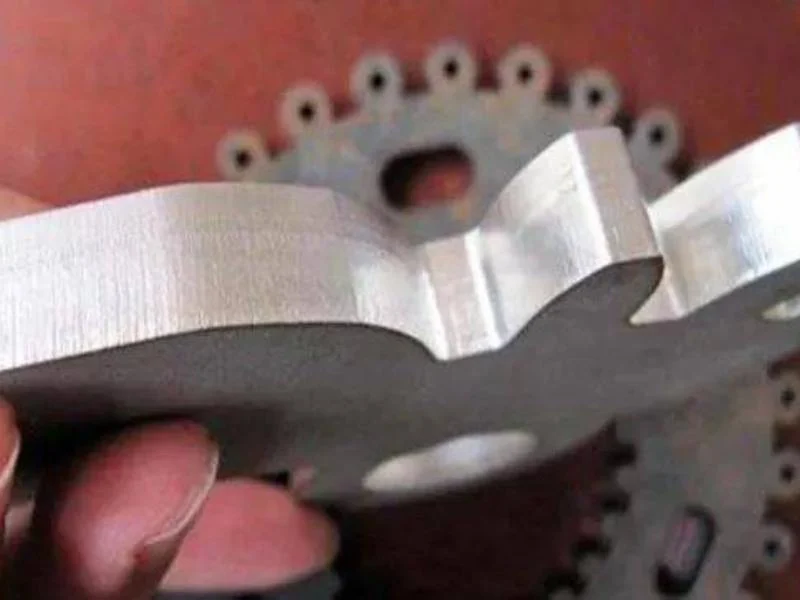
Stainless Steel
- Formats: 304, 316 and duplex, 0.5–14 mm, in 2B, brushed and mirror finish
- Watch out: The cut edge is the finished surface — a heat-tinted or dross-bearing edge fails inspection in food, pharma and architectural work no matter how accurate the profile is
- How we cut it: High-pressure nitrogen leaves a bright, corrosion-resistant edge that needs no polishing or passivation
Aluminium
- Formats: 5052, 6061 and 1050 sheet and plate, 0.8–12 mm, including pre-anodised and film-coated stock
- Watch out: Punching leaves a burr on every hit, and thin panel distorts from the mechanical shock long before the profile is finished
- How we cut it: A laser touches nothing — a 1 mm enclosure panel comes off flat and burr-free, ready to fold
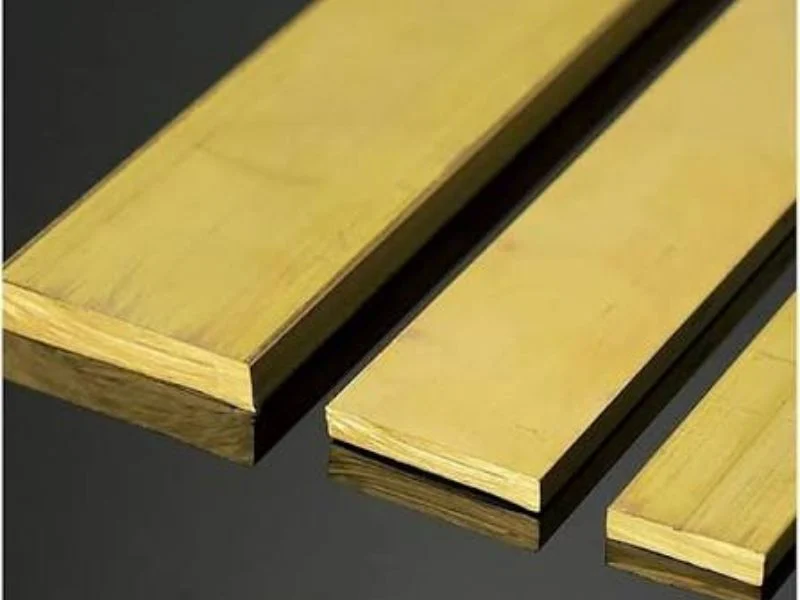
Copper & Brass
- Formats: Copper busbar to 6 mm and decorative brass to 8 mm at 6 kW
- Watch out: A CO2 laser cannot safely process these — the beam reflects rather than absorbs, which is a machine-damage risk, not just a quality one
- How we cut it: The 1064 nm fiber wavelength is absorbed by the material, so busbar and architectural brass become routine jobs instead of a subcontract
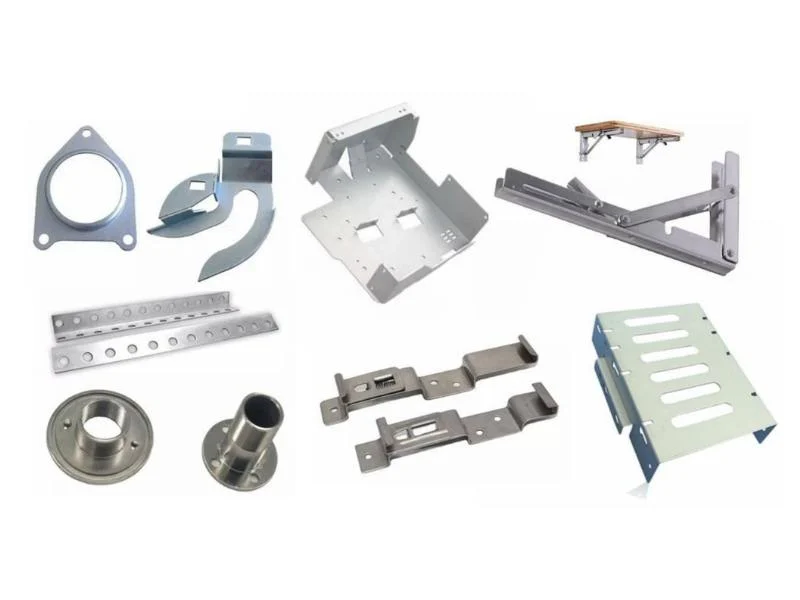
Enclosures, Brackets and Panels Cut From Sheet Metal
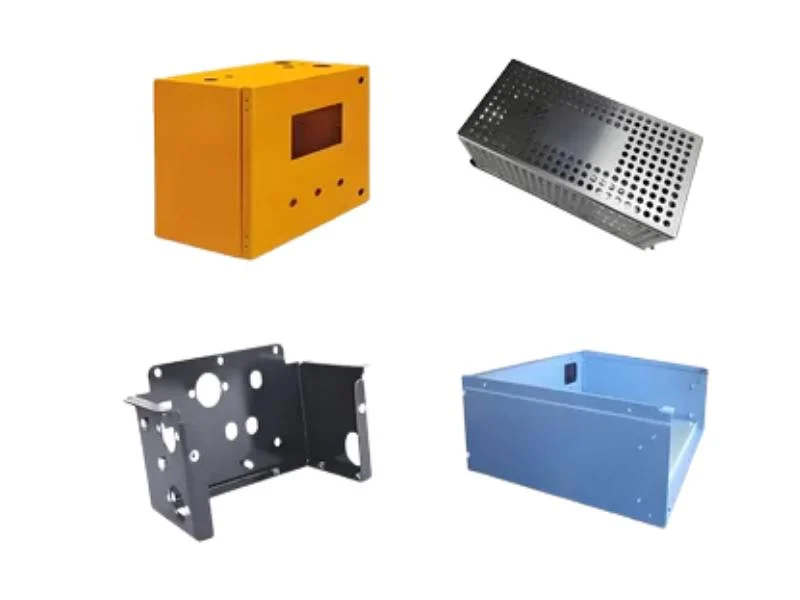
Enclosures & Electrical Cabinets
- Parts: Panels, doors, mounting plates and vent patterns in 1–3 mm steel and aluminium, 10–500 off
- The hard part: An enclosure only assembles if every hole, bend line and cut-out references the same datum — accumulate error across three processes and the door stops closing
- What you get: Every feature cut in one setup from one file, so the box folds and bolts together without adjustment
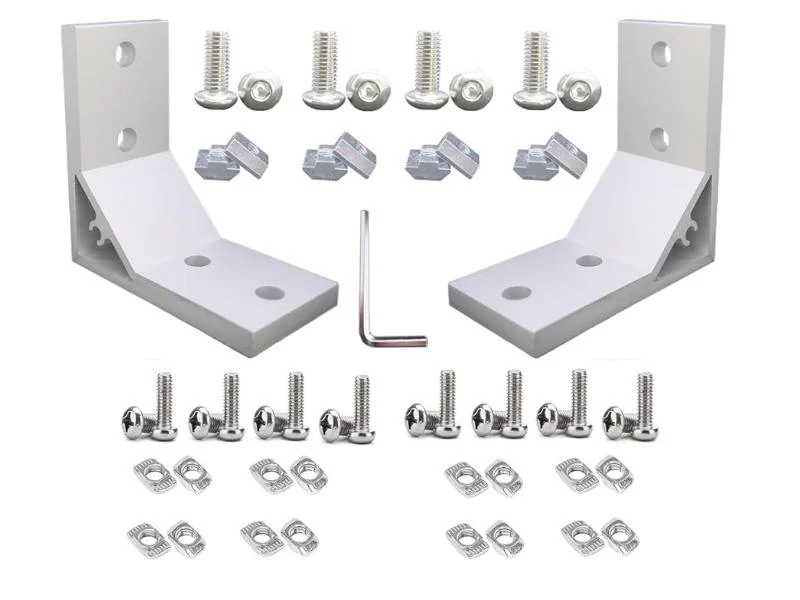
Machinery Parts & Brackets
- Parts: Brackets, gussets, mounting plates and machine guards, 2–12 mm, batches of one upwards
- The hard part: This work used to be gated by tooling — a punch and die set costs weeks and money, and a design revision writes both off
- What you get: Cut to drawing with no tooling at all; a revision is a new file, and batch-of-one costs the same per part as batch-of-fifty
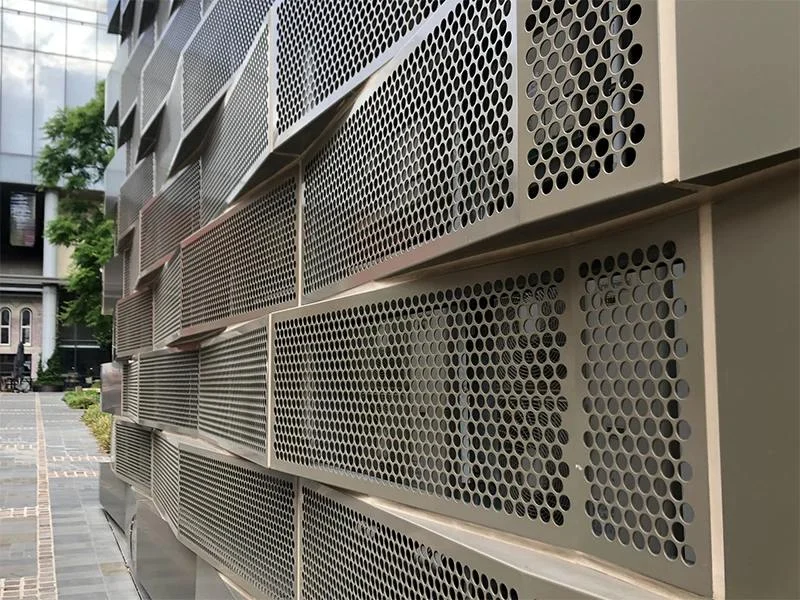
Architectural & Decorative Panel
- Parts: Perforated facades, screens, balustrade infills and signage letters in 1.5–6 mm stainless, aluminium and corten
- The hard part: The visible cut edge is the product, and a dense perforation pattern puts enough heat into thin sheet to buckle a whole panel if the cut sequence is wrong
- What you get: Nitrogen cutting plus heat-distributed nesting keeps large panels flat and edges clean enough to install unfinished
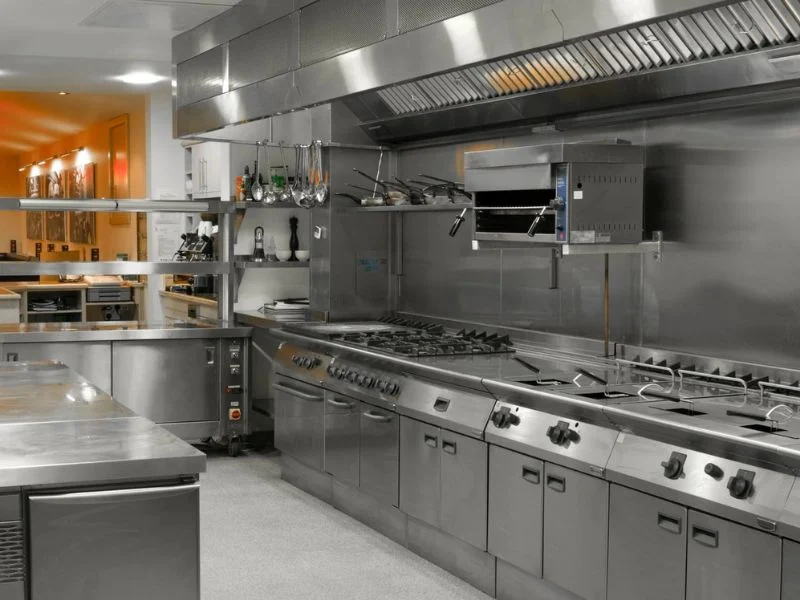
Kitchen Equipment & Food Machinery
- Parts: Worktops, splashbacks, tank panels and housings in 1–4 mm 304 and 316 stainless
- The hard part: Hygiene standards do not tolerate crevices or heat tint — a discoloured or rough edge is somewhere bacteria sits, and it fails audit
- What you get: A bright nitrogen-cut edge meets the requirement straight off the machine, with no secondary polishing to schedule
Recommended MNT Machines
Flat sheet runs on the X-series fiber platform. Pick by bed size and part scale — and by whether tube also comes through your shop.
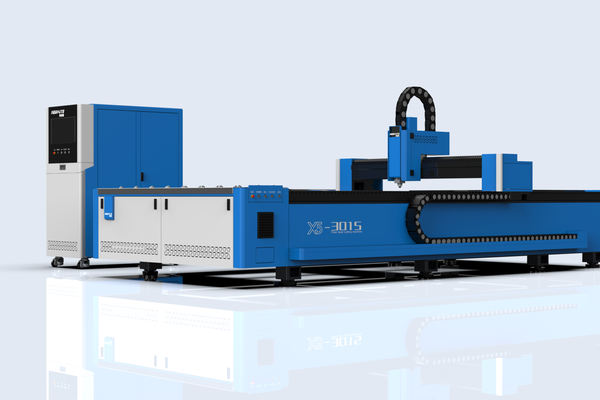
X5 Fiber Laser Metal Plate Cutter
- Cuts: Carbon steel, stainless, aluminium, copper and brass sheet and plate
- Specs: 3000 × 1500 mm · 3 kW / 6 kW · 0.05 mm · rack-and-pinion dual drive · 60 m/min travel
- Best for: General sheet-metal fabrication — the machine this page is about
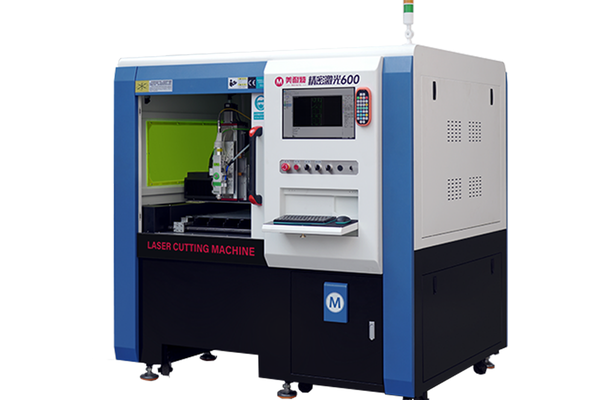
X6040 Precision Fiber Laser Cutter
- Cuts: Small precision metal parts, thin sheet, fine detail work
- Specs: Compact bed · marble base · enclosed safety door · high positioning accuracy
- Best for: Jewellery, electronics and small-part work rather than full sheets
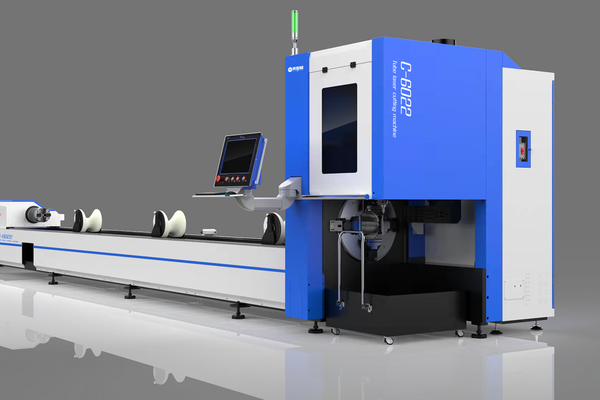
X6 Fiber Laser Tube & Profile Cutter
- Cuts: Round Ø 10–220 mm, square, angle, channel and H profile
- Specs: 6000 W · 6000 mm length · ±0.02 mm · self-centring 4-jaw chuck
- Best for: Shops where tube and profile arrive alongside flat sheet
Where a Fiber Laser Wins on Sheet Metal — and Where It Doesn't
A fiber laser is not the right answer for every metal cutting job, and pretending otherwise wastes everyone’s time. It dominates thin to mid-range sheet on edge quality, detail and running cost. It loses on thick plate, where the cut slows sharply and plasma or waterjet does the work more economically.
| Factor | Fiber laser | Plasma | Waterjet | Turret punch |
|---|---|---|---|---|
| Edge on 1–6 mm mild steel | Square, near-dross-free | Bevelled, dross | Clean, wet | Burr on every hit |
| Thin sheet (< 2 mm) | No distortion | Warps | Fine | Fine |
| Small holes & fine detail | Down to material thickness | Limited | Good | Tool-dependent |
| Tooling per shape | None | None | None | Punch and die per feature |
| Running cost per hour | Low (electricity + gas) | Low | High (abrasive) | Low, plus tool wear |
| Thick plate (> 25 mm) | Slows sharply | Economical | Best choice | No |
| Reflective copper / brass | Yes, fiber wavelength | Yes | Yes | Yes |
The honest boundary: under about 20 mm, a fiber laser is usually the best tool in the shop. Above 25 mm the economics turn, and we will point you to plasma or waterjet rather than sell a machine that will disappoint you at the thickness you actually need.
Why Sheet Metal Fabricators Choose the MNT X-Series
Most of what separates fiber lasers at this price point is the frame and the drive, not the laser source — sources are commodity, rigidity is not. About MNT (MEINAITE) — who builds it and where.
Distributor or OEM partner? Territory, spare-parts commitment and technical training are what decide whether a machine is worth carrying. Talk to us about partnership.
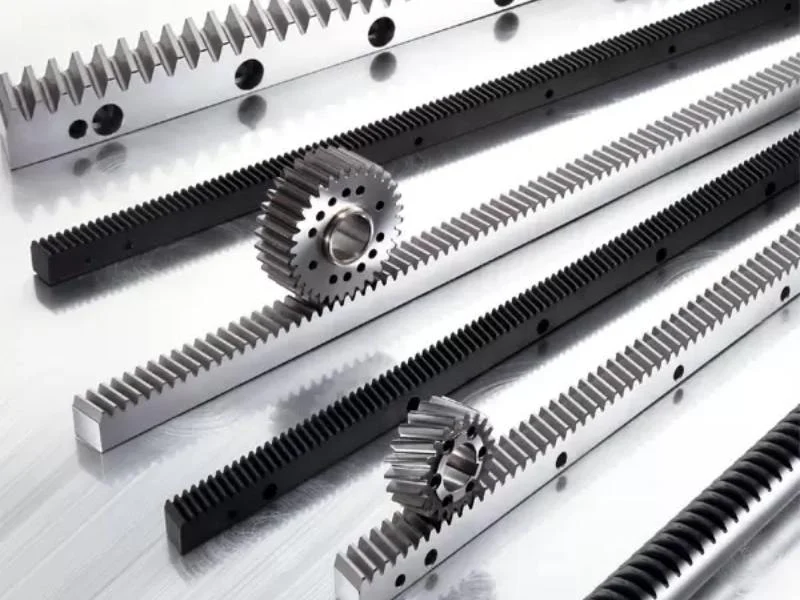
Frame and Drive, Not Just Wattage
- Heavy annealed steel frame — stress-relieved so accuracy holds over years, not months
- Rack-and-pinion dual-drive gantry with imported servos and ground guides
- 60 m/min travel speed without the chatter that shows up on the cut edge
- For distributors: sheet metal is the largest installed base in this catalogue and it replaces on a five-to-eight year cycle — what you are taking on is repeat capital equipment business, not a one-off sale
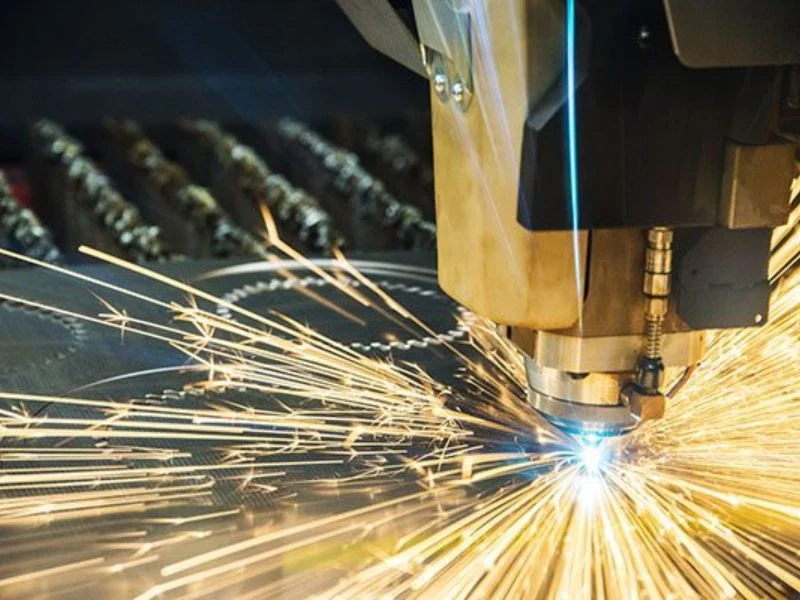
Power Sized to Your Work
- 3 kW and 6 kW both offered — we recommend by your thickness list, not by margin
- 100,000-hour source life; zoned extraction included, not an upsell
- 5 kW rated draw, 5000 × 3000 mm footprint — plan the floor before it ships
- For distributors: spare-parts commitment, territory and technical training are the three things that decide whether a machine is worth carrying — all three are set out on our partnership page
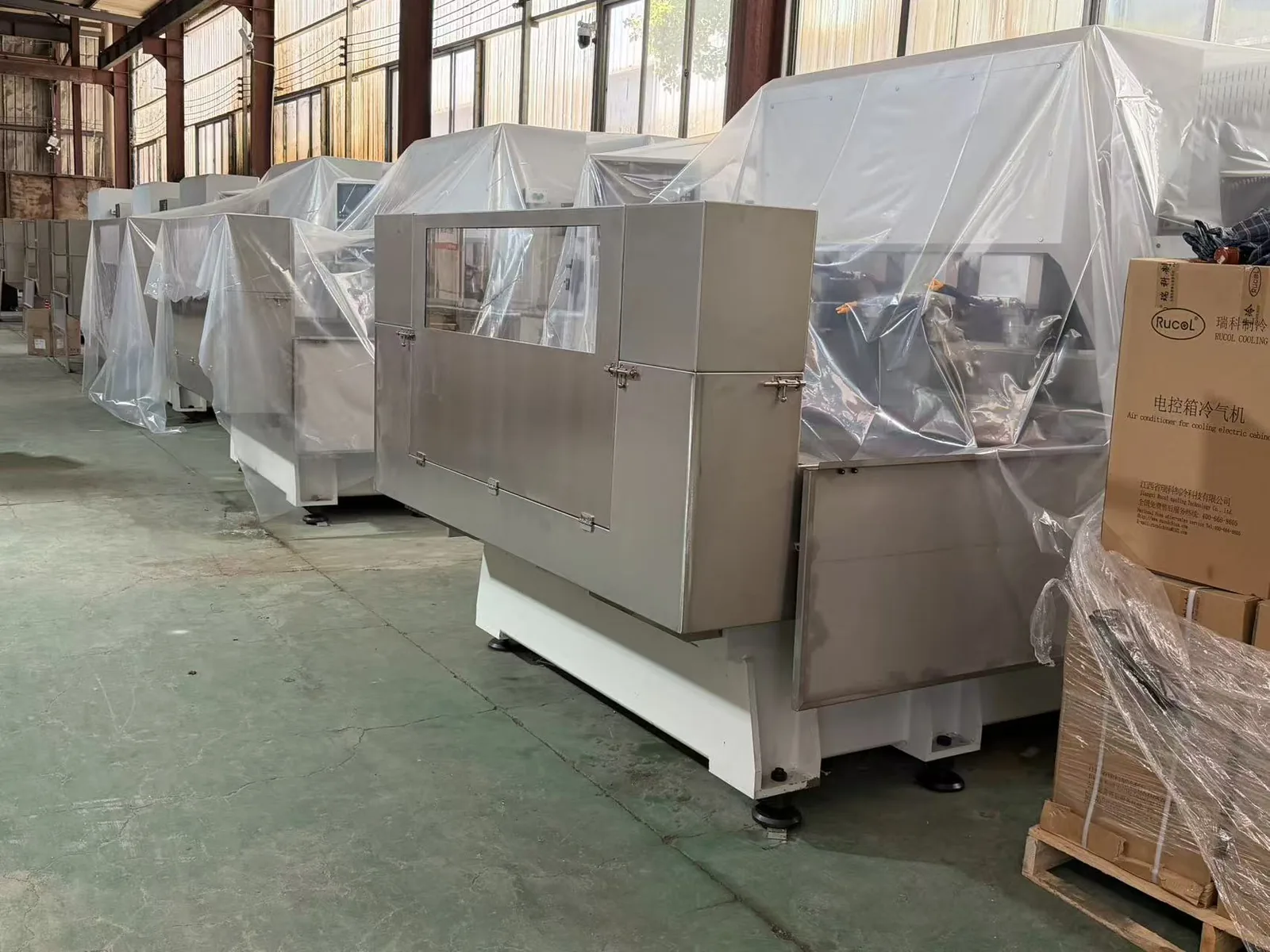
The Factory That Builds Your Fiber Laser
- Frames welded, annealed and machined in-house by Hangzhou Chaohan
- Every machine laser-calibrated before shipping, with the report supplied
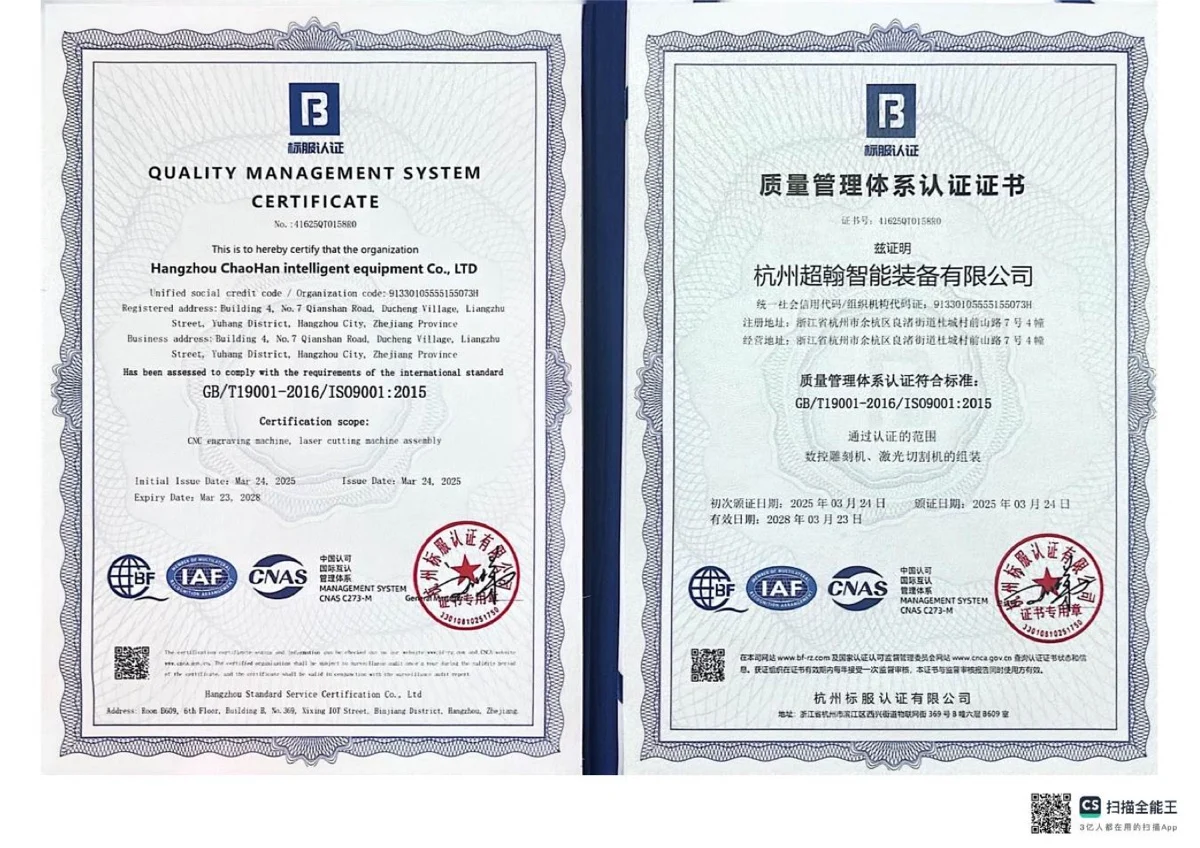
CE + ISO — Send a DXF for a Free Sheet Metal Sample
- CE-marked and ISO 9001:2015 certified, built by Hangzhou Chaohan
- Send a DXF and your material spec — we cut a free sample and send edge photos
- 12-month warranty, lifetime software updates, on-site commissioning and training
Specs are the standard X5 build: 3000 × 1500 mm, 3/6 kW, 0.05 mm positioning, 5 kW rated draw. Calibration report ships with the machine.
Frequently Asked Questions
What thickness can a sheet metal laser cutter handle?
At 3 kW: roughly 16 mm mild steel, 8 mm stainless, 6 mm aluminium. At 6 kW: about 22 mm mild steel, 14 mm stainless, 12 mm aluminium. These are production-quality ranges, not maximum pierce — any machine will cut thicker than it cuts well, and that gap is where disappointed buyers come from. Send your material list and we confirm the power you need.
How much does a sheet metal laser cutting machine cost?
A 3000 × 1500 mm fiber laser runs roughly USD 45,000 to 150,000 depending on source power, whether an exchange table and enclosure are included, and the chiller and extraction specification. A 3 kW open machine sits near the bottom; a 6 kW enclosed machine with automatic pallet changer near the top. Tell us thickness, material and volume for a factory-direct quote.
Should I buy 3 kW or 6 kW?
Choose by the thickness you run most days, not the thickest you have ever quoted. 3 kW covers the majority of fabrication work at lower running cost and lower purchase price. 6 kW buys speed on mid-range thickness and headroom above 15 mm — which pays back on a two-shift machine and is hard to justify on a one-shift one.
Can a fiber laser cut copper and brass?
Yes. The 1064 nm fiber wavelength is absorbed by reflective metals rather than bounced back, so copper busbar and decorative brass are routine — roughly 3 mm copper and 4 mm brass at 3 kW, doubling at 6 kW. This is the main capability a CO2 laser cannot match, and it is why fiber replaced CO2 for metal.
Fiber laser or plasma for thick plate?
Plasma, above about 25 mm. A fiber laser slows sharply on thick plate and the running cost per part climbs, while plasma cuts it economically and the edge quality difference matters less on heavy structural work. Below 20 mm the laser wins clearly on edge quality, small-hole capability and no-dross finish.
Does it also cut tube and profile?
No — the X5 is a flat sheet machine. Round, square and structural profile needs a chuck and a rotary axis, which is the X6 tube laser. Shops doing both normally run one of each rather than compromising with a combination machine, because the tube side is where a compromise machine gives up the most.
What gases does it need?
Oxygen for thicker carbon steel (faster, leaves an oxide edge), nitrogen for stainless, aluminium and any part going straight to coating (bright oxide-free edge, higher gas consumption). Most shops plumb both. Nitrogen cost is a real line item at volume — worth modelling before you commit to an all-nitrogen process.
What power supply and floor space does it need?
AC 380 V / 50 Hz three-phase, 5 kW rated draw for the standard build, with a 5000 × 3000 mm footprint plus room for sheet loading and the chiller. Request the installation drawing when enquiring — extraction ducting and chiller placement are easier to plan before the machine arrives than after.
Sheet Metal Laser Cutting — Technical Guides
Power, gas and process selection — the decisions that set what a sheet metal laser actually costs to own.
How to Choose a Sheet Metal Fiber Laser Cutter
Bed size, power and table configuration: how to size a sheet metal laser cutting machine against the thickness you run most days, not the thickest you have ever quoted.
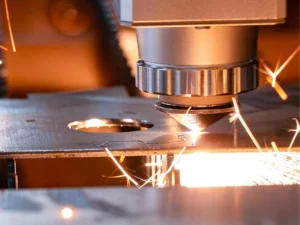
Assist Gas Guide for Sheet Metal Fiber Laser Cutting
Oxygen for thick carbon steel, nitrogen for a bright oxide-free edge. Gas is a real running-cost line on a sheet metal laser, and worth modelling before you commit.
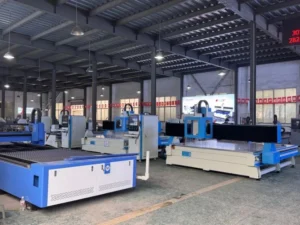
Fiber Laser Cutting Thickness Chart: What 3 kW and 6 kW Actually Cut
3 kW or 6 kW? What each buys you in thickness and speed on mild steel, stainless, aluminium, copper and brass — and when the bigger source does not pay back.
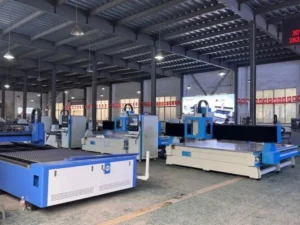
X5 vs X6 vs X6040 Fiber Laser Cutter Comparison
Flat sheet, tube or small precision parts — which X-series machine matches the work coming through your shop.
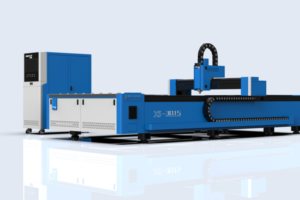
X5 Fiber Laser Cutter Maintenance Checklist
Holding 0.05 mm positioning past year one: optics, guides, chiller and the checks that protect cut quality.
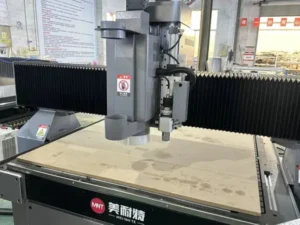
CNC Machine Loading: Manual, Vacuum Lifter or Automated Loader?
A 3 mm steel sheet at 1500 x 3000 mm weighs 106 kg — what your material actually weighs, and how to get it on and off the bed without hurting anyone.
Send a DXF for a Free Sheet Metal Sample Cut
Send your material, thickness range, sheet size and monthly volume — we cut a free sample on an X5, send edge photos, and recommend 3 kW or 6 kW honestly.