Choosing between an oscillating knife and a laser to cut leather looks like a simple equipment decision. It is not. The two tools damage leather in completely different ways, and picking the wrong one shows up on every finished edge you ship. This guide compares them on how they cut, edge quality, speed, materials, cost and safety, so you can match the method to the leather you actually run.
The Short Answer: Knife for Leather, Laser for a Few Synthetics
For genuine leather and most synthetic leather, an oscillating knife is the right choice. It cuts cold, so there is no scorching, no darkened edge and no burnt smell — and it runs up to 6× faster than hand cutting at ±0.1 mm precision. A laser earns its place only on thin synthetic sheets where a sealed or engraved edge is acceptable.
The reason sits in one word: heat. Leather is a natural, collagen-based material, and heat changes its color, hardens its edge and leaves an odor. A knife applies no heat; a laser is nothing but heat. Everything below follows from that single difference.
The stakes are higher than they first appear. A cutting method you choose once affects edge quality, scrap rate, labor and workshop safety on every order for years. That is why it pays to decide on how each tool treats leather, not on headline speed or price alone.
How Each Method Cuts — Cold Blade vs Focused Heat
An oscillating knife cuts mechanically and cold; a laser cuts by burning a narrow line through the material. That is the root difference every other trade-off grows from.
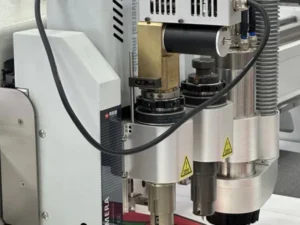
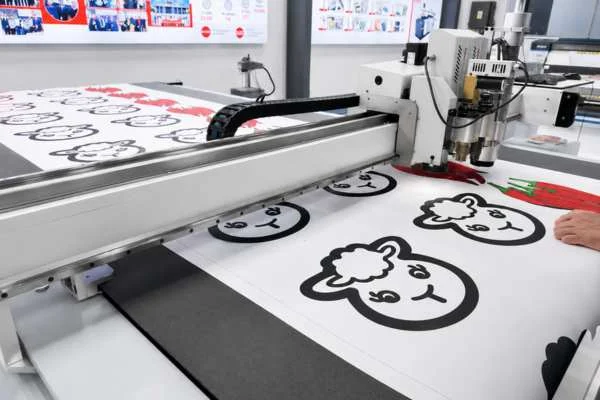
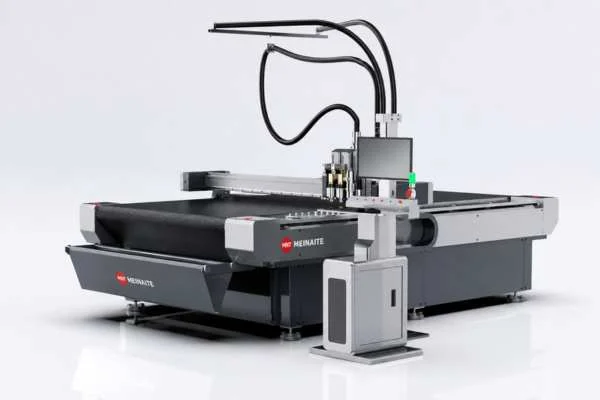
On a knife machine, a servo-driven head carries a blade that vibrates vertically tens of thousands of times per minute. The blade slices along a programmed path while a vacuum table holds the hide flat and a CCD camera follows printed edges or registration marks. No part of the process gets hot, so the fibre structure of the leather is left intact.
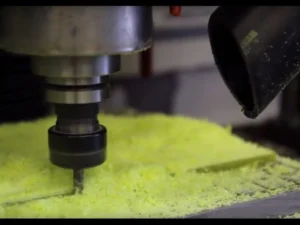
A laser works the opposite way. It focuses a beam to melt, burn or vaporize a thin kerf through the material. Around that kerf sits a heat-affected zone where the material is cooked but not removed. On steel that zone is invisible. On leather, it is a scorched, discolored band you cannot hide.
The heat-affected zone is the hidden cost of cutting leather with a laser. Genuine leather is built from collagen fibres that denature and shrink when heated, which is why a laser edge feels stiff and looks darker than the surrounding hide. Chrome-tanned and vegetable-tanned leathers react differently to that heat, but neither reacts well — the change is chemical, not just cosmetic, so it cannot be buffed out after the fact.
This is why the comparison is not really “which cuts faster” but “which cuts leather without ruining it.” A knife treats leather as a material to separate; a laser treats it as a material to burn through.

Edge Quality — the Deciding Factor for Leather
On genuine leather, the oscillating knife leaves a clean edge that goes straight to stitching, while the laser leaves a scorched edge that often becomes a reject. For products sold on appearance, edge quality alone settles the decision.
Leather is judged at the cut line. A cold-cut edge keeps the natural grain, the true color and a soft hand, because the fibres are sheared rather than cooked. Parts come off the table ready for the next operation, with no sanding, sealing or trimming to hide a damaged edge.
A laser edge on natural leather tells a different story. The heat darkens the cut line to a brown or black band, stiffens the leather, and leaves a burnt smell that lingers in the finished good. On light-colored hides the discoloration is obvious; on chrome-tanned leather the odor is hard to remove. In automotive interiors, luxury bags and footwear, that edge is scrap.
There is also consistency. Because the knife applies the same mechanical action on every part, the edge looks identical across a full batch — which matters when stitch lines from many cut pieces have to line up on one seat cover or shoe upper.
That edge quality feeds straight into scrap and rework numbers. A scorched laser edge on a visible panel becomes a reject or a slow hand-finishing step, while a clean knife edge moves to stitching untouched. On expensive hide, cutting fewer rejects is often worth more than any raw speed difference between the two methods.
Speed, Thickness and Multi-Layer Cutting
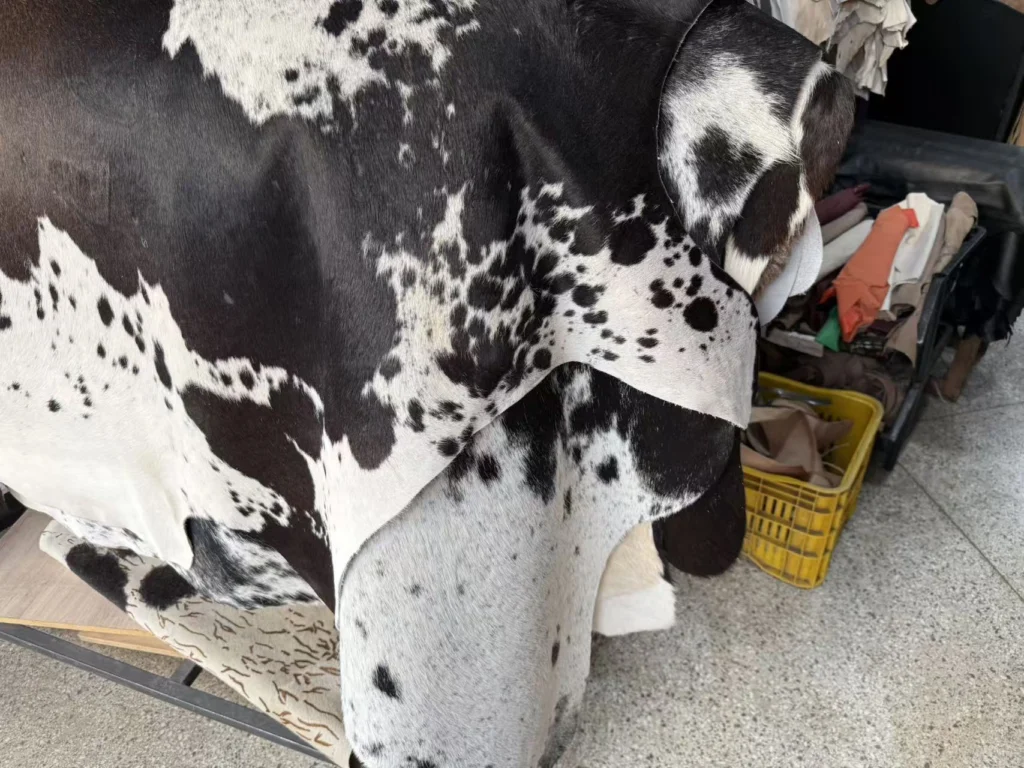
The knife is faster on real leather and can cut stacked layers; the laser slows down on thickness and cannot stack. For volume production, that gap compounds across every shift.
An oscillating knife cuts most leather in a single pass and runs up to 6× faster than hand cutting, holding ±0.1 mm accuracy. On rigid material it handles thicknesses up to around 50 mm, depending on the tool. Speed stays steady because the blade does not have to “work harder” on darker or denser leather the way a laser does.
Multi-layer is where the knife pulls ahead for footwear and bags. After vacuum adsorption holds the stack flat, the blade cuts through roughly 1–10 mm of stacked leather in one pass without the layers shifting, so one machine replaces several hand cutters on a line. A laser cannot reliably stack leather — the lower layers char before the beam clears the top ones.
The throughput gain shows up clearest on a footwear or bag line. When one machine stacks and cuts several layers per pass, it does the work of multiple hand cutters, and nesting software arranges parts to fit more of them onto each hide. Over a shift, that combination of multi-layer cutting and tight nesting is what turns a faster cut into a lower cost per part, not just a quicker one.
Consistency matters as much as peak speed. Because the knife’s result depends on blade and depth rather than beam power, tuning it for a new leather is quick and repeatable, so a line reaches stable output faster than one balancing laser speed against burn on every material change.
A laser can be quick on very thin, uniform synthetic sheet. But on genuine hide, thickness variation and the risk of burning force it to slow down, which erases any speed it had on paper.
Which Leather Each Machine Can Handle
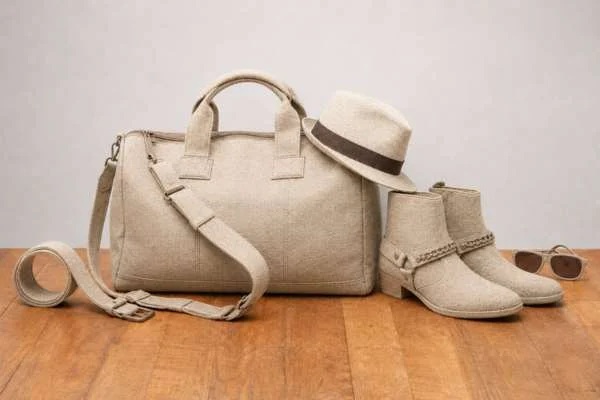
The oscillating knife handles the full leather family; the laser is limited to thin synthetics and even there it burns natural fibres. Material range is a practical reason mixed workshops standardize on the knife.
A knife cuts genuine leather (cowhide, sheepskin, full-grain, split), PU leather, PVC leather, microfiber leather and bonded or recycled leather — with the same machine, just by changing blade and depth. It also crosses over to felt, foam, rubber and EVA when a plant runs mixed materials, so one bed covers more of the shop.
A laser is realistically confined to thin PU or PVC sheet where a sealed edge or an engraved pattern is the goal. Put genuine leather under it and the collagen scorches; put thick or stacked leather under it and it cannot finish the cut. The narrower the material list, the narrower the case for a laser.
Each material still behaves differently under the blade, and a good setup accounts for that. Soft genuine hide cuts cleanly at moderate speed; dense microfiber for sports footwear needs a sharper blade and steadier feed; thin PU for fashion goods cuts fast but relies on vacuum hold-down so it does not lift. One knife platform adapts to all of them by changing blade and depth, rather than forcing you to buy a second machine for each material.
PVC leather and bonded leather round out the range. PVC-coated synthetic cuts cleanly and is common in cases and cost-sensitive goods; bonded or recycled leather — a reconstituted fibre sheet — cuts without fraying under a sharp blade, but would scorch and delaminate under a laser. Once any real thickness is involved, neither is a laser-friendly material.
Detail, Complex Shapes and Small Parts
Both methods follow complex outlines, but the knife holds size and edge on small leather parts where laser heat would distort them. For intricate work, the question is again whether heat helps or hurts.
An oscillating knife traces tight curves, notches and internal cut-outs at ±0.1 mm, and because it applies no heat, small parts keep their exact dimensions — critical when dozens of cut pieces have to assemble into one product. A drag or tangential tool turns corners cleanly without over-cutting past the line.
A laser can follow even finer detail and is unmatched at engraving or perforating a surface. But on small, solid leather parts, the heat around many close cut lines can darken and stiffen the whole piece. So for fine surface marking a laser wins; for small structural leather parts, the knife wins.
Cost, Safety and Running Considerations
Beyond the cut itself, a laser adds fume extraction, ventilation and consumable costs that an oscillating knife avoids. The total running picture, not just the sticker price, favors the knife for leather.
Burning leather produces smoke and odor, so a laser needs fume extraction and proper ventilation to keep the workshop safe and compliant. It also carries optical consumables — lenses and, on CO₂ systems, the tube — that wear and need replacement, plus the energy to drive the beam.
An oscillating knife has a simpler running profile. Its main consumable is the blade, which is inexpensive and quick to swap, and it produces no smoke or fumes, so ventilation demands are minimal. Maintenance is mechanical and predictable rather than optical.
Neither machine is free to run, but the knife keeps costs where a plant can see and plan them — blades and routine service — instead of adding air-handling and optics to the bill.
Over the life of the machine, those differences add up. A knife’s blades are a small, steady line item; a laser’s optics, tube and air-handling are larger and less predictable, and downtime for optical service takes the machine off the floor. For a plant costing a leather line, the knife’s running profile is easier to budget and keep producing.
When a Laser Still Makes Sense
A laser is not the wrong tool everywhere — for thin synthetic sheet, sealed edges, engraving or fine filigree, it can beat a blade. Being honest about that is how you make the right call rather than a dogmatic one.
If your work is thin PU or PVC and you actually want a heat-sealed edge that resists fraying, a laser delivers that in one step. It is also strong at surface engraving, decorative perforation and marking, and at intricate filigree patterns finer than a blade can physically follow.
It also depends on volume and finish. A short run of thin synthetic labels with a sealed edge is a natural laser job; a production run of leather seat panels is not. Matching the tool to both the material and the finish you sell keeps you from paying for capability you will not use.
The line is simple. If the material is genuine leather, thick, stacked, or judged on a natural edge, choose the knife. If it is thin synthetic and you want an engraved or sealed look, a laser can be the better fit. Most leather production sits firmly on the knife side of that line.
Oscillating Knife vs Laser for Leather: Full Comparison
The table below summarizes how the two methods compare across the factors that decide a leather-cutting purchase.
| Criteria | Oscillating Knife | CO₂ Laser |
|---|---|---|
| Cutting principle | Cold mechanical cut | Thermal — burns through |
| Edge on genuine leather | Clean, true color, ready to stitch | Scorched, darkened, stiff |
| Smell & smoke | None | Burnt-leather odor, fumes |
| Grain & color | Preserved | Heat discoloration |
| Multi-layer stacking | Yes (≈1–10 mm) | Very limited |
| Thick / rigid material | Up to ≈50 mm (rigid) | Thin only |
| Speed vs hand cutting | Up to 6× faster | Slower on thick / dense |
| Precision | ±0.1 mm | Kerf <0.5 mm |
| Ventilation / fumes | Minimal | Fume extraction required |
| Main consumable | Blade (low cost) | Lens / tube, energy |
| Best fit | All leather, multi-layer, production | Thin synthetics, engraving |
Bottom Line for Leather Producers
For genuine leather, PU, PVC and microfiber — single-layer or stacked — the oscillating knife is the production choice. It delivers clean, cold-cut edges at speed, handles the full material range, and keeps running costs simple.
Reserve the laser for thin synthetic sheet where a sealed or engraved edge is the actual goal. For everything a leather workshop typically cuts, the knife protects the one thing customers judge first: the edge. See the full specification, tooling and material range on our leather cutting machine.
Before you commit, run your own leather through both methods if you can. A cutting test on your real material shows the edge, the smell, the speed and the multi-layer behavior far better than any spec sheet, and it removes the guesswork from a decision your production will live with for years.
The decision rarely comes down to a single number. It comes down to whether your finished product is judged on its edge — and for leather it almost always is. Choose the method that keeps that edge clean under real production conditions, and the rest, from speed to running cost to safety, tends to follow.

FAQ
Can a laser cut genuine leather at all?
Technically yes, but it burns the edge — scorching, discoloration and a persistent smell — so for genuine leather judged on appearance it is generally unsuitable. An oscillating knife cold-cuts without heat damage, keeping the grain and color intact.
Is an oscillating knife faster than a laser for leather?
For most leather, yes — especially on thicker or stacked material, where the knife cuts in one mechanical pass while a laser slows down and risks burning. The knife runs up to 6× faster than hand cutting at ±0.1 mm.
How many layers of leather can an oscillating knife cut?
Roughly 1–10 mm of stacked leather in a single pass, depending on hardness and blade. Vacuum adsorption holds the stack flat so every layer keeps its dimensions — common in footwear and bag production.
Which leather types suit an oscillating knife?
Genuine (cowhide, sheepskin), PU, PVC, microfiber and bonded leather, single or multi-layer. The same machine also cuts felt, foam and rubber if your line runs mixed materials.
Does knife cutting leave a cleaner edge than laser?
Yes. Cold cutting shears the fibres instead of cooking them, so there is no carbonized edge, no discoloration and no odor. Parts are ready for stitching without post-processing.
Does a leather laser cutter need ventilation?
Yes. Burning leather produces smoke and odor, so a laser requires fume extraction and proper ventilation. An oscillating knife produces no fumes, so its ventilation demands are minimal.