
CNC Routers for Cutting & Machining Thick PTFE (Teflon) Plate
Cut, slot and profile solid PTFE and Teflon plate on an MNT (MEINAITE) CNC router — clean edges, precise depth and no toxic fumes. Real specs, real tolerances, real customer footage below.
What Is PTFE (Teflon), and Why Does It Machine Differently?
| Property | Typical value | Why it matters when cutting |
|---|---|---|
| Melting point | ~327 °C (621 °F) | Overheating melts/decomposes the edge |
| Service temperature | −260 to +260 °C | Wide use range; degrades above ~260 °C |
| Density | 2.15 g/cm³ | Heavy for a plastic; stable stock |
| Hardness | Shore D ~60 | Soft — needs very sharp tools |
| Coefficient of friction | 0.05 – 0.10 | Slippery — must be clamped/vacuumed down |
| Dielectric strength | ~60 kV/mm (εr ≈ 2.1) | Why it is used for insulators |
| Linear thermal expansion | very high (~±1.3% over 32–212 °F) | Heat = dimension drift, so keep it cool |
What Is the Best Way to Cut Thick PTFE Plate?
| Method | Best for | On thick PTFE plate | Edge & limits |
|---|---|---|---|
| CNC router (spindle milling) | Profiles, slots, holes, batch parts | Recommended | Clean edges with sharp tools; dry; needs dust extraction |
| Laser | Thin non-fluoropolymers | Not suitable | PTFE decomposes & releases toxic fluoride fumes; charred edges |
| Waterjet | Very thick blanks | Works (cold cut) | No heat, but wet, slower for fine detail, no 3D/tapped features |
| Band saw | Fast straight blanking | Rough cut only | Coarse blade needed; no profiling/slots; melts if forced |
How Do You Cut PTFE Cleanly, Without Fraying or Powdering?
- Sharp, polished carbide tooling (0–15° rake) — sharp edges shear PTFE instead of tearing it into fuzz.
- Controlled speeds & steady feed — enough feed to cut, not so much spindle dwell that the bit whips soft PTFE into powder.
- Dust extraction — the spindle shroud and vacuum pull the fine PTFE chips away from the cut.
- Vacuum / clamped fixturing — PTFE is slippery (µ 0.05–0.10) and thin parts move; holding it flat prevents drift and chatter.
- Shallow passes to manage heat — because PTFE expands so much with heat, light passes keep the part cool and on-dimension; anneal + finish pass for the tightest tolerances (down to ±0.0005″ on precision work).
Which MNT CNC Router Should You Use for PTFE?
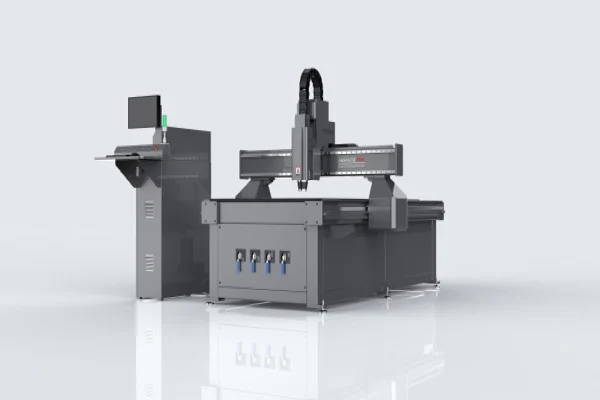
T5 Precision CNC Router
- Cuts: Solid PTFE plate & block; also acrylic, aluminum, composites
- Specs: 1300 × 2500 mm bed · 5.5 kW spindle · servo drive
- Best for: Gaskets, seals & small-batch PTFE parts
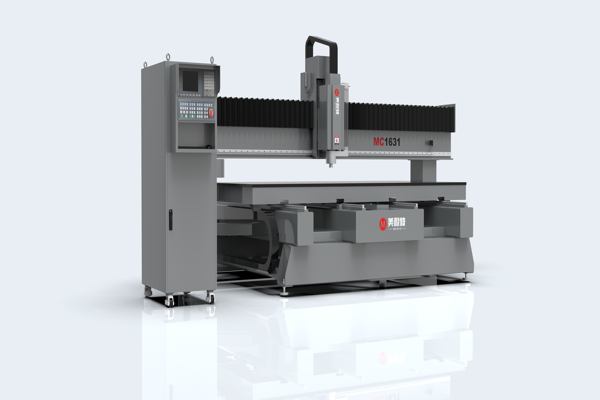
M3015 CNC Engraving & Machining Center
- Cuts: PTFE, filled PTFE & engineering plastics; aluminum, composites
- Specs: 9 kW ATC spindle · 8-tool changer · ±0.02 mm accuracy
- Best for: Insulators, valve seats & multi-operation precision PTFE parts
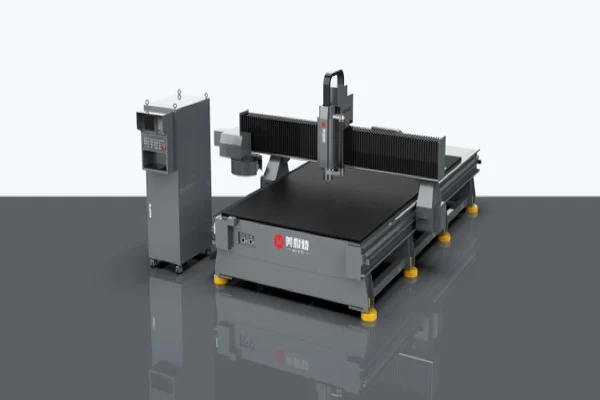
M4020 Large-Format CNC Machining Center
- Cuts: Large PTFE plate; acrylic, aluminum, composites
- Specs: 4000 × 2000 mm bed · 9 kW ATC spindle · 8-tool changer
- Best for: Big PTFE plates & higher-volume production
See It Cutting — Real Customer Footage
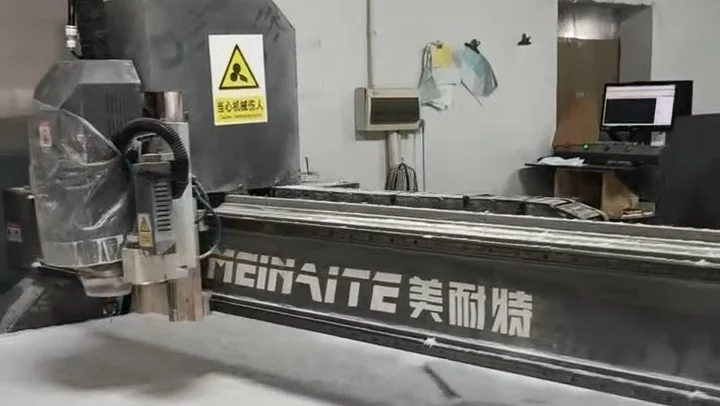
T5 Cutting Thick PTFE Plate
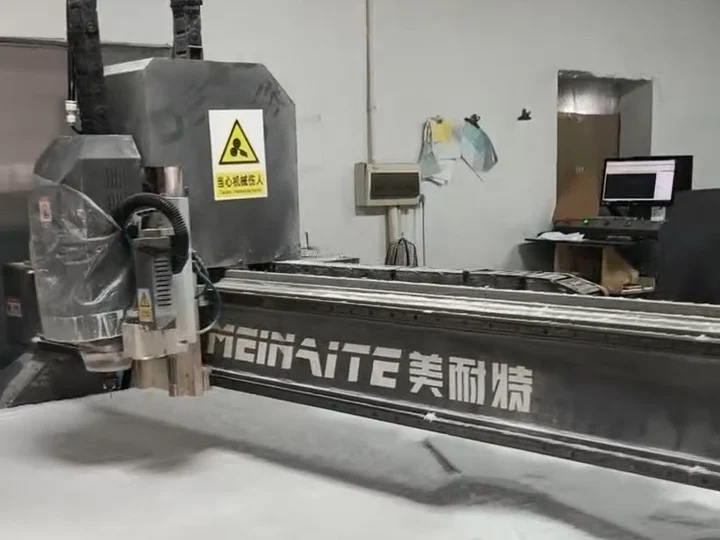
Real production footage filmed on a customer's shop floor: the MNT T5 milling a thick PTFE plate with a rotating spindle.
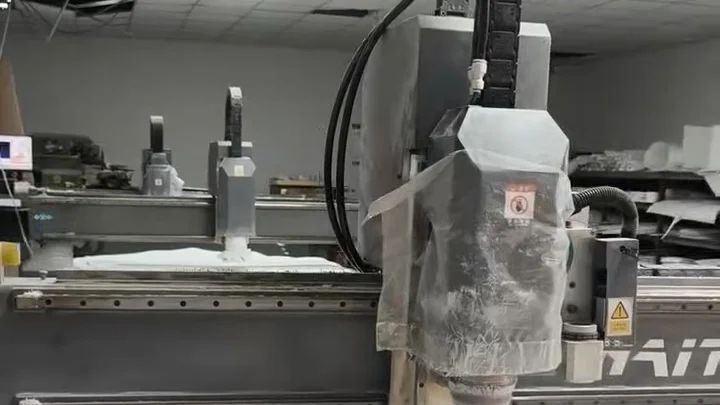
Machining a Solid PTFE Block
A second on-site clip showing clean, precise cutting of solid PTFE stock — no burnt edges, full depth control.
What PTFE Parts and Industries Do These Machines Serve?
- Sealing: gaskets, flat and ring seals, O-ring backups, valve seats, flange gaskets, spacers.
- Low-friction: bushings, bearings, sliding washers, wear strips, guide rails, manifolds.
- Electrical: insulators, standoffs, bushings, connector bodies (dielectric strength ~60 kV/mm).
- Industries: semiconductor & electronics, medical, automotive, chemical processing, oil & gas, food processing, aerospace.
| Property | PTFE | Nylon | POM (Acetal) | PEEK |
|---|---|---|---|---|
| Max service temp | ~260 °C | ~120 °C | ~100 °C | ~250 °C |
| Friction | Lowest (0.05–0.10) | Medium | Low | Low |
| Chemical resistance | Excellent | Fair | Good | Excellent |
| Machining note | Soft; sharp tools + support | Absorbs moisture | Cuts crisp | Hard; abrasive on tools |
Why Buy Your PTFE Cutting Machine From MNT
Beyond the machine, MNT (MEINAITE) backs every PTFE job with safe cold-cut process control, certified factory quality, pre-order sample cutting and worldwide engineering support.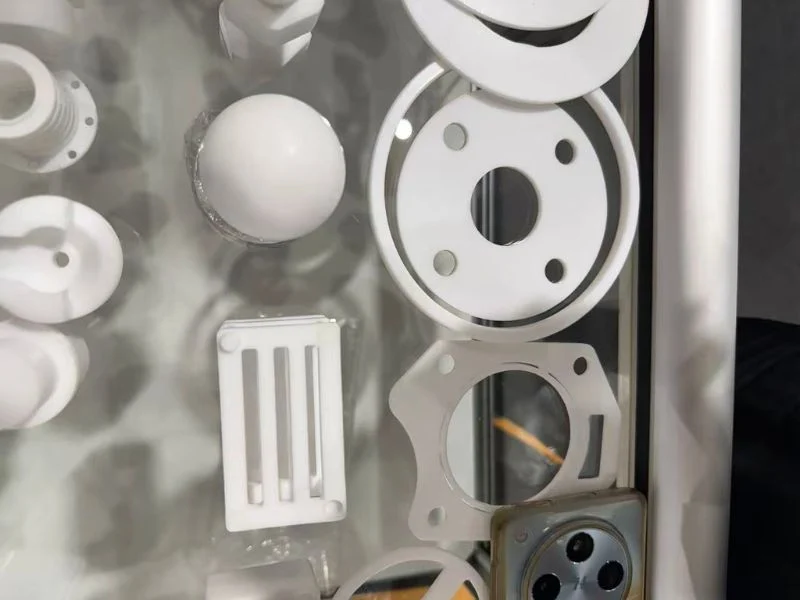
Safe, Fume-Free Cold Machining
- Spindle milling cuts PTFE dry and cold — no toxic fluoride fumes or charred edges like laser
- Dust extraction and vacuum fixturing keep the cut clean and the part flat
- How to cut PTFE without fraying
- For distributors: PTFE machining is a specialist trade with few credible suppliers and margins to match — buyers here compare on capability rather than on price, which protects your quote
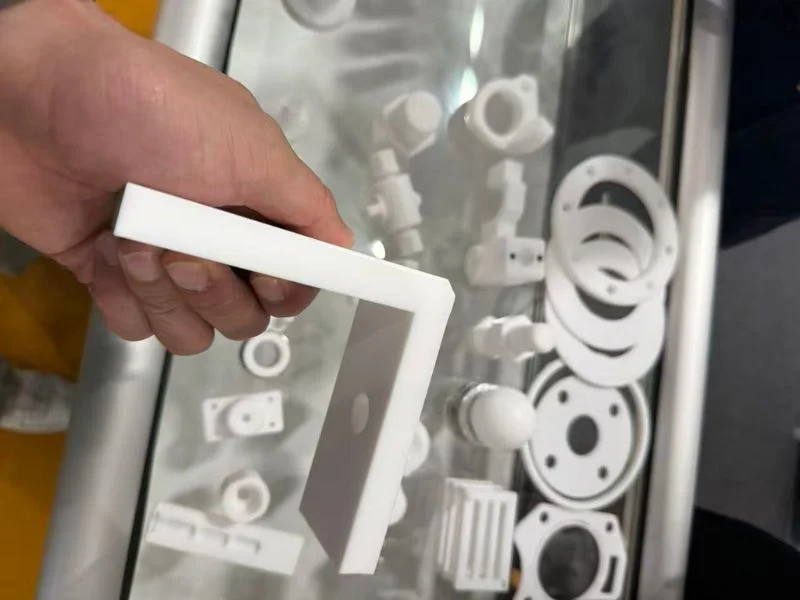
Precision to ±0.0005″ on PTFE
- Light passes plus annealing control PTFE's high thermal expansion
- Holds tolerances down to ±0.0005″ on precision work
- Repeatable part-to-part on seals, insulators and valve seats
- For distributors: spare-parts commitment, territory and technical training are the three things that decide whether a machine is worth carrying — all three are set out on our partnership page
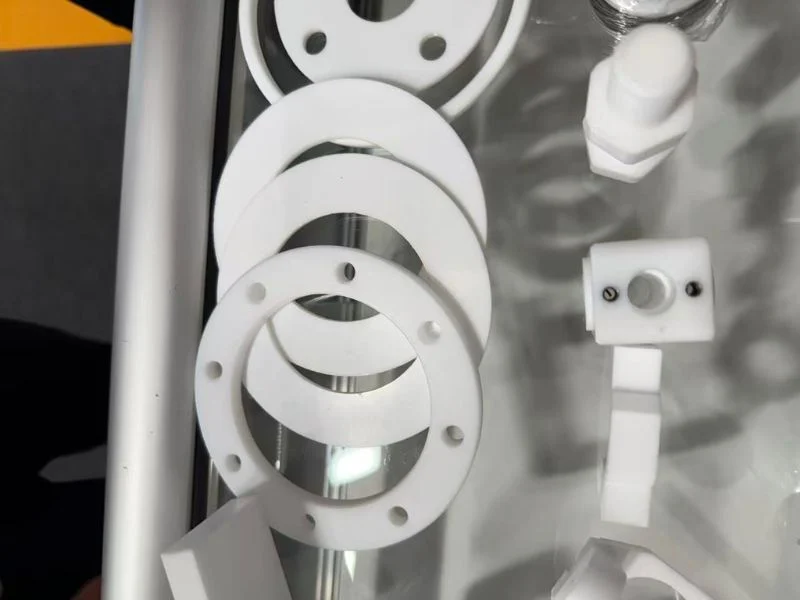
Free Sample Cut on Your PTFE Grade
- Send your drawing and grade — we run a free sample cut before you order
- Confirm edges, thickness and tolerance on your actual material
- Virgin or glass/carbon-filled PTFE and other engineering plastics
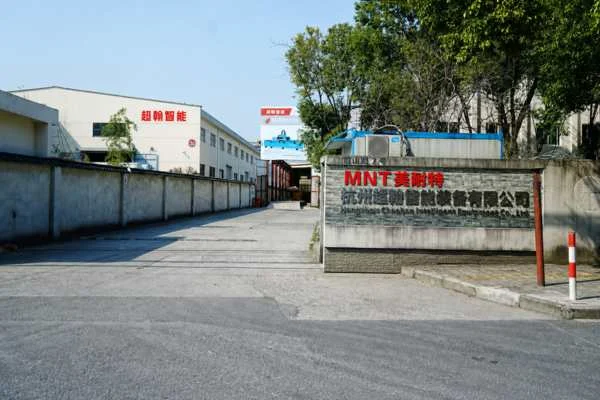
Factory-Direct — Certified for PTFE Machining
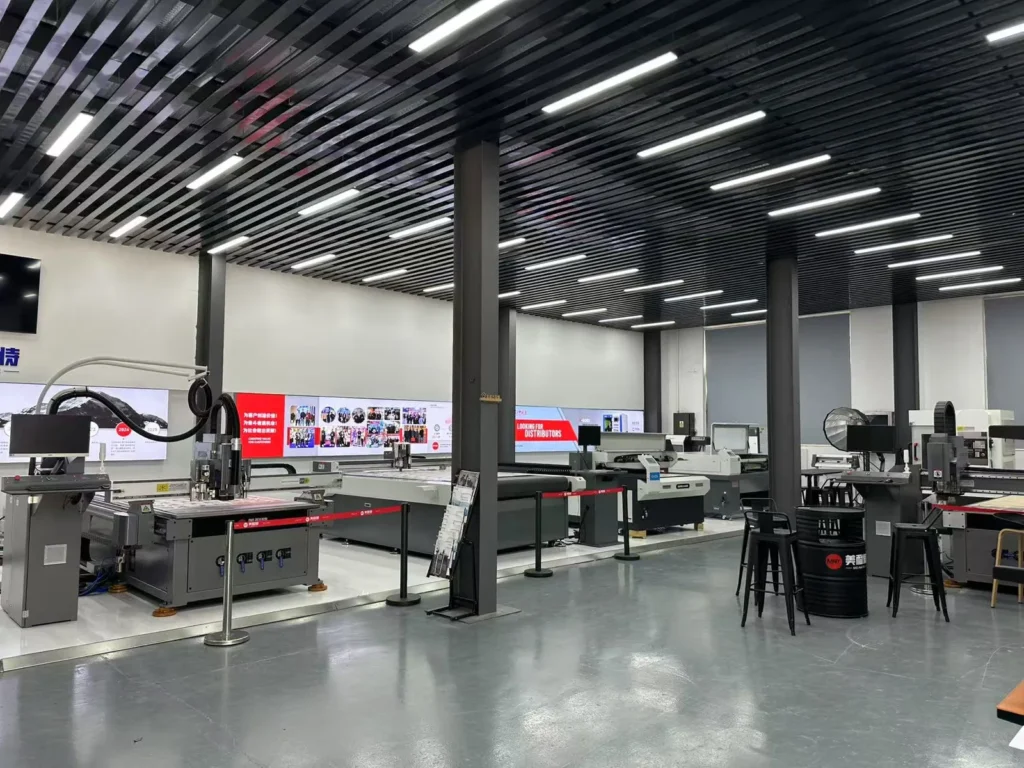
- Our own 10,000 m² Hangzhou Chaohan factory — tour it
- CE + ISO 9001 certified and tested before shipment — view certifications
- 1-year warranty, worldwide delivery and OEM — about MNT
PTFE / Teflon Cutting — Buyer FAQ
Can PTFE or Teflon be laser cut?
No. PTFE thermally decomposes above ~260 °C and releases toxic fluoride fumes, leaving charred edges. Thick PTFE should be machined with a rotating spindle (CNC router), which cuts cold and clean. Thin PTFE film is handled on a digital knife cutter, not on these routers.How much does a PTFE cutting machine cost?
Price depends on working size, spindle power and tool-changer configuration — an entry CNC router costs far less than a full ATC machining center. Send your part drawing, plate thickness and volume and we quote your exact setup within 24 hours.Is a CNC router or a waterjet better for cutting thick PTFE?
Use a router when you need clean 2D profiles, slots, holes and repeatable batch parts from plate — dry and in one setup. A waterjet suits very thick blanks where only an outline is needed, but it is wet, slower for fine detail and cannot cut slots, pockets or tapped features. Most finished PTFE components are routed.How do you stop PTFE from fraying or powdering when routing?
Fuzz and white powder come from friction heat and dull tools, not the router. Sharp polished carbide tooling, controlled speeds and feed, dust extraction, vacuum/clamped fixturing and shallow passes keep the cut clean and cool. Our engineers preset these for your grade.How thick a PTFE plate can these machines cut?
They machine solid PTFE plate, rod and block; the maximum in a single setup depends on the model's Z-axis travel and tooling. Send your plate thickness and drawing and we confirm which machine — T5, M3015 or M4020 — fits the job.What tolerance can you hold on machined PTFE?
Positioning accuracy reaches ±0.01 mm on the T5 and ±0.02 mm on the M3015 machining center. Achievable part tolerance depends on PTFE's high thermal expansion and fixturing; with light passes and annealing, precision work reaches ±0.0005″. We confirm realistic tolerances against your part.Do these machines cut filled PTFE and other plastics?
Yes — virgin and glass/carbon-filled PTFE, plus UHMW-PE, POM, PEEK, nylon and acrylic, and wood, aluminum and copper. Useful if you process mixed engineering-plastic stock.Can you supply OEM machines, custom sizes and sample cuts before order?
Yes. We support OEM and custom configurations, run sample cuts of your material before shipment, and provide worldwide delivery with engineering support for distributors and end users.Explore More MNT Cutting & Machining Solutions
How to Choose a Cutting Machine — MNT Buying Guide
New to sourcing a cutter? Our buying guides walk through specs, materials and matching a machine to your parts.
Compare MNT Machines
Weighing cutting methods or machine types? Side-by-side comparisons to help you decide before you buy.
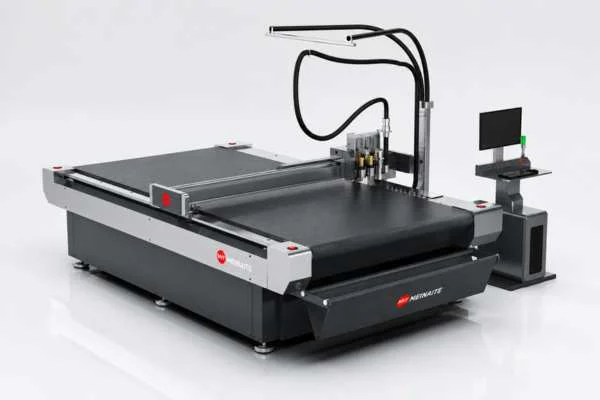
Digital Cutting Machine
Also cutting thin PTFE film, gaskets or soft sheet? See our digital knife cutting machines for flexible materials.
Technical Support for PTFE / Teflon Cutting
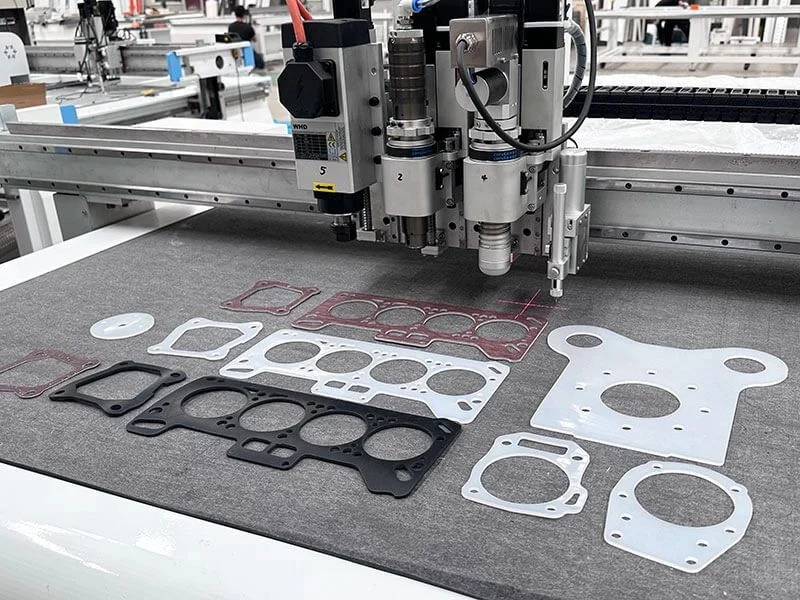
How to Cut PTFE Without Fraying or Powdering
Sharp tooling, light feeds and dust extraction that leave PTFE edges clean instead of fuzzy or powdered.
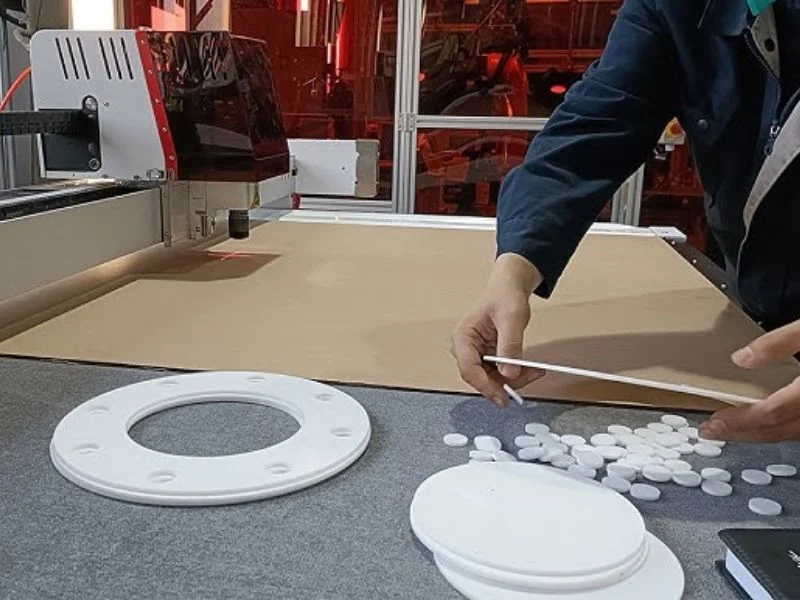
CNC Router vs Waterjet for Thick PTFE Plate
Router or waterjet for thick PTFE? Compare edges, features, thickness and cost before you commit a job.
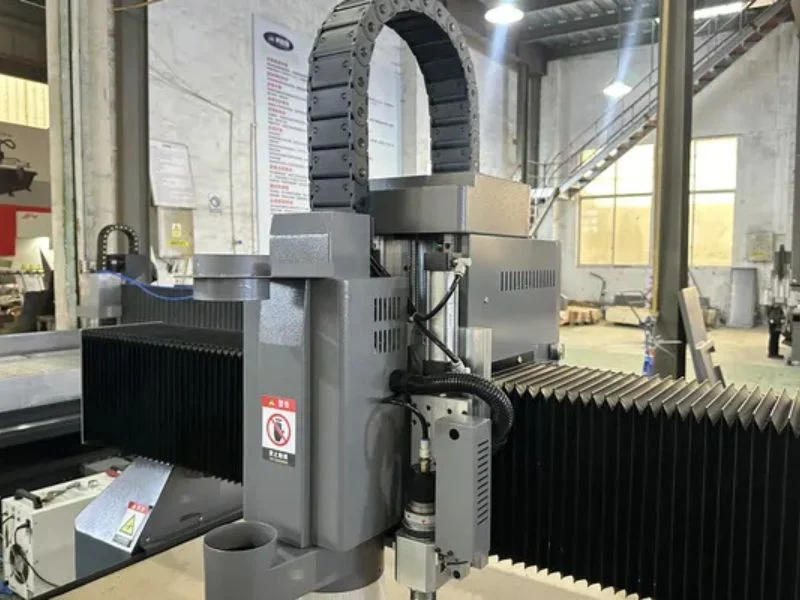
Machinable Plastics: PTFE vs POM vs PEEK vs Nylon
PTFE, POM, PEEK or nylon — pick the right machinable plastic by temperature, strength, moisture and cost.
Get a Quote for PTFE / Teflon Cutting
Send us your PTFE part drawing, plate thickness and volume — our engineers will recommend the right CNC router and reply within 24 hours.
Cutting thermal or acoustic insulation rather than PTFE? The insulation cutting machine handles rock wool, glass duct board and elastomeric foam — a different material family, but the same cold-knife-over-laser logic and the same C-series table.