
Rubber Cutting Machine
MNT (MEINAITE) CNC knife cutters cut rubber sheet — EPDM, NBR, SBR, neoprene, silicone and sponge rubber — straight from your file. No dies, no heat, no water.
- No die, no tooling lead time — a one-off gasket costs the same per cut as a batch
- Cold cut, no burnt edge — a laser hardens and scorches rubber; a knife parts it clean
- Up to 30 mm with the pneumatic head — POT holds cutting force through dense, high-Shore sheet
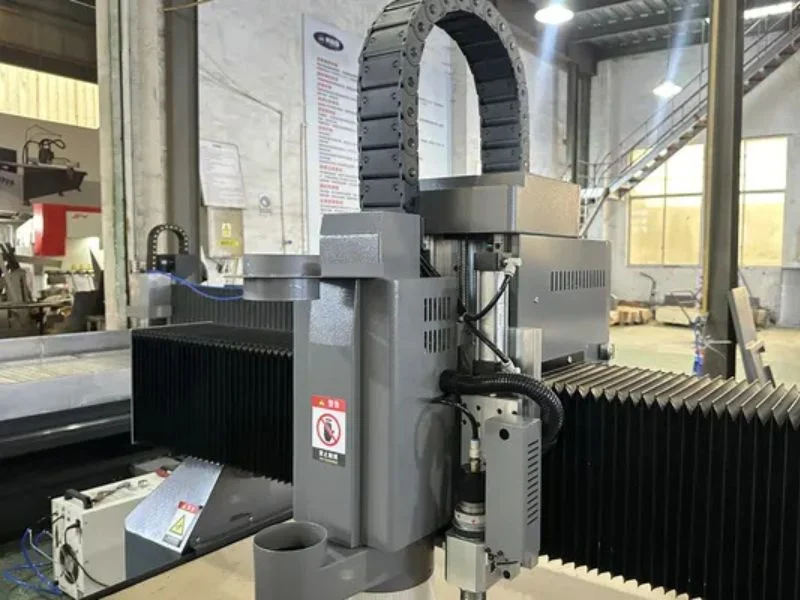
Cutting Rubber Sheet Without Dies
This page is about cutting rubber sheet and roll into parts — gaskets, seals, pads, mats and liners. It is not about slicing raw rubber bales (that is a bale cutter) and not about craft rubber. If you are converting sheet stock into profiles, a CNC oscillating knife replaces both the die press and the hand knife.
Rubber is awkward for most cutting processes. A laser burns it — the edge hardens, discolours and smells, and on chlorine-containing compounds it should not be attempted at all. A waterjet cuts well but leaves the part wet, which matters when the next step is bonding. A steel rule die is fast in volume but each profile needs its own die, so the first piece carries the whole tooling cost.
A cold oscillating blade avoids all three problems. The knife parts the rubber rather than melting or eroding it, so the edge is square and dry and ready to bond or seal. Blade selection follows the compound and its Shore hardness more than the thickness — sheet from Garlock and Klinger covers most of what crosses this bed, and the Fluid Sealing Association publishes the material selection guidance we point customers to when a specification is still open.
Rubber types and thickness
| Compound | Typical thickness | Tool |
|---|---|---|
| EPDM — weather, ozone, steam | ≤ 30 mm | POT pneumatic |
| NBR / nitrile — oil and fuel | ≤ 30 mm | POT pneumatic |
| SBR — general purpose, matting | ≤ 30 mm | POT or EOT |
| Neoprene / CR | ≤ 20 mm | POT or EOT |
| Silicone rubber sheet | ≤ 20 mm | POT pneumatic |
| Sponge and cellular rubber | ≤ 50 mm | EOT electric |
| Fabric-reinforced / insertion rubber | ≤ 15 mm | POT pneumatic |
Hardness matters as much as thickness — a 10 mm 80-Shore sheet needs a different blade from a 10 mm sponge. Send a sample and we return a free test cut with edge photos.
Neoprene specifically — closed-cell CR sponge and solid chloroprene — is the neoprene cutting machine, where the closed cell (a laser melts it shut) and the chlorine chemistry make it a distinct cold-knife job from general rubber sheet.
Machine specifications compared. Thickness on rubber is decided by the tool, not the gantry. The pneumatic oscillating tool (POT) is what drives a blade through 30 mm of dense sheet without the material walking; it is standard on the C3232 and an option you have to specify at order on the C6090 and C2516T.
| Specification | C6090 | C2516T | C3232 |
|---|---|---|---|
| Cutting area | 600 × 900 / 600 × 1200 / 900 × 1200 mm | 2500 × 1600 mm | 3200 × 3200 mm |
| Rubber & silicone sheet | ≤ 20 mm | ≤ 30 mm | ≤ 30 mm |
| Pneumatic oscillating tool (POT) | Optional | Optional | Standard |
| Cutting speed | 300–1800 mm/s | 300–1800 mm/s | 300–1800 mm/s |
| Hold-down | Aluminium honeycomb, vacuum | Vacuum adsorption | Vacuum adsorption |
| Continuous belt feeding | Yes | Yes | Yes |
| Total connected load | 9.5 kW | 9.5 kW | 9.5 kW |
| Typical rubber job | Samples and short runs | Mixed sheet work | Thick rubber as the standard tool |
Rubber We Cut
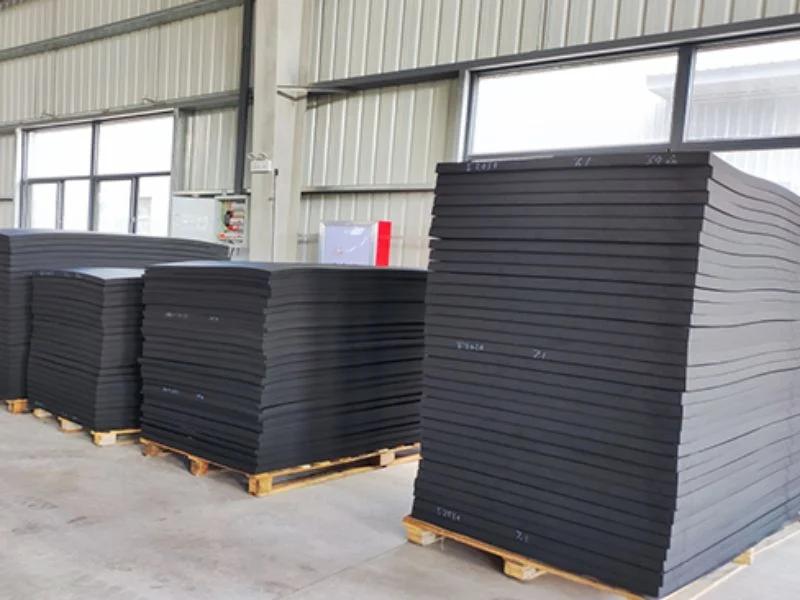
EPDM & Neoprene
- Formats: Sheet and roll, 40–80 Shore A, plain or fabric-backed — weather, ozone and steam grades plus chloroprene (CR) for general-purpose sealing.
- Watch out: Neoprene is the one rubber you must not laser: it is chlorine-containing, so the beam releases corrosive gas that attacks optics and slideways. EPDM survives a laser but the edge hardens and stops sealing.
- How we cut it: Cold knife, no heat at all. The edge keeps its elasticity instead of glazing over, which is what lets a flange ring actually seat.
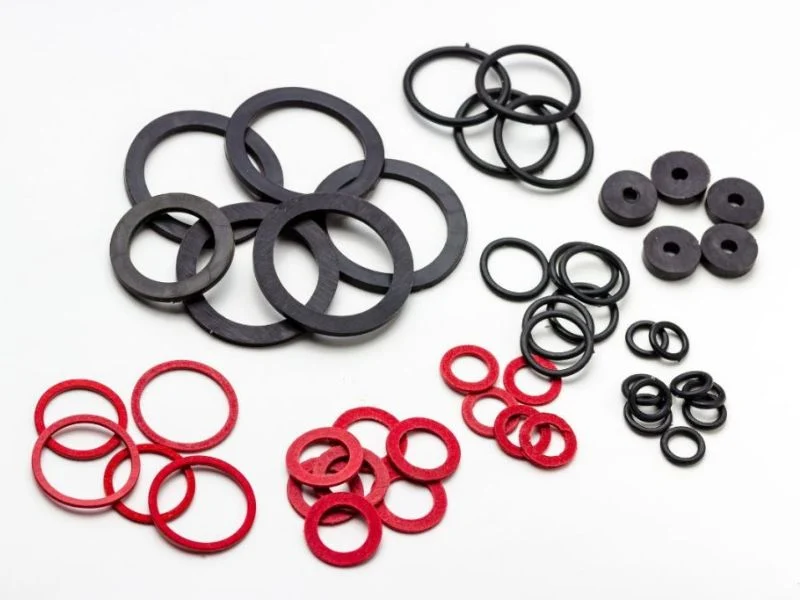
NBR / Nitrile Sheet
- Formats: Oil, fuel and hydraulic grades, 1–30 mm, plain and insertion (fabric-reinforced).
- Watch out: Sulphur-cured compounds are the ones that discolour and go tacky under a beam — the yellow, sticky edge people associate with lasered rubber comes from here, not from silicone.
- How we cut it: Dry, square edges straight off the bed — decisive when the part gets bonded rather than bolted, because no cleaning step is needed before adhesive.
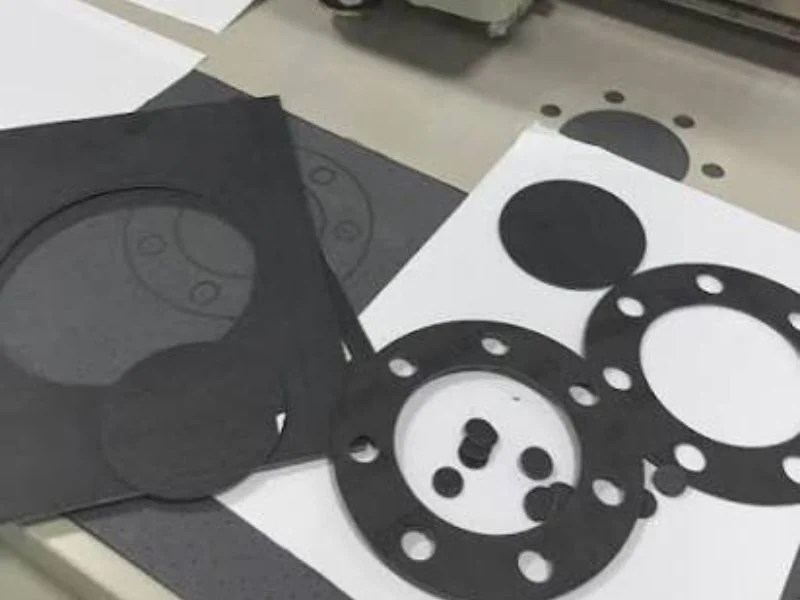
Silicone Rubber
- Formats: Sheet and roll to 20 mm, platinum- and peroxide-cured, medical and food grade, sponge and fabric-reinforced.
- Watch out: Silicone is the exception among rubbers: a CO2 beam does not leave the yellow burnt edge you get on sulphur-cured stock. It leaves white silica powder — the Si–O backbone oxidises instead of charring. That powder is abrasive, settles on optics and rails, and on a medical part it is particulate contamination you then have to validate away. There is also a hard thickness wall: a 100 W CO2 tops out around 6 mm on silicone, and adding power scales badly because the ablation debris blocks the beam deeper in the kerf.
- How we cut it: POT pneumatic head, cold, to 20 mm — no powder, no heat-affected zone, no chemical change at the edge. A 7 mm strip cuts in one pass and the edge bonds or over-moulds without a cleaning step.
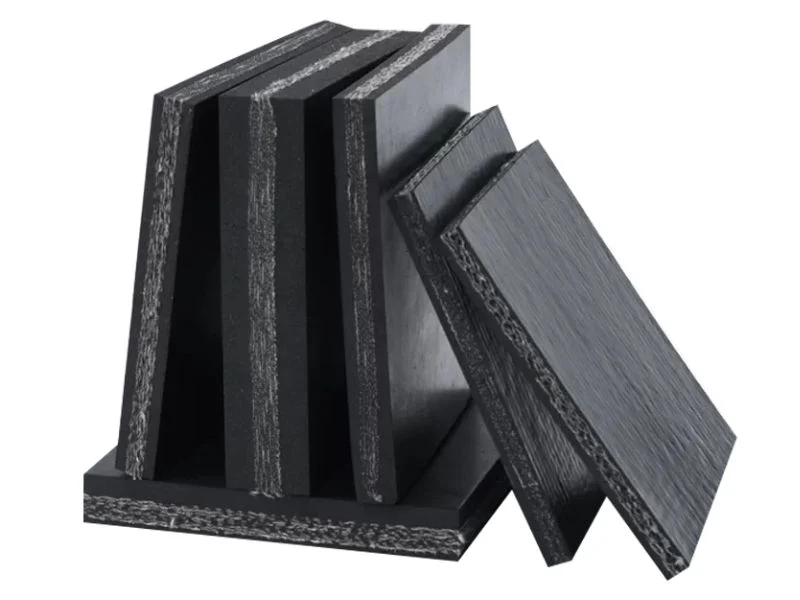
Sponge & Insertion Rubber
- Formats: Cellular and closed-cell sponge to 50 mm; fabric-reinforced and insertion sheet to 15 mm.
- Watch out: Sponge compresses ahead of a dull blade and comes back oversize; insertion sheet tears at the reinforcing ply if the blade pushes instead of slicing.
- How we cut it: Electric head for sponge, pneumatic for insertion — the pneumatic holds force through the reinforcing ply without dragging it.
Thickness figures are MNT's own test cuts per compound and Shore hardness, cross-checked against customer-reported CO2 results — not generic spec sheets.
What Converters Make With It
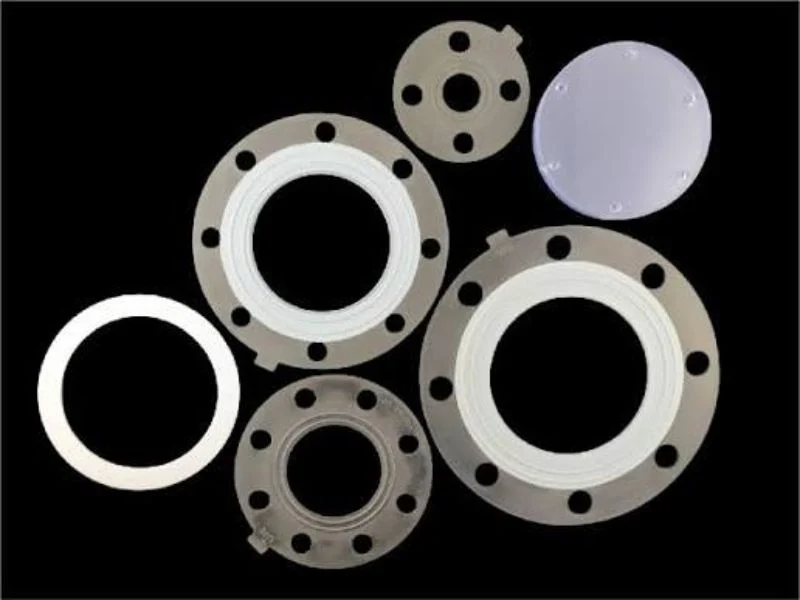
Gaskets & Flange Seals
- Parts: Flange rings, ring joints, custom profiles and one-off replacement seals, cut straight from the DXF.
- The hard part: A one-off costs the same per cut as a production batch only if there is no die — the moment tooling is involved, short runs stop paying.
- What you get: No die, no tooling lead time. See the dedicated gasket cutting machine page for finished-seal work.
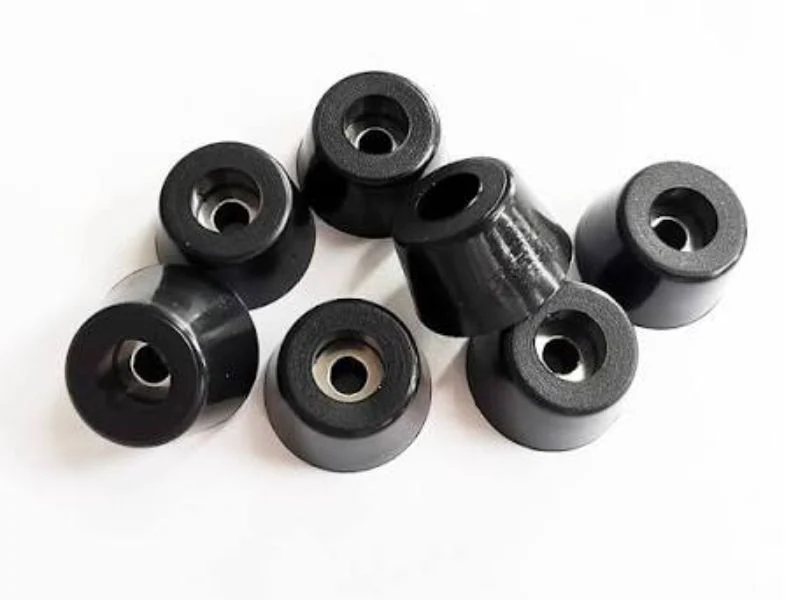
Anti-Vibration Pads & Mounts
- Parts: Machine feet, isolation pads, shims and mounts from 10–30 mm sheet.
- The hard part: Thick, soft stock deflects under a blade that pushes instead of slices, so holes drift out of position relative to the outline.
- What you get: Bolt holes positioned in the same pass as the outline, so the pattern stays true to the part rather than to a second setup.
Industrial Matting & Flooring
- Parts: Wide SBR, recycled rubber and matting cut to room dimensions with cut-outs for fixtures.
- The hard part: Site measurements rarely match the drawing, and a wrong cut on a 10 m roll is expensive.
- What you get: On-site measurements become a file instead of a chalk line — the same sheet can be re-cut from the corrected file without new tooling.
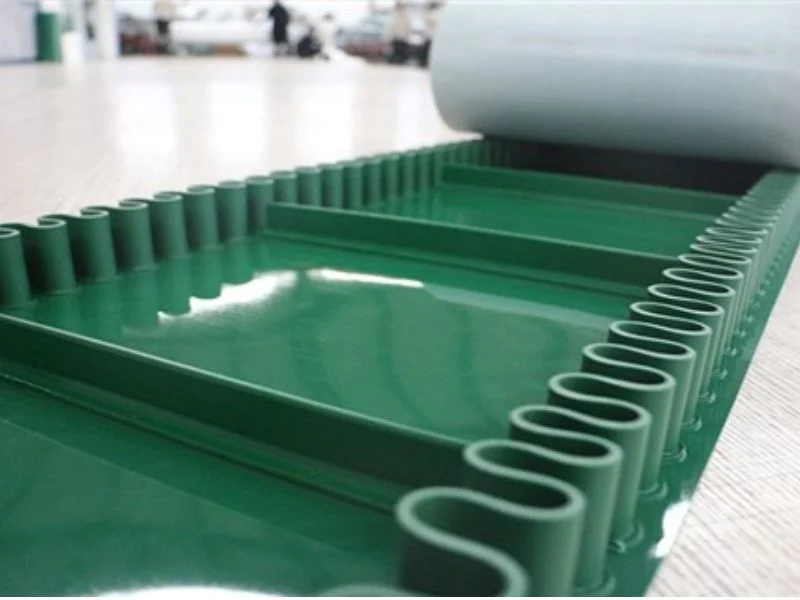
Liners, Skirting & Wear Parts
- Parts: Chute liners, conveyor skirting, hopper wear sheet, including fabric-reinforced grades.
- The hard part: Reinforced sheet tears at the fixing holes if the blade drags the ply instead of cutting through it.
- What you get: Pneumatic head holds force through the reinforcing ply, so fixing holes stay intact where the part takes its load.
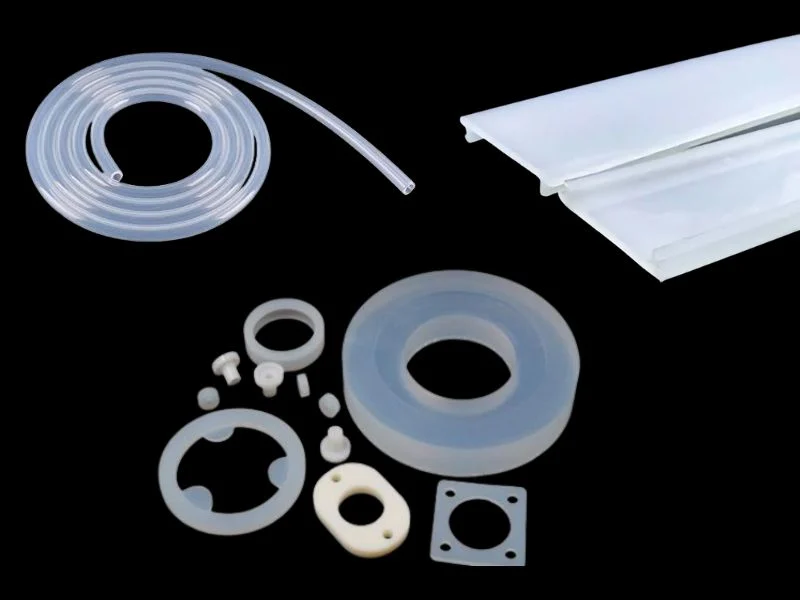
Medical & Food-Contact Parts
- Parts: Platinum-cured silicone gaskets, diaphragms, tray and tubing retainers, instrument liners and device seals, from medical- and food-grade sheet to 20 mm.
- The hard part: These parts are qualified, not just made. Anything the cut leaves behind — a heat-affected edge, silica residue, a chemically altered surface — becomes a cleaning step and a validation document.
- What you get: Cold knife adds nothing to the material: no heat, no ablation product, no residue. The part leaves the bed in the same state the sheet arrived in, so it can be bonded, over-moulded or packed without a cleaning stage.
Application examples come from parts MNT has cut on C-series machines for converters and medical component makers.
Recommended MNT Machines
Rubber runs on the C-series knife platform. All three take the same POT pneumatic head — pick by the sheet size you handle most.
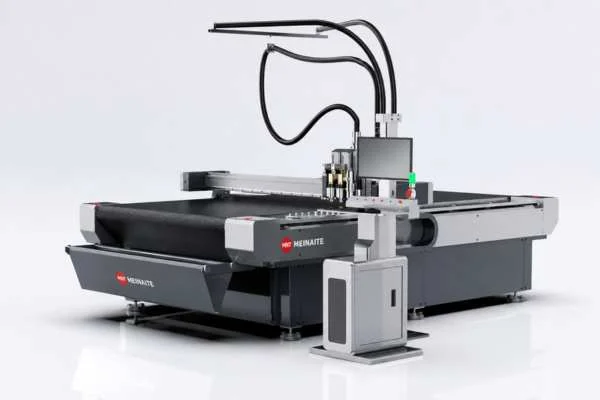
C2516T Digital Cutting Machine
- Cuts: Rubber sheet, gasket stock, plus board, foam and textile
- Specs: 2500 × 1600 mm bed · EOT + drag + milling spindle · POT optional · from USD 16,900
- Best for: Converters running rubber alongside other materials on one bed
- Price: From $16,900
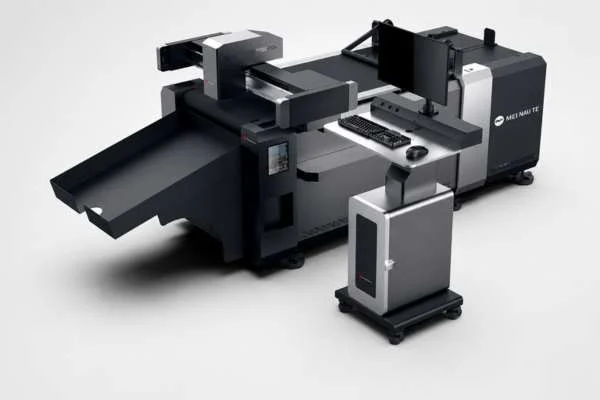
C6090 Digital Cutting Machine
- Cuts: Rubber samples, small seals, short-run parts
- Specs: 600 × 900 to 900 × 1200 mm · EOT + creasing · POT optional · USD 12,000
- Best for: Sample rooms, R&D and small-part production
- Price: From $12,000
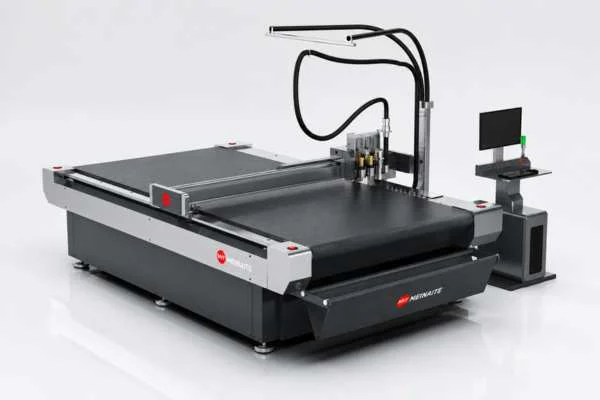
C3232 Digital Cutting Machine
- Cuts: Wide rubber roll, large flange rings, oversized sheet
- Specs: 3200 × 3200 mm square bed · POT pneumatic fitted as standard · USD 11,555
- Best for: Sealing fabricators — the pneumatic head is standard on this model
- Price: From $11,555
C-series machines share one platform and tool range; models differ by working size and standard tool head.
Why Rubber Ends Up on a Knife
Rubber defeats each of the alternatives in a different way, and the failure is usually at the edge rather than the cut itself. A laser burns it hard and discoloured. A waterjet leaves it wet, which is a problem when the part gets bonded. A steel rule die is excellent in volume but every new profile is a new die, and the die cost lands entirely on the first piece.
| Factor | Oscillating knife (MNT) | Steel rule die | Waterjet | Laser |
|---|---|---|---|---|
| Tooling cost per shape | None — cut from file | New die per profile | None | None |
| Design change | Edit the file | Order a new die | Edit the file | Edit the file |
| Edge on 60–80 Shore rubber | Clean, square | Clean but die-dependent | Clean, wet | Burnt, hardened, smells |
| Material left wet / contaminated | No | No | Yes — needs drying | Carbon residue |
| One-off and short run | Same cost per cut | Die cost kills it | Viable | Viable but edge suffers |
| Thick sheet (20–30 mm) | Yes, POT head | Limited by die height | Yes | No |
Where a die still wins: a single profile in very high volume. If you run one gasket shape by the ten thousand, a die press is faster and we will tell you so. The knife wins on variety — many profiles, frequent changes, and short runs where tooling cost decides the quote.
Why Rubber Converters Choose MNT
The pneumatic oscillating head is the part that matters for rubber — it holds cutting force through dense, high-Shore sheet where an electric blade starts to deflect. About MNT (MEINAITE) — who builds it and where.
Distributor or OEM partner? Territory, spare-parts commitment and technical training are what decide whether a machine is worth carrying. Talk to us about partnership.
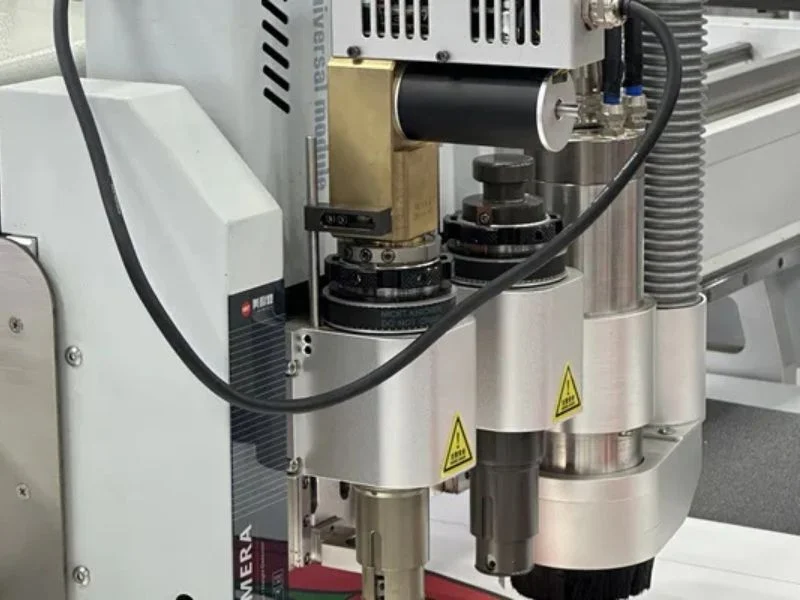
POT Pneumatic Head for Dense Rubber
- Built for sealing stock: EPDM, NBR, SBR, silicone, fluororubber, insertion rubber
- Holds force through 60–80 Shore sheet where an electric blade deflects
- EOT electric head alongside for sponge, foam rubber and soft grades
- For distributors: rubber converters buy blades for the life of the machine and serve a stable customer base of their own — their repeat orders are predictable in a way project-driven industries never are
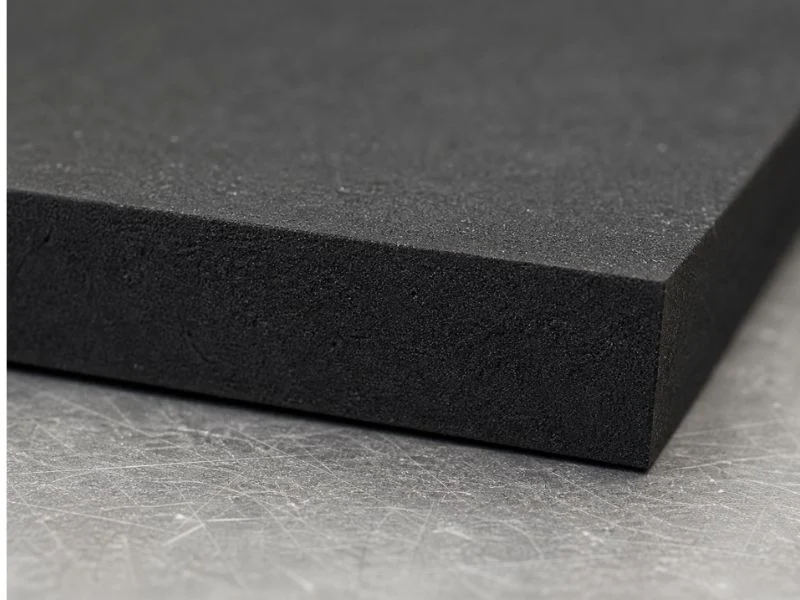
Dry, Square Edge — Ready to Bond
- No heat: the edge keeps its elasticity instead of hardening like a lasered cut
- No water: parts leave the bed dry, no drying step before bonding
- ±0.1 mm on the profile, so mating parts seal first time
- For distributors: spare-parts commitment, territory and technical training are the three things that decide whether a machine is worth carrying — all three are set out on our partnership page
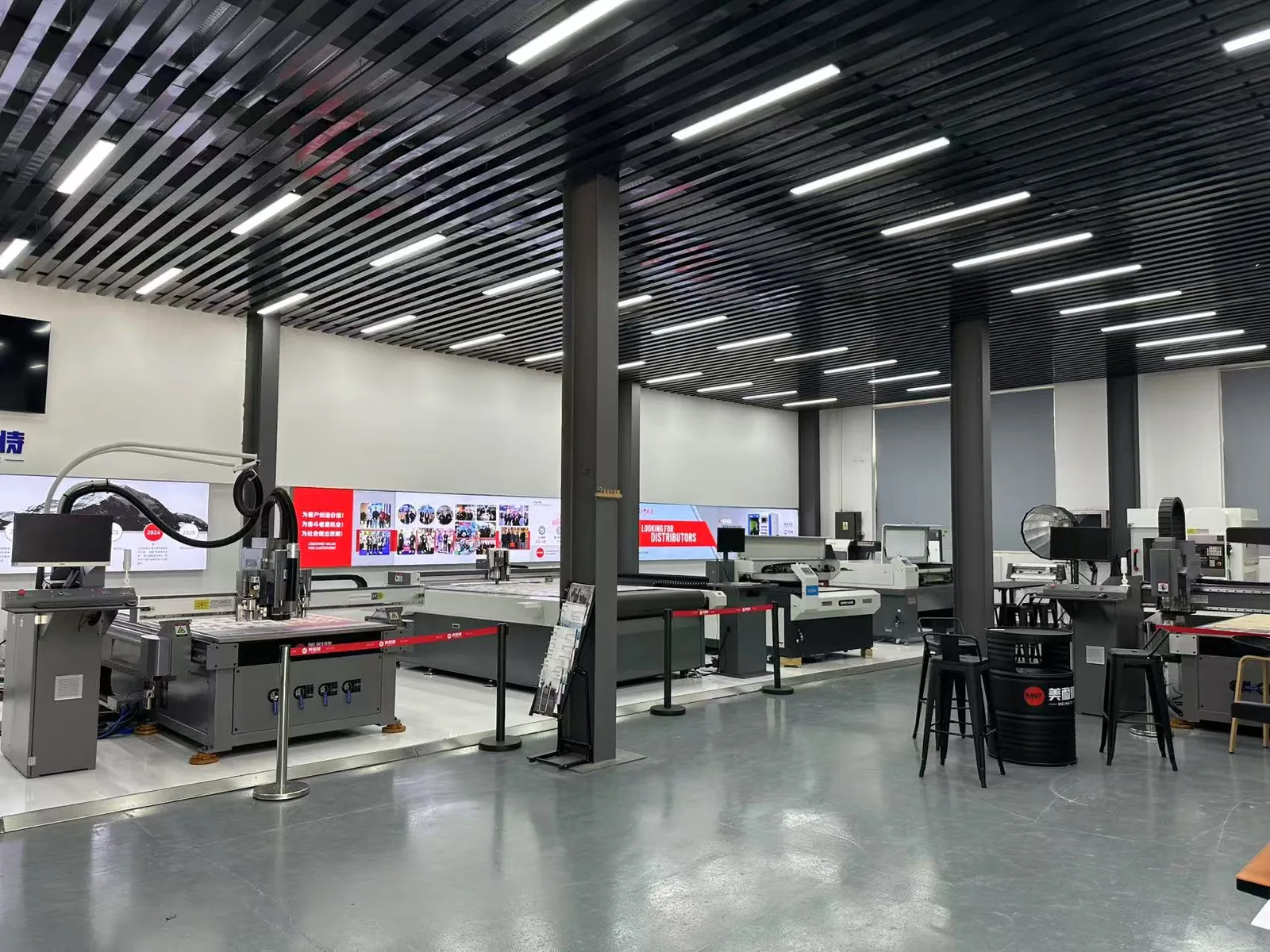
The Factory That Builds Your Rubber Cutter
- C-series built in-house by Hangzhou Chaohan — assembled and calibrated, not rebadged
- Blade and tooling supplied with documented settings per compound
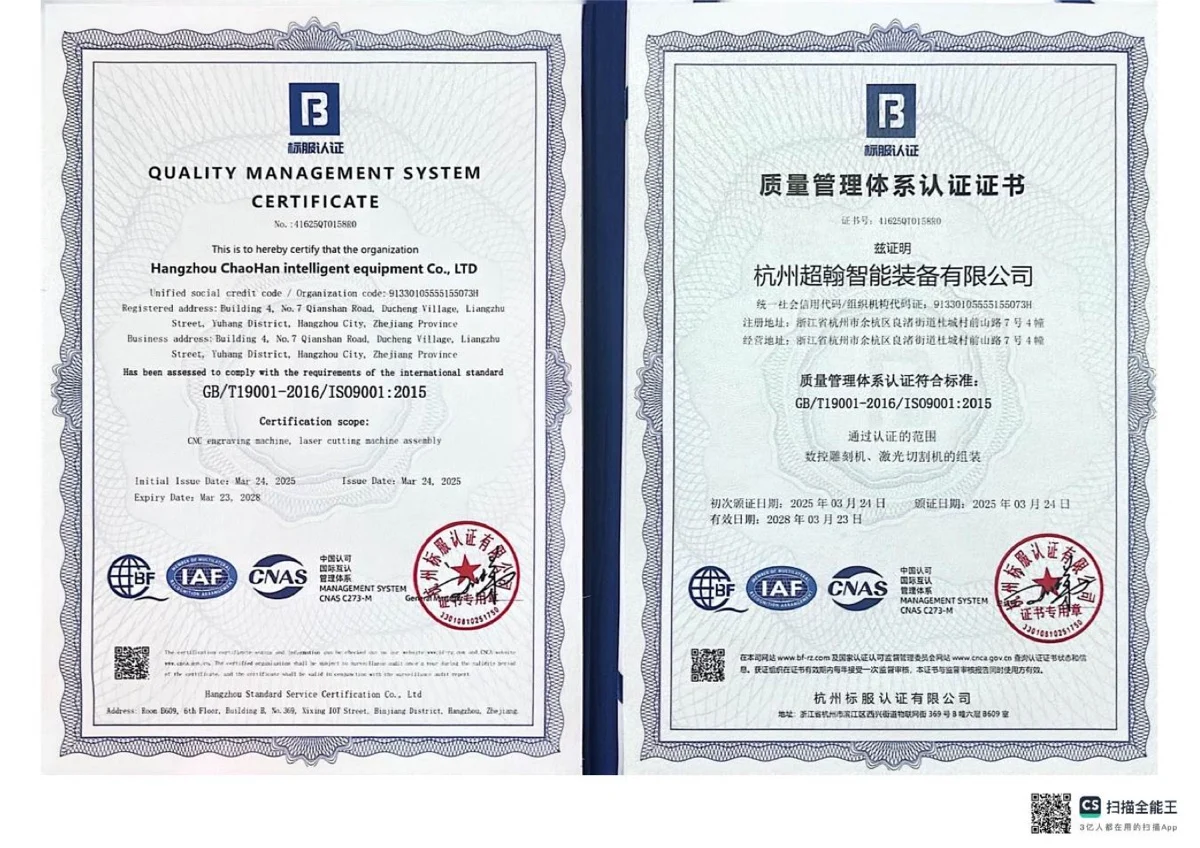
CE + ISO — Send Your Rubber Sheet for a Free Test Cut
- CE-marked and ISO 9001:2015 certified, built by Hangzhou Chaohan
- Send your sheet and drawing — we cut a free sample and send edge photos
- 12-month warranty, lifetime software updates, online and on-site training
Thickness figures come from MNT's own test cuts per compound and Shore hardness. Send your sheet for a free sample cut.
Frequently Asked Questions
What is the best way to cut rubber sheet accurately?
A CNC oscillating knife, for anything beyond a handful of parts. It cuts cold, so the edge stays square and elastic; it needs no die, so a one-off costs the same per cut as a batch; and it holds ±0.1 mm on the profile. Hand knives wander on anything thicker than a few millimetres, and a die only makes sense when one profile runs in very high volume.
Can you laser cut rubber?
Technically yes, but the edge comes out burnt, hardened and discoloured, and the smell is difficult to extract. Worse, chlorine-containing compounds like neoprene release corrosive gas that damages the machine. For any rubber that has to seal, bond or flex at the cut edge, a cold knife is the correct tool — this is not a close call. Silicone is the one that behaves differently: it does not yellow, but it throws white silica powder instead, which is its own problem — see the silicone question below.
How thick a rubber sheet can it cut?
Up to 30 mm for dense compounds like EPDM and NBR with the POT pneumatic head, up to 50 mm for sponge and cellular rubber with the electric head, and around 15 mm for fabric-reinforced insertion rubber. Hardness matters as much as thickness — a 10 mm 80-Shore sheet and a 10 mm sponge need different blades and different settings.
What is the difference between the POT and EOT tools?
Both are oscillating knives; the difference is the drive. The POT is pneumatic and holds cutting force through dense, high-hardness rubber — it is the tool for sealing stock. The EOT is electric, faster and quieter, and suits sponge rubber, foam and softer grades. Machines can carry both, so one bed covers the full hardness range without a tool change between jobs.
Do I still need dies for rubber gaskets?
Not for the variety and short-run work that makes up most gasket quoting. Every profile is cut from the DXF, so a dimension change is a file edit rather than a new steel rule die and its lead time. Dies keep their advantage in one situation: a single unchanging profile in very high volume.
Will the cut edge be clean enough to bond?
Yes — that is the main reason converters move off waterjet. The knife leaves the surface dry and free of contamination, so adhesive goes on without a drying or cleaning step. A lasered edge, by contrast, is chemically altered and often will not bond reliably at all.
How much does a rubber cutting machine cost?
MNT C-series machines run from USD 11,555 for the C3232 (which has the pneumatic head fitted as standard) and USD 12,000 for the compact C6090, to USD 16,900–25,000 for the C2516T with milling spindle. Price depends on bed size, which tool heads you fit and vacuum zoning — tell us your sheet size and monthly volume for a factory-direct quote.
Can the same machine cut other materials?
Yes, and most buyers count on it. The same bed handles foam, gasket sheet, leather, technical textile, cardboard and composite — only the blade and settings change. That is usually what justifies the machine: rubber alone may not fill a shift, but rubber plus the rest of the material list does.
Why does laser cutting silicone rubber leave a white powder?
Because silicone is not a carbon-backbone rubber. Its Si–O chain oxidises rather than chars, so instead of the yellow burnt edge you get on sulphur-cured NBR or SBR, a CO2 beam converts the cut line into amorphous silica — fine white powder. It is abrasive, it settles on optics, rails and bearings, and on a medical or food-contact part it is particulate contamination that has to be cleaned off and validated. A knife produces no powder at all because nothing is vaporised: the sheet is sheared cold.
How thick can silicone rubber be cut, and why does a 100 W laser stop at 6 mm?
MNT’s POT pneumatic head cuts silicone to 20 mm in a single pass. A 100 W CO2 laser typically stops cleanly around 6 mm on silicone, and going to 7 mm or beyond does not simply need more watts: the silica debris generated in the kerf absorbs and scatters the beam deeper down, so the cut goes ragged and the powder volume rises faster than the depth does. If your parts are 7 mm or thicker, more laser power is the expensive way round the problem — a knife removes it.
Is knife cutting suitable for medical-grade silicone parts?
Yes, and it is usually the easier route to qualify. Cold knife cutting adds no heat-affected zone, no chemical change at the edge and no residue, so a platinum-cured medical sheet leaves the bed in the same state it arrived in — only in the shape you need. There is no ablation product to clean off before bonding, over-moulding or packing, which removes a cleaning and validation step that laser-cut silicone parts normally carry.
Rubber & Sealing — Technical Guides
Cutting rubber raises the same questions every time: which process, which blade, and whether the edge will seal. These guides work through them.
Send Your Rubber Sheet for a Free Test Cut
Tell us the compound, Shore hardness, thickness and part size — plus whether stock arrives as sheet or roll. We cut a free sample, send edge photos, and quote the exact build.