
What Is a Gasket Cutting Machine?
A gasket cutting machine is a computer-controlled flatbed cutter that cuts sealing gaskets from a digital file with an oscillating knife, so it needs no die, mould or punch. It cuts rubber, cork, fibre, non-asbestos, graphite, PTFE and foam gaskets in one setup to ±0.1 mm.
Because the knife is a cold mechanical tool, it does not heat the material — the sealing face stays flat and burr-free, with no scorched edges or off-gassing. And because there is no die to build, a new flange or custom profile goes from drawing to cut gasket the same day, which is why die-less cutting suits samples, short runs and frequently changing shapes.
The part it makes is a gasket — a compressible seal between two mating surfaces. See the full MNT digital cutting machine range behind this process.
Thermal and acoustic insulation rather than sealing gaskets? The insulation cutting machine is the neighbouring page — same knife table, but rock wool and duct board where R-value and the facing carry the job, not a sealing face.
Sealing in neoprene specifically? The neoprene cutting machine covers solid CR and closed-cell sponge as a material — where keeping the closed cells sealed at the cut (a laser melts them shut) is the whole point, alongside the gasket application here.
Rubber parts that are not seals? Matting, pads, bumpers, liners and sheet blanks are cut on the same knife but bought for different reasons — thickness and material cost drive that decision, not sealing performance. That is the rubber cutting machine page. This page stays on the gasket: flange patterns, bolt circles and the compression set that decides whether the joint holds.
Gasket machine specifications compared. The line that decides most gasket jobs is the third one: the pneumatic oscillating tool (POT) is what shears thick rubber and graphite without dragging the sheet, and it is standard only on the C3232 — on the C6090 and C2516T it is an option you have to specify at order.
| Specification | C6090 | C2516T | C3232 |
|---|---|---|---|
| Cutting area | 600 × 900 / 600 × 1200 / 900 × 1200 mm | 2500 × 1600 mm | 3200 × 3200 mm |
| Rubber & silicone gasket sheet | ≤ 20 mm | ≤ 30 mm | ≤ 30 mm |
| PTFE / graphite gasket sheet | ≤ 20 mm | ≤ 30 mm | ≤ 20 mm |
| Pneumatic oscillating tool (POT) | Optional | Optional | Standard |
| Cutting speed | 300–1800 mm/s | 300–1800 mm/s | 300–1800 mm/s |
| Hold-down | Aluminium honeycomb, vacuum | Vacuum adsorption | Vacuum adsorption |
| Continuous belt feeding | Yes | Yes | Yes |
| Total connected load | 9.5 kW | 9.5 kW | 9.5 kW |
| Typical gasket job | Samples, short runs, bench-top footprint | Mixed sheet work, milling spindle available | Large sheet, thick rubber as the standard tool |
Gasket Materials This Machine Cuts
One flatbed covers the full range of non-metal gasket stock — the cold oscillating knife cuts each one clean, with no die to build for a new profile.
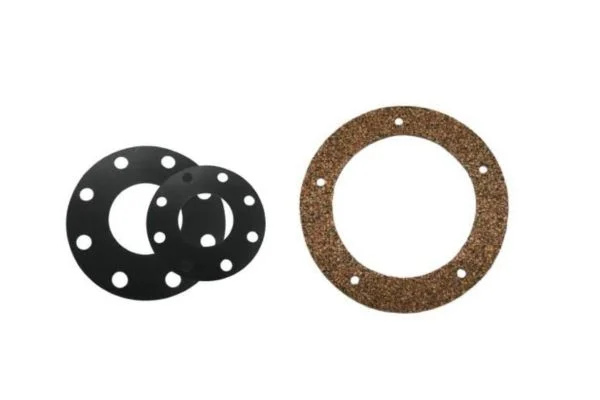
Rubber, Cork & Foam Gaskets
Cuts soft rubber, cork-rubber and EVA/PU foam gaskets with a clean cold edge — no melting or off-gassing, and consistent compression across every part.
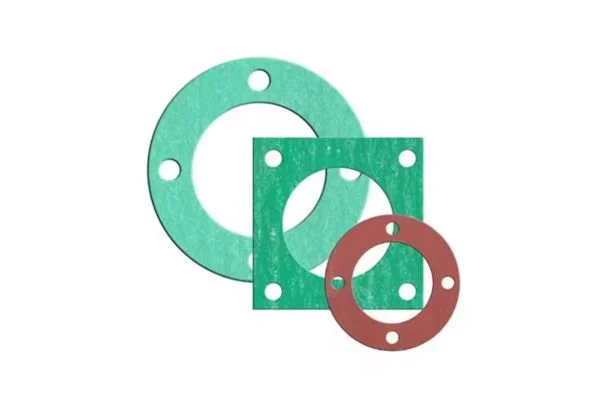
Non-Asbestos, Fibre & Cellulose Gaskets
Slices compressed non-asbestos, fibre, cellulose and paper gasket sheet without fraying or crushing the edge, holding ±0.1 mm on flange and custom profiles.
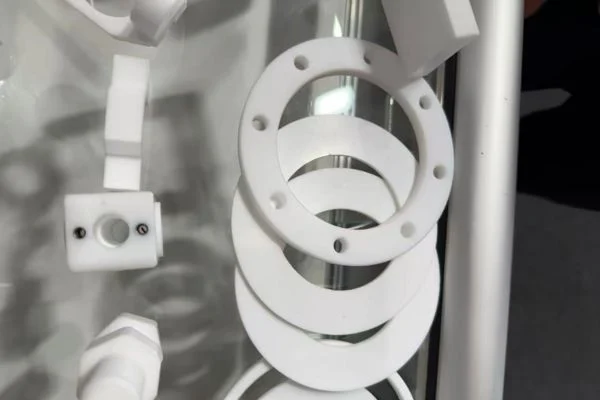
PTFE, Graphite & Reinforced Gaskets
Cold-cuts PTFE (Teflon) sheet, flexible graphite and tanged/reinforced gaskets without powdering or cracking the facing — sealing surface stays intact.
Gaskets & Sealing Parts You Can Cut
Die-less cutting turns any drawing into a finished gasket the same day — the short-run, made-to-file work that punches and steel-rule dies make slow and costly.
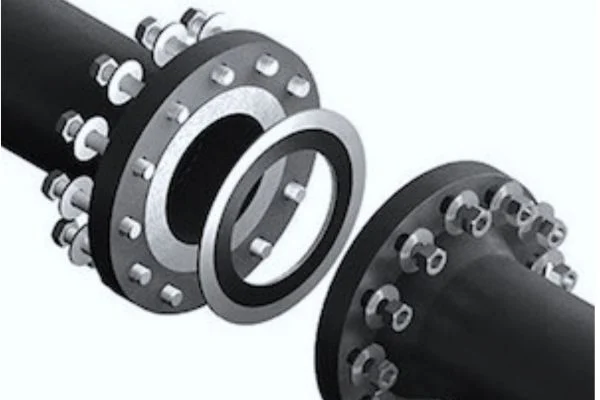
Flange & Pipe Sealing Gaskets
Cuts ring, full-face and custom flange gaskets to any bolt pattern straight from CAD — no die per size, so a new DN or PN ships the same day.
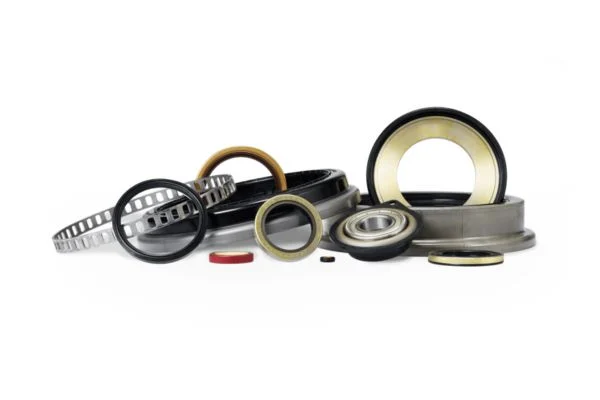
Automotive & Machinery Seals
Produces valve-cover, housing, pump, diaphragm and manifold gaskets in short runs and prototypes, cutting rubber, fibre and cork to spec without tooling cost.
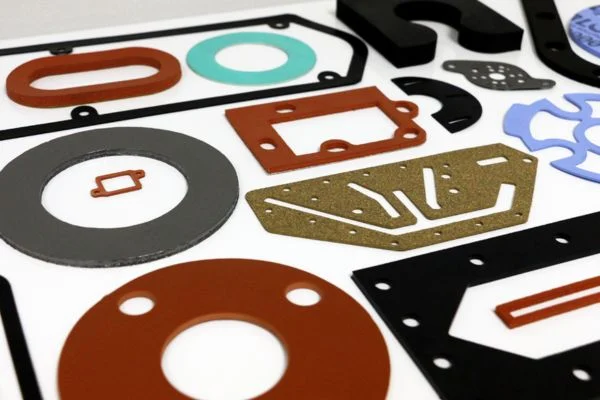
Electrical Insulation & Custom Gaskets
Kiss-cuts and through-cuts insulating washers, EMI/enclosure seals and one-off custom gaskets, holding ±0.1 mm across changing shapes.
Recommended MNT Gasket Cutting Machines
Our C-series digital flatbed cutters run the die-less gasket cutting above — choose by working size and run length.
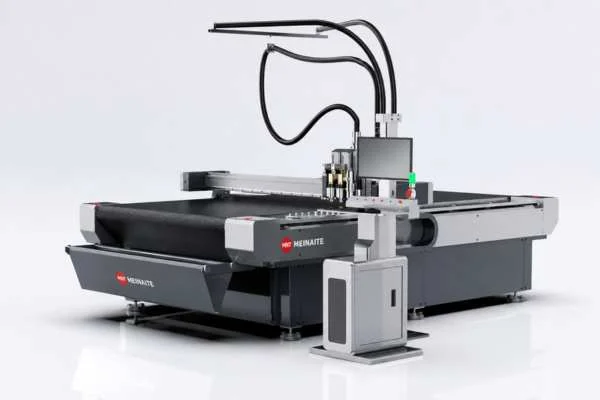
C2516 Digital Flatbed Gasket Cutter
- Cuts: Rubber, PTFE, non-asbestos, graphite and foam gaskets, large sheets
- Specs: 1600 × 2500 mm · oscillating knife + drag knife + creasing + CCD · ±0.1 mm
- Best for: Industrial short-run and large-format gasket production
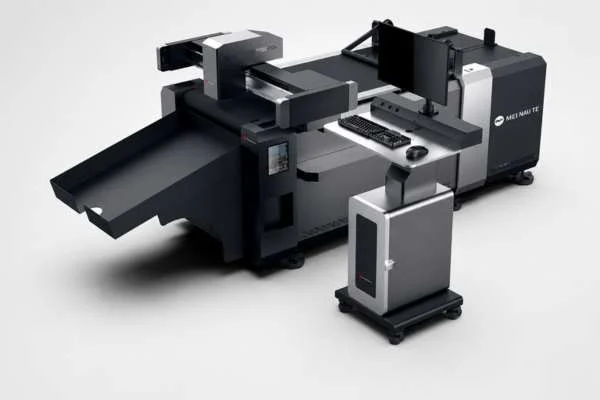
C6090 Compact Gasket Cutter
- Cuts: Small rubber, cork and PTFE gaskets, samples
- Specs: 600 × 900 mm · oscillating + drag knife · bench-top
- Best for: Sample rooms, labs and small-batch gaskets
- Price: From $12,000
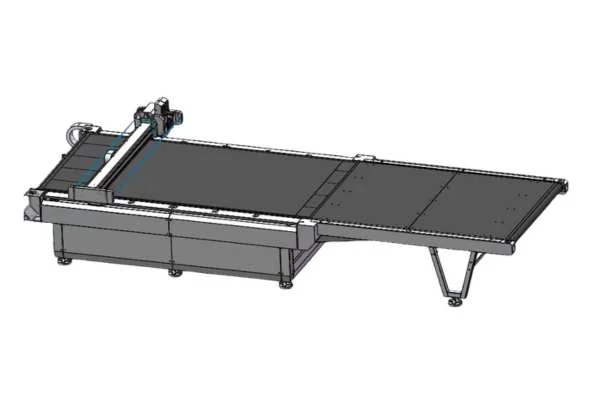
Custom Gasket Cutting Machine
- Cuts: Special sizes, roll-fed sheet, multi-tool jobs
- Specs: Custom bed, roll feeding, CCD vision, OEM
- Best for: Special material size or automation needs
How the Machine Cuts a Gasket
You import a gasket outline (DXF, PLT, AI or PDF); the machine drives an oscillating knife along the path and cuts the gasket from flat sheet in one pass — no die, no punch. For printed or pre-marked stock, CCD vision registers to the artwork so the cut lines up to ±0.1 mm.
- Tools: oscillating knife (thick rubber/foam), drag knife (thin sheet), creasing wheel, optional router
- Vision: optional CCD camera for registration to printed or pre-cut material
- Feeding: flatbed sheet loading, optional conveyor or roll feed for longer runs
- Nesting: software nests many gaskets per sheet to lift material utilisation
Oscillating Knife vs Laser vs Die Cutting for Gaskets
For gaskets, the cutting method decides the edge quality and whether you pay for tooling. A cold oscillating knife cuts rubber, PTFE and non-asbestos without heat, a laser risks burnt edges and fumes on those same materials, and a die only pays off at high volume on one fixed shape.
| Factor | CNC oscillating knife | Laser | Steel-rule die / punch |
|---|---|---|---|
| Edge on rubber / PTFE | Cold, flat, no scorch or off-gas | Burnt / melted edge, fumes | Clean, but a die per shape |
| Gasket materials | Rubber, cork, PTFE, non-asbestos, graphite, foam | Limited — many rubbers scorch or emit fumes | Any, but tooling per profile |
| Tooling | None — cuts from file | None — cuts from file | A die built per shape |
| New / changed shape | Same day, edit the file | Same day, edit the file | New die, days of lead time |
| Best volume | Samples to medium runs | Thin non-rubber only | High volume (1,000+), one shape |
| Accuracy | ±0.1 mm | ±0.1 mm | Die-dependent |
For most gasket work — rubber, PTFE and fibre in changing shapes and short-to-medium runs — the cold oscillating knife wins on edge quality and zero tooling. A steel-rule die still earns its place only at high volume on one fixed profile.
Why Buy Your Gasket Cutting Machine From MNT
Distributor or OEM partner? Territory, spare-parts commitment and technical training are what decide whether a machine is worth carrying. Talk to us about partnership.
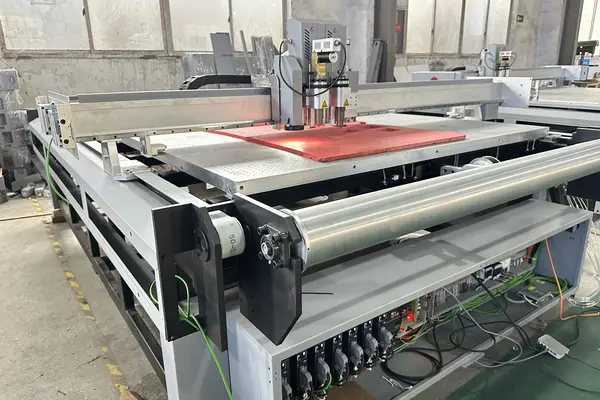
Lower Cost Per Gasket
- Zero die cost — no punch or steel-rule die to build for each new gasket profile
- A new flange or custom shape is cutting the same day, MOQ 1 — no minimum run
- Nesting lifts sheet utilisation, so short runs and samples stay economical
- For distributors: gaskets are a consumable market: the machine sells once, but blades and sheet stock keep selling for as long as the customer is in business — that recurring revenue is the real annuity here
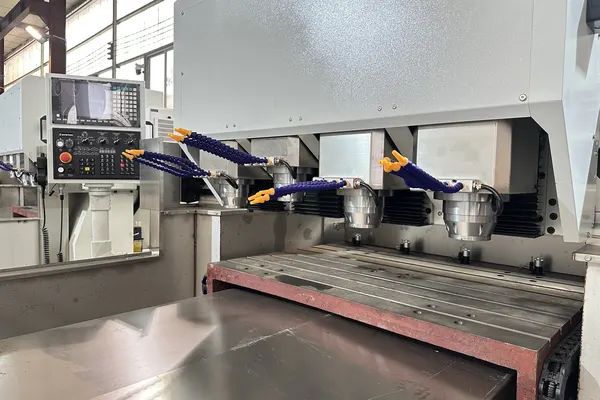
Cold Cut Keeps the Sealing Face
- Mechanical knife cuts cold — no scorched or melted edge like laser on rubber and PTFE
- Flat, burr-free sealing face gives consistent compression and no leak paths
- No off-gassing or heat-affected zone on non-asbestos, graphite or fibre stock
- For distributors: spare-parts commitment, territory and technical training are the three things that decide whether a machine is worth carrying — all three are set out on our partnership page
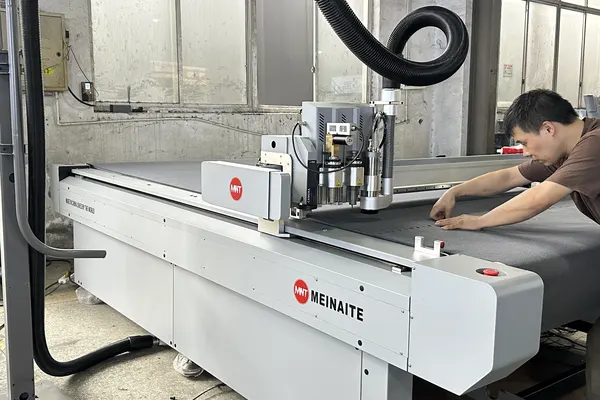
Free Sample Cut on Your Gasket Material
- Send your rubber, PTFE or fibre stock and drawing — we run a free sample gasket before you order
- Confirm edge quality and accuracy on your actual material
- Select or customise the machine from real results
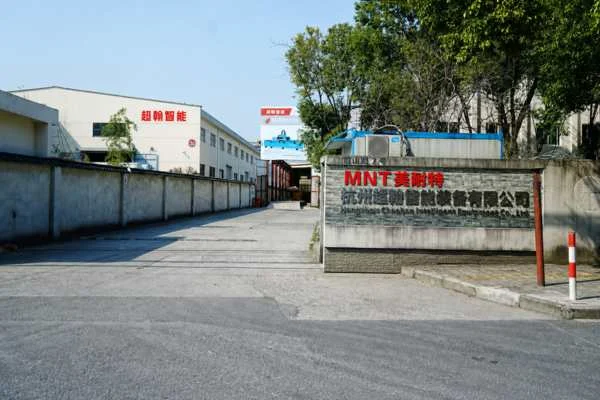
Factory-Direct — Certified for Sealing Work
- Our own 10,000 m² Hangzhou Chaohan factory — tour it
- CE + ISO 9001 certified and tested before shipment — view certifications
- 1-year warranty, worldwide delivery and OEM — about MNT
Gasket Cutting Machine — Buyer FAQ
What types of gaskets can a gasket cutting machine cut?
It cuts non-metal gaskets from sheet: rubber, cork-rubber, EVA/PU foam, compressed non-asbestos, fibre, cellulose, flexible graphite, PTFE (Teflon) and reinforced/tanged gaskets. All are cut cold from your file, so a new profile needs no die.
How much does a gasket cutting machine cost?
Price depends on working size (C6090 bench-top vs C2516 1600×2500 flatbed), the tool set and automation level. There is no per-shape die cost — that is where die-less cutting saves money on samples and short runs. Send your material, size and volume and we quote your exact configuration within 24 hours.
Does knife cutting burn or melt the gasket edge?
No. An oscillating knife is a cold mechanical cut, so rubber and PTFE gaskets keep a flat, burr-free sealing face with no scorching or off-gassing — unlike laser cutting, which can burn edges and emit fumes on these materials.
Can it cut gaskets without a die or mould?
Yes — that is the point. The machine cuts straight from your CAD file with an MOQ of one, so there is no die or punch to build, pay for or store. A new or revised gasket shape is cutting the same day.
How thick a gasket can it cut?
The oscillating knife handles soft rubber, cork and foam gaskets through a wide thickness range in a single pass, with thinner fibre, PTFE and graphite sheet cut by drag or oscillating knife. Exact thickness depends on the material and tool — send your stock and we confirm with a free sample cut.
Oscillating knife vs laser for gaskets — which is better?
For rubber, PTFE and non-asbestos gaskets, the oscillating knife is better: it cuts cold with no burnt edge, no fumes and a clean sealing face. Laser suits only thin non-rubber materials and risks scorching or off-gassing on most gasket stock.
Can you laser cut rubber gaskets?
You can make the cut, but not a sealing face. A laser removes rubber by burning it, so nitrile, EPDM and neoprene come off the bed with a carbonised, slightly tacky edge that transfers soot onto the flange and does not bed down evenly under bolt load. Chlorine-bearing rubbers such as neoprene release hydrogen chloride as they burn, which attacks the optics and the extraction ducting. PTFE is worse again — it decomposes into fluoride fumes rather than cutting cleanly. This is why gasket shops cutting elastomer and PTFE sheet run an oscillating knife, not a laser.
When does a laser make sense for gaskets?
Two cases. Metal gaskets — stainless, copper and soft-iron rings — are a fibre laser job, because there is nothing for a knife to shear cleanly. And very thin, non-elastomeric sheet such as polyester film, mica or some paper-based grades can take a laser edge without the sealing face suffering. For everything in between — rubber, cork-rubber, compressed non-asbestos, graphite, PTFE and foam — the cold knife is the process that keeps the sealing face flat and uncontaminated.
What file formats does it accept?
Standard CAD and vector formats — DXF, PLT, AI, and PDF outlines. Import the gasket shape, nest multiple parts per sheet, and cut; CCD vision can register the cut to printed or pre-marked material.
Gasket Cutting — Technical Guides
Choosing a gasket cutting machine raises real questions — whether a cold knife or a laser suits rubber and PTFE, how a die-less flatbed compares with waterjet and punching, and how to size the machine to your run length. These guides walk through edge quality, material safety and machine selection so you get repeatable gaskets straight from your file.
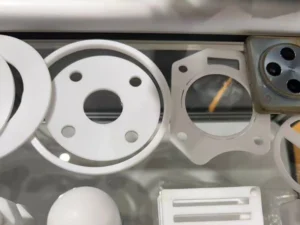
Digital vs Laser Gasket Cutting: Which One for Your Material?
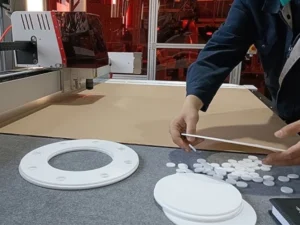
CNC Router vs Waterjet for Thick PTFE Plate
Oscillating Knife vs Laser Cutting for Leather: Which Should You Choose?
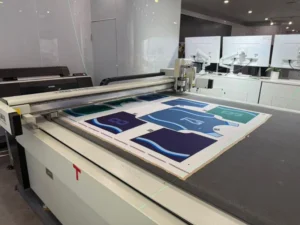
Digital Die Cutting vs Steel-Rule Die: Cost, Speed, and When to Switch
Start Your Gasket Cutting Project
Send your gasket material, shape and volume — we recommend the right C-series cutter and reply within 24 hours.