
Shoe Upper Cutting Machine
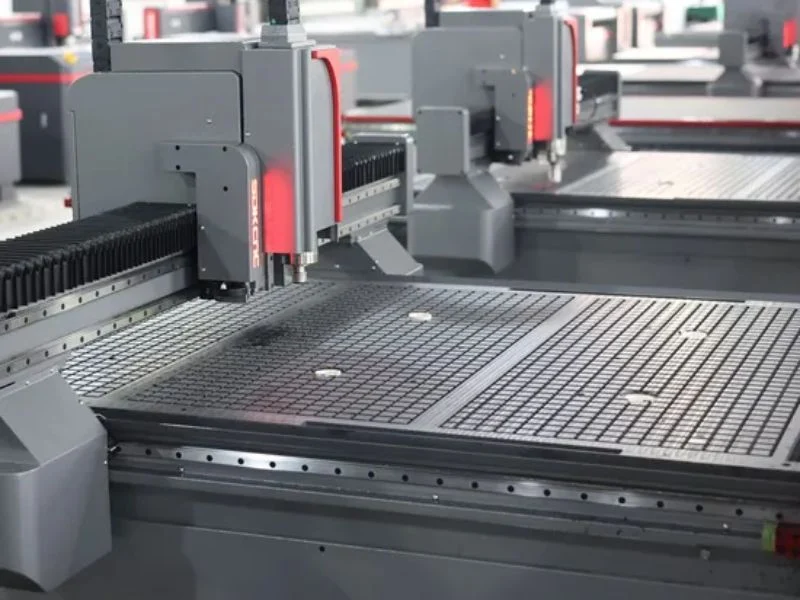
MNT (MEINAITE) C-series digital knife cutters nest and cut every part of a shoe upper — leather, synthetic, mesh and lining — plus insoles and reinforcement, on one vibrating-knife table, so a whole size run comes off nested and labelled instead of clicked out on a die.
- Oscillating knife shears leather, PU and mesh — clean sheared edge, no fray, no laser scorch on the face
- Camera nests around hide defects and to the print, so patterned and perforated uppers land in register and yield stays high
- A design change is a file, not a new steel-rule die — style revisions and size runs without the tooling bill
Why Footwear Is Moving Off the Clicking-Press Die
Footwear has cut its uppers on a clicking press — a steel-rule die under a hydraulic beam — for a century. It is fast on a settled style at volume, but every design or size means a new die with its cost and lead time, the die edge crushes rather than shears, and a hide is nested to a fixed die layout rather than around its own defects.
A digital knife table replaces the die. The C-series is a vibrating-knife cutter with a camera and a zoned vacuum bed: it nests upper parts around the range defects on each hide, registers to a printed or perforated pattern, and shears leather, synthetic and mesh to a clean edge — then labels the parts for the closing room. A revision becomes a file, not a die. This page is the footwear part; for hide as a raw material in its own right, the leather cutting machine covers that. The footwear-technology trade calls this move off the die exactly what it is: high-mix production without the tooling wall.
Machine specifications compared. Upper material is thin, so table size and feeding decide throughput, not cutting depth. The C6090 suits pattern work and grading trials; once you are cutting production runs the continuous belt feed on the larger tables is what keeps a nest moving without an operator re-laying the hide.
| Specification | C6090 | C2516T | C3232 |
|---|---|---|---|
| Cutting area | 600 × 900 / 600 × 1200 / 900 × 1200 mm | 2500 × 1600 mm | 3200 × 3200 mm |
| Leather, felt, technical textile | ≤ 10 mm | ≤ 10 mm | ≤ 10 mm |
| Rotary wheel tool | Optional | Optional | Optional |
| Cutting speed | 300–1800 mm/s | 300–1800 mm/s | 300–1800 mm/s |
| Hold-down | Aluminium honeycomb, vacuum | Vacuum adsorption | Vacuum adsorption |
| Continuous belt feeding | Yes | Yes | Yes |
| Total connected load | 9.5 kW | 9.5 kW | 9.5 kW |
| Typical footwear job | Pattern samples, grading trials | Full-size runs, mixed uppers | Wide hides and roll goods |
Footwear Materials We Cut
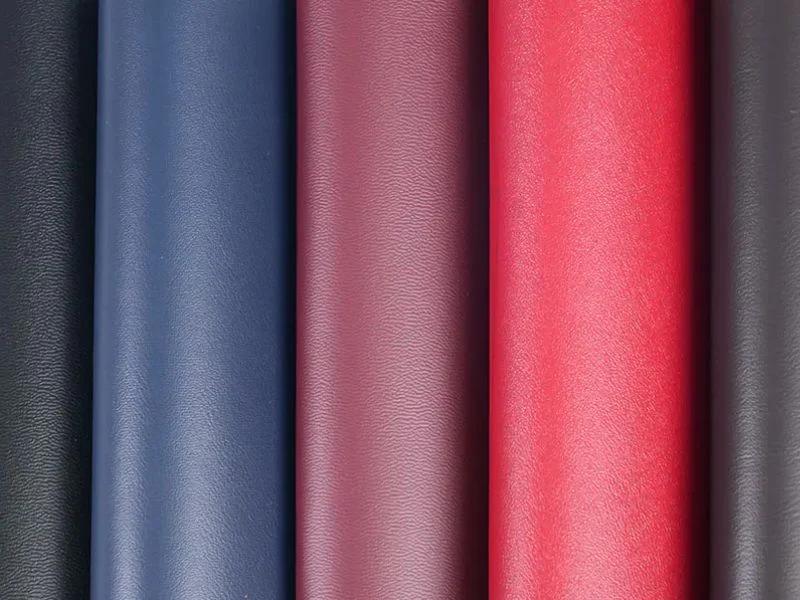
Upper Leather & Synthetics
- Formats: full grain and split shoe leather, PU and microfibre synthetic, patent and coated uppers
- Watch out: a hide is irregular and dear — a fixed die layout wastes it, and a laser scorches the grain and edges
- How we cut it: the camera nests upper parts around range defects on each hide and the knife shears the grain clean, no heat mark
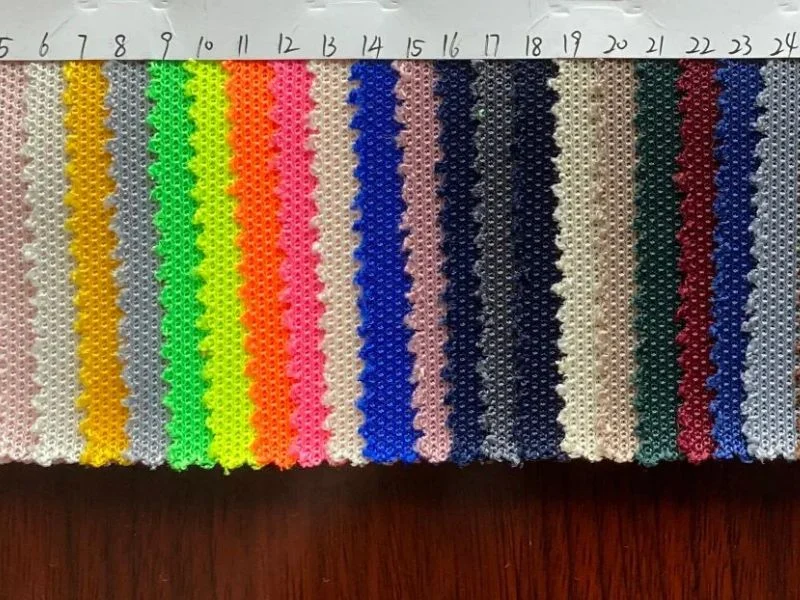
Textile & Knit Uppers
- Formats: engineered flyknit, spacer mesh, functional textile and sandwich mesh
- Watch out: knit and mesh fray and distort if a blade drags, and the print or the knit zones have to register
- How we cut it: camera registration locks to the knit zones and a drag or oscillating blade shears the mesh without fraying
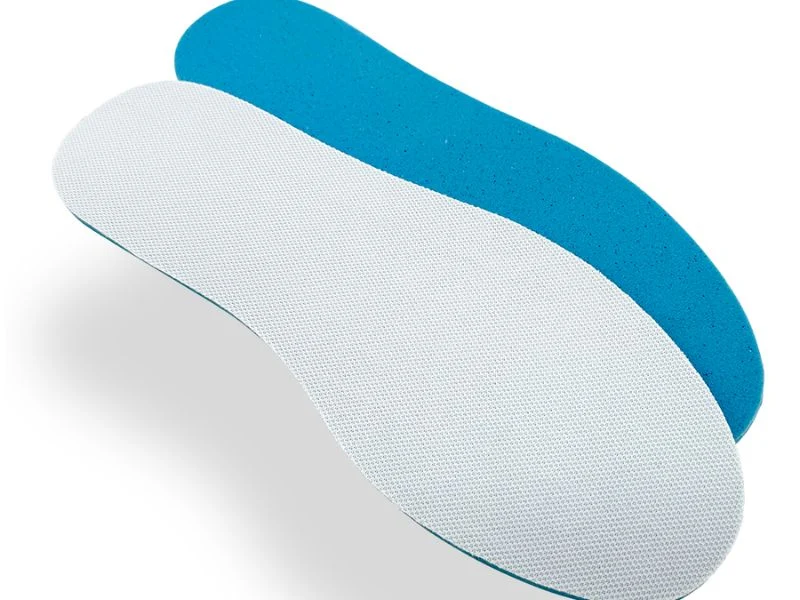
Foam, Lining & Insole Board
- Formats: EVA and PU insole foam, ortholite, textile lining, dacron and needled felt, 2–10 mm
- Watch out: soft foam compresses and drifts under a blade, so the footbed comes out undersized
- How we cut it: zone vacuum holds it and the oscillating knife shears full-depth in one pass — the footbed matches the CAD
Reinforcement & Toe Puff
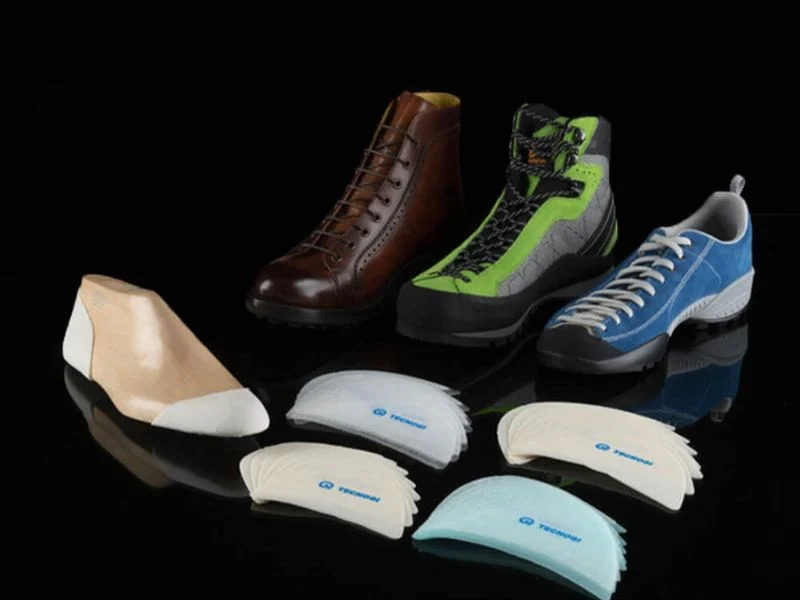
- Formats: counter and toe-puff sheet, shank board, thermoplastic reinforcement, tape
- Watch out: thermoplastic reinforcement is stiff and brittle and shatters on a crushing die
- How we cut it: a shearing knife cuts it clean to shape without cracking, kiss-cut or through-cut in the same nest
Cut behaviour verified on MNT C-series vibrating-knife tables at Hangzhou Chaohan; hide-yield notes from footwear-production installs.
Who Cuts Footwear This Way
Footwear Brands & OEM Production
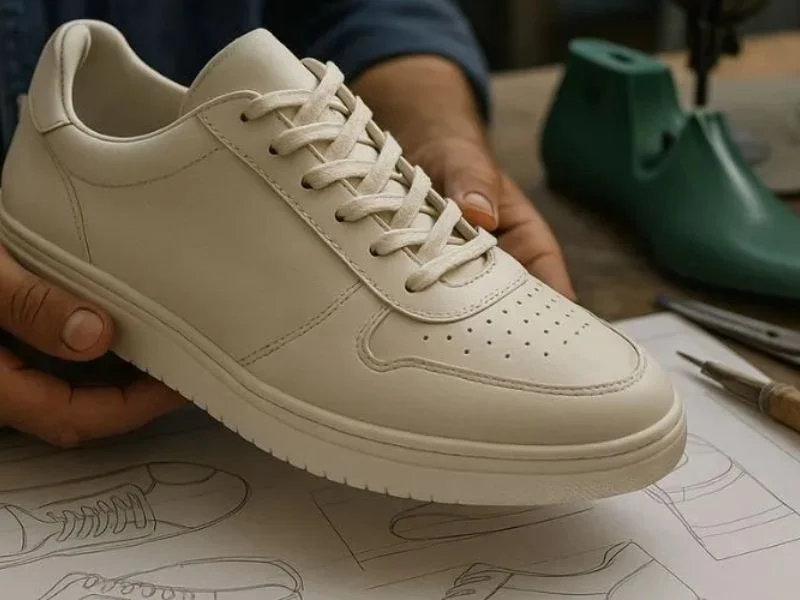
- Parts: sports, fashion and safety-shoe uppers, linings and insoles in size runs
- The hard part: many styles and sizes, frequent revisions, and hide yield that decides the cost of every pair
- What you get: nested per hide and style, labelled for the closing room — a new style is a file, never a new die
Sample Rooms & Development
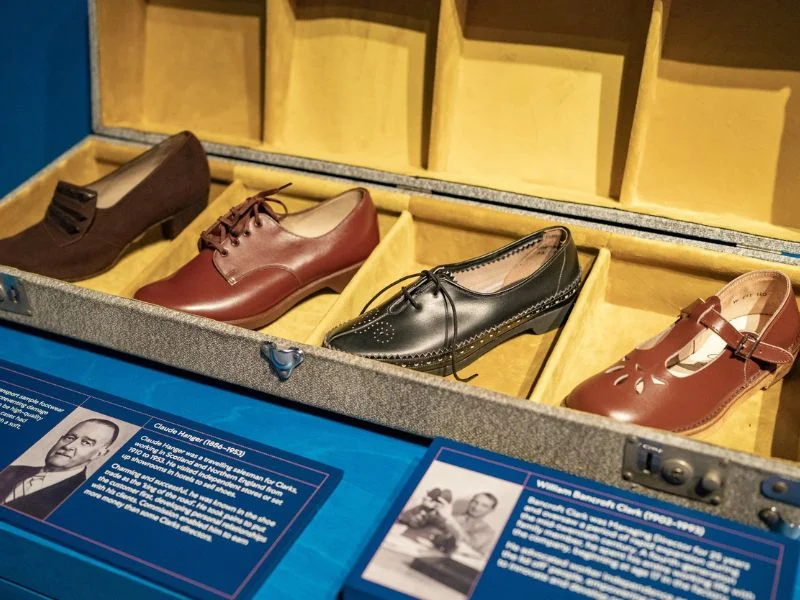
- Parts: prototype uppers, pattern grading and short development runs
- The hard part: a die per iteration is too slow and dear when the pattern changes daily
- What you get: cut straight from the CAD pattern, no tooling — iterate a style in hours, not a die lead time
Leather Goods & Bags
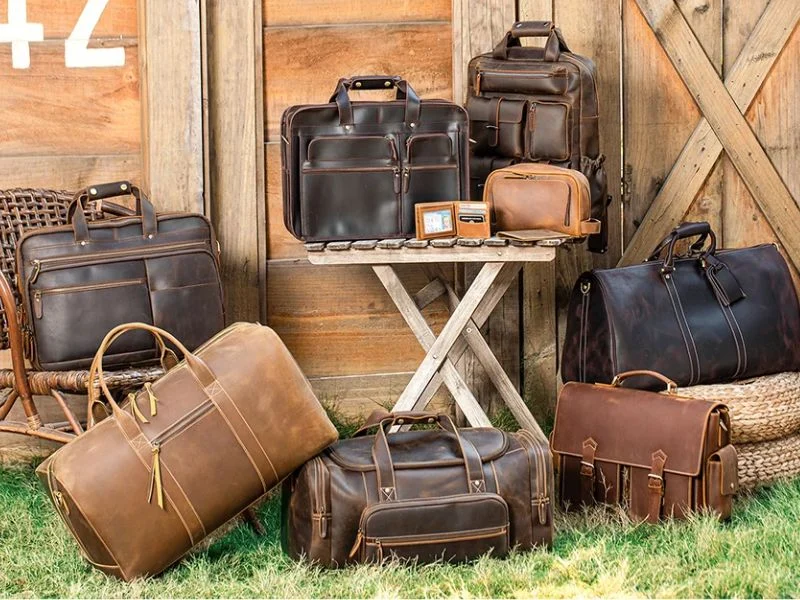
- Parts: bags, straps, wallets and small leather goods alongside footwear
- The hard part: the same hide, the same yield problem, a different set of parts
- What you get: one table nests bags and uppers from the same hide, so offcuts feed the smaller parts
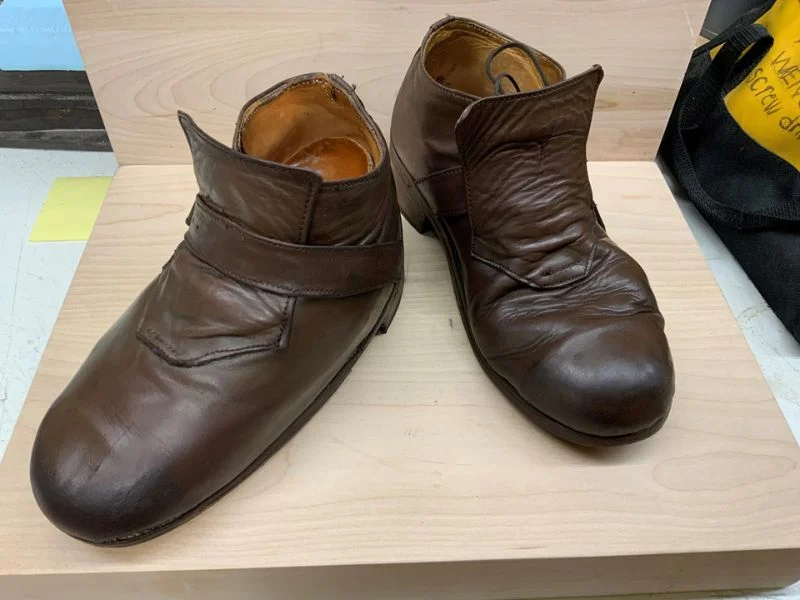
Orthopedic & Custom Footwear
- Parts: custom insoles, orthotic uppers and made-to-measure parts
- The hard part: one-off geometry per patient, no economic case for a die at all
- What you get: a bespoke pattern is just another file — cut on demand, repeatable to the millimetre
Application mix from MNT installs in footwear OEM and leather-goods shops; grading and closing-room notes from production cutting rooms.
Recommended MNT Footwear Cutting Machines
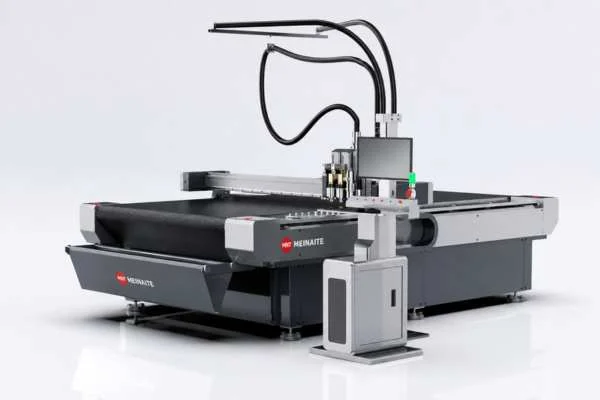
C2516T Digital Cutting Machine
- Cuts: upper leather, synthetic, mesh, lining and insole foam
- Specs: 2500 × 1600 mm · EOT oscillating + drag + camera registration · zone vacuum · conveyor feed
- Best for: production upper cutting from hide and roll, with defect and print nesting
- Price: From $16,900
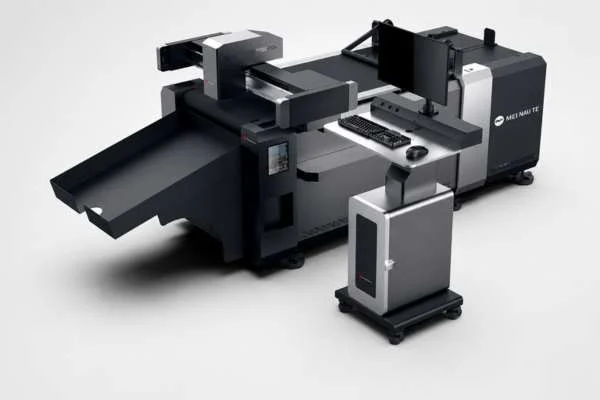
C6090 Digital Cutting Machine
- Cuts: sample uppers, graded patterns and short development runs
- Specs: 600 × 900 / 600 × 1200 mm · EOT + creasing · vacuum table
- Best for: sample rooms, pattern development and custom footwear
- Price: From $12,000
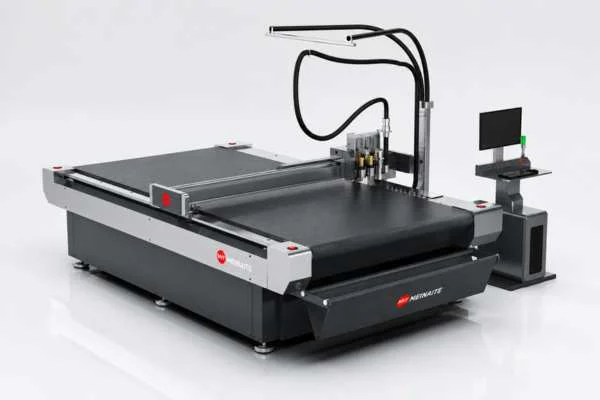
C3232 Digital Cutting Machine
- Cuts: wide textile rolls, bulk lining and large-batch nesting
- Specs: 3200 × 3200 mm · POT pneumatic knife + EOT oscillating · zone vacuum
- Best for: high-volume textile-upper and lining production too wide for a 1600 mm table
- Price: From $11,555
Specifications from MNT C-series build sheets; all three share one platform, software and tool range — Hangzhou Chaohan.
Where a Knife Beats a Clicking-Press Die on Footwear — and Where It Doesn’t
| Digital knife (this page) | Clicking-press die | Laser | |
|---|---|---|---|
| Design change | A new file | A new steel-rule die — cost + lead time | A new file |
| Hide yield | Camera nests around defects | Fixed die layout, defects wasted | Camera, but edge scorched |
| Edge | Sheared clean | Crushed by the die | Scorched on leather, fume on synthetic |
| Mesh & knit | Sheared, no fray | Crushes and distorts | Melts the knit |
| Best at | High-mix styles and sizes | One settled style at volume | Flat synthetic only |
Where footwear differs from the leather material page. Cutting hide as your material — grading tannage and thickness — is the leather cutting machine. This page is the footwear part — uppers, linings, insoles and reinforcement nested from hide, mesh and foam and kitted for the closing room, which is a different production job from cutting a hide on its own.
Three things that catch first-time buyers
- Hide yield pays for the machine, not cutting speed. On uppers the leather dwarfs the machine cost, so camera nesting around range defects — not how fast it cuts a rectangle — is the return. Judge a demo on parts-per-hide off a real skin, not on raw speed.
- The clicking press does not disappear overnight. A digital table wins on high-mix, samples and defect nesting; a die still wins on one settled high-volume style. The honest sell is the mix — most cutting rooms run both, and the table absorbs the styles a die cannot justify.
- Mesh and knit need shear, not heat. Engineered knit and spacer mesh melt under a laser and distort under a crushing die; a shearing blade on vacuum cuts them clean and in register. Test the machine on your actual knit upper, not on plain leather, per footwear-industry material trends.
Why Footwear Cutting Rooms Choose the C-Series
On footwear the machine earns its keep at the camera and the nest, not at headline speed — hide yield and pattern registration decide the cost of every pair. About MNT (MEINAITE) — who builds it and where. Carrying the line? Territory and spare-parts terms are on our partnership page.
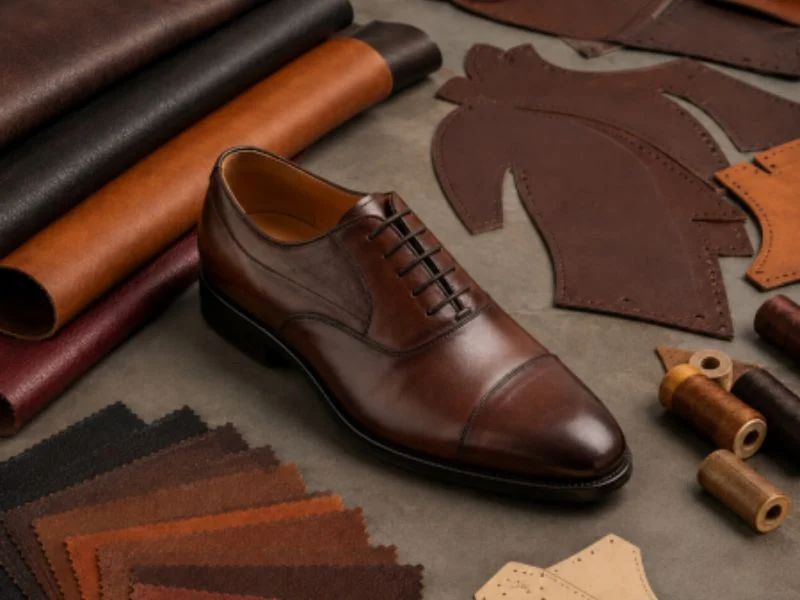
Yield and Registration on Every Hide
- Camera nests upper parts around the range defects on each skin
- Registers to printed, perforated and knit-zone patterns
- Shears leather, synthetic and mesh clean — no fray, no scorch
- For distributors: footwear and leather-goods makers are concentrated in production clusters and re-tool constantly for new styles — replacing die tooling with a digital table is an ROI they grasp fast, and blade and underlay pull-through is steady once it is in the cutting room
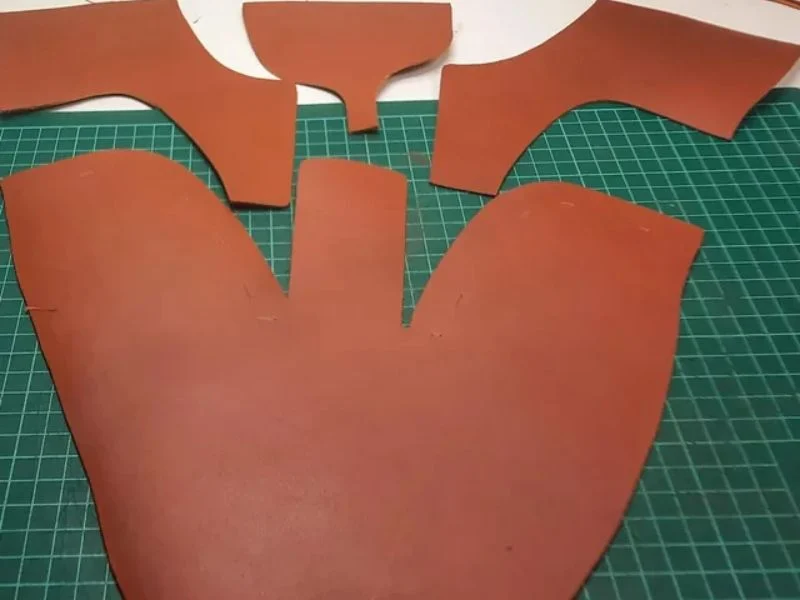
High-Mix Production Without the Die Wall
- A style or size change is a file, never a new steel-rule die
- Samples and short runs cut on demand with no tooling
- One table nests uppers, linings, insoles and reinforcement
- For distributors: spare-parts commitment, territory and training are the three things that decide whether a machine is worth carrying — all three are set out on our partnership page
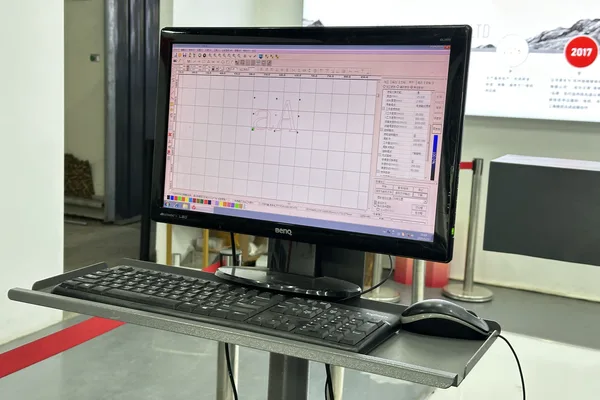
The Factory That Builds Your Footwear Cutter
- Frames, gantries and vacuum tables built in-house by Hangzhou Chaohan
- Every machine run-tested and calibrated before it ships
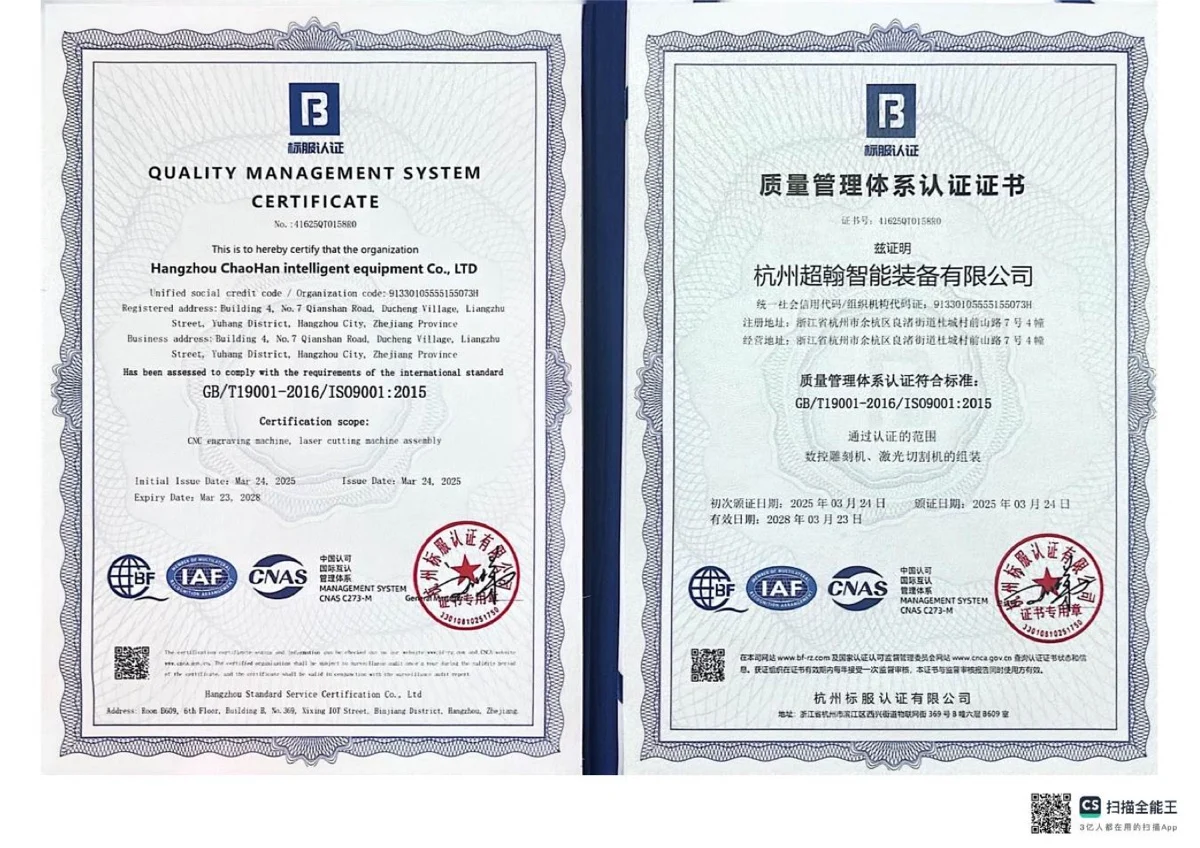
CE + ISO — Send Your Upper for a Free Cut
- CE-marked and ISO 9001:2015 certified, built by Hangzhou Chaohan
- Send a hide, a mesh and an upper pattern — we nest and cut it free and return the parts and edge photos
- 12-month warranty, lifetime software updates, on-site commissioning and training
CE-marked (EU 2006/42/EC), ISO 9001:2015; 8 patents incl. 1 invention patent; built by Hangzhou Chaohan, not traded.
Frequently Asked Questions
Can a digital knife replace a clicking press for shoe uppers?
For high-mix work, yes. A digital knife table cuts uppers, linings and insoles straight from the CAD pattern with no die, so a style or size change is a file rather than new tooling. A clicking press still wins on one settled style at very high volume — most cutting rooms run both, with the digital table taking the styles, samples and short runs a die cannot justify.
Does it nest around defects on a shoe-leather hide?
Yes. The camera maps each hide and the nesting software places upper parts around range defects, holes and brand marks, so scrap goes to offcut areas rather than into a visible upper. On footwear, where leather is the biggest cost per pair, that parts-per-hide yield is what pays the machine back.
Can it cut engineered knit and mesh uppers?
Yes, and it is the better tool for them. A shearing blade on zone vacuum cuts flyknit, spacer mesh and functional textile without fraying, and the camera registers to the knit zones so the cut lands where the design intends. A laser melts the knit and a crushing die distorts it — a cold shear does neither.
Why not laser-cut shoe uppers?
Because heat damages the face. A laser scorches leather grain, melts knit and synthetic uppers, and releases fumes from coated materials. A cold knife adds no heat, so the grain, the knit and the coating all survive — and it cuts foam and insole board, which a laser cannot do cleanly at all.
How thick a stack can it cut?
Roughly 0.6 mm single upper leather up to about 10 mm of stacked lining or insole foam, depending on material and blade. Most upper cutting is single-ply for yield and registration; linings and insole board are where stacking helps, and the exact pass count comes from a sample cut of your material.
How much does a shoe upper cutting machine cost?
A production digital knife cutter with vacuum bed and camera registration runs roughly USD 12,000 to 40,000, depending on table size, tool head and whether the camera system is fitted. A sample-room table sits near the bottom; a wide production table with conveyor near the top. Send your material list, part sizes and monthly volume for a factory-direct quote.
Which C-series model fits footwear work?
All C-series machines share one platform, software and tool range — the difference is working size. The C6090 suits sample rooms and pattern development; the C2516T suits production upper cutting from hide and roll; the C3232 exists for wide textile rolls and bulk lining. See the full digital cutting machine range.
Footwear Cutting — Technical Guides
Die or digital, hide or knit — the guides behind every recommendation on this page.
Cutting Leather for Automotive Interiors and Footwear
How footwear and automotive shops cut hide and coated trim — the registration and nesting decisions that decide yield on expensive material.
Oscillating Knife vs Laser Cutting for Leather: Which Should You Choose?
Why a cold knife beats a laser on leather and synthetic uppers: no scorched grain, no melted knit, no fumes.