
Door Making CNC Machine for Interior and Entry Doors
If you make interior or entry doors — MDF moulded-look doors, frame-and-panel solid wood, carved entry doors — every new design on a spindle moulder or a pattern router means new cutters and a new setup. MNT (MEINAITE) ATC CNC routers and machining centres cut the blank, the panel grooves, the carving and the face bores of a full-size door leaf from one program.
- 1300 × 2500 mm bed takes a standard door leaf in one piece; 4000 × 2000 mm takes two side by side
- Automatic tool changer: profile, groove, carve and bore without stopping
- A new door design is a new file — no cutters to grind, no templates to make
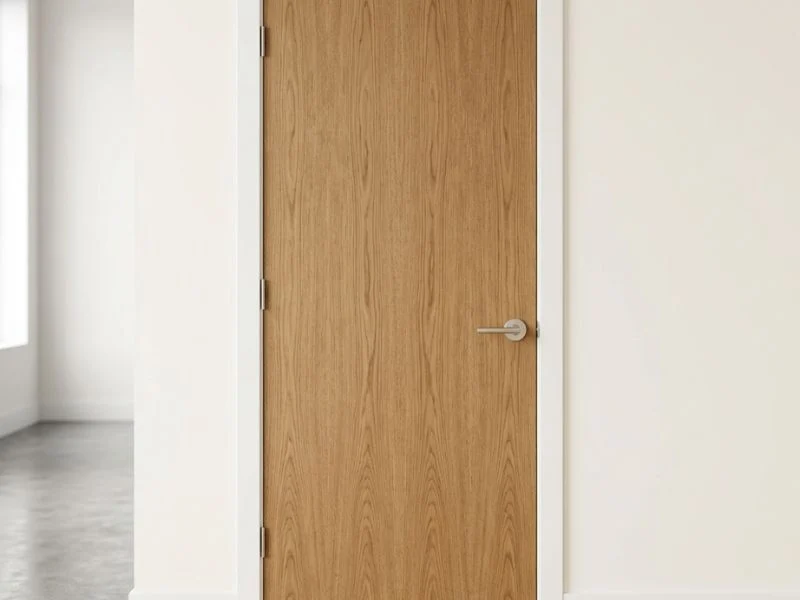
What a Door Making CNC Machine Changes in a Door Shop
This page is written for interior door manufacturers producing MDF and moulded-look doors, solid wood and entry door makers, and joinery shops that build doors to order alongside frames and panelling.
The traditional door shop runs on spindle moulders, a pattern router and a lot of setups. That is efficient for one design in volume and slow for everything else: each new panel profile is a new cutter set, and each new groove pattern is a new template. Buyers now expect a catalogue of designs, and a shop that needs a day of setup per design cannot offer one.
Where a CNC router fits. A door leaf is a flat panel, and almost everything that makes one door different from another happens on its face: the V-grooves and routed patterns on an MDF door, the raised panel on a frame-and-panel door, the carving on an entry door, the cut-outs for glass lites and louvres, the cross bore for the lockset. An ATC router does all of that in one program, and a new design is a new file. What it does not do on its own is the work on the edge of the door — hinge rebates and the latch bore — which we explain further down, because it decides which machine you need. For door performance and product standards, the Window & Door Manufacturers Association is the North American reference.
Cabinet and wardrobe doors are a different job — small panels nested by the sheet with hinge cups bored in the same setup — and our cabinet making CNC machine page covers them. This page is about full-size interior and entry door leaves.
Door Materials We Machine
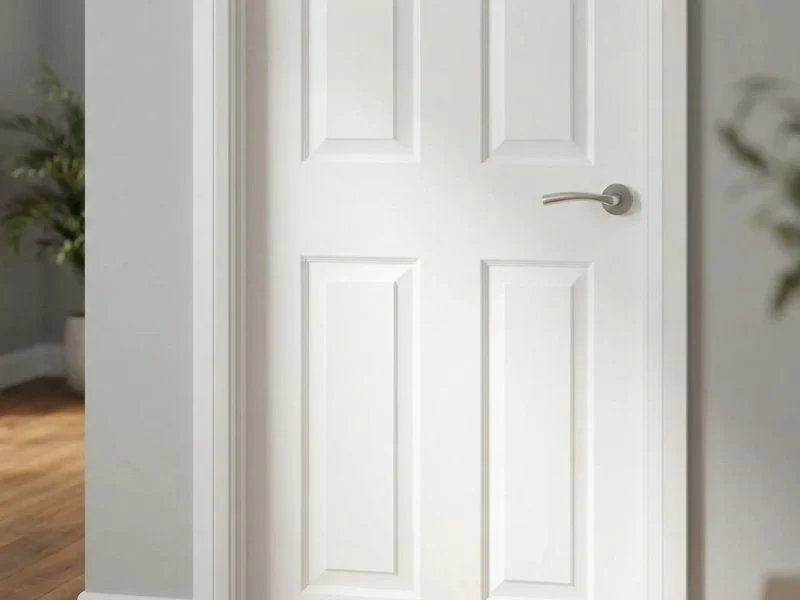
MDF and HDF Door Blanks
- Formats: 38–45 mm MDF and HDF blanks for painted and moulded-look doors
- Watch out: a dull or slow cutter fuzzes MDF fibre in the grooves, and every fibre shows through the paint
- How we cut it: sharp compression and V-groove tooling at the right chip load; panel materials in depth on the cabinet page
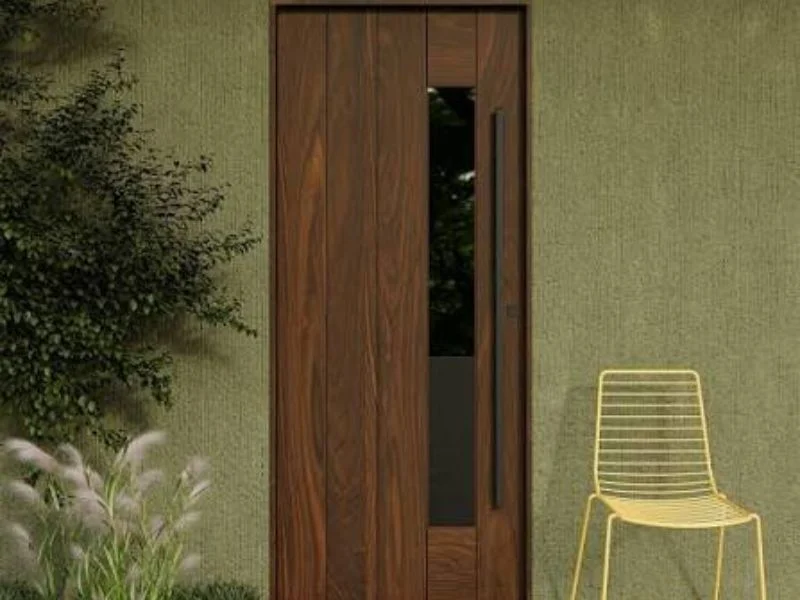
Solid Hardwood and Softwood
- Formats: oak, walnut, ash, pine and engineered solid-wood door stock
- Watch out: solid wood moves — cut a deep pattern on one face and the leaf can cup unless the stock is dry and the cut is balanced
- How we cut it: roughing and finishing passes from the ATC, with stock moisture checked before carving, not after
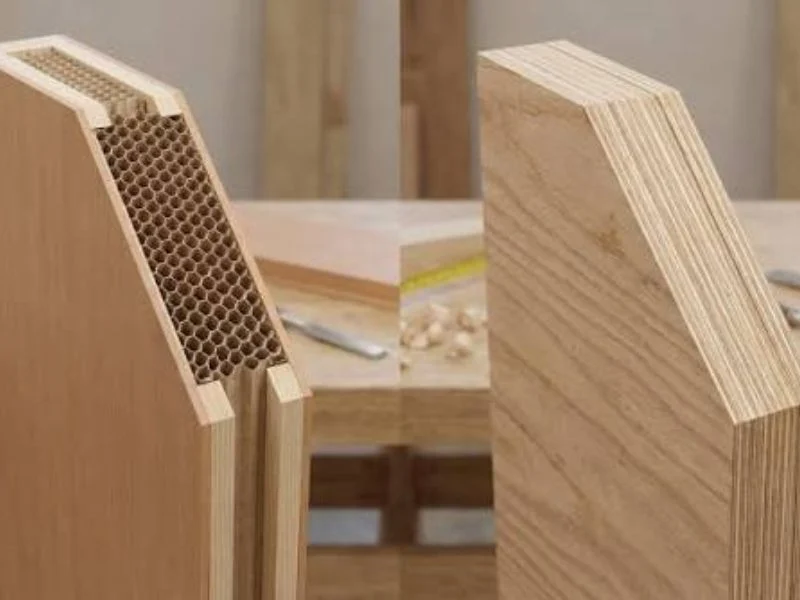
Plywood, LVL and Flush-Door Cores
- Formats: plywood and LVL stiles, flush-door skins and core panels
- Watch out: cut a lite opening through a flush door and you cut into the core structure — the frame must be designed for it
- How we cut it: lite and louvre cut-outs routed after the core layout is confirmed from your drawing
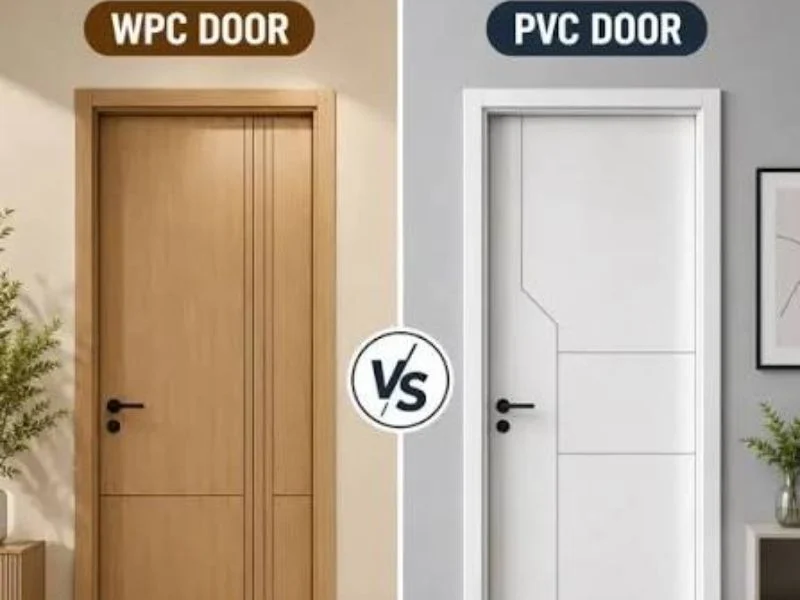
PVC and WPC Door Board
- Formats: PVC foam and WPC door boards for bathroom and moisture-prone doors
- Watch out: the wrong spindle speed melts PVC in the groove instead of cutting it
- How we cut it: single-flute plastic tooling and higher feed so the chip carries the heat away
Machining behaviour verified on MNT T-series ATC routers and M-series machining centres — Hangzhou Chaohan.
Doors and Door Parts Cut on One CNC Program
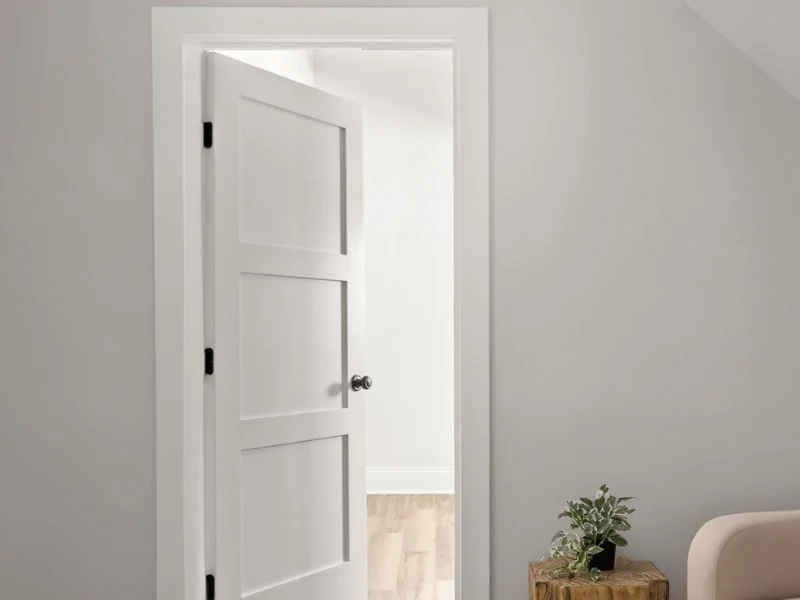
MDF Moulded-Look Interior Doors
- Parts: shaker, grooved and routed-pattern MDF doors for painting
- The hard part: a catalogue of dozens of designs, each ordered in small quantities
- What you get: every design stored as a program — switching design is loading a file
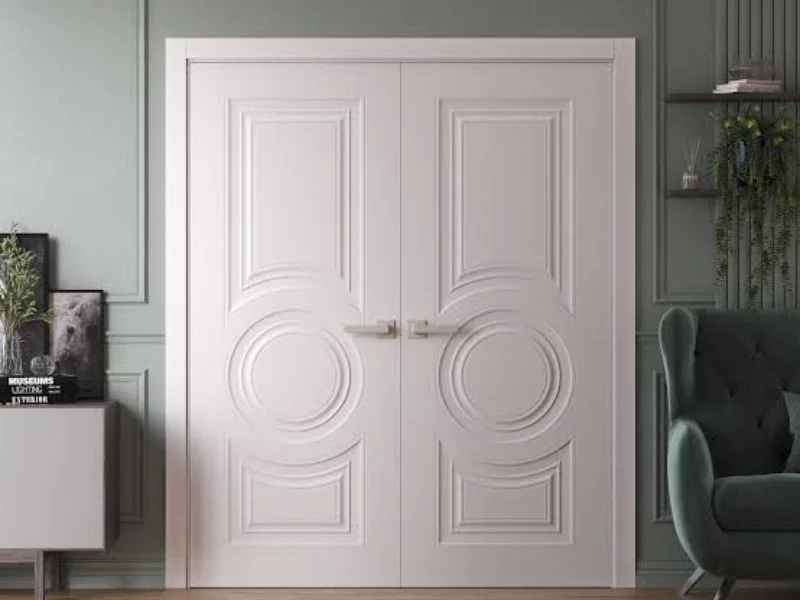
Frame-and-Panel Solid Wood Doors
- Parts: stiles, rails and raised panels, cut and profiled to size
- The hard part: the raised panel and the stile profile must match exactly or the joint shows
- What you get: matched profiles cut from the same tool path set, part after part
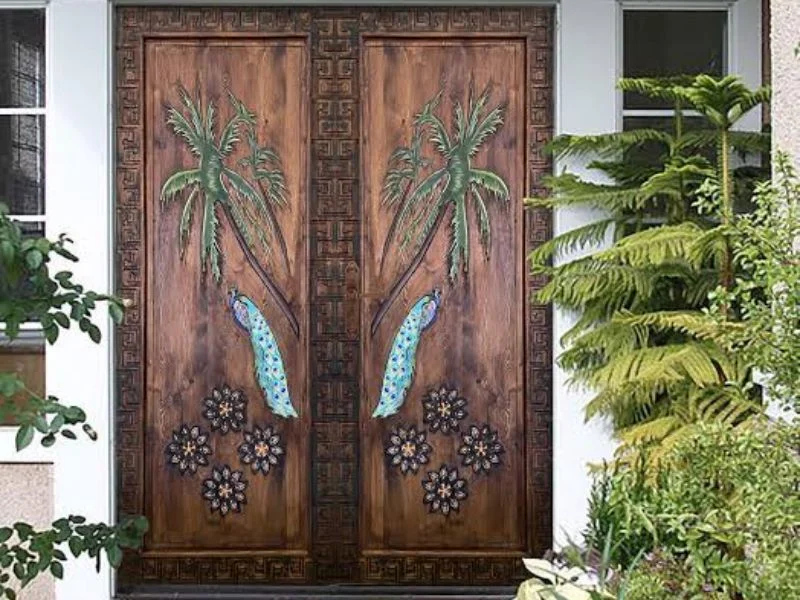
Carved and Decorative Entry Doors
- Parts: relief-carved panels, decorative mouldings and one-off entry doors
- The hard part: hours of hand carving per door, and no two carvers work the same way
- What you get: roughing and finishing tools change automatically, so a carved panel runs unattended
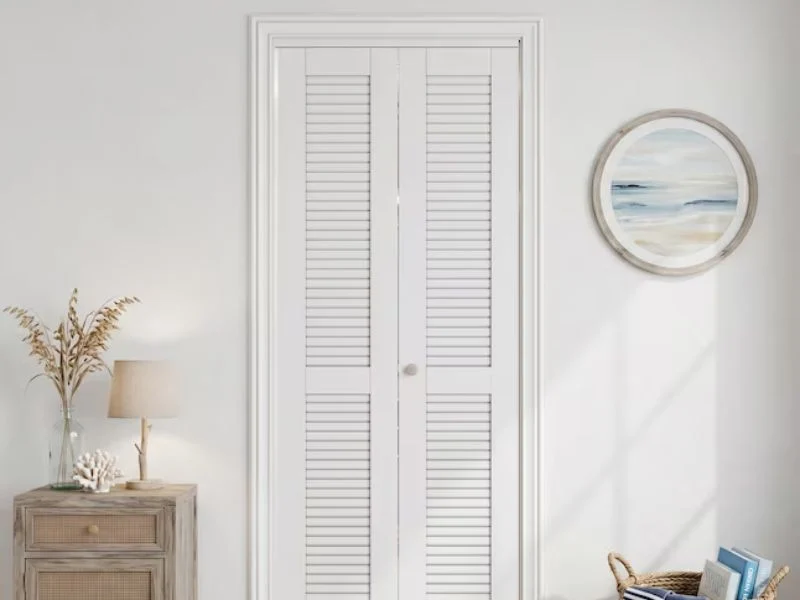
Lite, Louvre and Hardware Cut-Outs
- Parts: glass lite openings, louvres, letter plates and lockset cross bores
- The hard part: an opening in the wrong place scraps a finished door
- What you get: openings and face bores placed from the drawing, in the same setup as the face pattern
Application mix from MNT installs in door and joinery shops; tooling per T-series and M-series build sheets.
Recommended MNT Door Making Machines
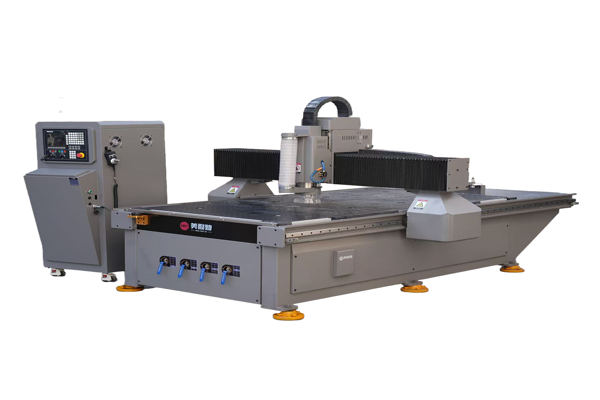
T6 ATC Engraving & Processing Center
- Cuts: MDF, solid wood and PVC door leaves — grooves, panels, carving and face bores
- Specs: 1300 × 2500 mm · 4-tool linear ATC · 9 kW air-cooled or 7.5 / 11 kW water-cooled spindle
- Best for: door shops starting on CNC with one leaf per cycle
- Price: From $11,100
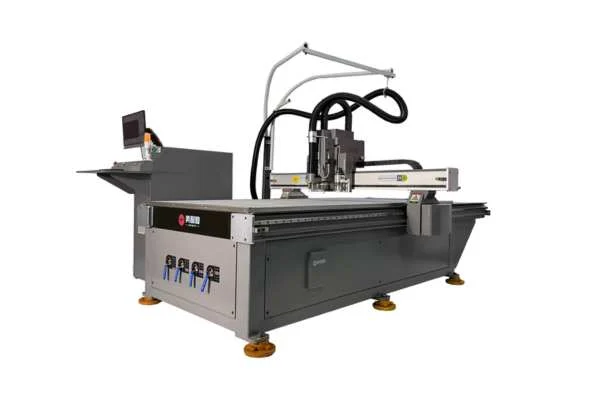
T7 ATC Digital Engraving & Cutting Machine
- Cuts: door leaves and panels where many tools are used in one program
- Specs: 1300 × 2500 mm or 2000 × 3000 mm · 9- or 6-tool linear ATC · 4-zone vacuum
- Best for: design-heavy door catalogues with frequent tool changes
- Price: From $17,800
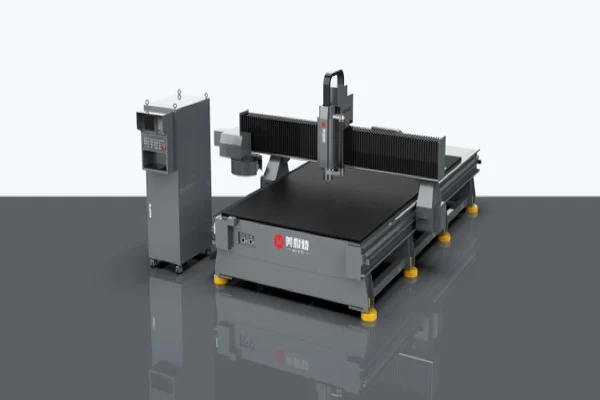
M4020 Large-Format CNC Machining Center
- Cuts: two door leaves side by side, or oversize entry doors
- Specs: 4000 × 2000 mm · 8-tool disc ATC · 9 kW spindle · ±0.025 mm positioning
- Best for: production door lines and oversize or double doors
- Price: From $37,050
Specifications from MNT T- and M-series build sheets; prices from each product page — Hangzhou Chaohan.
How a Door Leaf Runs on a Door Making CNC Machine
One leaf, one clamping, one program. The edge work at the end is the step that decides your machine choice.
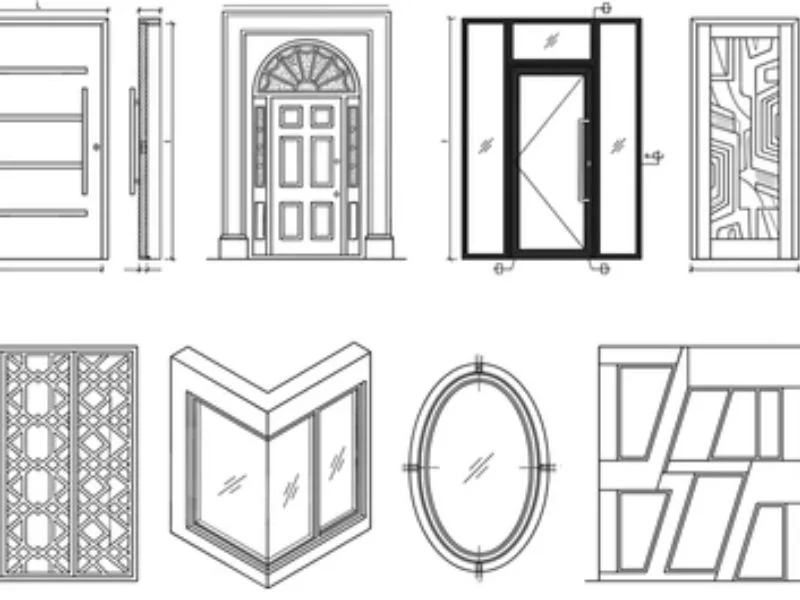
Door Design to Program
The design becomes a set of tool paths: sizing, face pattern, panel, carving, openings. Once a design is programmed it is a catalogue item — reload it for the next order in any size.
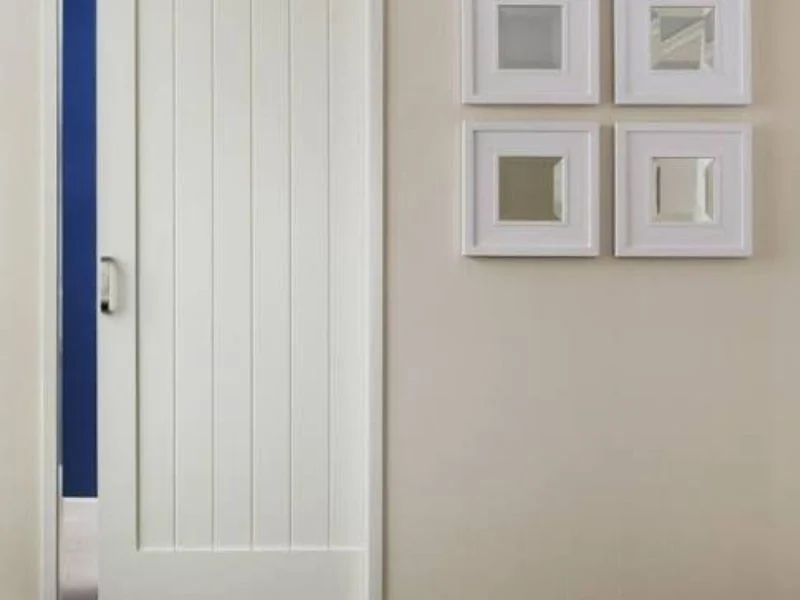
Sizing and Face Pattern
The leaf is held on vacuum and cut to its final size first, so the face pattern is placed from the true edges rather than from a blank that was only roughly sized.
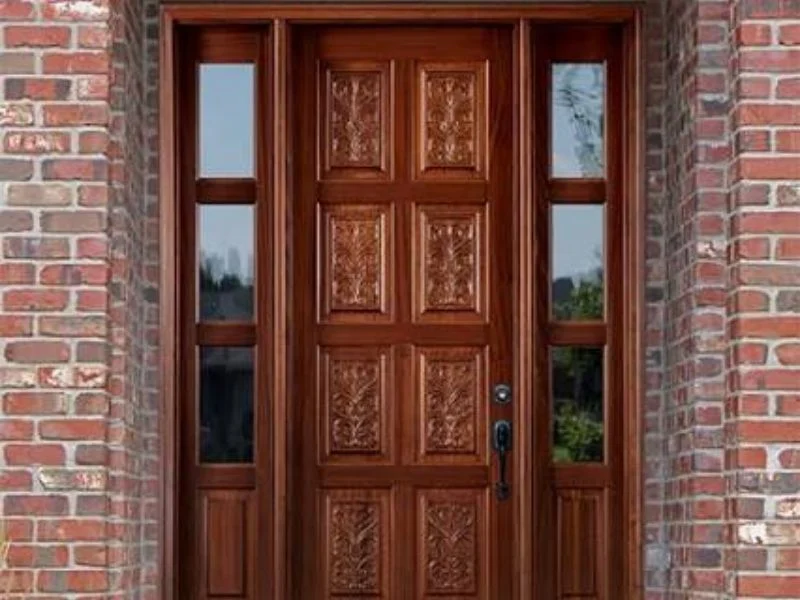
Panels, Carving and Openings
The tool changer swaps from profile cutter to carving bits to a straight cutter for lite openings without the operator stopping the machine.
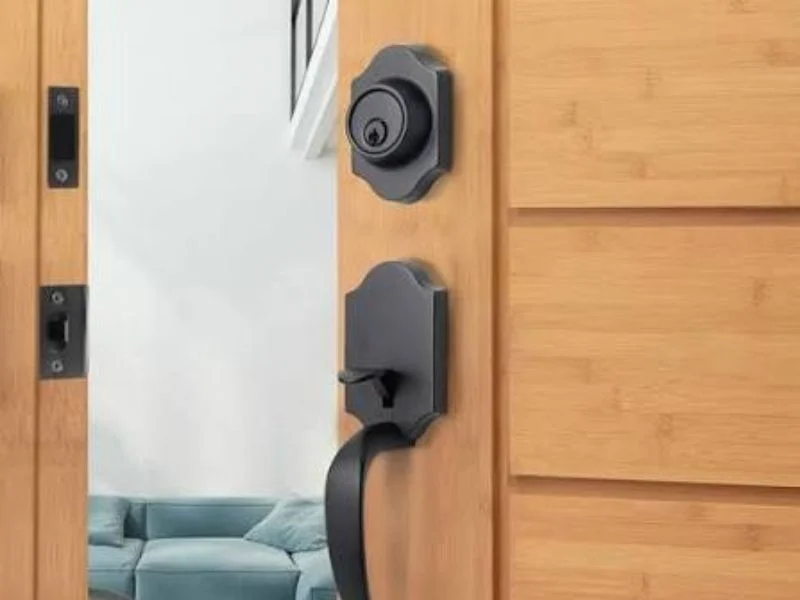
Hardware Preparation
The lockset cross bore through the face is drilled in the same program. Hinge rebates and the latch bore sit on the door edge, which a three-axis router cannot reach on a flat leaf — see the boundary below.
What a Door Making CNC Router Does Not Do
A door shop needs more than one machine. These are the jobs that sit outside a flatbed ATC router, so you can plan for them.
Hinge Rebates and Latch Bores on the Edge
With the leaf lying flat, a three-axis spindle only reaches the face. Hinge rebates and the latch bore are cut into the edge, which needs an angle-head aggregate or a dedicated door machining centre that clamps the leaf on edge. Tell us your hardware and we will say which route fits your volume.
High-Volume Flush-Door Lines
A plant making thousands of identical flush doors a day runs pressing, sizing and edge-machining lines built for that one product. A CNC router earns its place on design variety, not on raw volume of one flat door.
Pressing, Edge Banding and Finishing
Laminating skins, edge banding and painting are separate machines. The router hands them a sized, patterned and bored leaf; it does not replace them.
Why Door Shops Choose MNT Routers
In a door shop the machine earns its keep on design changeovers — the catalogue you can offer is the number of programs you have, not the number of cutter sets. About MNT (MEINAITE) — who builds it and where. Carrying the line? Territory and spare-parts terms are on our partnership page.
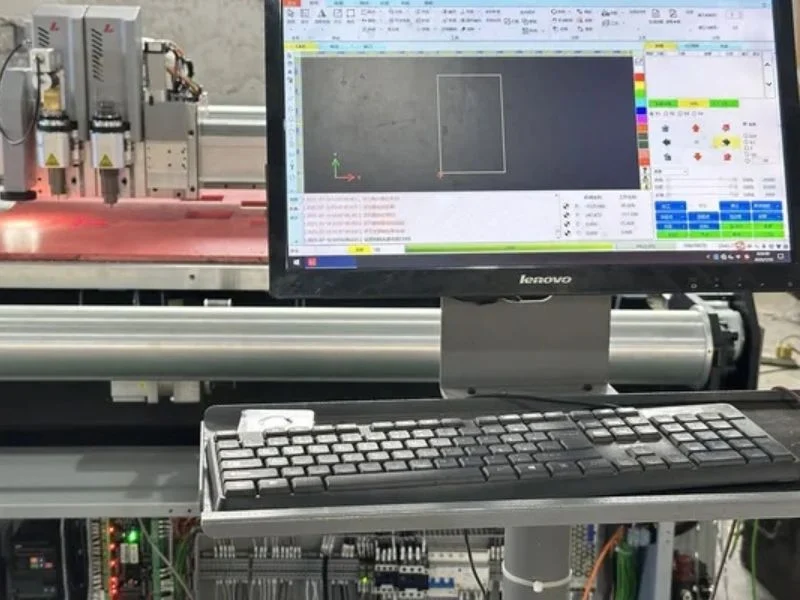
A Door Catalogue Stored as Programs
- Each design is a program, reloaded for any size and any order
- Tool changer runs profile, carve and bore without an operator standing by
- For distributors: door and joinery shops cluster in building-materials districts — one working reference machine is shown to the next shop down the road, and router bits are a steady repeat order
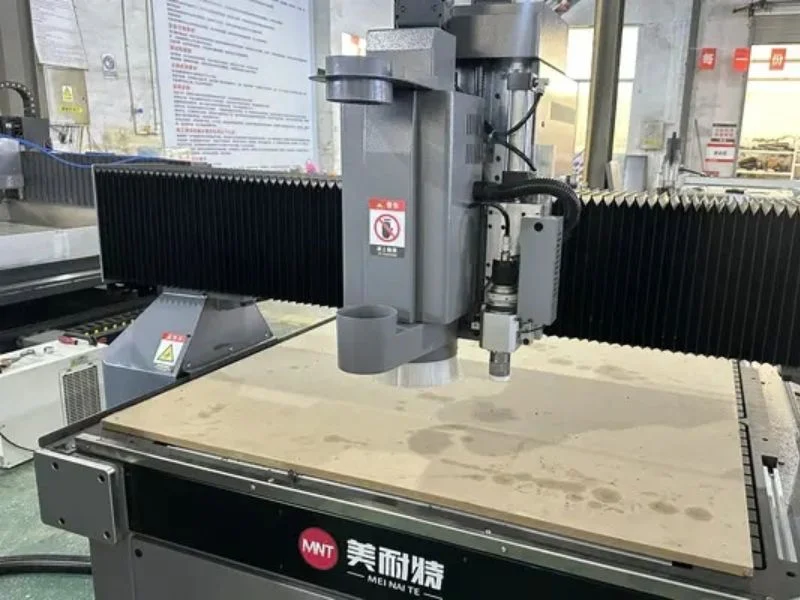
From One Leaf Per Cycle to Two
- Start on a 1300 × 2500 mm router, move to a 4000 × 2000 mm machining centre as volume grows
- The same programs run on both — no reprogramming when you scale
- Distributors: territory, spare-parts stock and training terms are set out on our partnership page
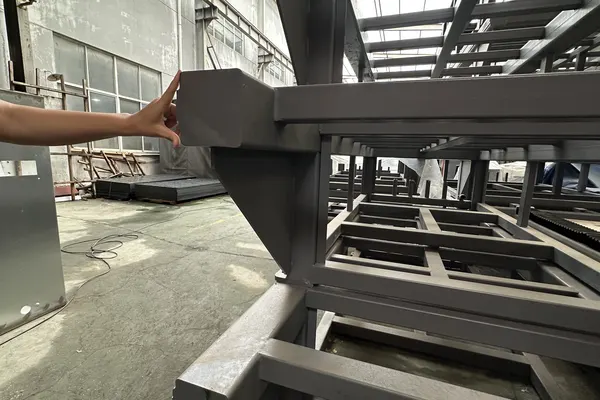
The Factory That Builds Your Door Making Router
- Frames are welded, stress-relieved and machined in our Hangzhou plant, not bought in and badged
- A flat, stiff bed is what keeps groove depth even along a 2-metre door leaf

CE + ISO — Send a Door Design for a Free Sample Panel
- CE marked and built under an ISO 9001:2015 certified quality system
- Send a door drawing and your material — we cut a sample panel and send back the part and the cycle time
CE-marked (EU 2006/42/EC), ISO 9001:2015; 8 patents incl. 1 invention patent; built by Hangzhou Chaohan, not traded.
Frequently Asked Questions
How much does a door making CNC machine cost?
MNT door-capable machines start from $11,100 for the T6 ATC router and $17,800 for the T7; the M4020 large-format machining centre, which takes two leaves side by side, starts from $37,050. The right choice depends on door size, design variety and daily volume — send a drawing and your output target and we quote the configuration.
What door size fits on the machine?
The T6 and T7 have a 1300 × 2500 mm bed, which takes a standard interior or entry door leaf in one piece. The T7-3020 at 2000 × 3000 mm and the M4020 at 4000 × 2000 mm take oversize doors or two standard leaves side by side.
Can a CNC router cut hinge rebates and the lock bore?
It cuts the lockset cross bore through the face in the same program. Hinge rebates and the latch bore are on the door edge, which a three-axis spindle cannot reach with the leaf lying flat — they need an angle-head aggregate or a dedicated door machining centre. We advise which route fits your hardware and volume.
Can one machine make both MDF and solid wood doors?
Yes. The same ATC router cuts MDF grooved doors, solid-wood frame-and-panel parts and carved panels; the difference is tooling and feed, which are stored in each program. Solid wood needs dry, stable stock so the leaf does not cup after deep carving.
Can it carve decorative entry doors?
Yes — relief carving is where the tool changer pays for itself. Roughing and finishing bits change automatically, so a carved panel that takes a skilled carver hours by hand runs unattended once programmed.
What software do I need to design doors?
Any CAD/CAM that outputs G-code or PLT. MNT routers run programs from Type3, ArtCAM, Mastercam, AutoCAD and CorelDRAW-based workflows; most door shops design in 2D CAD and generate carving tool paths in ArtCAM or Type3.
Is this the same machine used for kitchen cabinet doors?
The same router family, but a different job. Cabinet doors are small panels nested across a sheet with hinge cups bored in the same setup; full-size doors are single leaves with deeper patterns and edge hardware. Cabinet door production is covered on our cabinet making CNC machine page.
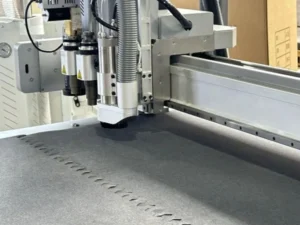
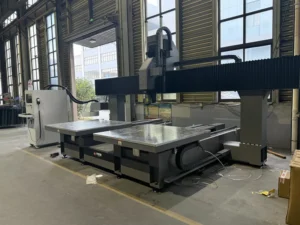
Door Making CNC — Technical Guides
The guides behind the recommendations on this page.
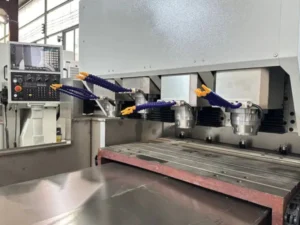
How to Choose an ATC CNC Router for Multi-Tool Production
How to choose an ATC router for multi-tool production — tool count, spindle and bed for door and panel work.
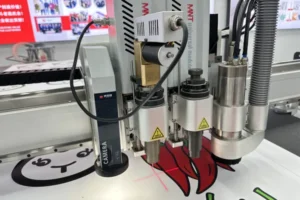
T7 vs T6 ATC Router: Spindle, Knife and Vision Workflow Comparison
T6 or T7 for a door shop: tool changer size, spindle and bed compared side by side.
CNC Router Maintenance Checklist: Daily, Weekly and Monthly Tasks
Keeping an ATC router accurate on long door-leaf runs: the daily, weekly and monthly CNC router maintenance checks.