Vision positioning on a precision fiber laser solves a specific alignment problem — cutting accurately relative to a feature that’s already on the material, rather than to a fixed origin point the machine assumes is correct. Most precision cutting jobs don’t need this. The ones that do genuinely can’t be done reliably without it.
A precision fiber laser without vision positioning cuts exactly where the program says to cut, relative to a fixed reference point on the machine. That works perfectly for parts cut from raw, unmarked material. It breaks down the moment the material itself carries a pattern, print, or existing feature that the cut needs to align to — because that feature’s actual position on the sheet varies slightly from the file’s assumed position every time.
This guide covers when vision positioning is actually useful, how it handles printed metal sheets and fine patterns, the alignment workflow and software setup involved, its real limitations, and what information to gather before configuring it for a specific job.
When Vision Positioning Is Actually Useful
Vision positioning earns its cost specifically when the cut needs to align to something already on the material — a printed pattern, an etched mark, an existing hole or feature from a prior process — rather than to a fixed origin the machine assumes is accurate. For parts cut from raw, unmarked sheet with no alignment dependency, vision positioning adds cost and complexity without a corresponding benefit.
The test is simple: does your part’s cut position depend on something that varies slightly from sheet to sheet, or from what the file assumes? If yes, vision positioning is solving a real problem. If the material is consistent, unmarked stock and the cut only needs to reference the machine’s own fixed geometry, a well-calibrated machine without vision positioning handles the job more simply.
Printed Metal Sheets and Fine Patterns
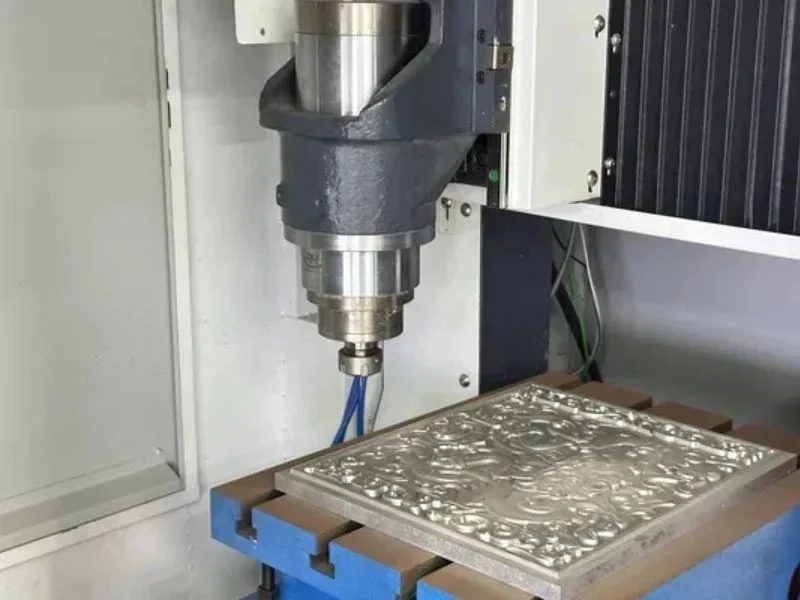
Printed or pre-marked metal sheets — decorative panels, branded components, sheets with printed or etched reference patterns — need vision positioning because the print or pattern’s actual position on the sheet shifts slightly from the nominal file position due to normal printing and material handling variance.
Fine patterns compound this challenge: the finer the feature the cut needs to align to, the less positional tolerance there is before misalignment becomes visible or functionally significant. This is exactly the scenario precision fiber laser buyers in electronics, decorative metalwork and precision hardware run into, which is why vision positioning is offered as an option on precision-focused machines rather than a standard feature everyone needs.
Alignment Workflow and Software Setup
The camera reads reference marks or features on the loaded sheet, calculates the offset between their actual position and the file’s assumed position, and applies that offset to the cut path before cutting begins — this happens as a setup step before the job runs, not continuously during the cut.
Software setup typically involves defining what the camera should look for — specific registration marks, or edge/feature detection against the part’s existing geometry — and confirming the search area the camera checks for those references. Getting this configuration right for your specific material and pattern type is a one-time setup effort per job type, not something reconfigured on every single run once established correctly.
Limitations and Sample Testing
Vision positioning depends on the reference marks or features being visible and detectable under the camera’s lighting and contrast requirements — low-contrast prints, reflective or highly polished metal surfaces, and inconsistent printing quality can all reduce read reliability, which is why testing on your actual material is essential before committing to production.
Highly reflective and polished metal in particular can challenge camera-based vision systems more than matte or printed surfaces, since reflections and glare interfere with reliable feature detection. Request a test run on your actual sheet type, printed pattern, and surface finish before assuming vision positioning will perform the same way it did on a supplier’s demonstration material.
Information Needed Before Configuration
Before configuring vision positioning for a job, gather: the exact reference mark or feature type the cut needs to align to, typical positional variance you’ve observed between sheets, surface finish and reflectivity of the material, and how tight the resulting alignment tolerance needs to be.
This information determines both whether vision positioning is the right solution and how it should be configured for reliable results. A supplier configuring the system without this information is working from assumptions rather than your actual production conditions, which increases the chance the initial setup needs rework once real production material is tested.
For the broader buying decision on precision fiber laser capability, see our precision fiber laser cutter buying guide. For the structural engineering that supports this level of precision, see why marble frames matter in precision laser cutting.
Frequently Asked Questions
Do I need vision positioning for every precision cutting job?
No — only when the cut needs to align to something already on the material, like a printed pattern or existing feature. Parts cut from raw, unmarked stock don’t need it.
Can vision positioning handle reflective or polished metal?
It can be more challenging — reflections and glare interfere with reliable feature detection more on reflective surfaces than on matte or printed ones. Test on your actual material’s surface finish before assuming standard performance.
How much positional variance can vision positioning correct for?
This depends on the camera’s search area and detection range — confirm this against your actual observed variance between sheets rather than assuming unlimited correction capability.
Is vision positioning a one-time setup or reconfigured every job?
Configuring what the camera looks for is typically a one-time setup per job type or pattern, not something reconfigured on every single production run once correctly established.
What should I test before committing to vision positioning?
Request a test run on your actual sheet type, printed pattern and surface finish — performance on a supplier’s demonstration material doesn’t guarantee the same results on your specific production conditions.
What information should I have ready before configuration?
The reference mark or feature type, typical positional variance between sheets, surface finish and reflectivity, and your required alignment tolerance — this determines both whether vision positioning fits and how it should be configured.