How to cut rockwool depends on how much of it you cut.
Most guides answer the homeowner’s question: one batt, a bread knife, a straight edge. That works for two pieces in a wall. It does not work for an HVAC contractor cutting duct liner all day, an OEM kitting appliance insulation, or a panel plant cutting hundreds of boards a shift, where dust, blade wear, crushed edges and scrap become the real costs.
This guide covers how to cut rockwool and mineral wool at production volume: tools, dust, compression, facing and when to move to a CNC knife table.
How to Cut Rockwool: The Short Answer
Cut rockwool with a sharp shearing blade that slices the fibre rather than crushing or tearing it: a serrated insulation knife for a few pieces, and an oscillating-knife CNC table for production volume — with dust extraction at the blade either way.
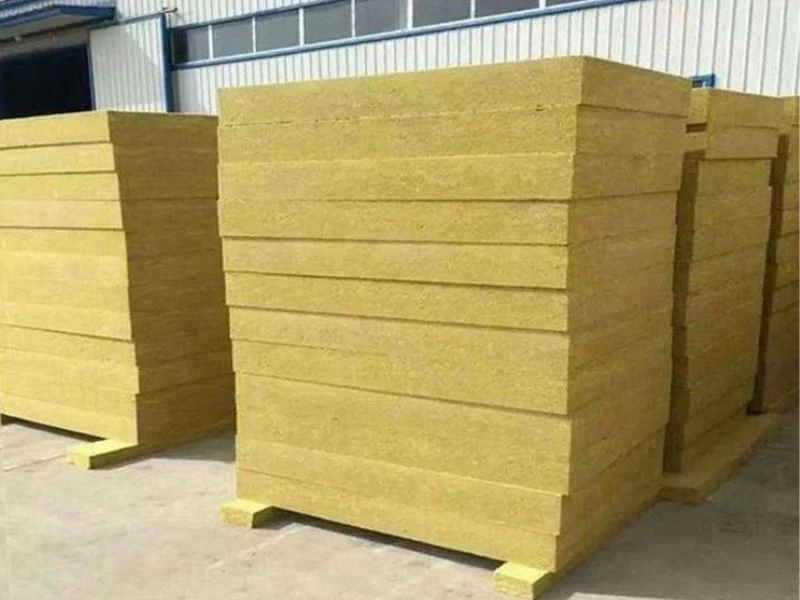
Rockwool — stone wool — is spun from molten basalt rock and slag into a mat of fine fibres held together with a binder. Glass wool is the related material spun from glass, and it softens far sooner: Wikipedia puts glass wool at about 230–260 °C against 700–850 °C for stone wool. Both are soft, springy and abrasive, and both shed fibre dust when cut.
Those three properties decide how to cut them. Softness means a blade that presses down crushes the board and changes its density. Springiness means a sheet that is compressed during cutting springs back to a different size. Abrasiveness means blades dull quickly. And fibre dust means extraction and protection are part of the process, not an extra.
| Volume | Best method | Main limitation |
|---|---|---|
| A few pieces on site | Serrated insulation knife and straight edge | Slow, uneven edges, operator fatigue |
| Dozens per day, simple shapes | Band saw or insulation saw at a cutting station | Dust, width limits, straight cuts only |
| Hundreds per shift, nested shapes | CNC oscillating-knife table with extraction | Capital cost; blades are a running cost |
| Thick rigid foam block (EPS / XPS) | Hot wire — a different job | Does not apply to mineral wool |
Why Cutting Rockwool at Volume Is Different
At production volume, the problems of cutting rockwool are dust, blade wear, crushed edges and scrap — not whether the knife goes through. A method that is fine for two pieces becomes expensive at two hundred.
Density and R-value. Stone wool board typically runs from about 40 to 160 kg/m³. A blunt blade or a sawing action that crushes the edge changes the local density, and with it the thermal and acoustic performance the specification paid for. The part fits, but it no longer performs as designed.
Dimensional accuracy. Duct liners, appliance kits and panel inserts must fit a defined space. Hand cutting drifts from piece to piece, and a liner cut short leaves a gap that bridges heat or sound.
Yield. Board is expensive, and on 1200 × 600 mm or larger sheets the offcuts add up fast. Hand-marked cuts waste material between parts; nested cutting from a file fits more parts on each board.
Labour and consistency. Hand cutting is slow, tiring and hard to keep consistent across a shift. Operators also spend the most time exposed to fibre dust.
This is why insulation fabricators move to CNC knife cutting once volumes rise. Our insulation cutting machine page covers what that equipment looks like for stone wool, glass wool and faced board.
Tools for Cutting Rockwool and Mineral Wool
The right tool for cutting rockwool shears the fibre cleanly — a serrated insulation knife by hand, or a powered oscillating blade on a CNC table — while hot wires, lasers and ordinary circular saws are poor choices.
Serrated insulation knife. The standard hand tool: a long, serrated blade that saws through the fibre with light pressure. It is cheap and portable but slow, and edge quality depends entirely on the operator.
Band saws and insulation saws. Useful at a fixed cutting station for straight cuts on batts and boards. They are faster than hand knives but throw fibre dust and cannot follow complex shapes.
Oscillating-knife CNC table. A powered blade moves rapidly up and down — see how it differs from drag and rotary blades in our guide to oscillating, rotary and drag knives — and shears the fibre against a vacuum-held board, following a nested file. It cuts complex shapes accurately, repeats exactly, and keeps the edge square without crushing it. The MNT C-series cuts up to 50 mm per pass with the electric oscillating tool, material dependent; confirm thicker or denser board with a sample cut.
What not to use. A hot wire is the right tool for EPS and XPS foam block, but it does nothing useful to stone wool, which withstands roughly 700–850 °C before melting according to Wikipedia. Lasers scorch the binder and burn any facing. High-speed circular saws throw large amounts of fine dust.
Dust, Fibres and Operator Safety
Fibre dust is the main hazard when cutting rockwool at volume: extract it at the blade, and give operators gloves, long sleeves, eye protection and a suitable dust mask.
Mineral wool fibres cause temporary skin itching and irritation, and dust can irritate the eyes and airways. Wikipedia notes that stone wool and slag wool are classified by IARC as Group 3 — not classifiable as to carcinogenicity in humans — for the types in common use since around 2000. That classification is reassuring, but it is not a reason to breathe the dust.
Extraction at the cutting head is the most effective control, because it removes fibre where it is created rather than after it spreads. On a CNC knife table, a shroud and extraction port at the head, plus vacuum hold-down that keeps the board still, reduce airborne dust far more than a saw in open air.
Personal protection still matters: gloves, long sleeves, eye protection and a dust mask rated for fibres, following the insulation manufacturer’s safety data sheet and your local regulations. Keep the cutting area cleaned with a vacuum, not a broom or compressed air, which put settled fibre back into the air.
A common planning mistake is to treat insulation dust like hot-wire fume. They are different hazards with different extraction and protection, and a shop planned for one is not ready for the other.
Compression, Rebound and Cutting Accuracy
Rockwool compresses under a blade or a clamp and springs back afterwards, so accurate cutting means holding the board without squeezing it and shearing it without pressing down.
A board that is clamped hard, or pressed down by a blunt blade, is cut while compressed. When it relaxes, the edge moves and the part comes out a different size, often with a rounded, torn edge.
A vacuum table holds the whole board lightly and evenly, so it stays at its natural thickness during the cut. An oscillating blade shears through without the downward force that crushes the fibre. The result is a square edge and a part that matches the file after it is released.
For friction-fit installation, some parts are cut slightly oversize on purpose so they stay in place between studs or inside a panel. On a CNC table that allowance is part of the file and repeats exactly; by hand, it varies with every cut.
Denser boards behave more predictably than light batts, which are harder to cut cleanly. Test the lightest material you use first; if the table cuts that cleanly, the denser grades will follow.
Cutting Faced Rockwool and Duct Board
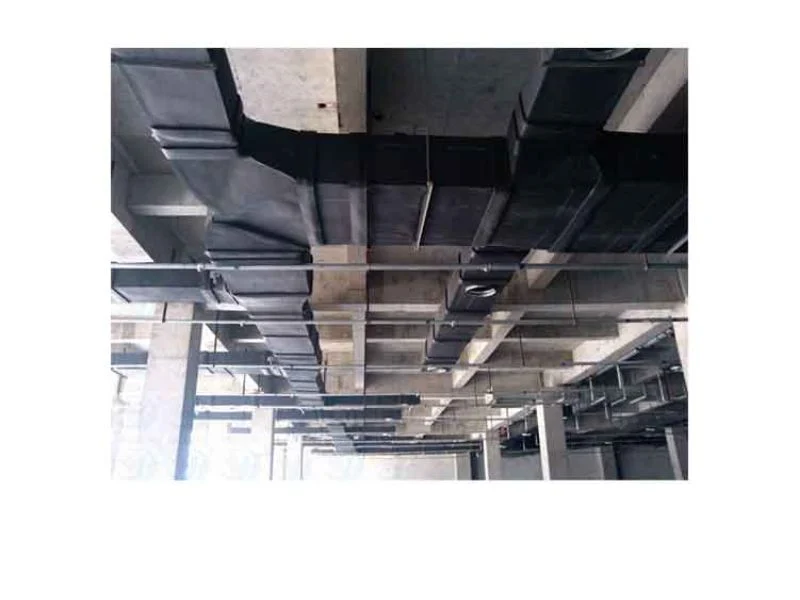
Foil-, kraft- and FSK-faced insulation must be cut in the same pass as the wool, or the facing tears and the vapour barrier is lost; a shearing blade on a vacuum bed keeps facing and wool bonded.
Faced board is common in HVAC ducts, pipe and equipment insulation, and building panels. The facing is a vapour barrier or a surface finish, and it is usually part of the specification. A torn or delaminated facing turns a good part into scrap.
A saw tends to snag the facing and pull it from the wool. A sharp oscillating blade, cutting from the facing side with the board held flat, parts both layers together. On duct board, the same head can score fold lines so a flat sheet folds into a duct without cracking the facing.
Parts can also be labelled in install order as they are cut, which saves sorting time on large duct or panel jobs. See how glass wool and faced board are handled on our insulation cutting machine page.
Blade Wear and Running Cost
Rockwool and glass wool are abrasive, so blades wear quickly; budget blade replacement as a running cost, the way you would budget gas on a laser.
A dull blade does not just cut slowly — it crushes the fibre and tears the facing, which is exactly what production cutting is meant to avoid. Change blades on a schedule based on cut length and material, not when edges start to look ragged. Our blade selection chart by material covers which blade profile suits fibre insulation.
Keep a simple log of blade life by material. Faced rock wool and dense board wear blades faster than light glass wool batts, and knowing the pattern lets you order blades before they run out.
Nesting reduces the cost that matters most: material. Cutting parts from a file with shared edges and tight spacing fits more parts on each board than hand marking, and on a high-volume line that saving usually outweighs blade cost.
Frequently Asked Questions
What is the best way to cut rockwool?
For a few pieces, use a sharp serrated insulation knife against a straight edge, with light sawing strokes. For production volume, use a CNC oscillating-knife table with vacuum hold-down and dust extraction, which shears the fibre without crushing it and cuts nested shapes accurately.
What is a good tool for cutting rockwool insulation?
A serrated insulation knife is the standard hand tool. At a cutting station, an insulation saw or band saw handles straight cuts. For complex shapes and high volume, an oscillating-knife CNC cutter is the most accurate. Avoid hot wires and lasers, which do not suit mineral wool.
Can rockwool be cut in half?
Yes. Batts and boards can be split in thickness with a long serrated knife or a band saw, though keeping the cut even across a large piece is hard by hand. On a production line, splitting is usually done on a saw with a guide, then the halves are shaped on a knife table.
Is rockwool asbestos?
No. Rockwool is stone wool, spun from molten basalt rock and slag; it contains no asbestos. Stone and slag wool are classified by IARC as Group 3, not classifiable as to carcinogenicity in humans. The fibres can still irritate skin, eyes and airways, so use extraction and protection when cutting.
Does rockwool dull blades?
Yes. Rock and glass wool are abrasive, and faced or dense boards wear blades faster still. On a production table, change blades on a schedule based on cut length, because a dull blade crushes the fibre and tears facing long before it stops cutting.
How thick a rockwool board can a CNC knife cut?
The MNT C-series cuts up to 50 mm per pass with its electric oscillating tool, depending on density. Thicker or denser board should be confirmed with a sample cut on your material before quoting, because density matters as much as thickness.
How to cut rockwool at volume is easiest to judge on your own material. Send us your board grades, part drawings and daily volume, and we will cut a free sample on a C-series table so you can check edge quality, facing and dust before you commit. Contact our engineering team to arrange it.