Thin-gauge sheet metal and small, intricate parts expose a laser cutting problem that thick-plate cutting never has to deal with: the machine’s mechanical behavior at high speed and rapid direction changes matters as much as the laser source itself. A general-purpose fiber laser built for structural steel plate isn’t automatically the right tool for fine parts under a millimeter thick.
Precision fiber laser cutting for thin metal and small parts is a different buying decision than sheet metal cutting in general — the questions that matter are thickness range and tolerance requirement, not maximum plate size or raw power. A machine oversized for thick plate can actually underperform on thin, intricate work if its acceleration and positioning characteristics weren’t built for that specific job.
This guide covers what to check when buying a precision fiber laser cutter for thin metal: material and thickness range, tolerance requirements, when compact precision beats large-format capability, software and alignment options, and an RFQ checklist.
Thin Metal Material and Thickness Range
Confirm your candidate machine is specified and tested for your actual thickness range — thin-gauge precision cutting typically means material well under 3mm, often under 1mm for fine electronic, jewelry or precision hardware components — since a machine’s cutting parameters optimized for thicker plate don’t automatically translate to clean, precise cuts on thin sheet.
Ask for a test cut on your actual material and thickness, not a mid-range demonstration sample. Thin material behaves differently under a laser than thick plate — heat distortion, edge quality and dimensional accuracy all respond differently at sub-millimeter thickness, and a machine’s general capability claim doesn’t guarantee performance at your specific thickness.
Small-Part Tolerance Requirements
Define your actual tolerance requirement in numbers before comparing machines — precision positioning around ±0.02mm and repeatability around ±0.005mm are achievable on machines specifically built for this work, but that level of accuracy comes from the whole machine system, not the laser source alone.
Repeatability matters more than raw positioning accuracy for most production runs — a machine that’s slightly off from nominal but consistent part to part is often more usable in production than one that’s accurate on average but inconsistent, since consistent error can be compensated for in the design while inconsistent error can’t.
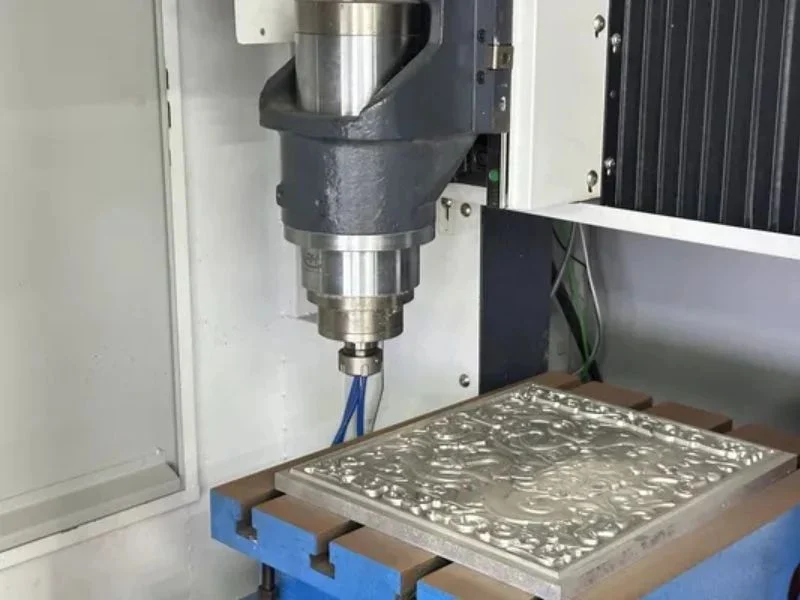
When Compact Precision Beats Large-Format Plate Cutting
Choose a compact precision-focused machine over a large-format plate cutter when your parts are small and the work is about tolerance and edge quality, not maximum cuttable size — a large-format machine’s engineering priorities (covering big working envelopes efficiently) trade off against the acceleration and positioning characteristics that fine, small-part work actually needs.
This is a genuinely different design problem than large-format cutting. Thin-sheet precision work depends heavily on how fast the cutting head can accelerate and change direction without losing positioning accuracy — a spec that matters far less on large plate where the cutting head travels longer, straighter paths. A machine built specifically around this acceleration requirement outperforms a general-purpose large-format machine on fine, intricate parts even at lower rated power.
Machine Frame and Vibration: Why It Matters More at Small Scale
Fine, intricate cuts at high acceleration put more demand on a machine’s structural stability than slower, larger-scale cutting does — vibration or thermal drift in the frame shows up directly as edge quality and dimensional inconsistency on small features, where there’s very little tolerance margin to absorb it.
This is why precision-focused machines in this category often use frame materials and construction specifically chosen for dimensional stability and vibration damping rather than the welded steel frames common on general-purpose plate cutters. A frame that’s stable enough for structural steel cutting isn’t automatically stable enough for sub-millimeter precision work at high acceleration — the requirements are genuinely different, not just a matter of degree.
Software, Vision and Alignment Options
Ask whether optional vision positioning is available and what it adds for your specific work — camera-based alignment matters most for parts that need to align to a printed pattern or existing feature on the material, and less for parts cut purely from a CAD file with no alignment dependency.
See our vision positioning for precision fiber laser cutting guide for a deeper look at when this option earns its cost and what it needs to work reliably. For parts with no alignment dependency, a well-calibrated machine without vision positioning is simpler to operate and maintain.
RFQ Checklist for Precision Parts
Bring these specifics to a quote conversation for accurate results:
| Item | Why it matters |
|---|---|
| Material type and exact thickness range | Determines whether the machine’s parameters are actually tested for your material |
| Required tolerance (positioning and repeatability) | Determines whether compact precision or general-purpose capability fits |
| Part complexity and feature size | Determines acceleration and beam-quality requirements |
| Alignment dependency (printed pattern, existing feature) | Determines whether vision positioning is needed |
| Production volume | Determines whether cycle time or pure accuracy is the priority |
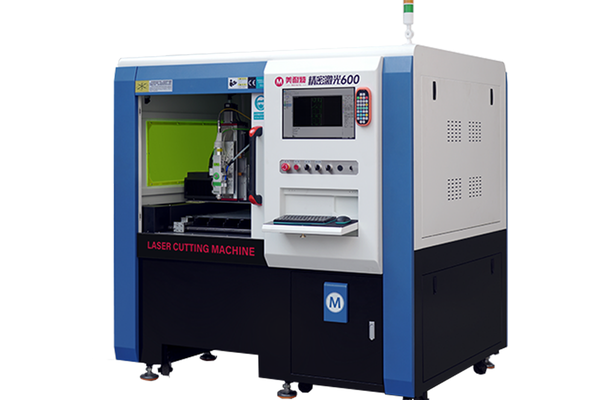
See the full X6040 Precision Fiber Laser Cutting Machine specifications, and our why marble frames matter guide for the structural engineering behind this level of precision.
Frequently Asked Questions
What thickness counts as “thin metal” for precision laser cutting?
Generally well under 3mm, often under 1mm for fine electronic, jewelry or precision hardware components — confirm your candidate machine is specifically tested at your actual thickness, not just rated for it generally.
Is a higher-power laser better for thin, precise parts?
Not necessarily — thin-sheet precision work depends more on the machine’s acceleration and positioning characteristics than raw laser power, which is why a lower-power precision-focused machine can outperform a higher-power general-purpose one on fine work.
What’s more important: positioning accuracy or repeatability?
Repeatability usually matters more for production — consistent error part to part can be designed around, while inconsistent accuracy can’t be reliably compensated for.
Do I need vision positioning for precision parts?
Only if your parts need to align to a printed pattern or existing feature on the material — parts cut purely from a CAD file with no alignment dependency don’t need it.
Should I buy a large-format machine if I mostly cut small parts?
Not if fine tolerance and edge quality matter more than maximum cuttable size — a compact precision-focused machine’s acceleration and positioning characteristics are better suited to small, intricate work than a large-format machine’s.
What should I test before committing to a precision laser purchase?
Request a test cut on your actual material, thickness and part geometry rather than a general demonstration sample — thin material and fine features behave differently enough that a mid-range demo doesn’t guarantee your specific results.