The T6 and T7 share the same 1300×2500 mm bed, the same welded gantry platform, and the same ATC concept — automatic tool changing that turns a router into a machine one operator can run alongside a second unit instead of babysitting full-time. Past that shared foundation, the two machines are built for genuinely different production floors.
Both machines are covered on the ATC CNC router page, which compares magazine formats, tool counts and change times across the range — read that first if you have not yet settled on a tool changer at all.
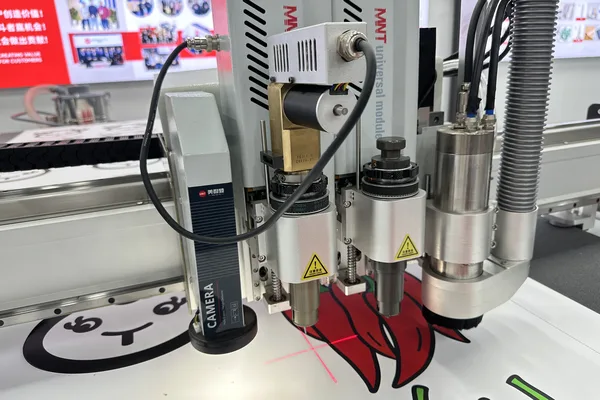
The T6 is an ATC router: a four-position linear tool changer running spindle tooling for profiling, drilling and engraving on rigid sheet material. The T7 adds an oscillating knife, a drag blade and a CCD vision system to that same platform, turning it into a mill-plus-knife-plus-vision machine that can profile rigid board and cut flexible printed material in the same job — the kind of work that otherwise needs a router and a separate flatbed digital cutter.
This comparison covers what each machine’s tool changer actually offers, where the knife and vision workflow matters, and which shop profile fits each machine.
The Short Answer
The T6 is the right choice for a shop cutting and profiling rigid sheet material only — wood, acrylic, aluminum composite, MDF — with no flexible or printed roll material in the job mix; the T7 is the right choice for a shop that regularly needs both spindle routing and knife cutting of flexible or printed material, since it replaces two separate machines with one.
| T6 ATC Engraving Processing Center | T7 ATC Digital Engraving & Cutting Machine | |
|---|---|---|
| Bed size | 1300×2500 mm | 1300×2500 mm (T7-1325), also available as T7-3020ATC |
| Tool changer | 4-position linear ATC | ATC spindle plus oscillating knife and drag blade in the same tool head |
| Vision system | Not included | CCD camera for print-to-cut registration |
| Spindle | 9 kW air-cooled, or 7.5/11 kW water-cooled | 40,000 RPM water-cooled ATC spindle |
| Rapid / working speed | Model-dependent | 80 m/min rapid, 35 m/min working |
| Best for | Rigid sheet routing, drilling and engraving only | Combined rigid milling and flexible/printed knife cutting |
| Starting price | USD 11,100 | USD 17,800 |
| Lead time | 20 days | Confirm with current production schedule |
Spindle and Tool Changing: What Each ATC Actually Offers
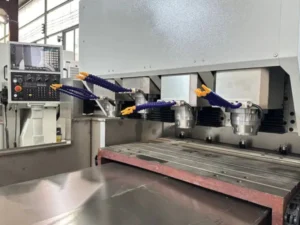
Both machines automate tool changes so one operator can run more than one job without manually swapping bits between operations — the T6’s four-position linear tool changer handles spindle tooling only, while the T7’s tool head combines ATC spindle capability with a high-frequency oscillating knife and drag blade in the same automated system.
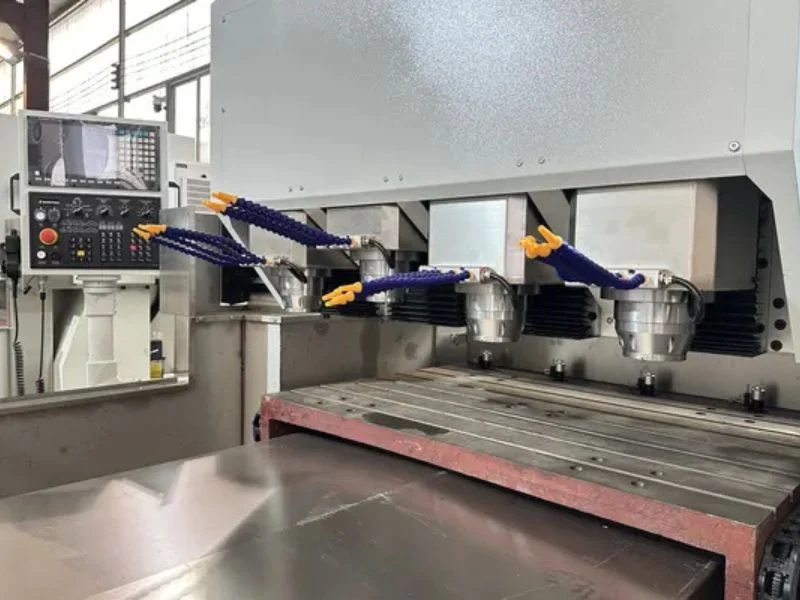
For a shop that only ever runs spindle work — profiling, drilling, engraving on rigid board — the T6’s four tool positions cover a typical bit rotation of router bits, drills and engraving tools without needing the added cost of knife capability. Both machines share the same welded, stress-relieved gantry platform, which is worth knowing if you’re considering starting with a T6 and adding knife capability later: the underlying machine structure is the same, so the upgrade path exists even though it isn’t a simple field retrofit.
The Oscillating Knife and CCD Vision Workflow — T7 Only
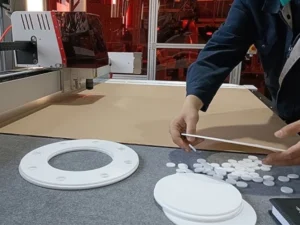
The T7’s oscillating knife and drag blade, combined with a CCD camera that reads printed registration marks, lets one machine mill rigid material and knife-cut flexible or printed material — including cutting precisely to a printed graphic — without needing a second, dedicated digital cutting table.
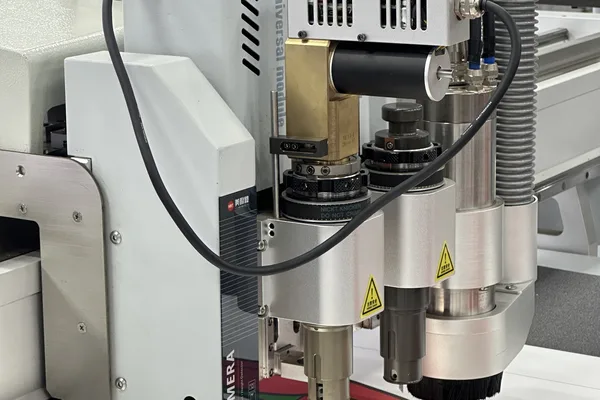
This matters most for signage and display shops running mixed jobs: a rigid substrate that needs routed edges or mounting holes, paired with a printed flexible overlay or vinyl graphic that needs to be knife-cut precisely to the printed artwork. Without CCD registration, cutting accurately to a printed graphic that may have shifted slightly during printing or lamination isn’t possible — the camera compensates for that shift before the knife runs. The T6 has no equivalent capability; it’s built for spindle work on rigid material only.
Rigid vs Flexible Material: Where Each Machine Belongs
If your job mix is entirely rigid sheet material — plywood, MDF, acrylic, aluminum composite panel — the T6 covers that work without paying for knife and vision capability you won’t use; if your job mix includes flexible, textile or printed roll material alongside rigid substrates, the T7’s combined workflow is doing the job of two machines.
The decision point isn’t which machine is more capable in the abstract — it’s whether your actual production mix includes both material categories often enough to justify the T7’s higher price over a dedicated T6 plus a separate flatbed digital cutter, or whether standardizing on one combined machine is operationally simpler even before the cost comparison.
A Worked Example: Signage Shop Buying Decision
A signage shop cutting mostly rigid substrate — dibond, acrylic, foam board — with occasional printed vinyl overlay work is a reasonable case for either machine plus a smaller standalone cutter for the occasional flexible job; a shop where flexible and printed material work is a regular, not occasional, part of the mix is a stronger case for the T7 outright.
Run the comparison against your own job log rather than a general rule: count how many jobs in a typical month need both rigid routing and flexible knife cutting on the same part or the same production run. If that number is low, a T6 plus occasional outsourcing or a smaller secondary cutter may be the more capital-efficient choice. If it’s a regular weekly occurrence, the T7’s single-machine workflow avoids the handling, scheduling and registration overhead of moving work between two separate machines.
Price and Lead Time
The T6 starts at USD 11,100 with a 20-day lead time; the T7 starts at USD 17,800, reflecting its added knife and vision hardware — confirm current lead time directly, since production scheduling can shift. The roughly $6,700 price gap is the cost of not needing a second machine for flexible and printed material work, so weigh it against what a separate dedicated flatbed cutter would cost your shop instead.
See the full T6 ATC Engraving Processing Center and T7 ATC Digital Engraving & Cutting Machine product pages for full specifications, or our digital cutting machine overview for how combined mill-and-knife platforms compare to dedicated single-process machines.
Frequently Asked Questions
What’s the main difference between the T6 and T7?
The T6 is an ATC spindle router for rigid sheet material only. The T7 adds an oscillating knife, drag blade and CCD vision system to the same platform, so it can also knife-cut flexible and printed material with camera-based registration.
Can the T6 be upgraded to T7 capability later?
Both machines share the same welded gantry platform, but adding knife and vision capability isn’t a simple field retrofit — if there’s a realistic chance you’ll need combined capability, it’s worth deciding upfront rather than planning to upgrade later.
Do I need CCD vision if I’m only cutting rigid material?
No — CCD registration exists specifically to align a knife cut to printed artwork on flexible or printed material. If your work is entirely rigid substrate with no printed-graphic cutting, the T6 covers that work without the added vision system cost.
Is the T7 worth the price difference over a T6 plus a separate cutter?
It depends on how often your job mix genuinely needs both rigid routing and flexible knife cutting on the same production run. Frequent mixed jobs favor the T7’s single-machine workflow; occasional flexible work may be more capital-efficient handled another way.
How many tool positions does the T6’s ATC have?
Four positions in a linear tool changer, sized for a typical rotation of router bits, drills and engraving tools on rigid sheet work.
What spindle options does the T6 offer?
A 9 kW air-cooled spindle or 7.5/11 kW water-cooled options, depending on configuration — confirm current spindle options and pricing for your specific application.