
Industrial ATC CNC Routers for Multi-Tool Production
MNT (MEINAITE) builds ATC routers and machining centers with model-specific magazines: four tools on the T6, six or nine stations on T7 variants, and eight or twelve positions on the listed M-series configurations. Choose the tool count from your actual job sequence and confirm the cycle time for the quoted build. The T7 can combine spindle and knife work with CCD registration on one bed.
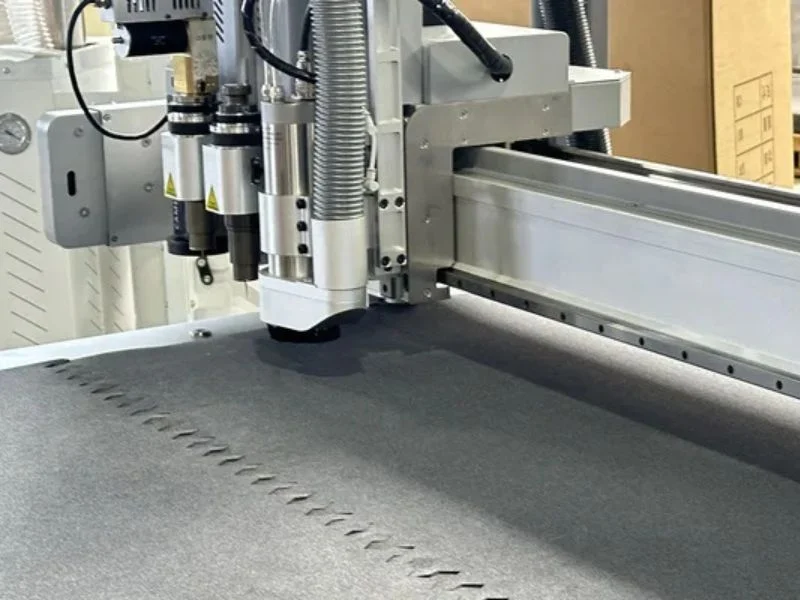
What an ATC Actually Buys You — and When It Does Not
The headline number on every ATC page is tool-change time, and it is the least useful number on the page. Going from a two-minute manual change to a two-second automatic one saves a couple of minutes per job. That alone does not pay for the magazine.
What pays for it is what the machine can do while nobody is standing at it. A single-spindle router running a cabinet door needs an operator present at every tool change — to stop the program, swap the collet, re-zero the tool length, and restart. That operator cannot be loading the next sheet or running a second machine. With an ATC, a nest with a roughing pass, a finish pass, a hinge-cup bore and a V-groove runs start to finish unattended, and the tool length for every position is already stored.
The second thing it buys is accuracy across operations. Every manual tool change reintroduces the chance of a slightly different Z-zero. On a part where the pocket depth and the profile depth have to agree, that variation shows up as a step. An ATC with a tool setter measures each tool once and holds the offset.
Where an ATC does not pay: single-tool work. If you cut one material with one bit all day — acrylic letters, plain panel cutting, one profile repeated — the magazine is capital you will not use. A rigid single-spindle machine like the T5 will hold the same tolerance for less money. The honest threshold is roughly three tool changes per job, or any job you want to leave running while you do something else.
Machine specifications compared. All three share a 1300 × 2500 mm table, so the choice is tooling, not size. The T6 is a four-tool router; the T7 carries nine stations plus an oscillating knife and CCD vision on the same gantry, which is what you want when a job mixes routing with knife cutting; the T5 is single-spindle and belongs where tool changes are rare.
| Specification | T6 | T7 | T5 |
|---|---|---|---|
| Working area | 1300 × 2500 mm | 1300 × 2500 mm (T7-1325) · 2000 × 3000 mm (T7-3020ATC) | 1300 × 2500 mm |
| Tool changer | 4-tool linear ATC | Linear · 9 stations (T7-1325), 6 (T7-3020ATC) | — |
| Spindle | 9 kW air-cooled, or 7.5 / 11 kW water-cooled | Water-cooled, 40,000 RPM | 5.5 kW water-cooled |
| Oscillating knife | — | High-frequency electric | — |
| Vision (print-and-cut) | — | CCD positioning | — |
| Control system | Weihong 280 | MNT self-developed | G-code & PLT — Type3, Mastercam, ArtCAM |
| Worktable | Vacuum hold-down | 4-zone vacuum, 500 kg load | Vacuum hold-down |
| Net weight | 2000 kg | — | 1500 kg |
Do You Need an ATC — and If So, Which Configuration
Two questions in order. First, does this job justify a magazine at all — the honest answer is no for a shop cutting one material with one bit. Second, if it does, which magazine and how many axes.
| Comparison item | ATC CNC router | Single-tool CNC router | What it means on the floor |
|---|---|---|---|
| Tool changing | Automatic tool changer | Manual change, or one tool for the whole job | No operator standing at the machine between operations |
| Tool change time | About 0.8–3 seconds | Typically several minutes by hand | Minutes per change matter only once you multiply by changes per shift |
| Tool length | Stored offset per tool, applied automatically | Re-zeroed by hand after every swap | This, not the seconds saved, is where manual setups lose accuracy |
| Tool capacity | 4–12 positions across listed MNT configurations | One, or a small manual set | Decides whether a job runs in one program or several |
| Continuity | Cutting, drilling, grooving and engraving in one program | Machine stops at each tool change | A full nest can run while the operator loads the next sheet |
| Repeatability | Consistent across the rotation | Varies with each manual re-zero | Batch work is where the difference compounds |
| Initial investment | Higher | Lower | The magazine, spindle and tool setter are most of the gap |
| Maintenance | Magazine and tool setter add service points | Fewer parts to service | Tapers need cleaning every shift — chips on a taper cause most change faults |
| When the other one wins | — | One material, one bit, one profile repeated | For repeat one-tool work, a magazine may not pay back |
If the first table put you on the ATC side, the second one narrows it. Note that the fork is rarely price: magazine type decides how much of the cycle you lose to indexing, axis count decides whether the part can be reached at all. Settle the axis question first — if nothing you cut has a compound curve, three axes is not a compromise, it is the correct machine, and the five-axis page explains where that stops being true.
| Configuration | Price range | What it buys you | Best applications | Typical buyer | MNT models |
|---|---|---|---|---|---|
| Linear ATC | By configuration quote | Simple magazine, stable indexing, compact footprint — the best cost per tool station for ordinary multi-process work | Cabinet furniture, wooden doors, acrylic signs, PVC, ACP, advertising board, general sheet engraving and cutting | Small and medium furniture factories | T6 · T7 |
| Carousel ATC | By configuration quote | More positions and faster indexing — the magazine turns while the spindle is still cutting, so the change costs about a second | Acrylic finishing, aluminium sheet, composite panel, LED letters, cabinet doors, large-format panel work | Medium and large processing companies | M3015 · M4020 |
| 3-axis ATC | By configuration quote | Widest application range at the lowest cost — the right answer whenever the part has no compound curve | Flat sheet, cabinet doors, furniture panel, advertising signage, acrylic, ACP, engineering plastics | Most sheet-processing factories | T6 · T7 · M1631 · M3015 · M4020 |
| 5-axis ATC | On request | Two rotary axes keep the cutter normal to the surface — multi-angle trimming, drilling, chamfering and saw cutting in one setup | Composite, automotive interior, thermoformed parts, engineering plastics, curved-part trimming | High-end manufacturers | M1515-2 |
Tool Magazine Types and What Separates Them
The magazine format decides how many tools you can stage, how fast they swap and how much of the table they cost you. These are the four things to settle before you compare prices.
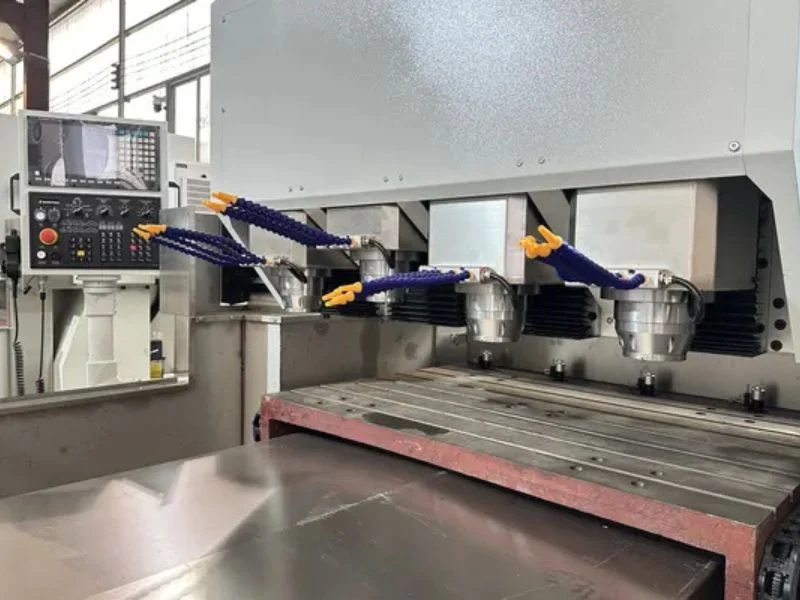
Linear Magazine — Model-Specific Capacity
- Capacity: T6: 4 positions; T7: 6 or 9 stations; MC1631: 12 positions, depending on variant
- Change time: Confirm cycle time for the quoted model
- Trade-off: Rack sits on the beam, so it takes no table space, but change time grows as the head moves further to reach it
- Best for: Panel work with a settled tool list — cabinet doors, sign blanks, repeat nests
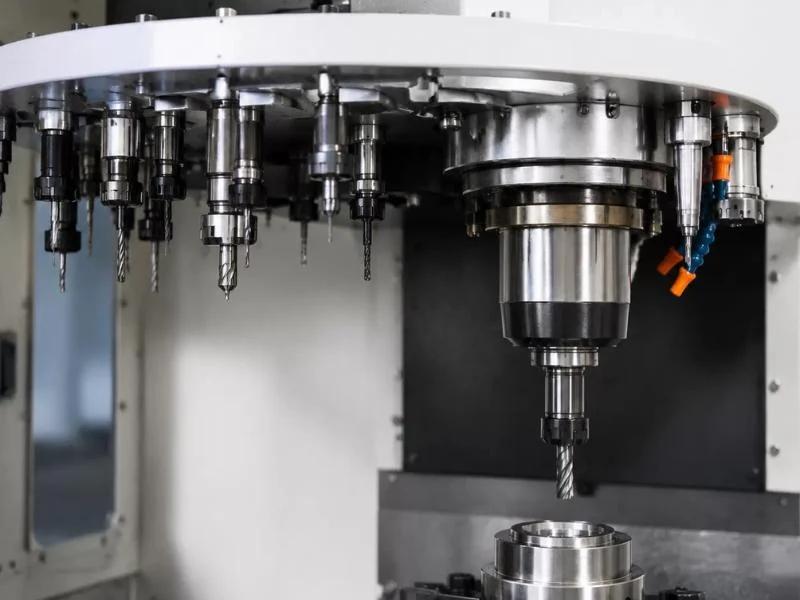
Disc Magazine — Eight Positions on Listed Models
- Capacity: 8 positions on the listed M-series disc-magazine configurations
- Change time: Confirm cycle time for the quoted model
- Trade-off: Faster and higher capacity, but the carousel occupies a corner of the working area
- Best for: Mixed-job shops where the tool list changes between orders
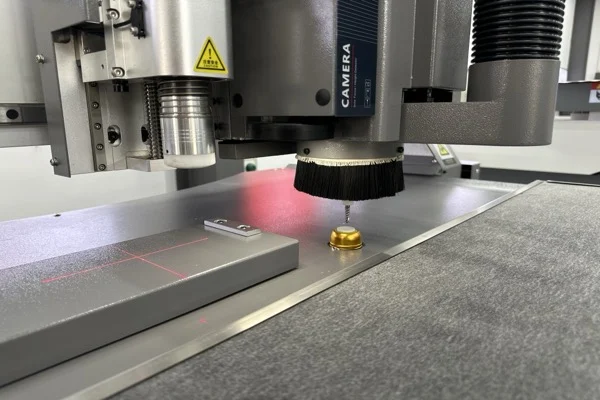
Tool Setter and Length Offset
- What it does: Measures each tool’s length once and stores the offset per position
- Why it matters: Manual changes reintroduce Z-zero variation — on a part where pocket depth and profile depth must agree, that shows as a step
- Recalibrate after: Any tool change outside the magazine, any collision, any collet swap
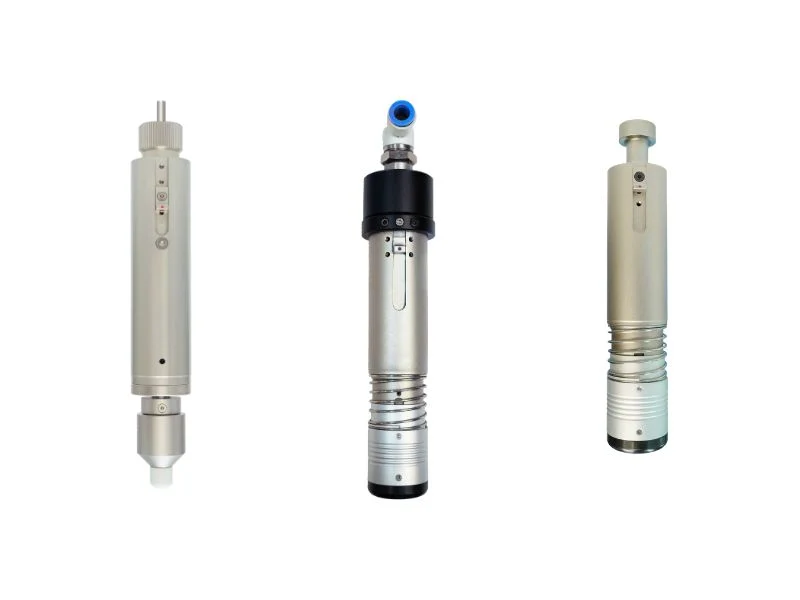
Mixed Tooling — Bits, Knife and Drag Blade
- On the T7: The magazine carries router bits alongside an oscillating knife and a drag blade
- What that allows: Mill an acrylic or ACM panel, then knife-cut gasket, foam, film or vinyl on the same sheet without moving it
- Why it is rare: Most ATC routers are woodworking machines — spindle tools only
MNT model pages list T6 at 4 tools, T7 at 6 or 9 stations, and M-series at 8 or 12 positions. Confirm the offered configuration in the quotation.
What Shops Actually Run on an ATC Router
Four job types where the tool count — not the cutting speed — is the reason the machine earns its keep.
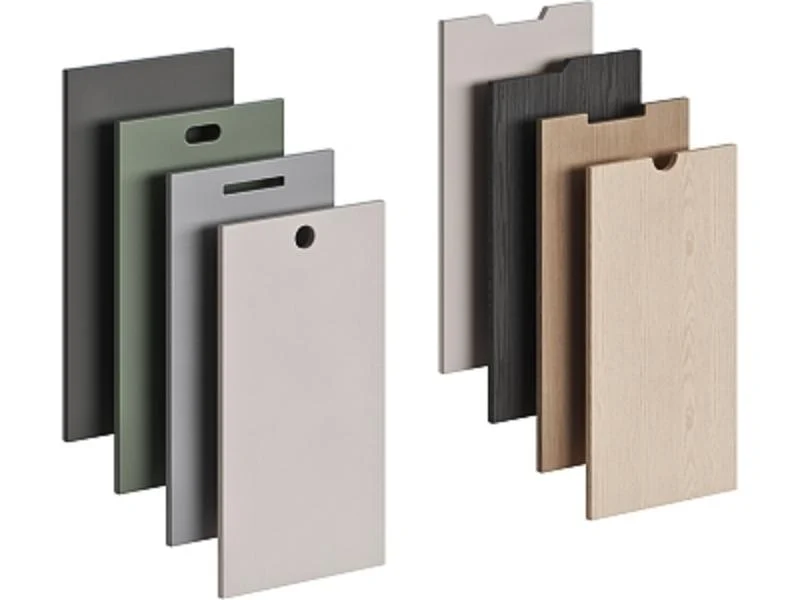
Cabinet Doors and Panel Furniture
- Tools per job: Roughing bit, finish bit, hinge-cup drill, V-groove cutter — 4 changes minimum
- Materials: MDF, plywood, particleboard, melamine-faced panel
- Payoff: A full nest runs unattended while the operator loads the next sheet
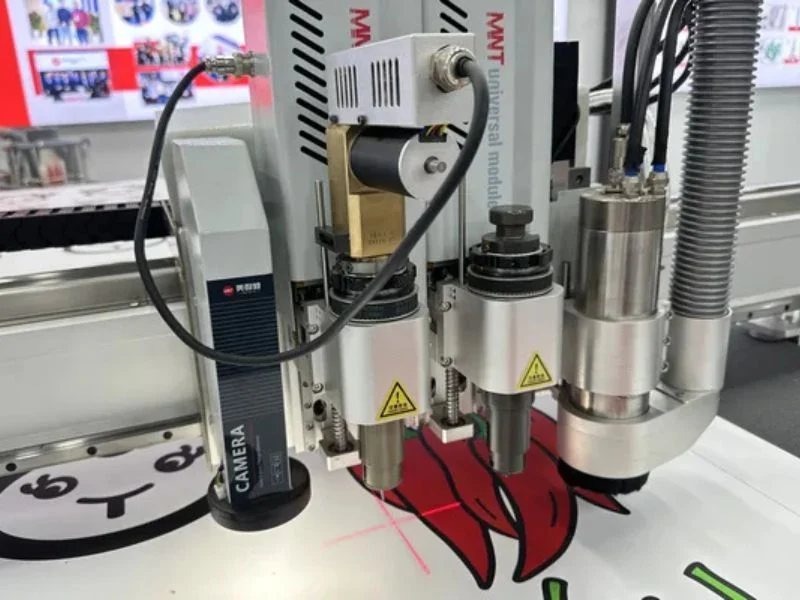
Signage, Letters and Display
- Tools per job: Profile cutter, engraving V-bit, chamfer tool, drill for stand-offs
- Materials: ACM, acrylic, PVC foam board, aluminium composite
- Payoff: Bevelled letter faces and profile cuts in one program, no re-fixturing

ACM and Composite Panel Milling
- Tools per job: V-groove cutter for folding lines, then profile bit for the outline
- Materials: Aluminium composite panel, honeycomb board, cured laminate
- Payoff: Groove depth and profile depth share one Z-reference, so folds land square
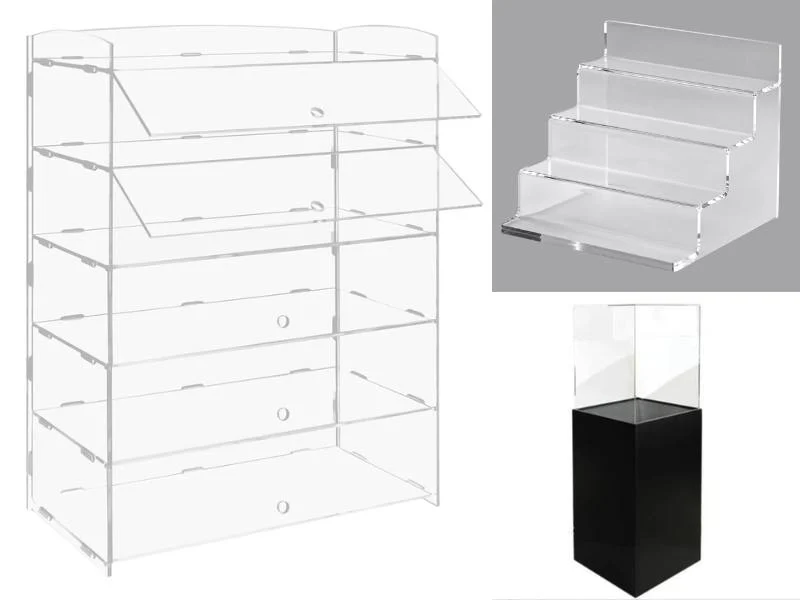
Acrylic Display and Retail Fixtures
- Tools per job: Single-flute O-flute for the cut, then a polishing or chamfer pass
- Materials: Cast and extruded acrylic, PETG, polycarbonate
- Payoff: Cut and edge-finish without unclamping — the part never loses its datum
Job profiles and tool counts drawn from MNT customer production files across cabinet, signage and display shops.
Which MNT Machine — Including When You Do Not Need an ATC
Two ATC machines and one single-spindle alternative. If your job list does not reach three tool changes, the third one is the honest answer.
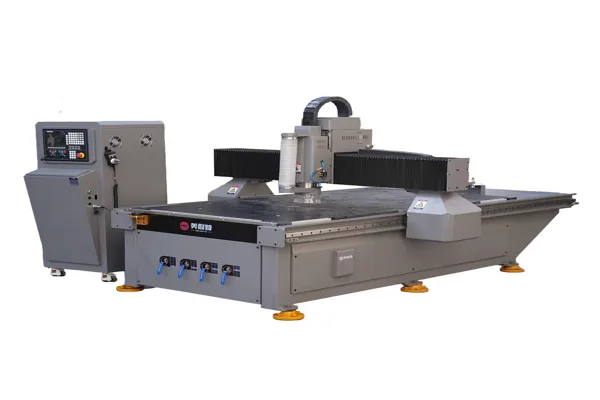
T6 ATC Engraving Processing Center
- Configuration: 9 kW ATC spindle, linear magazine, multi-zone vacuum table
- Runs: MDF, plywood, acrylic, ACM, aluminium, engineering plastics
- Choose when: Spindle tooling covers your whole job list — panel and rigid-sheet production
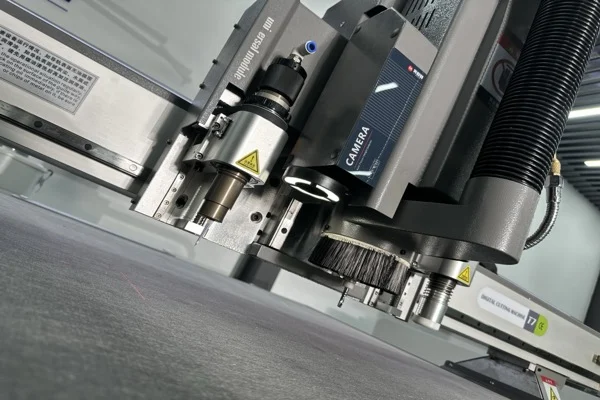
T7 ATC Digital Engraving & Cutting Machine
- Configuration: ATC spindle plus oscillating knife and drag blade in the same magazine, CCD camera registration
- Runs: Everything the T6 runs, plus gasket, foam, film, vinyl and printed board
- Choose when: One sheet needs both milling and knife cutting, or you finish printed work to a contour
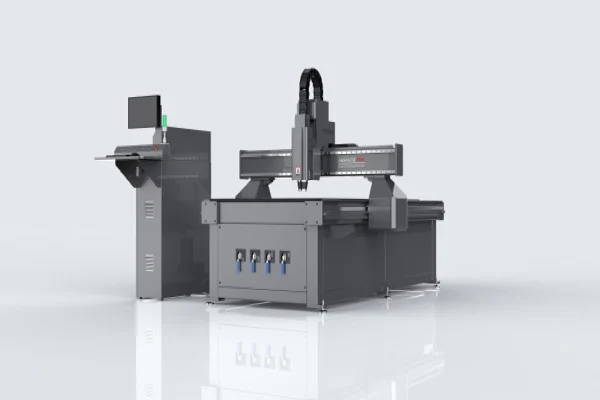
T5 Precision CNC Router — Single Spindle
- Configuration: Rigid single-spindle machine, no magazine
- Choose when: One material, one bit, one profile repeated — acrylic letters, plain panel cutting
- Why it is here: Below roughly three tool changes per job, the magazine is capital you will not use
Specifications and prices as published on each MNT model page. Configurations confirmed with Hangzhou Chaohan production.
How an Automatic Tool Change Actually Works
Four steps, and the two that decide whether the machine holds tolerance are the two nobody demonstrates at a trade show.
Loading and Numbering the Magazine
Tools are seated in numbered positions and the program calls them by number, not by name. The discipline that matters is keeping the numbering stable between jobs — a bit moved to a different position without updating the tool table is the single most common cause of a crash on an ATC machine.
Measuring Tool Length
Each tool touches off on the setter and the controller stores its length offset. This is what lets a pocket cut by tool 3 and a profile cut by tool 5 share the same Z-reference. Re-measure after any collet swap, any collision, and whenever a tool is reground.
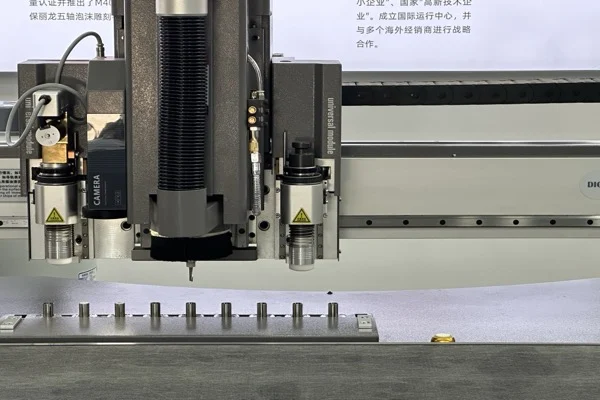
The Change Cycle
The spindle decelerates, the drawbar releases, the old tool is parked, the magazine indexes, the new tool is clamped and the spindle spins back up. Carousel magazines index the disc to the head and finish in about a second; linear racks require the head to travel to the beam, which is why they run 2–3 s.
Planning the Tool Rotation
Sequence roughing before finishing so the finish tool meets a light, even load, and group everything that shares a depth so the Z-axis is not chasing up and down. On the T7, put spindle tools and knife tools in one rotation so a milled panel and a knife-cut gasket come off the same nest.
What Goes Wrong on ATC Routers
Five failures we see repeatedly. Two cost you a part, two cost you a spindle, and one means you bought the wrong machine.
Sizing the Magazine for Today's Tool List
Buyers count the tools in their current job and buy exactly that many positions. Then a customer asks for a chamfered edge or a hinge bore and the machine is back to manual changes. Count your tool list, then add the tools you turn work away for. The cost difference between an 8-position and a 12-position magazine is far smaller than the cost of the job you cannot quote.
Not Re-Measuring Tool Length After a Crash
A collision bends the tool or shifts it in the holder by a few hundredths. The stored offset is now wrong, and every subsequent part cut with that tool is off by that amount — pockets too deep, profiles too shallow. The parts still look fine until someone gauges them. Re-touch off every tool involved in a crash before restarting, not just the one that hit.
Extraction Sized for One Tool, Not Six
A dust system specified for a single profiling bit chokes when the job rotates through a roughing bit throwing heavy chips, a V-groove cutter making fine dust and a drill packing swarf into a hole. Chips left in the nest get re-cut, ruining the edge and loading the spindle. Size extraction for the heaviest tool in the rotation, not the average one.
Buying an ATC as a Speed Upgrade
Saving 90 seconds per tool change does not repay a magazine. Unattended running does. If your operator is going to stand at the machine anyway — because you load one sheet at a time and there is no second machine to tend — the ATC is not converting his time into anything. The payback comes when he is doing something else while the nest runs.
Putting Knife Work on a Spindle-Only ATC
Most ATC routers are woodworking machines: every position in the magazine takes a spindle tool. Gasket, foam, film and vinyl need an oscillating knife or a drag blade, and a router bit will melt, tear or drag them. If your job mix includes soft or laminated material, the magazine has to accept knife tooling — check that before comparing tool counts.
Why Multi-Tool Shops Buy From the Factory
On an ATC machine three things decide whether it earns money: whether the magazine holds its numbering under production, whether tool length stays true across a shift, and whether the tooling you actually need will fit in it.
Spindle Tools and Knife Tools in One Magazine
- The T7 carries router bits, an oscillating knife and a drag blade in the same rotation — mill a rigid panel and knife-cut gasket, foam or printed film without moving the sheet.
- Most ATC routers on the market are woodworking machines with spindle-only magazines. If your job mix crosses rigid and soft material, that distinction decides whether one machine or two does the work.
- CCD camera registration on the T7 picks up printed contours, so print-to-cut finishing runs in the same tool rotation.
9 kW ATC Spindle and Multi-Zone Vacuum
- 9 kW spindle holds feed rate through a full-depth roughing pass instead of backing off and rubbing.
- Multi-zone vacuum lets you hold a part-sheet without wasting suction on empty table — the difference between a small part staying put and being thrown on the finishing pass.
- Frame welded, stress-relieved and machined in-house, so the gantry does not move when the tool loads change through the rotation.
We Cut Your Job Before You Buy the Machine
- Send your nest file and the material. We run it on the model we recommend, through the full tool rotation, and send back the parts with the tool list and the cycle time.
- We gauge a feature cut by the first tool and the same feature cut after the rotation, so you can see whether the tool-length offsets held.
- You get the sample, both measurements and the tooling we used — before any money moves.

Factory-Direct, Not a Trading Company
- MNT (MEINAITE) is the brand of Hangzhou Chaohan Intelligent Equipment — frame welding, spindle assembly and control cabinet wiring all happen in our own 10,000 m² plant.
- Built under an ISO 9001:2015 quality system; request model-specific CE documents.
- Spare tool holders, collets and setter parts ship from the factory that built the machine, not from a reseller’s stock.
ISO 9001:2015. Machines built by Hangzhou Chaohan with in-house frame welding, spindle assembly and control cabinet wiring.
Frequently Asked Questions
What is an ATC CNC router?
An ATC CNC router changes tools automatically during a program. Current MNT configurations range from the T6 four-tool magazine to T7 six/nine-station variants and M-series eight/twelve-position options. The controller applies the stored length offset for each tool. Confirm the magazine and change cycle for the quoted model.
Can an existing CNC router be upgraded to an ATC?
Rarely worth it. A retrofit needs a drawbar spindle, a magazine, a tool setter, controller support for a tool table and enough gantry rigidity to carry the extra mass. By the time those are fitted you are close to the cost of a machine built for it, and the frame was never designed for the loads. If your current machine is sound and the job list is settled, running it single-spindle and adding a second machine is usually the better economics.
How many tool positions do I actually need?
Count the tools in your longest current job, then add the tools you currently turn work away for. Most panel shops settle at 8 to 12. The price gap between an 8-position and a 12-position magazine is much smaller than the cost of a job you cannot quote, and magazines are not easy to extend later.
Linear or carousel — which should I choose?
Carousel if your tool list changes between orders: higher capacity, and it indexes in about a second because the disc comes to the head. Linear if your tool list is settled and table space matters: the rack sits on the beam so it costs no working area, at 2–3 s per change because the head travels to it.
How accurate is the tool change?
The change itself is repeatable to the taper — an ISO30 or BT30 holder seats the same way every time. What actually drives part accuracy is the tool length offset, measured by the setter and stored per position. Hold that and a pocket cut by tool 3 and a profile cut by tool 5 share the same Z-reference. Lose it, after a crash or a collet swap, and you get a visible step.
What maintenance does the magazine need?
Clean the holder tapers and the spindle taper before every shift — chips on a taper are the most common cause of runout and of a tool pulling out. Check the magazine’s clamping and indexing weekly, and re-measure tool lengths after any collision. Our ATC maintenance checklist covers the full interval schedule.
Can the magazine hold a knife as well as router bits?
On the T7, yes — the rotation carries router bits alongside an oscillating knife and a drag blade, so one nest can mill rigid board and knife-cut gasket, foam, film or vinyl without the sheet moving. Most ATC routers on the market are woodworking machines with spindle-only magazines, so confirm this before comparing tool counts.
When is a single-spindle machine the better buy?
When you cut one material with one bit — acrylic letters, plain panel cutting, one profile repeated. Below roughly three tool changes per job, and with no intention of leaving the machine running unattended, the magazine is capital that never gets used. A rigid single-spindle machine like the T5 will hold the same tolerance for less money.
What does an ATC CNC router cost?
The quoted price depends on working area, spindle and tool-changing configuration, hold-down, material, output target and delivery country. Send the material, largest part or sheet, drawing and expected volume for an itemized quote.
Can the machine be customised?
Yes — working area, spindle power, magazine type and capacity, vacuum zoning and control system are all specified per order. Send the material, the sheet size and the tool list for your longest job; that is enough for us to propose a configuration rather than quote a catalogue number.
What support do you provide after delivery?
Installation guidance, operator training, spare parts and technical support, all from the factory rather than a trading company. MNT machines are built by Hangzhou Chaohan in its own 10,000 m² plant, so whoever answers a support call has the assembly drawings for your serial number.
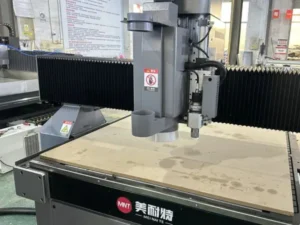

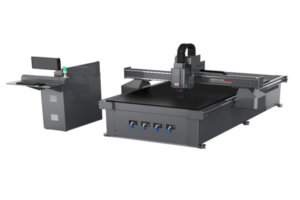
Technical Guides for Multi-Tool Production
The reasoning behind every number on this page, worked through at length.
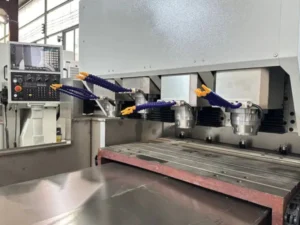
How to Choose an ATC CNC Router for Multi-Tool Production
Full selection guide: counting your real tool list, matching spindle power to the material mix, gantry rigidity and the tool-change cycle time that actually matters.
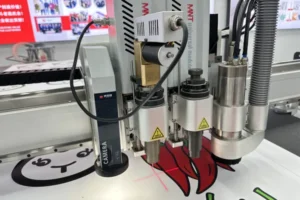
T7 vs T6 ATC Router: Spindle, Knife and Vision Workflow Comparison
T7 against T6 — where the knife and camera on the T7 change what the machine can take on, and when the T6 is the right machine instead.
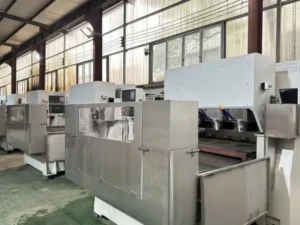
CNC Router Maintenance Checklist: Daily, Weekly and Monthly Tasks
Daily, weekly and monthly CNC router maintenance, including the ATC items: tool holders, magazine indexing and tool-length calibration.
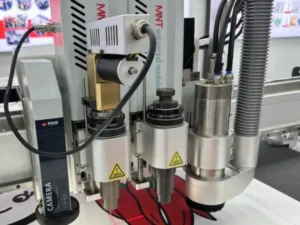
Oscillating Knife Blade Selection Chart by Material & Thickness
For T7 rotations that include knife tooling — which blade type, angle and depth by material and thickness.
Send Us Your Nest File — We'll Run the Whole Tool Rotation and Send the Parts Back
Tell us the material, the sheet size and every tool the job needs. We run your nest on the model we recommend, through the full rotation, then gauge one feature cut by the first tool and the same feature after the last — so you can see whether the tool-length offsets held. You get the parts, both measurements, the tool list and the cycle time.