Buying a leather cutting machine is a decision you live with for years, and specs that look similar on paper behave very differently on real hide. The wrong choice shows up as burnt edges, wasted leather, or a machine that cannot keep up with your line. This guide walks through the six factors that actually decide the purchase — from cutting method to a pre-order test — so you buy the machine your production needs, not the one that looked cheapest.
What to Prioritize — the Short Version
For most leather producers, prioritize an oscillating knife machine sized to your largest hide, with multi-layer capability and nesting software. That combination covers the three things that drive cost per part: material range, edge quality and yield.
Everything else — table size, precision, vision, support — matters, but it matters in service of those three. If a machine cuts your full material range with a clean edge and wastes little leather, the rest is refinement. The six factors below are ordered the way an experienced buyer weighs them.
1. Cutting Method
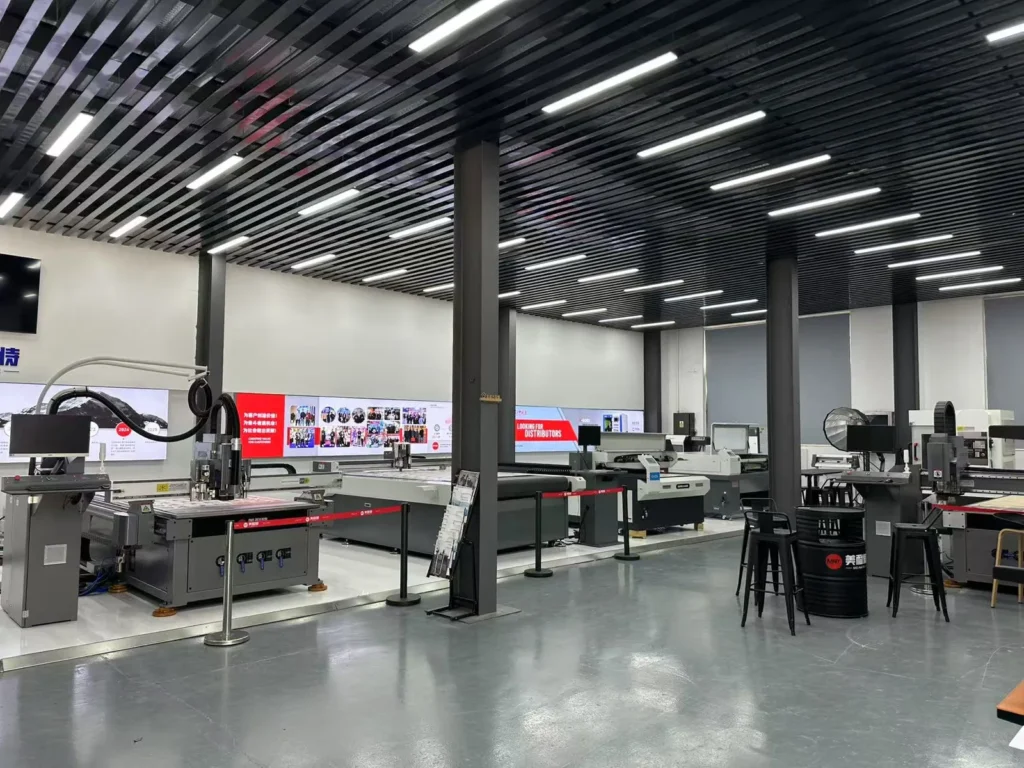
The cutting method is the first and biggest decision, because it sets edge quality and which leather you can run at all. Three options dominate, and they are not interchangeable.
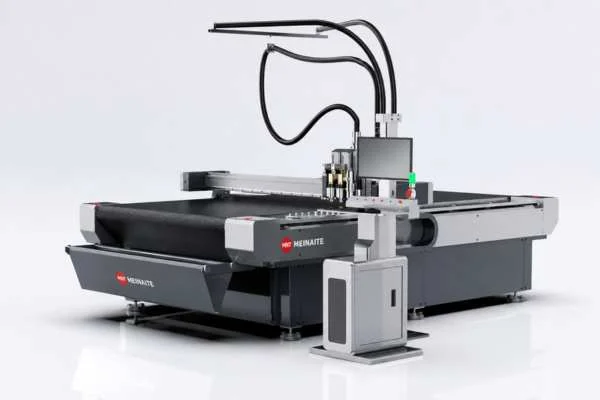
Manual clicker or die presses are cheap and simple, but they cut one shape at a time with a dedicated die, which is slow and inflexible for varied work. CO₂ lasers are fast on thin synthetics but burn genuine leather, leaving a scorched edge you cannot sell. CNC oscillating knife cutters cold-cut the full leather family, stack multiple layers, and leave a clean edge.
For a workshop that runs mixed leather — genuine, PU, PVC — the oscillating knife is the default because it covers the widest range without heat damage. Choose a laser only if your work is thin synthetic sheet where a sealed or engraved edge is the actual goal.
Running cost follows from the method too. A clicker press needs a new die for every shape; a laser adds fume extraction and optical consumables; the oscillating knife’s main consumable is an inexpensive blade. For varied leather work, the knife keeps both flexibility and running cost in your favor.

2. Working Size and Throughput
Size the table to your largest hide and your daily volume — not to the smallest machine that fits the budget. A bed that is too small forces extra passes and re-registration, which costs more than the machine saved.
A 2500×1600 mm bed suits full hides and batch production; a compact bed fits sampling and small parts. Leave room around the machine for loading, feeding and maintenance, and factor in how material moves through the shop.
For continuous output, a belt auto-feed conveyor lets a large machine run roll-to-sheet without an operator repositioning every piece. If your volume is steady and high, that feed system is often worth more than a marginally faster cutting speed.
A common mistake is buying just big enough for today. Leather demand tends to grow in batches, and a bed that fits your current hides but not next year’s larger orders forces a second purchase. Sizing with a margin for growth is usually cheaper than replacing the machine later.
3. Leather Types You Cut
Match the machine’s blades and cutting depth to your hardest, thickest material — it must handle your worst case, not your average. A machine that cuts soft hide beautifully but stalls on dense microfiber will bottleneck your toughest jobs.
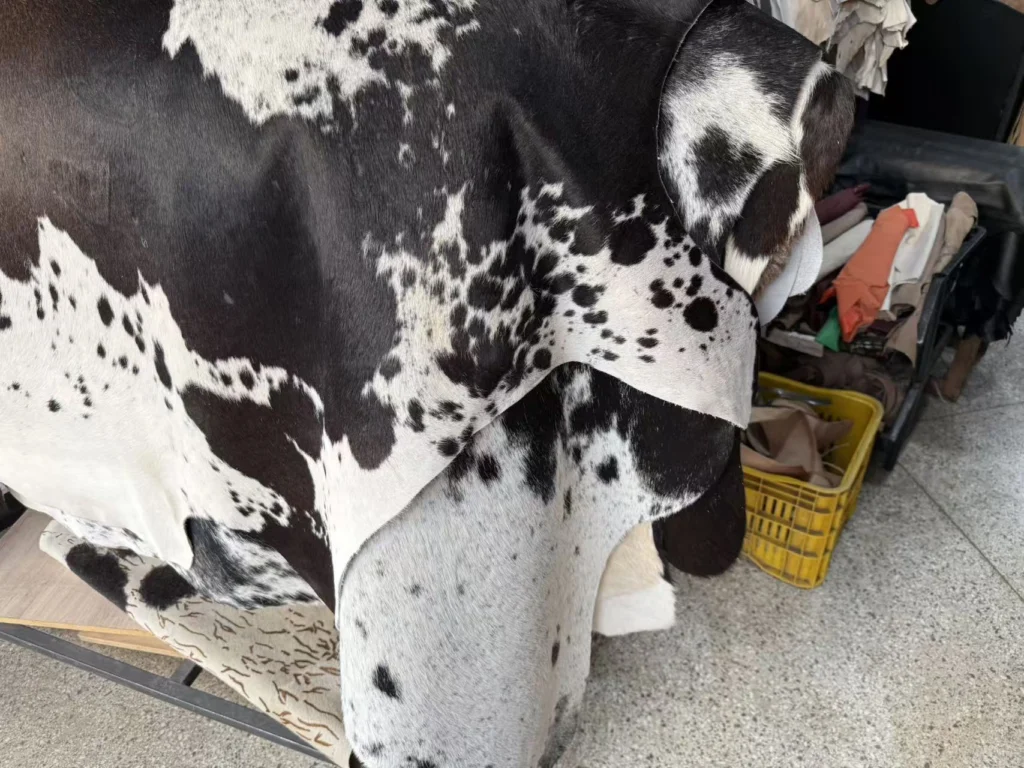
Genuine leather (cowhide, sheepskin, full-grain, split), PU, PVC, microfiber and bonded leather each behave differently under the blade. Soft hide cuts at moderate speed; dense microfiber needs a sharper blade and steadier feed; thin PU cuts fast but relies on vacuum hold-down so it does not lift.
Confirm the machine offers interchangeable tools — oscillating, drag, and where useful a router or wheel — so one platform adapts across your material list instead of forcing a second machine for the outliers.
4. Precision and Multi-Layer Cutting
For parts that stitch together, insist on ±0.1 mm accuracy; for volume, confirm how many layers the machine stacks. These two specs decide whether your cut pieces assemble cleanly and whether you hit output targets.
Accuracy matters most where many cut pieces meet, such as a seat cover or a shoe upper — if each part drifts a fraction, the stitch lines no longer align. A servo drive with linear guides holds that precision across a full sheet.
Multi-layer capability multiplies output. Cutting roughly 1–10 mm of stacked leather in one pass, held flat by vacuum adsorption, lets one machine do the work of several hand cutters — the single biggest throughput gain in footwear and bag production.
Precision also protects complex parts. When a design has internal cut-outs, notches or tight curves, small errors compound across the piece, so a machine that holds tolerance turns intricate patterns into usable parts instead of near-misses that get scrapped.
5. Software, Nesting and Vision
On expensive leather, nesting software and a CCD camera are not extras — they pay for themselves in yield and print-to-cut accuracy. The savings on hide often exceed their cost within months.
Nesting arranges parts to fit more of them onto each irregular hide, typically lifting utilization 15–30% versus manual layout. On genuine leather, that saved material is real money on every order.
A CCD vision camera follows printed edges and registration marks, so printed or pre-marked leather is cut exactly to the design. If you do any print-and-cut or work from marked hides, treat vision as a requirement, not an option.
Software also shapes daily workflow. A system that accepts standard CAD files such as HPGL, PLT and DXF and integrates with your pattern and nesting tools keeps the machine fed without manual redrawing, so operators spend their time cutting rather than converting files.
6. Test Before You Buy
Always send your real leather for a cutting test before ordering — it is the only reliable way to confirm edge quality, speed and multi-layer behavior. A spec sheet cannot tell you how your specific hide reacts.
A proper test shows the finished edge, any smell, the actual speed on your material, how many layers hold their dimensions, and whether parts need any post-processing. It also reveals how the supplier handles your requirements before money changes hands.
Send your hardest and your most common material, and ask for the cut samples back. Judging real parts in your own hands removes the guesswork from a purchase you will run for years.
Treat the test as part of the purchase, not a favor. A supplier confident in the machine will run your material, share the settings used, and send the samples back — and that willingness tells you as much about the after-sales relationship as the cut itself does.
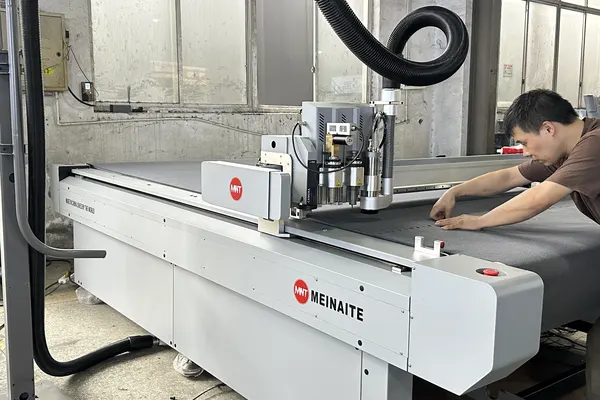
Machine Types at a Glance
The table below summarizes how the three cutting methods compare for leather work.
| Machine type | Best for | Leather limitation |
|---|---|---|
| Manual die / clicker press | One repeated shape, low volume | Slow, one die per shape |
| CO₂ laser | Thin synthetics, engraving | Burns genuine leather |
| CNC oscillating knife | All leather types, multi-layer, production | — |
Bottom Line
For a mixed leather workshop, an oscillating knife machine sized to your hides, with multi-layer cutting and nesting software, is the safe default. It covers material range, protects the edge, and keeps material waste low.
Prioritize in that order — method, size, material range, precision, software, then a real cutting test — and you will spec the machine your production actually needs. See the full specification, tooling and material range on our leather cutting machine.
FAQ
What is the best machine to cut genuine leather?
A CNC oscillating knife cutter. It cold-cuts without heat, preserving the grain and color, and handles genuine, PU, PVC and microfiber leather — single or multi-layer. Lasers burn genuine leather and clicker presses cut only one shape at a time.
How thick of leather can a cutting machine handle?
It depends on the tool. An oscillating knife cuts soft leather in one pass and rigid stacked material up to around 50 mm on larger machines. Confirm cutting depth against your thickest material before buying.
Do I need nesting software?
If leather cost matters — and it usually does — yes. Nesting arranges parts to use more of each hide, typically lifting utilization 15–30%, which pays back quickly on genuine leather.
What working size should I choose?
Size the bed to your largest hide and daily volume. A 2500×1600 mm bed suits full hides and batches; a compact bed fits sampling. Add belt auto-feed for continuous, high-volume output.
Should I test my material before buying?
Always. A cutting test on your real leather confirms edge quality, speed, odor and multi-layer behavior, and shows how the supplier handles your requirements — before you commit.