A fiber laser tube cutting machine that’s actually a sheet metal laser with a rotary axis bolted on will cut tube — badly. Real tube cutting capability starts with how the machine holds and feeds the tube, not just whether the beam can reach it.
Buyers comparing tube laser cutting machines often start with laser power, the same spec they’d compare on a sheet metal cutter. Power matters, but the specs that actually separate a purpose-built tube laser from a sheet machine with an add-on rotary axis are chuck design, tube diameter and length range, and loading method — get these wrong and no amount of laser power fixes a machine that can’t hold thin-wall tube without crushing it or feed material efficiently for real production volume.
This guide covers tube shapes and supported profiles, diameter and length range, laser power and material thickness, manual vs automatic loading, and questions to send before requesting a quote.
Tube Shapes and Supported Profiles
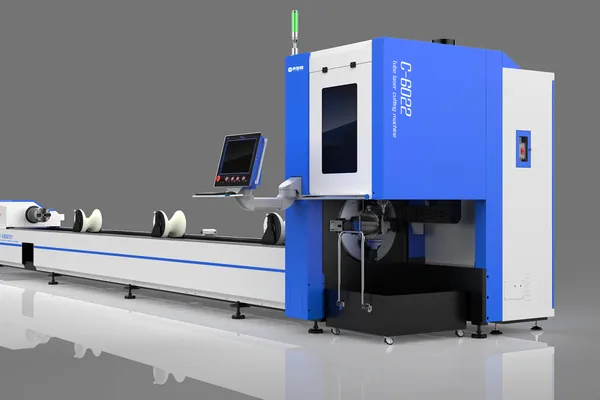
Confirm your candidate machine handles your actual shape range — round, square, rectangular tube, and structural profiles like angle and channel — since not every tube laser supports the full range, and a machine optimized for round tube specifically may handle square or profile shapes less capably.
Ask for a demonstration cut on your specific shape and dimension range, not just a general capability claim. Profile shapes with flat faces and sharp corners present different chuck-holding and cut-path challenges than round tube, and a machine’s round-tube performance doesn’t automatically predict its performance on angle or channel profile.
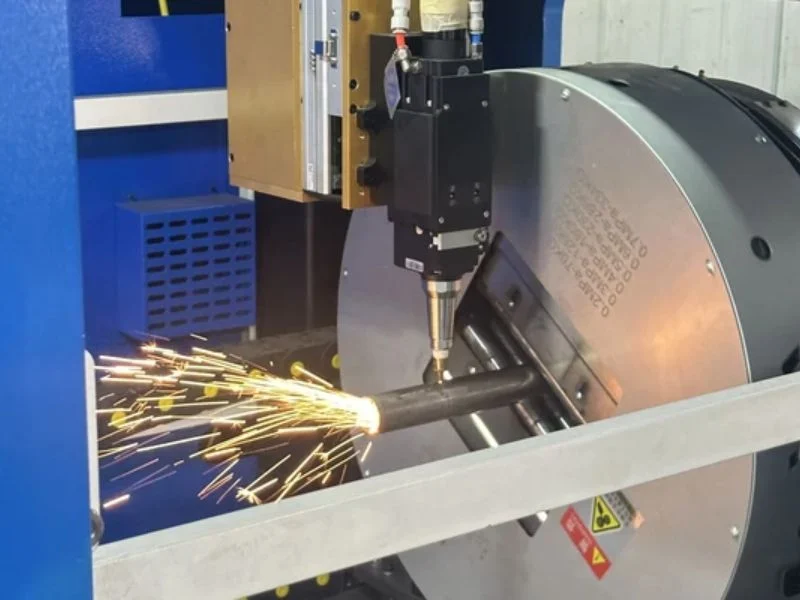
Tube Diameter and Length Range
Match diameter and length range to your actual material, not a theoretical maximum — a machine specified for large-diameter tube may not hold small-diameter thin-wall tube as securely, and length capacity beyond your standard stock length adds cost without adding usable capability.
Confirm the machine’s practical remnant length — how much tube is left unusable at the chuck end after cutting — since this directly affects material yield across your production volume. A shorter remnant length means less waste per tube, which compounds into real material savings at volume.
Chuck Design: The Spec That Actually Determines Tube-Holding Quality
A pneumatic self-centering four-jaw chuck holds thin-wall tube securely without crushing or deforming it — this is the component that separates a purpose-built tube laser from a sheet metal machine with a rotary axis added on, and it’s worth evaluating specifically rather than assuming any chuck handles thin-wall material equally well.
Ask for a demonstration on your thinnest-wall tube specifically. Thin-wall tube is the material most likely to reveal a weak chuck design — a chuck that handles thick-wall tube fine can still crush or distort thin-wall material if it wasn’t specifically engineered for that range.
Laser Power and Material Thickness
Match laser power to your wall thickness and material type — the same power-versus-material relationship that applies to sheet cutting applies to tube, with mild steel gaining less percentage benefit from added power than stainless steel or aluminum tube does.
See our fiber laser power guide for the full material-by-material thickness breakdown — the same principles apply whether you’re cutting flat sheet or tube wall thickness.
Manual vs Automatic Loading
Manual loading suits lower-volume or highly varied production where operator flexibility matters more than throughput; automatic loading — bundle or single-tube feed systems — pays back on higher-volume production where reducing operator loading time between cuts has a real, measurable effect on daily output.
Run the math on your actual volume: automatic loading’s cost premium needs to be weighed against the labor time it saves across your daily or weekly tube count. For shops running a wide variety of tube types and lengths in smaller batches, manual loading’s flexibility often outweighs automatic loading’s throughput advantage.
Questions to Send Before Requesting a Quote
Bring these specifics to a quote conversation for an accurate result:
| Item | Why it matters |
|---|---|
| Tube shapes and profile types | Confirms the machine is tested across your actual shape range |
| Diameter and length range, including thinnest wall | Determines chuck and travel requirements |
| Material type and wall thickness range | Determines required laser power |
| Production volume and batch variety | Determines whether automatic loading pays back |
| Weld-prep or bevel requirements | Confirms the machine supports needed joint geometry |
See the full X6 Fiber Laser Tube & Profile Cutting Machine specifications, our tube laser cutting machine category page, and our tube laser cutting design tips for what to do with that capability once you have it.
Frequently Asked Questions
What’s the difference between a purpose-built tube laser and a sheet laser with a rotary axis?
Chuck design is the key difference — a purpose-built tube laser uses a pneumatic self-centering chuck engineered to hold thin-wall tube without crushing it, which a sheet machine with an added rotary axis often isn’t optimized for.
How do I know if I need automatic loading?
Run the math on your actual daily or weekly tube volume — automatic loading pays back when the labor time saved across higher volume outweighs its cost premium; lower-volume, varied production often favors manual loading’s flexibility instead.
Does laser power matter as much for tube as for sheet cutting?
Yes, following the same material-specific relationship — mild steel gains less percentage benefit from added power than stainless or aluminum, which applies to tube wall thickness the same way it applies to sheet.
Why does remnant length matter?
It’s the unusable tube length left at the chuck end after cutting — a shorter remnant means less waste per tube, which compounds into real material savings across production volume.
Can one machine handle round, square and profile shapes equally well?
Not automatically — request a demonstration on your specific shape range, since a machine optimized for round tube may perform differently on square or structural profile shapes with flat faces and corners.
What should I test before buying a tube laser?
A demonstration cut on your thinnest-wall tube specifically — this is the material most likely to reveal whether the chuck design is genuinely built for thin-wall work or not.