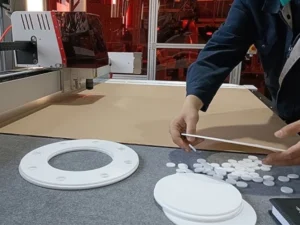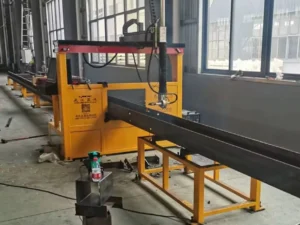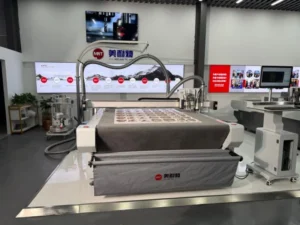
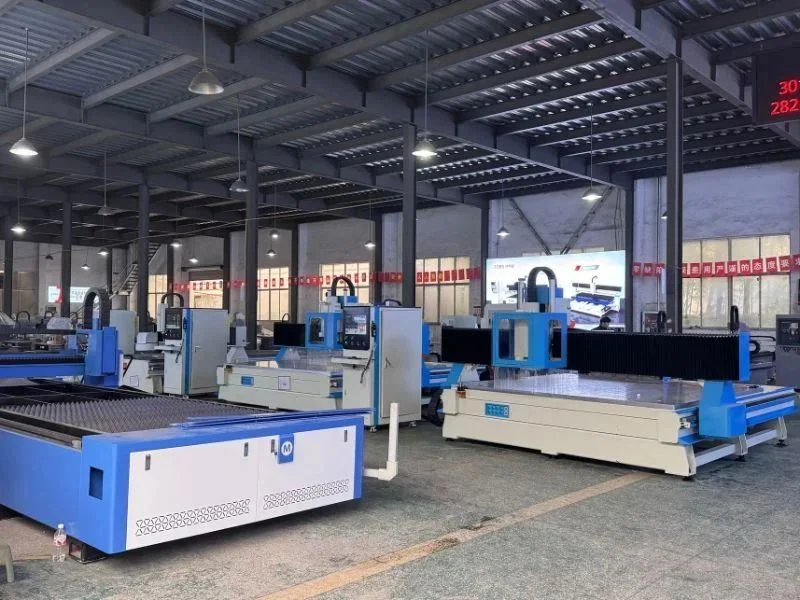
Three fiber laser platforms, three different workpiece shapes. The X5 cuts flat sheet. The X6 cuts tube and profile. The X6040 cuts thin-gauge metal and small precision parts where acceleration and positioning accuracy matter more than raw power. Comparing them on laser power alone misses the point — they’re built around fundamentally different workpiece geometry, not different tiers of the same capability.
Buyers sometimes assume more power or a higher price means a more capable machine across the board. That’s not how this product line works: the X6040 runs the lowest power of the three at 1500W and is priced for a narrow, high-value application, not because it’s a lesser machine, but because thin-sheet precision work is an acceleration and positioning problem, not a power problem.
This guide gives a quick recommendation table, then covers use cases for each machine and how to request the right configuration.
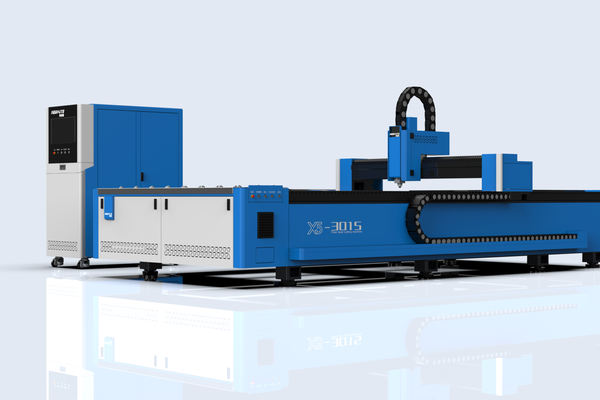
Quick Recommendation Table
| X5 | X6 | X6040 | |
|---|---|---|---|
| Workpiece | Flat sheet metal | Tube and profile | Thin-gauge sheet, small parts |
| Bed / working range | 3000×1500 mm | Round Ø10–220mm, square 10–150mm, length 6000mm | Compact precision envelope |
| Power | 3kW or 6kW | 6000W | 1500W |
| Key differentiator | Rack-and-pinion dual-drive gantry rigidity | Pneumatic self-centering four-jaw chuck | Marble frame, 1.5G acceleration |
| Accuracy | 0.05mm | ±0.02mm | ±0.02mm positioning / ±0.005mm repeatability |
| Best for | Structural steel, stainless, aluminum sheet fabrication | Structural framing, handrail, tube-based assemblies | Electronics, jewelry, precision hardware |
X5 Use Cases
The X5 fits sheet metal fabrication across mild steel, stainless steel and aluminum, from structural brackets to precision-cut panels, where the rack-and-pinion dual-drive gantry provides the rigidity needed for consistent accuracy across a large flat working area.
Choose the X5 when your work is flat sheet stock and your buying decision centers on power level (3kW vs 6kW) matched to your material and thickness range. See our fiber laser power guide for the detailed thickness-by-material breakdown that determines which power level fits your production.
X6 Use Cases
The X6 fits any work built from tube or structural profile — handrail and balustrade fabrication, structural framing, furniture frames, fitness equipment — where the pneumatic self-centering chuck holds thin-wall tube securely and integrated weld-prep and miter cutting eliminate secondary fitting operations.
Choose the X6 when your parts start as tube or profile stock rather than flat sheet. See our tube laser cutting design tips for how to design parts that take full advantage of integrated hole placement, miter joints and bevel cutting.
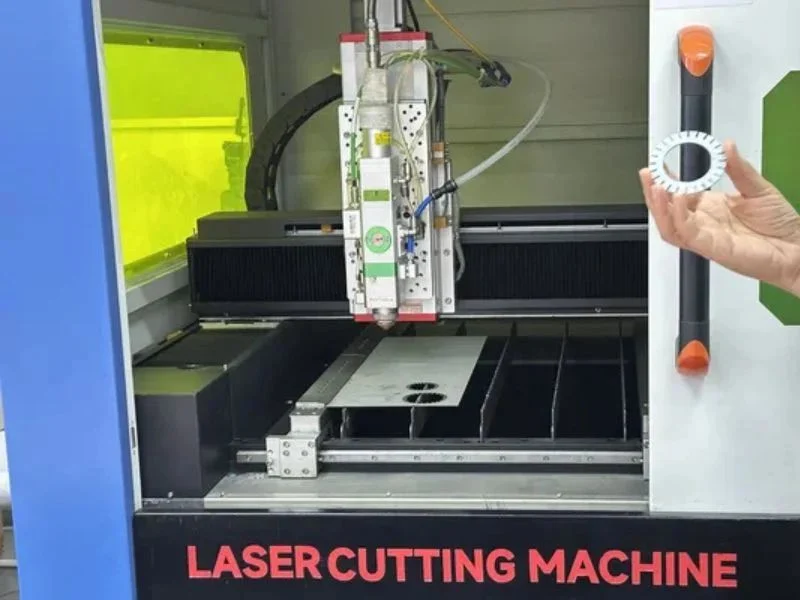
X6040 Use Cases
The X6040 fits thin-gauge metal and small, intricate parts in electronics, jewelry and precision hardware, where the marble frame’s thermal stability and vibration damping, combined with 1.5G acceleration, deliver consistent edge quality on fine features that a general-purpose sheet or tube laser isn’t engineered for.
Choose the X6040 specifically when part size is small and tolerance requirements are tight — not as a lower-cost alternative to the X5, since it’s solving a different precision problem, not a smaller version of the same one. See our why marble frames matter guide for the engineering behind this distinction.
How to Request the Right Configuration
Lead with your workpiece shape and size — flat sheet, tube/profile, or small precision parts — before discussing power level, since shape determines which platform fits before power level becomes the relevant question within that platform.
Provide material type, thickness or wall-thickness range, typical part size, production volume, and any tolerance requirements. This lets a quote be matched to your actual production rather than defaulting to a mid-range configuration that may not fit either your lightest or heaviest actual jobs.
See the full fiber laser cutting machine overview, or the individual X5, X6 and X6040 product pages for complete specifications.
Frequently Asked Questions
Is the X6040 a lower-cost, less capable version of the X5?
No — it’s engineered for a different problem (thin-sheet precision via acceleration and frame stability) rather than being a scaled-down general-purpose sheet cutter. Its lower power reflects that different design priority, not reduced overall capability.
Can the X6 cut flat sheet as well as tube?
The X6 is purpose-built around tube and profile holding via its chuck design — for flat sheet work, the X5’s gantry and bed are the platform built specifically for that geometry.
How do I choose between X5 and X6 if I cut both sheet and tube?
Most shops running both material types operate separate machines for each, since the chuck-based tube handling and flat-bed sheet handling are different mechanical systems — evaluate your volume in each category to determine if both platforms are justified.
What’s the most important factor in choosing between these three?
Workpiece shape first — flat sheet, tube/profile, or small precision parts — then power level and accuracy requirements within whichever platform matches your shape.
Does the X6040 replace the X5 for thin sheet work?
Only for small, intricate parts where fine tolerance and edge quality matter more than throughput on larger sheets — for general thin-sheet fabrication at production volume, the X5 remains the better fit.
What information should I provide when requesting a quote?
Workpiece shape, material type, thickness or wall-thickness range, typical part size, production volume and any tolerance requirements — this determines both which platform fits and how it should be configured.