Laser cutting vs waterjet is a choice between heat and no heat.
A fiber laser melts its way through metal fast and precisely, but it leaves a heat-affected edge and stops being economical on very thick stock. A waterjet cuts cold with a stream of water and abrasive, handles almost any material and thickness, and does it more slowly. Which one suits a part depends on what the heat would do to it.
This laser cutting vs waterjet guide compares the two on heat, tolerance, thickness, materials and cost per part.
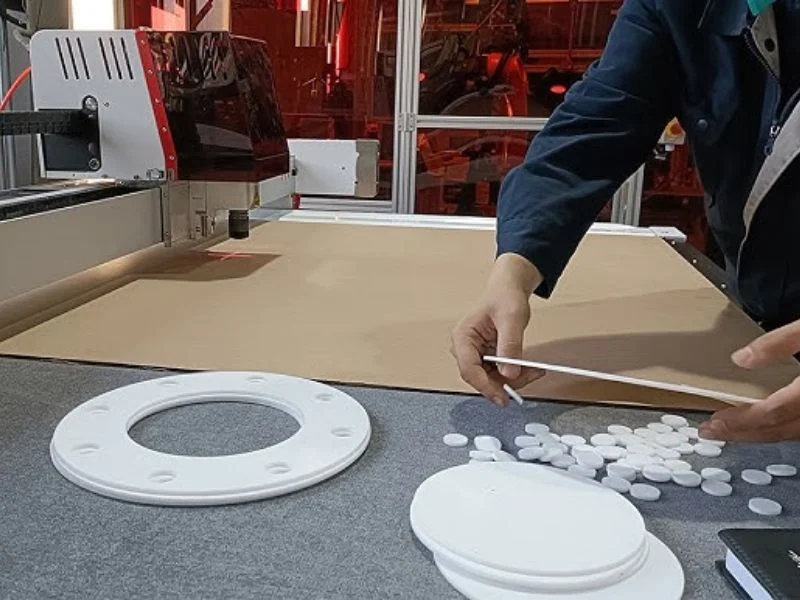
Laser Cutting vs Waterjet: The Short Answer
Choose a fiber laser for thin and mid-thickness sheet metal, where it is much faster and cheaper per part; choose a waterjet for heat-sensitive materials, composites, stone and glass, and very thick metal, where cutting cold matters more than speed.
| Factor | Fiber laser | Abrasive waterjet |
|---|---|---|
| Heat-affected zone | Yes, small | None |
| Thickness range (steel) | About 16 mm at 3 kW, 22 mm at 6 kW | Up to about 150 mm |
| Materials | Metals | Almost anything — metal, stone, glass, composites, rubber, foam |
| Accuracy | Under about 0.25 mm on parts | Machine accuracy down to about 0.13 mm |
| Kerf | About 0.1–0.4 mm on sheet | About 1.0–1.3 mm with abrasive |
| Speed on thin sheet | Much faster | Much slower |
| Main consumables | Assist gas, nozzles, protective lenses | Garnet abrasive, high-pressure seals, orifices |
Waterjet figures are from Wikipedia’s entry on the water jet cutter; fiber laser figures are from our fiber laser cutting thickness chart and laser makers’ published tolerances.
This guide covers heat, materials and very thick stock. If your question is purely thick carbon-steel plate, where speed and cost per metre decide, the comparison you need is laser cutting vs plasma cutting.
How Waterjet and Laser Cutting Work
A fiber laser melts a narrow line with focused light and blows it clear with gas; a waterjet pushes water through a tiny orifice at 30,000–90,000 psi and, for hard materials, mixes in garnet abrasive that erodes the cut.
The laser is a thermal process. Its energy is concentrated in a spot a fraction of a millimetre wide, which is why it is fast and precise on metal, and why it leaves a thin heat-affected zone along the edge.
The waterjet is a mechanical erosion process. Pure water alone cuts soft materials such as foam, rubber and food. Adding abrasive — usually garnet, which Wikipedia describes as non-toxic and largely recyclable — lets the stream cut metal, stone and glass. Because nothing is heated, the material’s structure right up to the edge is unchanged.
That difference drives the whole comparison. Heat is what makes the laser fast on metal; the absence of heat is what makes the waterjet versatile.
It also explains the kerf. A laser kerf on sheet is typically 0.1–0.4 mm; an abrasive waterjet kerf is typically 1.0–1.3 mm, according to Wikipedia. We explain how kerf affects parts in our guide to kerf in laser cutting.
Heat: The Deciding Difference in Laser vs Waterjet
A waterjet leaves no heat-affected zone, so the edge keeps the material’s original hardness, temper and chemistry; a fiber laser’s heat-affected zone is small, but on some materials and parts it matters.
For most sheet-metal parts, the laser’s heat-affected zone is irrelevant. It is thin, the part is welded, bent or painted anyway, and a nitrogen-cut stainless edge is bright and oxide-free.
Heat starts to matter in a few specific cases. Hardened or heat-treated steel can lose hardness at the edge. Titanium and some alloys are sensitive to heat and edge chemistry in aerospace and medical parts. Thick parts with many internal cuts can distort as heat builds up. And many non-metals — rubber, foam, plastics, composites — melt, char or give off fumes under a laser.
In those cases, a waterjet’s cold cut is worth its slower speed. The edge needs no stress relief or clean-up, and the part keeps the properties it was specified for.
The same logic runs through the non-metals. Cured carbon-fibre laminate can be trimmed with a waterjet without the resin damage a laser causes, which is why cured composite trimming is usually diamond routing or waterjet, as we explain on our carbon fiber cutting machine page.
Thickness and Materials
A waterjet cuts metal up to about 150 mm thick and most other materials much thicker, and it cuts almost anything except tempered glass and diamond; a fiber laser is limited to metal and becomes uneconomical beyond roughly 20–25 mm plate.
Wikipedia puts waterjet capability at up to 150 mm (6 in) in metals and up to 460 mm (18 in) in most materials. That makes it the practical choice for very thick stainless, titanium and aluminium blocks, where a laser cannot reach and plasma leaves too rough an edge.
Its material range is its other strength: stone, tile, glass, composites, rubber, foam, plastics, leather, food and paper. The main exceptions are tempered glass, which shatters, and diamond.
A fiber laser’s range is narrower but deeper where it counts. On sheet metal from under 1 mm to the low twenties, it is far faster and runs at a lower cost per part. We set out the practical thickness limits by power in our thickness chart, and on our sheet metal laser cutting machine page we point customers to waterjet or plasma above about 25 mm.
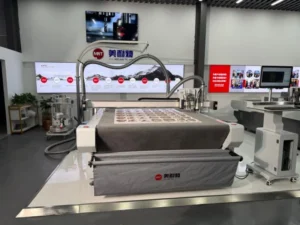
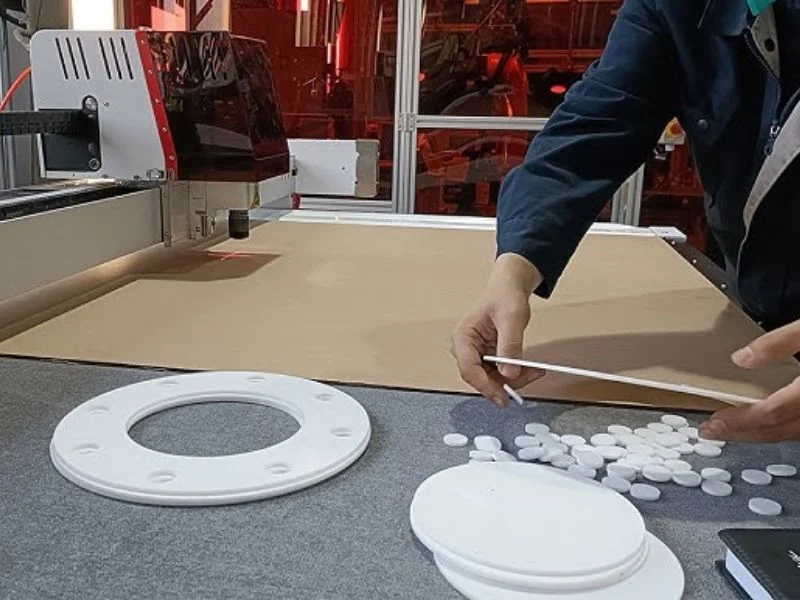
For soft, flexible materials, a third option often beats both. An oscillating knife cuts rubber, foam, gaskets and fabric cold, like a waterjet, but dry — with no water to dry off and no abrasive to clean from the parts.
Accuracy and Edge Quality: Which Is More Accurate?
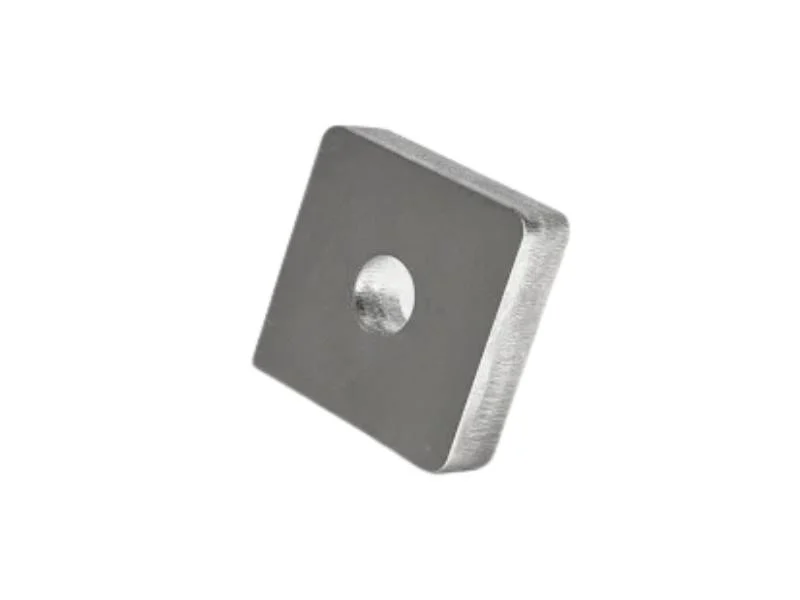
Both are accurate enough for most parts: Wikipedia puts waterjet machine accuracy down to about 0.13 mm and repeatability to 0.025 mm, while fiber lasers typically hold part tolerances under about 0.25 mm — with the laser more accurate on thin sheet and the waterjet steadier on very thick material.
On thin sheet, the laser usually wins. Its kerf is narrower, it holds small holes and sharp internal corners, and its speed means less time for anything to move. A waterjet’s wider kerf limits how small an internal corner can be.
On thick material, the balance shifts. A laser’s cut tapers and roughens as plate gets thicker, while a waterjet keeps cutting cold. Waterjets can show taper too, especially at speed, and modern heads compensate by tilting the stream.
Edge finish follows the same pattern. A laser edge on thin stainless is smooth and bright; on thick plate it shows striations. A waterjet edge has a fine, sand-blasted texture whose quality depends on speed — slowing down gives a smoother edge at the cost of time.
For what a laser can hold at each thickness, and how ISO 9013 grades a thermal cut edge, see our guide to laser cutting tolerances.
Cost per Part: Is Waterjet More Expensive Than Laser?
On thin and mid-thickness sheet metal, waterjet is usually more expensive per part than laser, because it cuts far more slowly and consumes abrasive; on very thick or heat-sensitive work, it can be the cheaper route because it avoids secondary operations or does work a laser cannot.
Speed. On a few millimetres of steel, a fiber laser cuts many times faster than an abrasive waterjet. Machine time is usually the biggest part of cost per part, so this alone decides most sheet-metal work in the laser’s favour.
Consumables. A waterjet uses garnet abrasive continuously, plus high-pressure seals and orifices that wear. A fiber laser uses assist gas, nozzles and protective lenses. Abrasive is typically a major line in waterjet running cost.
Secondary work. This is where waterjet recovers ground. On hardened steel or heat-sensitive alloys, a laser-cut part may need edge machining or stress relief; a waterjet part may not. On stone, glass or composites, the laser simply is not an option.
Handling. Waterjet parts come off wet and need drying and abrasive clean-up; laser parts come off dry. On high volumes, that handling adds up.
The practical laser cutting vs waterjet rule: sheet metal at volume goes to the laser; thick, heat-sensitive or non-metal work goes to the waterjet. Where a shop’s work covers both, it often subcontracts one side.
Water, Abrasive and the Shop Floor
A waterjet adds things a laser does not: a high-pressure pump, a water tank, abrasive supply and disposal, and wet parts — while a laser adds a gas supply, fume extraction and a closed cabin for beam safety.
The waterjet’s pump is its heart and its main maintenance item. High-pressure seals, check valves and orifices wear and are replaced on a schedule, and the pump needs a clean, stable water supply.
Abrasive is the other large item. Garnet is fed continuously during cutting, then settles in the catcher tank as sludge mixed with metal fines. It has to be removed and disposed of or recycled, which is a regular, messy job on a busy machine.
Parts come off a waterjet wet and often dusted with abrasive, so they need rinsing and drying before the next operation. Steel parts can flash-rust if left wet. That handling is small per part but real at volume.
A fiber laser trades those for its own requirements: a supply of oxygen, nitrogen or compressed air, extraction for metal fume, and an enclosure rated for its invisible beam. Parts come off dry and are ready for bending or welding.
Neither is a reason on its own to choose one process over the other, but both belong in the running-cost and floor-space comparison. Our sheet metal laser cutting machine page lists what a fiber laser installation needs.
How to Run a Fair Laser vs Waterjet Test
Compare laser cutting vs waterjet on your own parts by total cost per finished part — cutting time, consumables, secondary operations and handling — and by whether the edge meets the specification without further work.
Pick parts that represent the decision you are making. If the question is heat, include your most heat-sensitive part and check the edge hardness or structure after cutting. If the question is thickness, include your thickest regular part.
Record cycle time, gas or abrasive use and any secondary work each process needs. A laser part in hardened steel may need edge machining; a waterjet part may need drying and deburring of abrasive. Both belong in the total.
Measure the dimensions that matter at both the top and bottom of the cut, because taper behaves differently in the two processes as thickness grows.
Weighted by your monthly volume, the result usually makes the choice obvious: the laser wins most sheet work by a wide margin, and the waterjet wins the parts where heat or thickness rules the laser out.
Laser or Waterjet: Which Should You Choose?
Choose by what the part is made of and what heat would do to it: sheet metal goes to a fiber laser; thick metal, hardened or heat-sensitive parts, stone, glass and cured composites go to a waterjet; soft materials often go to a knife.
| Part or material | Better fit | Why |
|---|---|---|
| Sheet-metal parts, 0.5–20 mm | Fiber laser | Much faster, narrow kerf, lower cost per part |
| Stainless and aluminium thicker than about 25 mm | Waterjet | Beyond the laser’s economic range, no heat |
| Hardened steel, titanium, heat-sensitive alloys | Waterjet | No heat-affected zone |
| Stone, tile, glass | Waterjet | A laser cannot cut them |
| Cured carbon-fibre and glass-fibre laminate | Waterjet or diamond router | No resin burn or delamination from heat |
| Rubber, foam, gaskets, fabric | Oscillating knife | Cold and dry, no abrasive clean-up |
| Thick PTFE plate | CNC router or waterjet | No toxic fumes; see our PTFE comparison |
The PTFE case is set out in our comparison of CNC router vs waterjet for thick PTFE. For soft materials, our digital cutting machine range covers the knife option.
MNT builds fiber lasers, CNC routers and knife cutters, not waterjets. If your work is mostly thick, heat-sensitive or stone and glass, a waterjet is the right purchase, and we will say so. For sheet and tube metal, compare the X5, X6 and X6040 on our fiber laser cutting machine page.
Frequently Asked Questions
Is waterjet cutting more expensive than laser cutting?
On thin and mid-thickness sheet metal, usually yes: a waterjet cuts much more slowly and consumes garnet abrasive, so its cost per part is higher. On very thick, heat-sensitive or non-metal work it can be cheaper overall, because it avoids secondary operations or does work a laser cannot.
What are the downsides of waterjet cutting?
A waterjet is slow on thin sheet, has a wider kerf of about 1.0–1.3 mm with abrasive, uses abrasive continuously, and leaves parts wet with abrasive to clean off. It also cannot cut tempered glass, and it can show taper at high speed unless the head compensates.
What can a water jet not cut?
According to Wikipedia, tempered glass and diamond cannot be cut with a water jet: tempered glass shatters and diamond is too hard. Almost everything else — metals, stone, tile, ordinary glass, composites, rubber, foam, plastics and food — can be cut.
What is more accurate, a waterjet or a laser?
On thin sheet, a fiber laser is usually more accurate in practice, with a narrower kerf and cleaner small features; parts typically hold under about 0.25 mm. Waterjet machines reach accuracy of about 0.13 mm and stay steadier on very thick material, where a laser’s cut tapers.
Does a waterjet leave a heat-affected zone?
No. A waterjet cuts by erosion, not heat, so there is no heat-affected zone and the edge keeps the material’s original hardness and structure. That is its main advantage over laser and plasma on hardened, heat-sensitive or composite parts.
Can a fiber laser cut thick stainless steel?
Yes, within its range: a 6 kW fiber laser typically cuts stainless up to about 14 mm with a clean nitrogen edge, and more with oxygen at a lower edge quality. Beyond roughly 20–25 mm, waterjet or plasma is usually the more economical choice.
Laser cutting vs waterjet is easiest to settle with your own parts. Send us drawings, materials and thicknesses, and we will cut a free sample on the fiber laser where it fits — and tell you when waterjet is the better route. Contact our engineering team to arrange it.