How much does a CNC router cost? Public 4 × 8 ft examples span about $4,380–$5,500 for an entry-level kit and $32,000 or more for production packages.
The numbers cover different equipment and services. One supplier may exclude vacuum, dust collection and setup; another may include them. MNT quotes its routers by configuration, so a comparable price depends on the machine, options and delivery terms.
Use this guide to compare sourced price examples, the main cost drivers and the full ready-to-run budget for sheet and panel production.
What does an industrial CNC router cost in 2026?
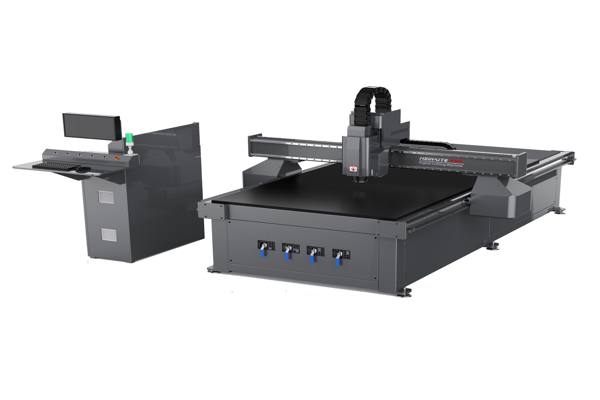
Budget from the configuration and scope, not from a single market average. In October 2026, STYLECNC listed its beginner-oriented STM1325 4 × 8 ft router at $4,380–$5,500 for its Basic and Pro editions. Front Range CNC published $32,000 for a ship-only 4 × 8 ft Lite package and $51,000–$81,000+ for its Core, Foundation and Elite packages. Front Range says its packages include items such as software, vacuum, dust collection, installation or training according to the model. The numbers are examples from other suppliers, not MNT offers or directly comparable quotes.
| Public example | Displayed price (USD) | Scope to check before comparing |
|---|---|---|
| STYLECNC STM1325, 4 × 8 ft | $4,380–$5,500 | Beginner-oriented Basic and Pro editions; confirm the exact included configuration |
| Front Range CNC Lite, 4 × 8 ft | $32,000 | Supplier describes this as a ship-only package |
| Front Range CNC Core / Foundation / Elite | $51,000 / $60,000 / $81,000+ | Different capacity and installation support by package |
| MNT T-series CNC routers | Configuration quote | Confirm spindle, motion, table, tooling, support and delivery terms |
Sources: STYLECNC STM1325 product listing and Front Range CNC published pricing, checked October 2026. Prices and inclusions can change; use the linked pages as dated examples, then request current itemized quotes.
The MNT CNC router range covers vision-guided contour routing, precision routing and automatic tool changing. Its current product pages ask buyers to request a configuration quote. They do not publish a current fixed USD price, so a historical list price should not be treated as today’s offer. A compact shop router, a full-sheet production router and a multi-tool cell also serve different workloads; a broad “CNC machine” price band would mix equipment that cannot be compared fairly.
Which CNC router specifications move the price?
Working area, spindle, motion system, tool changing, hold-down and controls set most of the machine cost. Each changes what the router can do, how consistently it can run and what supporting equipment you must buy.
Working area and frame
Size the table from the largest sheet you will actually load, including a practical margin for clamps or registration. A larger bed takes more floor space, a wider gantry and often more hold-down capacity. Price the whole machine around your normal part mix rather than buying the largest travel you can find. If most jobs are small signs, unused table area does not create revenue; if you cut full panels, splitting each sheet into two setups can cost more than the larger machine.
Spindle, drives and control
Spindle power alone does not determine throughput. Ask how the proposed spindle, tooling, drive motors and controller work together on your material and edge-quality target. A quote should name each major component and state whether cooling equipment, a transformer or a local power option is included. When suppliers propose different drive systems, compare a sample part’s cut time and finish at the same material thickness instead of assuming that a higher headline speed will appear in production.
Automatic tool change and registration
An automatic tool changer (ATC) swaps cutters during a job. It is useful when a part needs drilling, profiling and engraving in one program or when many sheets repeat the same sequence. Its value falls when most jobs use one cutter. Vision registration solves a different problem: it aligns a cut path to printed or otherwise positioned artwork. It should be priced for print-to-cut work, not added simply because another supplier’s brochure includes a camera.
Vacuum and dust collection
A vacuum table may be central to sheet throughput, but the pump, zones and plumbing must match the material. Small porous parts can lose hold-down even with a large pump; test a representative nested sheet. Dust extraction is a separate production requirement for wood and MDF. Confirm whether the machine price includes the pump, dust collector, hoses and installation. A low base figure with these omitted is not a lower complete cost.
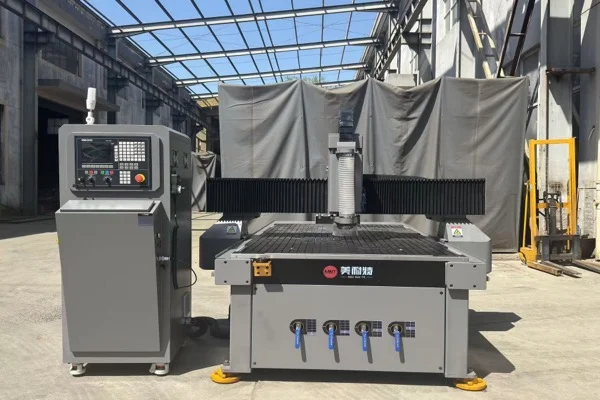
How do MNT router configurations affect the quote?
Compare the MNT T-series by job type, then request a written bill of configuration for the selected model. The live product range currently uses quote-based pricing. This table is a selection map, not a price or performance promise.
| Model | Production question | Items to specify in the quote |
|---|---|---|
| T2 Vision | Are printed signs and contour alignment the main job? | Camera workflow, material, spindle and table hold-down |
| T5 Precision | Is routing accuracy on panels more important than automatic tool changes? | Spindle, drives, sample tolerance and inspection method |
| T6 ATC | Do repeated jobs need several cutters in one program? | Tool magazine, holders, air supply and change sequence |
| T7 ATC | Do you combine routing, registration and knife cutting? | Each tool head, camera, vacuum zones and sample tests |
The differences matter more than a model name. A printer making irregular printed panels may value registration, while a cabinet shop running several cutter operations may gain more from ATC. If both are quoted, ask for the individual option prices and a sample-cut plan. Our ATC CNC router selection guide explains when a tool changer saves operator time. For larger sheet and panel work, compare the gantry machining center range as a separate configuration class.
What costs sit outside the CNC router machine price?
The landed and ready-to-run cost adds transport, import charges, installation, utilities, tooling and training to the quoted machine. Ask for each item as a separate line even if one supplier bundles it.
| Cost line | Question to ask | Evidence to request |
|---|---|---|
| Machine and options | Which spindle, drives, ATC, camera and table are included? | Itemized configuration and model drawing |
| Freight and insurance | Who pays from the factory to the named destination? | Named Incoterms rule, place and freight quote |
| Duty, taxes and broker | Who handles import and what classification is proposed? | Broker estimate for the destination country |
| Site preparation | Will the site need power work, compressed air or rigging? | Utility sheet, floor plan and local contractor quote |
| Production equipment | Are vacuum, dust extraction, tooling and software included? | Included-items list and renewal terms |
| Start-up and support | Who commissions, trains and supplies spares? | Written scope, warranty terms and response route |
Delivery terms need particular care. The International Chamber of Commerce’s Incoterms rules allocate delivery, cost and risk between seller and buyer. Specify both the rule and the named place, such as “FCA Hangzhou” or “CIF destination port,” rather than accepting an unexplained three-letter abbreviation. For containerized shipments, ask your freight forwarder which rule fits the route. An Incoterm does not itself settle the machine specification, payment schedule or installation scope.
Import charges vary by destination, origin, classification and date. US buyers can verify the current classification and duty with a customs broker using the USITC Harmonized Tariff Schedule. Do not copy a duty percentage from a machine article into a purchase order. Customs classification and any additional measures need confirmation for the specific shipment.
How should you compare two CNC router quotes?
Put both offers on the same delivered, ready-to-run basis. This reveals whether a lower quote reflects a simpler machine, a different support package or missing cost lines.
- Send both suppliers the same material, thickness, largest sheet, part file and expected sheets per shift.
- Ask each for a component list: spindle, drives, controller, ATC, vacuum pump, dust collection and software.
- Require a named delivery rule and place, packing dimensions, weight and an estimated lead time confirmed in the quotation.
- Add destination charges, rigging, electrical work, tooling, installation and training from local quotes.
- Ask each supplier to cut the same representative part, recording material, cutter, cycle time and acceptance criteria.
- Compare the total with written warranty, spare-parts and service terms beside it.
A simple comparison sheet has three totals: machine-only, landed and ready-to-run. The first is useful for evaluating hardware. The second adds transport and import. The third adds the work required to make acceptable parts at your site. Record the currency and the date on each quote; an old price in a different currency or shipping basis is weak evidence for today’s purchase.
If suppliers describe the same configuration differently, request a marked-up bill of materials or a video of the exact machine build. An equipment quote should show what is included, what is optional and what the buyer must supply. That detail is more useful than a brochure saying “complete system.”
When does ATC justify its added cost?
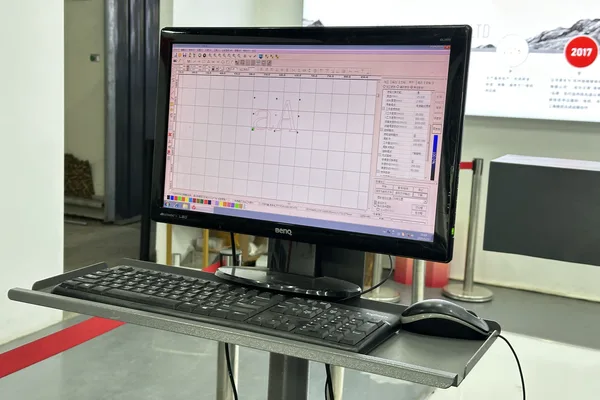
ATC is worth evaluating when saved manual changes and reduced interruptions exceed its extra ownership cost. That is a job-mix calculation, not a fixed rule that every production router needs a tool changer.
Count the manual cutter changes per sheet, the operator minutes for each change and the sheets run each month. Then multiply by the loaded cost of operator time. Add scrap or rework only when your own records show it. Compare that annual saving with the ATC price difference, its holders, air supply, maintenance and any extra programming. For a one-tool contour-routing job, the savings may be small. For cabinet parts that need boring, grooving and profiling on every sheet, interruptions add up.
For illustration only, 12 minutes of changeover avoided on each of 20 working days saves four operator hours per month. At a hypothetical loaded labor cost of $30 per hour, that is $120 monthly before any other effects. Change the minutes, days and rate to your own figures; this example is not a measured MNT result or a payback promise. Ask for a trial using your most common multi-tool file to test whether the assumed time saving appears.
Is a used CNC router cheaper to own?
A used machine has a lower purchase price only if inspection, transport, repair and downtime do not erase the saving. A sound frame can outlast a controller, but an unsupported control or worn spindle can stop production before the machine earns back its cost.
Inspect a used router under power. Run every axis over its full travel, perform a cut in your actual material, check spindle noise and run-out, test every ATC station if fitted and verify vacuum hold-down across the table. Ask for maintenance records, controller licence transfer, spare-parts availability and a report of any crashes or rebuilds. A machine that cannot be demonstrated under load deserves a repair allowance in the comparison.
Also quote the move itself: de-installation, packing, lifting, freight, recommissioning and operator training. Compare that ready-to-run used total against a current new-machine quote with the same work area and production tasks. The CNC machine maintenance checklist lists the inspection areas that matter after commissioning as well as before a used-machine purchase.
What should you send for an accurate MNT CNC router quote?
Send a representative job and the conditions under which the machine must run. A supplier can specify the machine only after it knows your material, part geometry, required output and delivery destination.
- Materials, thickness ranges and the largest sheet or panel size.
- A CAD file or drawing, including tolerances and edge-quality requirements.
- Sheets or parts per shift, the number of shifts and expected tool changes.
- Whether artwork must be registered to printed graphics.
- Available voltage, phase, air supply, extraction and floor space.
- Destination, preferred delivery rule and required commissioning or training.
Ask MNT to return an itemized configuration, options, included accessories, lead time, warranty, delivery term and sample-cut plan. Start with the router range, then send the job details for a current quote. For a quick comparison inside your team, keep the machine-only and ready-to-run totals on the same sheet and note which assumptions still need a supplier answer.
Frequently Asked Questions
How much does a 4 × 8 ft CNC router cost?
Public October 2026 examples include a $4,380–$5,500 STYLECNC STM1325 Basic or Pro edition and a $32,000 Front Range CNC Lite package. The scope differs, so use these as reference points and compare current itemized quotes on the same ready-to-run basis. MNT’s current 4 × 8 ft class is quoted by configuration.
Does MNT publish a fixed CNC router price?
No current fixed USD price appears on the MNT CNC router range or the T-series product pages checked for this guide. Request a written configuration quote with the spindle, drives, table, options, destination and delivery rule.
What is the difference between CNC router price and total cost?
The machine price covers the listed equipment and options. Total ready-to-run cost also covers freight, import, rigging, utilities, tooling, software, installation and training where these are not included. Ask suppliers to mark each item as included, excluded or optional.
Is an ATC CNC router worth the extra cost?
It depends on how often the program changes tools. Count the manual changes and lost production time per month, then compare that saving with the ATC option, holders, air and maintenance. A single-tool job may not justify it; repeated multi-tool parts may.
Should I buy a used CNC router to save money?
Only after an under-power inspection and a cut in your material. Add de-installation, freight, recommissioning and likely repairs to the purchase price; confirm controller and spare-parts support before comparing with a new quote.
What information makes a CNC router quote accurate?
Send materials and thicknesses, maximum sheet size, a representative part file, expected output, site utilities and delivery destination. Ask for the exact machine configuration, included accessories, delivery rule, lead time, warranty and sample-cut acceptance criteria in writing.