Fiber laser vs CO2 laser is really a question about what you cut.
Both are laser cutters, both follow a file, and both are sold on wattage. But they work at wavelengths about ten times apart, and that single difference decides which materials each one cuts well, how much power it draws and what it costs to keep running. Buy the wrong one and you own a machine that is excellent at somebody else’s work.
This guide compares fiber and CO2 lasers on materials, speed, running cost and maintenance, and says plainly where neither laser is the right tool.
Fiber Laser vs CO2 Laser: The Short Answer
Choose a fiber laser to cut metal — steel, stainless, aluminium, copper and brass; choose a CO2 laser to cut non-metals such as acrylic, wood, paper and many plastics. Fiber is faster and cheaper to run on metal; CO2 is the laser that non-metals absorb well.
| Factor | Fiber laser | CO2 laser |
|---|---|---|
| Wavelength | About 1.06 µm | About 10.6 µm |
| Best materials | Metals, including reflective copper and brass | Acrylic, wood, paper, textiles, many plastics |
| Wall-plug efficiency | About 20–30 % | About 5–10 % |
| Beam delivery | Through a flexible fibre cable | Mirrors along the gantry |
| Routine optics upkeep | Protective lens and nozzle | Mirrors, lenses and resonator |
| Speed on thin sheet metal | Much faster | Slower |
| Typical buyer | Sheet metal and tube fabrication | Signs, displays, woodwork, packaging prototypes |
Efficiency figures are from Wikipedia’s entry on laser cutting; wavelengths are the standard values quoted by laser makers.
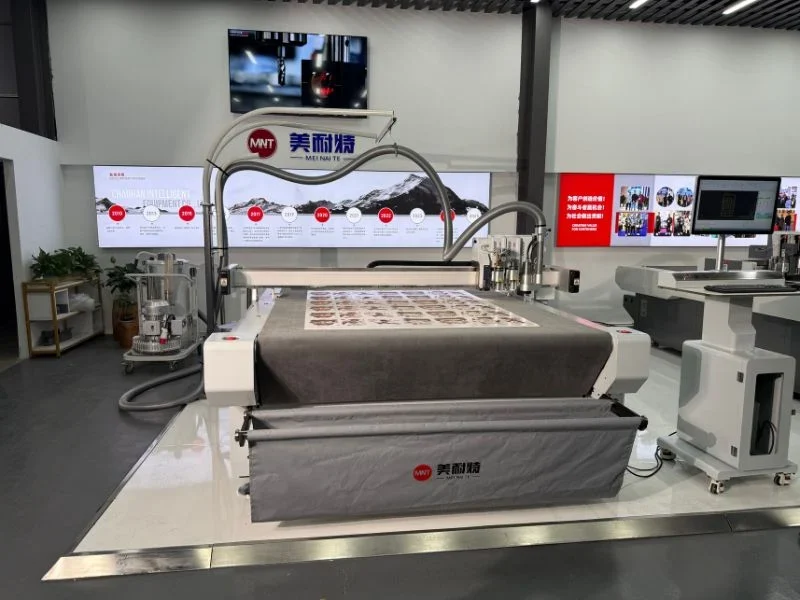
One point for transparency: MNT builds fiber lasers for metal, plus knife tables and routers for non-metals — the range has no CO2 lasers. That is why this comparison also covers when a knife or a router beats either laser.
Wavelength: Why Metals Prefer Fiber and Non-Metals Prefer CO2
Materials absorb light differently at different wavelengths: metals absorb a fiber laser’s roughly 1 µm beam far better than a CO2 laser’s 10.6 µm beam, while organic materials and most plastics absorb the CO2 wavelength strongly. That is the root of every other difference in fiber laser vs CO2 laser.
A fiber laser generates its beam inside a doped optical fibre and delivers it through a flexible cable to the cutting head. Its short wavelength couples well into steel, stainless and aluminium, and it is the reason fiber lasers can cut copper and brass, which reflect most of the longer CO2 wavelength.
A CO2 laser generates its beam in a gas-filled tube or resonator and steers it with mirrors. Wood, acrylic, paper, leather and textiles absorb 10.6 µm light readily, so a CO2 laser vaporises them cleanly at modest power. The same wavelength reflects strongly from bare metal, which is why a CO2 cutter needs much more power to cut the same sheet.
The wavelength also affects focus. The shorter fiber wavelength can be focused to a smaller spot, which gives a narrow kerf and high energy density on thin metal. We cover how kerf width changes with process and thickness in our guide to kerf in laser cutting.
Which Materials Each Laser Cuts
In fiber vs CO2 laser terms, fiber lasers are metal cutters; CO2 lasers are non-metal cutters that can also cut some metal at higher power. The table shows how each handles common workshop materials, and where a third method is the better choice.
| Material | Fiber laser | CO2 laser | Often better |
|---|---|---|---|
| Mild and stainless steel | Excellent | Possible at higher power, slower | Fiber laser |
| Aluminium | Excellent | Difficult; reflective | Fiber laser |
| Copper and brass | Good, with back-reflection protection | Very difficult | Fiber laser |
| Acrylic (PMMA) | Poor | Excellent, flame-polished edge | CO2 laser, or a router for thick sheet |
| Wood and MDF | Poor | Good, with a charred edge | CO2 laser or router |
| Fabric, leather, foam | Poor | Good but heats the edge | Oscillating knife for a cold edge |
| Rubber, PTFE, PVC gaskets | Poor | Chars or releases hazardous fumes | Oscillating knife |
The right-hand column matters because many buyers compare two lasers when their work is not laser work at all. PVC releases chlorine when lasered and PTFE releases toxic fumes, so neither belongs on a laser of any kind. Rubber and foam cut on a laser come off with a hardened or melted edge that a cold knife avoids.
We set out the gasket case in detail in our comparison of laser vs knife gasket cutting, and the leather case in oscillating knife vs laser for leather.
Speed, Thickness and Edge Quality on Metal
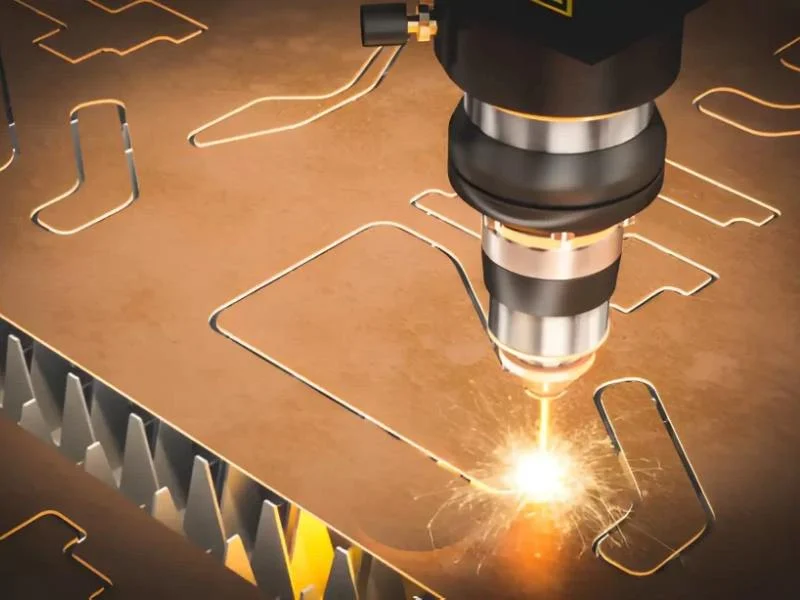
On thin and mid-gauge sheet metal, a fiber laser cuts far faster than a CO2 laser of similar power, which is why fiber has taken over sheet-metal fabrication; CO2’s remaining edge on metal is limited to some thick-plate work.
The speed advantage comes from absorption and focus. More of the fiber beam’s energy goes into the metal, and a smaller spot concentrates it, so the cut advances faster. On thin sheet the limit moves from laser power to machine dynamics — how fast the gantry can accelerate around small features.
Thickness capability depends on power and assist gas more than on laser type. A 3 kW fiber laser typically parts about 16 mm mild steel and a 6 kW source about 22 mm, as set out in our fiber laser cutting thickness chart. Historically CO2 lasers gave a smoother cut face on thick plate, and some heavy-plate shops still prefer them for that; for most fabrication work, higher-power fiber sources have closed the gap.
Edge quality on thin stainless and aluminium is a fiber strength: with nitrogen assist, the edge comes off bright and oxide-free, ready for welding or painting. The tolerances that edge can hold are covered in our guide to laser cutting tolerances.
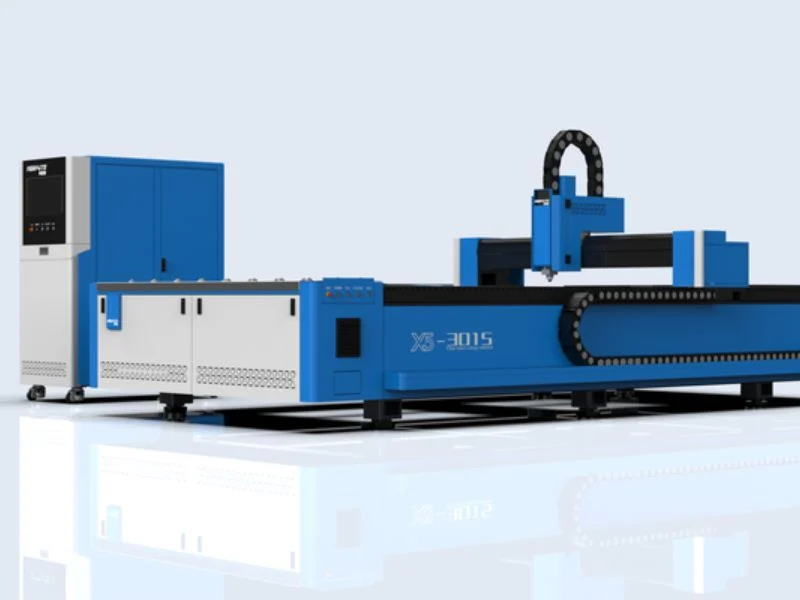
For a buyer choosing between the two for metal, the CO2 vs fiber laser question is essentially settled in fiber’s favour. The real decisions are power, bed size and whether you need sheet, tube or both — which is how we compare the machines on our fiber laser cutting machine page.
Running Cost, Efficiency and Maintenance
A fiber laser costs less to run than a CO2 laser of similar cutting output: it turns more electricity into light, and its beam path needs far less upkeep.
Electrical efficiency. Wikipedia puts wall-plug efficiency at about 20–30 % for fiber lasers and 5–10 % for CO2. The difference shows up in the power bill and in the size of the chiller needed to carry away the waste heat.
Beam delivery. A fiber laser’s beam travels inside a sealed fibre cable to the head, so there are no mirrors to align or keep clean along the gantry. A CO2 laser relies on a chain of mirrors, and any dust, misalignment or thermal drift in that chain loses power at the cut.
Consumables and source life. On a fiber laser, routine optics maintenance is mostly the nozzle and protective lens, checked daily. The laser source itself is solid-state; the source on the MNT X5, for example, is specified for a 100,000-hour life. CO2 resonators need gas, mirrors and periodic service.
Chiller and assist gas. Both need a chiller and both use assist gas, so these costs are similar in kind. Gas choice — oxygen, nitrogen or air — often matters more to cost per part than the laser type. Daily and weekly care for a fiber machine is set out in our fiber laser cutting machine maintenance checklist.
The upshot is that for metal work, a fiber laser usually wins on both cutting speed and cost per part, and the higher purchase price of a fiber source is recovered through throughput and lower running cost on a busy production run.
Fiber Laser vs CO2 Laser for Non-Metals: When a Knife or Router Is Better
For non-metals, the fiber laser vs CO2 laser question is often the wrong one: a CO2 laser suits acrylic, wood and paper, but fabric, leather, foam, rubber and gaskets are usually better cut cold with an oscillating knife, and thick acrylic or plastics with a router.
A CO2 laser is genuinely good at acrylic signage, engraved wood and paper prototypes. Its flame-polished acrylic edge is hard to match, and for thin decorative work it is fast and precise.
Its limits show on thicker and heat-sensitive material. Foam melts and rounds at the edge, leather and textiles scorch, and rubber and PTFE char or give off hazardous fumes. A digital cutter with an oscillating knife cuts the same materials cold, stacks layers, and leaves a square edge — which is why gasket, upholstery and composite shops use knife tables, not lasers. Our digital cutting machine range covers that work.
For thick acrylic, engineering plastics and sheet materials that need pockets, drilled holes or chamfers, a CNC router does what no laser can: it machines in three dimensions. See our CNC router for acrylic page for where a router beats a laser on plastic.
So the honest answer is that a CO2 laser is one of three tools for non-metals, and it leads the three only on thin, laser-friendly materials.
Fiber Laser vs CO2 Laser Safety
Both lasers can cause serious eye and skin injury, but a fiber laser’s near-infrared beam is the more dangerous to eyes, and it passes through ordinary clear plastic windows that block a CO2 beam — so fiber machines need fully enclosed, laser-rated guarding.
The difference is again the wavelength. The eye focuses light around 1 µm onto the retina, so stray or reflected fiber laser light can cause retinal damage, and it is invisible. The CO2 wavelength of 10.6 µm is absorbed at the front of the eye and by ordinary acrylic and polycarbonate, which is why CO2 cutters can use simple clear viewing lids.
For a fiber vs CO2 laser decision, that changes the machine you install. A production fiber cutter should have a closed cabin or protective enclosure with viewing windows rated for its wavelength, interlocked doors and extraction. The general principles are summarised under laser safety, and local regulations set the specific requirements for your site.
Fume extraction matters for both. Cutting metal produces metal fume and fine particulate; cutting plastics on a CO2 laser produces vapours that range from irritating to toxic, depending on the material. PVC should never be laser cut at all, because it releases chlorine compounds that are harmful to people and corrosive to the machine.
When you compare quotations, compare the guarding and extraction as well as the laser. A cheaper machine that needs an enclosure and extraction added on site is not cheaper once it is installed safely.
Fiber or CO2: Which Laser Should You Buy?
Match the machine to the material that makes up most of your work: sheet or tube metal points to a fiber laser; thin acrylic, wood and paper point to a CO2 laser; soft, layered or heat-sensitive materials point to a knife table.
| Your main work | Best fit | Why |
|---|---|---|
| Sheet-metal parts, enclosures, brackets | Fiber laser | Speed, cost per part, bright edge on stainless |
| Tube and profile fabrication | Fiber tube laser | Cuts holes, miters and notches in one setup |
| Copper busbar and brass parts | Fiber laser with back-reflection protection | CO2 barely couples into these metals |
| Acrylic signs and thin decorative work | CO2 laser | Flame-polished acrylic edge, clean on wood and paper |
| Thick acrylic and engineering plastics | CNC router | Pockets, holes and chamfers; no heat-affected edge |
| Gaskets, foam, leather, textiles, composites | Oscillating knife table | Cold cut, no fumes, square edge, stacks layers |
Shops that cut both metal and non-metals. Sign makers are the classic case: stainless or brass letters on one job, acrylic faces and foam-board backs on the next. For them the fiber vs CO2 laser question has no single answer, because the work spans both families. The usual solution is two machines — a fiber laser for the metal and a router or CO2 laser for the plastic — rather than one laser pushed outside its range. A fiber laser forced onto acrylic, or a CO2 laser forced onto thick stainless, costs more in slow cycles and rework than a second machine costs to own.
Before deciding, list the materials of your last hundred jobs by cutting time, not by count. The material that fills most of the machine’s hours should choose the machine; the occasional outlier can be subcontracted or handled by the second machine.
If your work is mostly metal, compare the X5, X6 and X6040 on our fiber laser cutting machine page. If it is mostly soft or layered material, a knife table will serve you better than either laser, and we will tell you so at the quoting stage.
Frequently Asked Questions
What are the disadvantages of fiber lasers?
Fiber lasers cut most non-metals poorly — acrylic, wood, paper and textiles absorb their roughly 1 µm wavelength weakly — and a fiber machine usually costs more to buy than a CO2 machine of similar power. Reflective metals such as copper need back-reflection protection in the cutting head.
What is the downside of a CO2 laser?
A CO2 laser converts only about 5–10 % of its electricity into light, against about 20–30 % for fiber, so it costs more to run. It cuts metal slowly and struggles with reflective metals, and its mirror-based beam path needs regular alignment and cleaning.
How long does a fiber laser last?
Fiber laser sources are rated for tens of thousands of hours; the source on the MNT X5, for example, is specified for 100,000 hours. The cutting head’s nozzle and protective lens are consumables replaced far more often, and the machine’s life depends on keeping the chiller and optics maintained.
Can a fiber laser cut wood or acrylic?
Not well. Wood and clear acrylic absorb the fiber wavelength poorly, so cutting is slow, inconsistent and often scorched. A CO2 laser cuts them cleanly, and a CNC router is the better tool for thick acrylic or parts that need pockets and holes.
Can a CO2 laser cut metal?
Yes, but less efficiently. A high-power CO2 laser can cut steel and stainless, usually with oxygen or nitrogen assist, but it is slower than a fiber laser on thin and mid-gauge sheet and struggles with reflective aluminium, copper and brass.
Is there anything better than a CO2 laser for non-metals?
For many non-metals, yes. An oscillating knife cuts fabric, leather, foam, rubber and gaskets cold, with a square edge and no fumes, and a CNC router machines thick acrylic and plastics in three dimensions. A CO2 laser remains the strongest choice for thin acrylic, wood and paper.
Which is cheaper to run, a fiber laser or a CO2 laser?
A fiber laser is usually cheaper to run on metal. It converts about 20–30 % of its electricity into light against about 5–10 % for CO2, needs a smaller chiller, and has no mirror path to align or clean. Assist gas is a similar cost for both and often matters more to cost per part than the laser type.
Fiber laser vs CO2 laser is easiest to settle with your own parts. Send us drawings and the materials you cut most, and we will recommend the machine type that fits — including when that is not a laser — and cut a free sample on it. Contact our engineering team to arrange it.