A CNC machining center for acrylic and aluminum has to satisfy two very different materials on the same platform — acrylic that melts and re-fuses if heat isn’t managed well, and aluminum that demands rigidity and precise chip evacuation to avoid chatter and built-up edge. A machine tuned for one often underperforms on the other unless it was specifically engineered to cover both.
Shops running engineering plastics, acrylic, aluminum and composite panel on the same machining center need a platform with the tool-changing capability, spindle configuration and vacuum holding to handle that material range without constant setup changes between job types. Getting sheet size, spindle power and accuracy requirements matched to your actual material mix determines whether the machine performs well across the full range or only on whichever material happened to be tested during the sales demo.
This guide covers material and sheet size, spindle power and tool changer needs, vacuum table and dust extraction, accuracy requirements, and an RFQ checklist for hard-material machining.
Material and Sheet Size
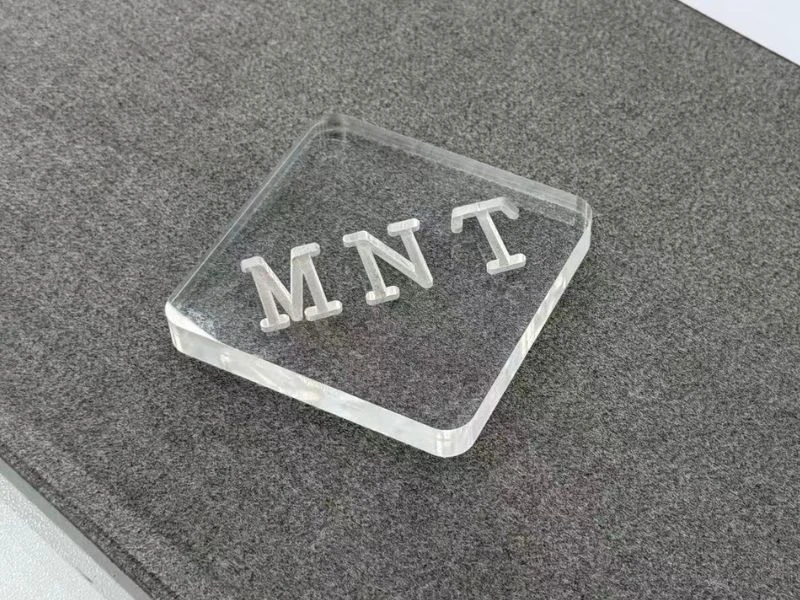
Confirm working travel — not nominal bed size — covers your standard sheet and plate sizes across your full material range, since acrylic sheet, aluminum plate and composite panel don’t always come in the same standard dimensions, and a machine sized for one material’s typical sheet size may not comfortably fit another’s.
A 1500×3000 mm class working envelope covers most acrylic and aluminum fabrication work; larger formats matter for shops running full 4×8 ft or bigger panels regularly. Match table size to your actual production sizes rather than an aspirational future capacity that adds cost without near-term benefit.
Spindle Power and Tool Changer Needs
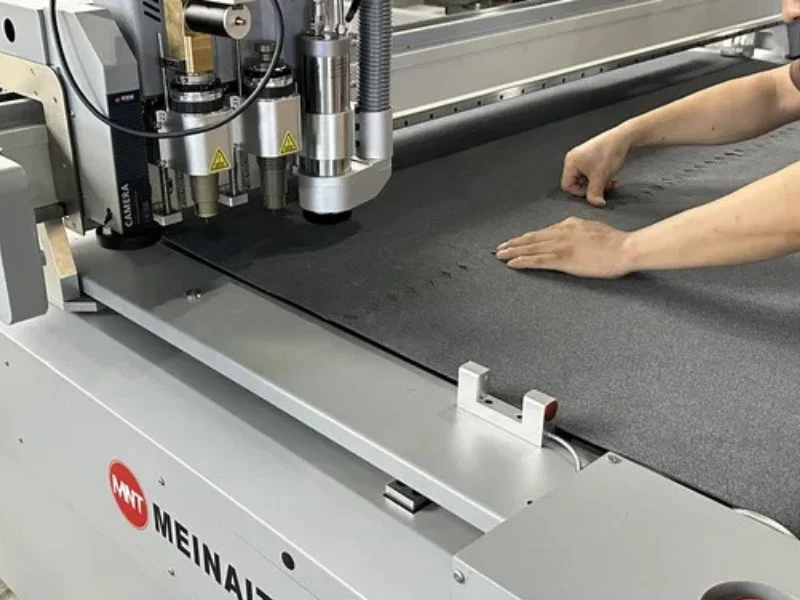
A water-cooled spindle in the 5–9 kW range covers acrylic, aluminum and engineering plastics across common thicknesses, with an ATC tool changer sized to your actual operation sequence — profiling, drilling, chamfering — rather than an oversized magazine that adds cost without adding capability your job list uses.
Ask whether the machine’s drive architecture is direct-drive or belt-driven — direct-drive axes hold tighter positioning accuracy over sustained production, which matters more on aluminum work where dimensional consistency across a run is often the actual requirement, not just accuracy on the first part.
Vacuum Table and Dust Extraction Across Material Types
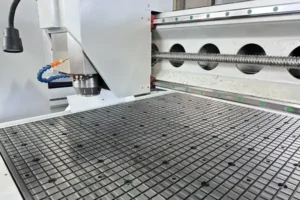
Confirm zoned vacuum holding works reliably across your full material range — thin acrylic sheet holds differently than rigid aluminum plate — and that dust extraction is sized for the different debris types each material produces, since aluminum chips and acrylic dust need different handling than wood or composite debris.
Aluminum machining in particular generates metal chips and fine dust that some general-purpose extraction systems aren’t optimized to handle alongside lighter plastic dust. Ask specifically how the system performs across your actual material mix, not just its rated capacity on a single material type.
Accuracy and Repeatability Requirements
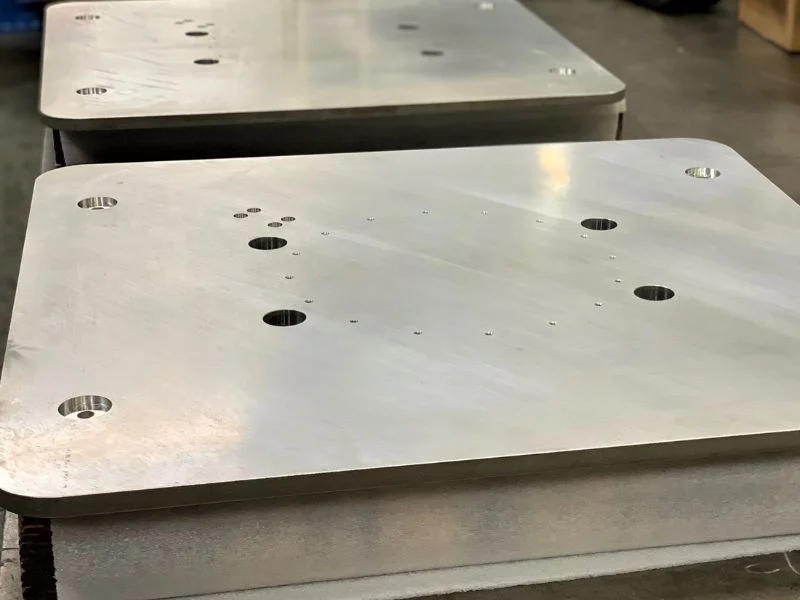
Define your actual tolerance requirement before comparing machines — acrylic fabrication for signage and displays often tolerates looser tolerance than aluminum parts destined for assembly or precision hardware, and matching machine capability to the tighter of your two requirements avoids under-specifying for your more demanding material.
Ask for positioning and repeatability figures specifically, and request a demonstration cut on your own aluminum sample if precision aluminum work is part of your mix — acrylic cutting is more forgiving of minor accuracy variance than tight-tolerance aluminum parts, so testing on your most demanding material gives the most honest picture of the machine’s real capability.
Adding Composite Panel and Engineering Plastics to the Mix
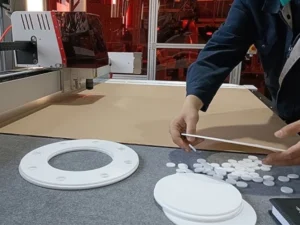
Composite panel and engineering plastics generally sit between acrylic and aluminum on cutting difficulty, but confirm your candidate machine’s tooling and feed rate recommendations cover these materials specifically rather than assuming settings for acrylic or aluminum transfer directly — composite layups and engineering plastics like PTFE or nylon have their own tooling and heat-management requirements.
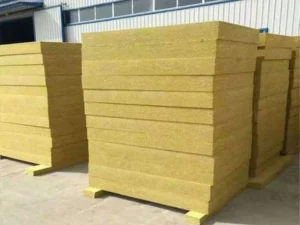
Shops with a genuinely mixed material list — acrylic signage work, aluminum brackets, composite tooling boards, engineering plastic components — benefit most from a machine with a broad, well-documented range of tested feeds and speeds across all of these categories, rather than one primarily validated for a single material with the others treated as an afterthought.
RFQ Checklist for Hard-Material Machining
Bring these specifics to a quote conversation:
| Item | Why it matters |
|---|---|
| Full material list and typical thickness range | Confirms the machine is actually tested across your material mix, not just one |
| Largest and smallest regular part/sheet size | Determines required working envelope |
| Tightest tolerance requirement across your material mix | Avoids under-specifying for your most demanding material |
| Typical tool rotation per job | Determines ATC magazine size and type needed |
| Production volume by material type | Determines spindle cooling and duty-cycle requirements |
See our M1631 vs M3015 vs M4020 comparison for how the machining center line covers different load, precision and format requirements, and the full M3015 CNC Engraving & Machining Center specifications for direct-drive precision on acrylic and aluminum work.
Frequently Asked Questions
Can one machine handle both acrylic and aluminum well?
Yes, provided it has adequate spindle power, the right drive architecture for sustained precision, and vacuum/extraction handling that works across both material types — a machine tuned for only one material often underperforms on the other.
What spindle power do I need for acrylic and aluminum?
A water-cooled spindle in the 5–9 kW range covers common thicknesses of both materials — match the higher end of that range if aluminum is your primary material or thicknesses run heavier.
Does direct-drive matter for acrylic work, or just aluminum?
It matters more for aluminum, where dimensional consistency across a production run is often the actual requirement — acrylic work is generally more tolerant of minor accuracy variance.
Do I need different dust extraction for aluminum vs plastic?
Aluminum generates metal chips and fine dust that some general-purpose extraction systems aren’t optimized to handle alongside lighter plastic dust — confirm extraction performance across your actual material mix, not just one material’s rated capacity.
Should I test the machine on acrylic or aluminum before buying?
Test on your most demanding material — usually aluminum if tight tolerance matters — since acrylic cutting is more forgiving and testing on it alone can mask accuracy limitations that show up on harder material.
How do I size the ATC tool magazine for mixed-material work?
Count your actual tool rotation per typical job across your material mix, rather than defaulting to the largest available magazine — an oversized magazine adds cost without adding capability your job list uses.