
CNC Router for PEEK and High-Performance Polymers
MNT (MEINAITE) CNC routers machine PEEK, Ultem, PPS and PSU dry — with sharp carbide on virgin grades and diamond-coated tooling on reinforced ones, on stock where the blank costs more than the machine time.
- The blank is the expensive part — we prove the program on a cheap polymer of the same size, then cut your PEEK once
- Annealing is a scheduled operation — anneal, rough, anneal, finish: the sequence that stops a part moving in service
- No coolant loop to validate — dry cutting with extraction, which on medical and semiconductor work is a much shorter paperwork trail
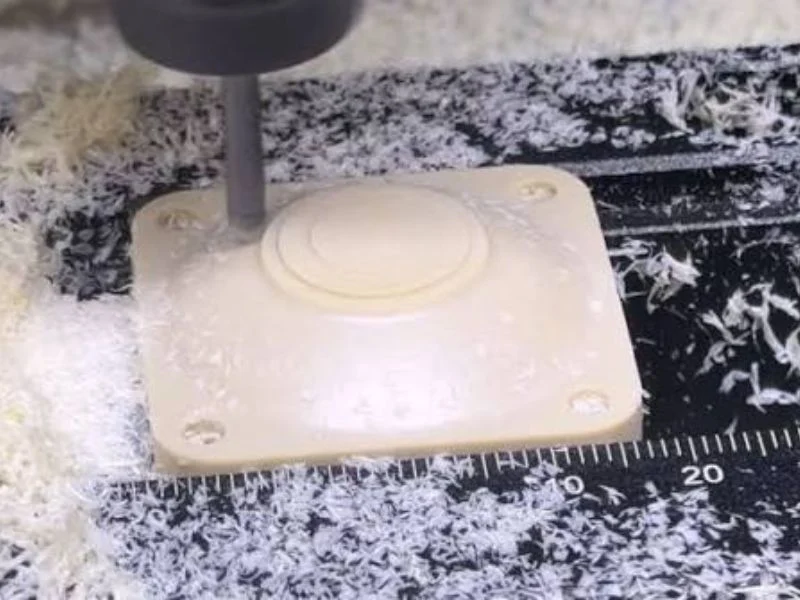
Why PEEK Is Easy to Machine and Expensive to Get Wrong
PEEK machines well. Every supplier says so and it is true — it takes high feed rates, it cuts cleanly, and it does not fight the tool the way glass-epoxy laminate does. The difficulty with PEEK is not the cutting. It is that the blank costs more than the day.
Unfilled PEEK rod runs many times the price of acetal per kilo, and implant-grade or high-purity stock more again. That inverts the normal economics of a machine shop: on most materials the hour is expensive and the blank is cheap, so you prove out a program by cutting one. Here the blank is the expensive part — and the habit of proving a program on the first real part is the single most costly thing a shop brings to this material.
The second difficulty is that PEEK is semi-crystalline. It carries residual stress from the way stock is made, and it releases that stress when you machine it. A part can measure perfectly on the bench and move later, at temperature, in service. Annealing is a scheduled operation here, not a finishing touch — anneal the blank, rough it, anneal again, then finish. Grade data and processing guidance for stock shapes are published by Victrex, who developed the polymer.
Where a router fits. For plate, rod and machined components, milling is the production route: a laser chars the edge and alters the surface crystallinity that gives PEEK its properties, and a knife is not in the conversation at all. What you are actually buying in a machine here is rigidity and repeatability on stock you cannot afford to scrap.
Machine specifications compared. PEEK stock is expensive enough that a scrapped billet costs more than a week of spindle time, so the machine is judged on repeatability and heat, not throughput. High RPM with a shallow depth of cut keeps the chip carrying the heat away rather than letting it glaze the cut face — the M1631 is the one here with a published 18,000 RPM and a stated accuracy figure.
| Specification | T5 | T6 | M1631 |
|---|---|---|---|
| Working area | 1300 × 2500 mm | 1300 × 2500 mm | 3000 × 1500 mm (X/Y), Z 150 mm |
| Spindle | 5.5 kW water-cooled | 9 kW air-cooled, or 7.5 / 11 kW water-cooled | 11 kW ATC water-cooled |
| Max spindle speed | — | — | 18,000 RPM |
| Tool changer | — | 4-tool linear ATC | 8-position disc, NBT40 |
| Positioning accuracy | — | — | 0.025 mm over full travel |
| Rapid traverse | — | — | X/Y 30 m/min · Z 15 m/min |
| Material hold-down | Vacuum | Vacuum | 2-zone independently controlled vacuum |
| Net weight | 1500 kg | 2000 kg | 3500 kg frame |
High-Performance Polymer Grades We Machine
One family, four price brackets and two completely different tooling problems. What the drawing specifies decides the tooling budget more than the geometry does.

Unfilled PEEK (Virgin)
- Formats: Rod 6–150 mm, plate 5–80 mm, natural beige and black, industrial and medical grades
- Watch out: Stock runs many times the price of acetal per kilo, so a scrapped part costs you the material rather than the hour — which should change how you prove out a program, and usually does not
- How we cut it: Program proved on a cheap polymer blank of the same size first, then the PEEK runs once; the first PEEK part is a production part, not a test
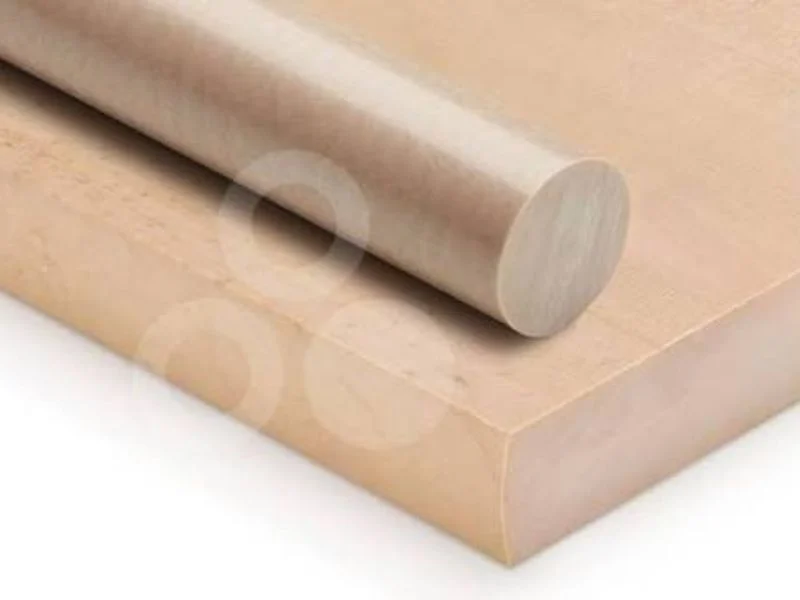
Reinforced PEEK — GF30 and CF30
- Formats: 30% glass-filled and 30% carbon-filled PEEK in rod and plate
- Watch out: The filler turns an easy-machining polymer into an abrasive one — glass-filled PEEK wears tooling at a rate closer to G10 laminate than to virgin PEEK, and the edge quality goes with the tool
- How we cut it: Diamond-coated tooling throughout, with a shortened tool-change interval priced into the job instead of discovered mid-batch
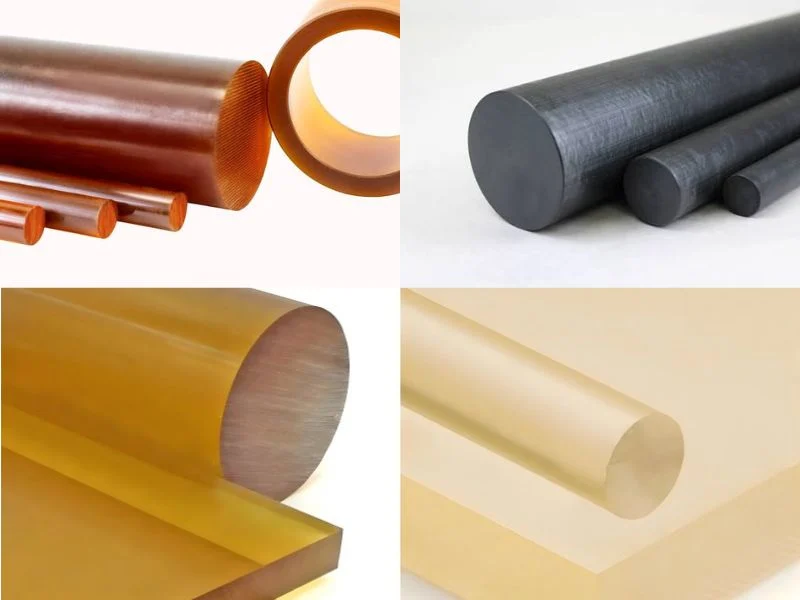
PEI (Ultem), PPS and PSU
- Formats: Ultem 1000 and 2300, PPS (Ryton), PSU and PPSU in sheet and rod
- Watch out: Cheaper than PEEK and often specified as a substitute, but PEI is notch-sensitive — a sharp internal corner that PEEK shrugs off will start a stress crack in Ultem
- How we cut it: Radiused internal corners, climb milling, and no dwelling at a corner where the tool changes direction
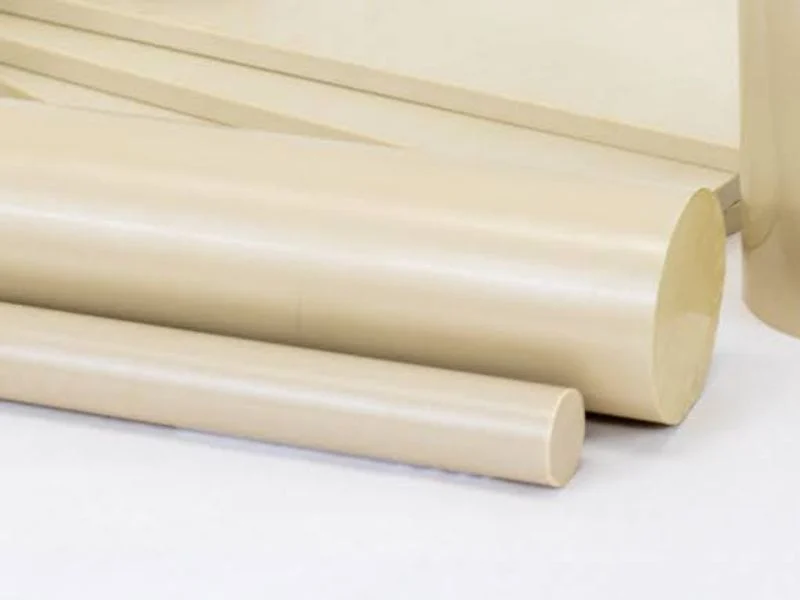
Medical and Semiconductor Grades
- Formats: Implant-grade PEEK and high-purity grades for wafer handling and test equipment
- Watch out: What you are paying for is purity and traceability — one shared tool or a trace of cutting fluid and the lot documentation no longer describes the part you machined
- How we cut it: Dedicated tooling, dry cutting with extraction, and a machine history that can be written down rather than argued
Grade and temperature data per Victrex and Ensinger PEEK datasheets. Machining parameters from production runs on MNT T5 and M1631.
Parts Machined From PEEK and PEI
Four industries that specify these polymers, and what is genuinely difficult in each. In three of the four, the part is qualified rather than simply inspected.
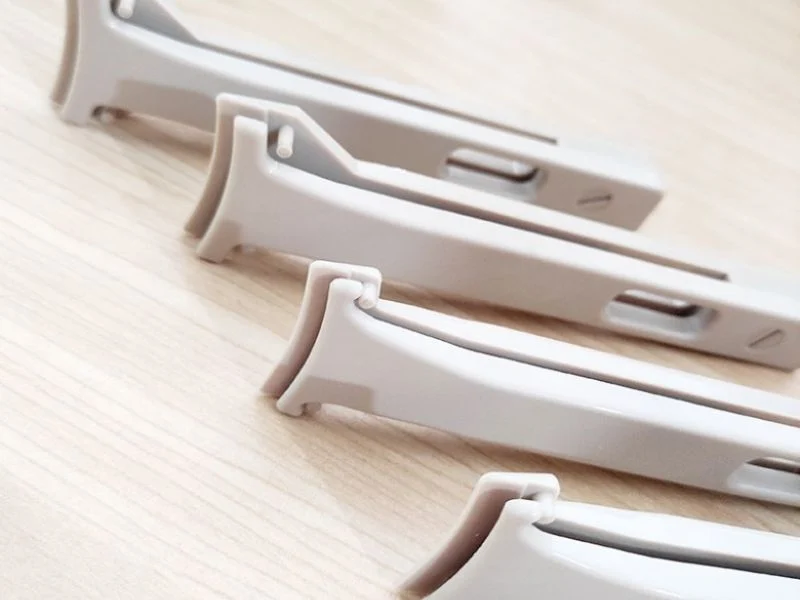
Semiconductor Wafer Handling
- Parts: Wafer carriers, end effectors, chucks, test sockets and vacuum fittings
- The hard part: Outgassing and particle generation will disqualify a part that measures perfectly — here cleanliness is as much of a specification as the dimensions are
- What you get: Dry machining with extraction and no cutting fluid anywhere in the process, on tooling that has not seen another material
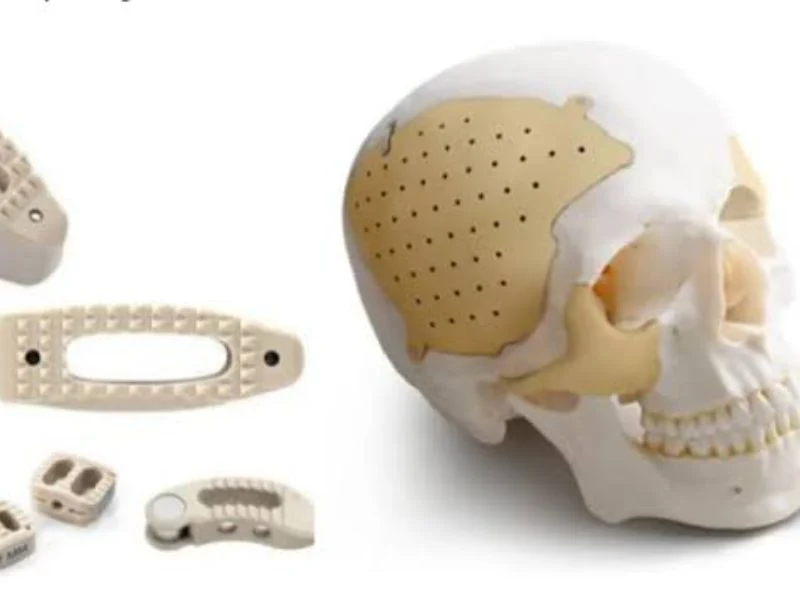
Medical and Implantable Components
- Parts: Spinal cages, trial implants, instrument handles and dental components
- The hard part: Traceability from bar to finished part, with a process an auditor will accept without a validation exercise attached to it
- What you get: A route that is easy to document precisely because there is no coolant loop in it to validate
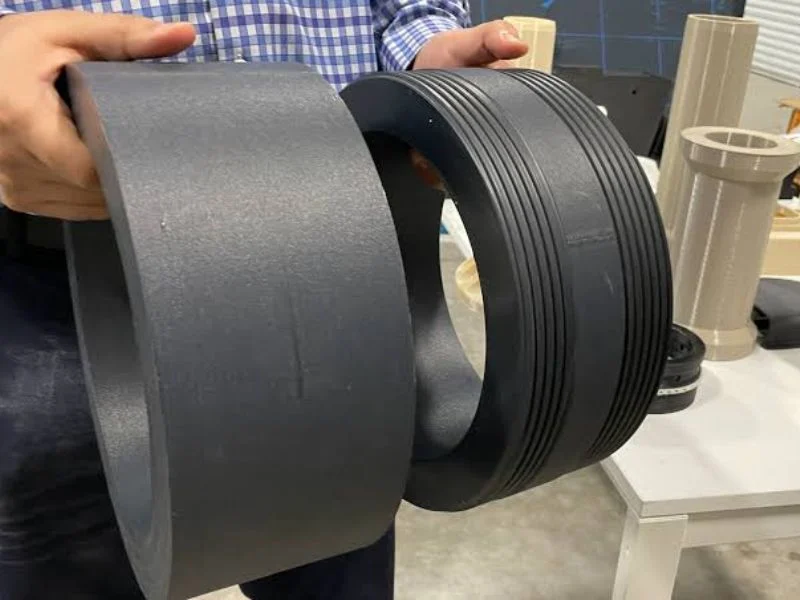
Oil, Gas and Chemical Service Parts
- Parts: Back-up rings, seal faces, valve seats, bushings and connector bodies for downhole tools
- The hard part: These are specified for 200°C and up under pressure, so residual stress left in by machining becomes a field failure rather than a shop-floor one
- What you get: Stress relief before finishing and annealing after, scheduled into the job rather than added when a part comes back
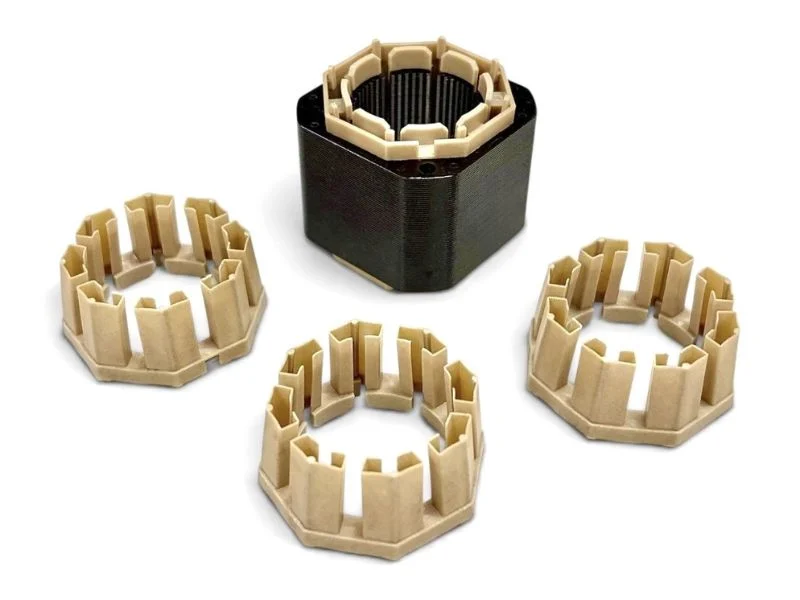
Aerospace Brackets, Bushings and Insulators
- Parts: Metal-replacement brackets, bushings, thermal isolators and connector housings
- The hard part: The weight saving comes from thin walls, and thin walls in a semi-crystalline polymer move once the stress comes out of them
- What you get: A rough–anneal–finish sequence that lets a thin-wall part keep its shape after it leaves the machine
Application and failure modes reported by medical and semiconductor machinists, cross-checked against MNT machine runs on PEEK and PEI.
Recommended MNT Routers for PEEK and Ultem
Three machines, one material family. On stock this expensive, rigidity and repeatability are what you are paying for — cutting power has never been the constraint.
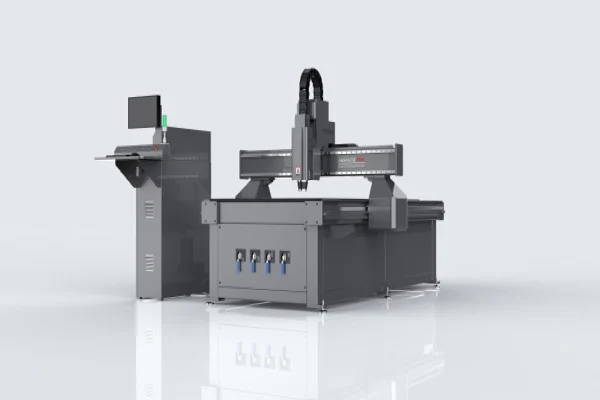
T5 Precision CNC Router
- Cuts: Unfilled PEEK, PEI/Ultem, PPS and PSU in sheet and plate
- Specs: Precision gantry · 18,000–24,000 RPM · dry cutting with extraction at the head
- Best for: Plate work and flat components where edge quality decides whether the part is accepted
- Price: Request a configuration quote
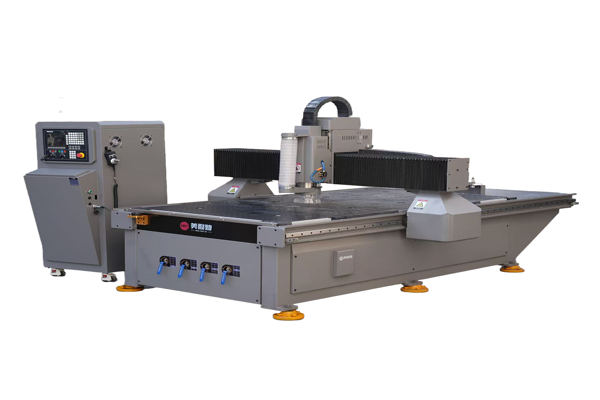
T6 ATC Engraving Processing Center
- Cuts: PEEK and reinforced grades needing several tools per part in one setup
- Specs: Automatic tool change · vacuum table · unattended running through a tool sequence
- Best for: Expensive blanks, where a second setup puts an already costly piece of stock at risk twice
- Price: Request a configuration quote
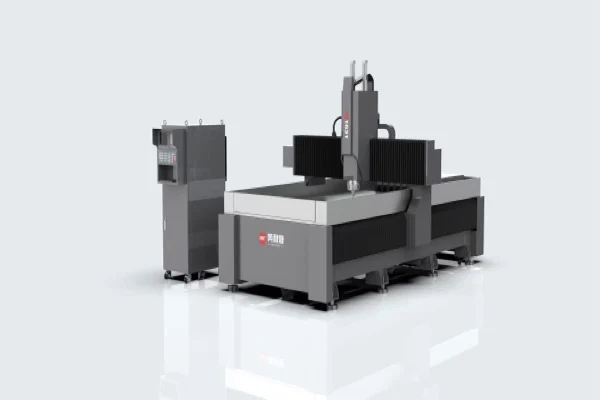
M1631 CNC Machining Center
- Cuts: Thick PEEK plate, glass- and carbon-filled grades, and parts held to tight bands
- Specs: 3,500 kg frame · C5 ground ballscrews · HIWIN linear guides · 0.025 mm positioning accuracy
- Best for: Semiconductor and medical work where repeatability is written into the specification
- Price: Request a configuration quote
Specifications and prices as published on each MNT model page. M1631 accuracy is machine positioning accuracy, not finished-part tolerance on polymer.
Feeds, Speeds and Tooling for PEEK and Ultem
PEEK rewards being cut properly and punishes being cut timidly. The first two items below are ordinary machining parameters; the third is the one that decides whether your part is still the right shape in six months.
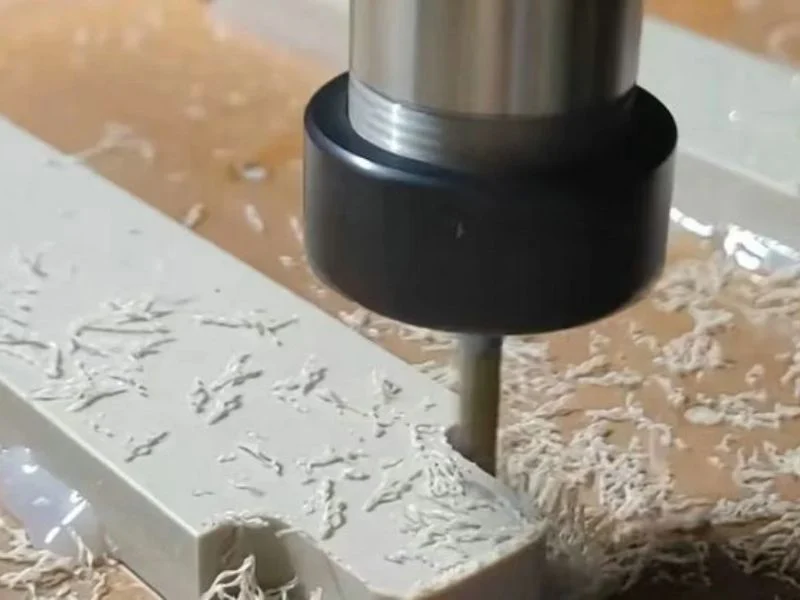
Spindle Speed and Feed Rate
PEEK tolerates high feed rates and machines better fast than slow. Running it timidly does more harm than good: low feed means the tool rubs, rubbing means heat, and heat in a semi-crystalline polymer means the surface crystallinity is no longer what the datasheet describes. Feed until you get a real chip.
Tooling — Sharp Carbide, Diamond for Filled Grades
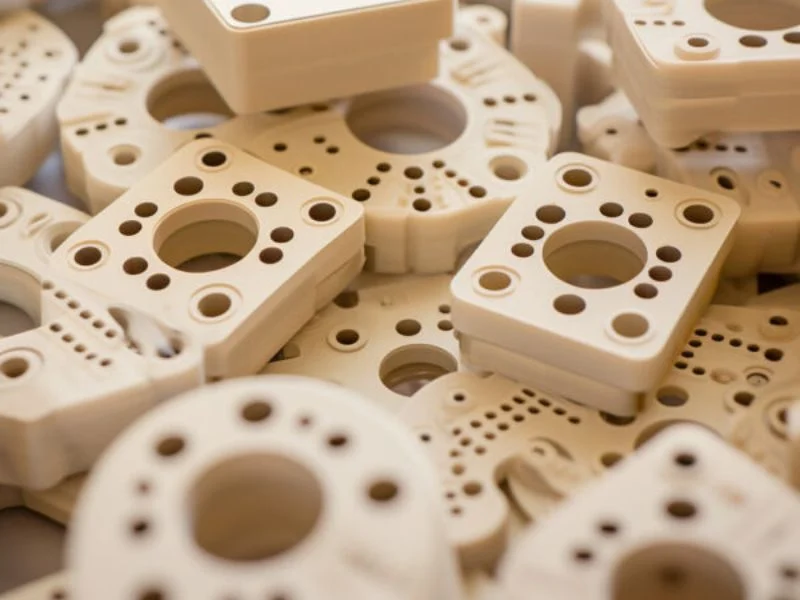
Unfilled PEEK cuts happily on sharp polished carbide. Put 30% glass into it and the economics invert: carbide that lasted a shift is worn within the hour, and the wear shows up as edge quality on a part whose material already cost more than the machine time. Reinforced grades are a different job at a different price.
Annealing — Before and After, Not Optional
This is the step that separates a PEEK part that holds its shape from one that moves in service. Stock carries residual stress and roughing releases it. For anything with thin walls, a tight band or a high service temperature, anneal the blank, rough it, anneal again, then finish. Skipping it does not fail on the CMM — it fails in the field, at temperature.
Cleanliness, Coolant and the Paper Trail
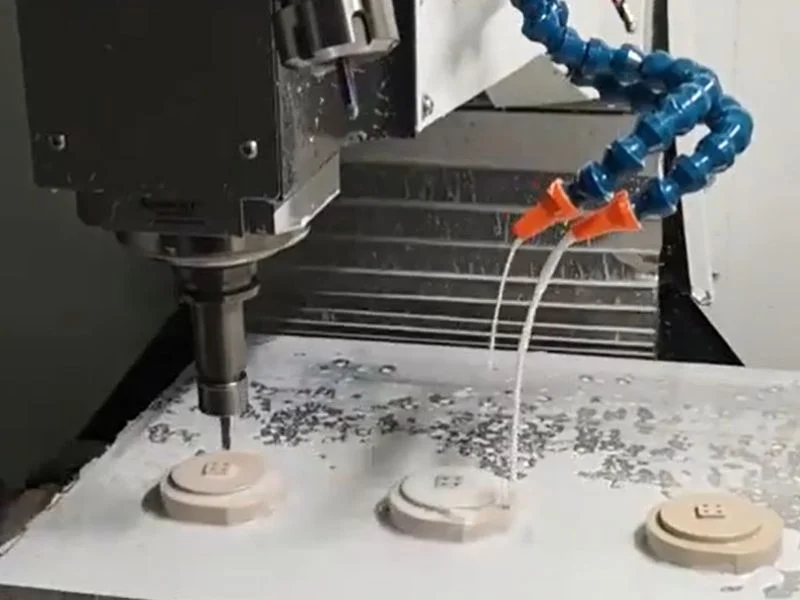
For industrial parts, dry cutting with extraction is simplest and sufficient. For medical and semiconductor work it stops being a preference: there is no coolant loop to validate, no residue to test for, and the machine history becomes a document rather than an argument with an auditor.
What Goes Wrong When Machining PEEK
Five failures we see repeatedly on high-performance polymers. Two of them cost you a blank you cannot easily replace; one of them does not show up until the part is in service.
Proving Out the Program on the PEEK Itself
Every shop proves a new program on the first part, because on most materials the blank is the cheap half of the job. On PEEK it is the expensive half — implant-grade or reinforced stock can cost more than the entire machine time for the batch. Cut the program on a cheap polymer blank of the same size, confirm it, then run the PEEK once.
Skipping the Anneal Because the Part Measured Fine
A PEEK part with residual stress still in it will pass inspection on the bench and move later — at temperature, in service, months after it shipped. Annealing is a scheduled operation between roughing and finishing, not a finishing touch. The parts that come back from the field are almost always the ones that skipped it.
Running Filled Grades on Unfilled Tooling
30% glass-filled PEEK is abrasive in a way virgin PEEK simply is not. Shops quote GF30 at unfilled rates, run ordinary carbide, and lose the margin twice: once in tooling, and again in the surface finish that drifts off as the edge wears on a part nobody wants to scrap.
Using Cutting Fluid on Medical or Semiconductor Parts
The material was bought for purity and traceability. A coolant loop introduces something that has to be validated, tested for and documented — and if the answer is ever in doubt, the whole lot is. Dry cutting here is not only cleaner, it is a much shorter paper trail.
Substituting Ultem Because It Is Cheaper
PEI is a sensible substitute for PEEK in plenty of applications and a poor one in a few. It is more notch-sensitive: a sharp internal corner PEEK tolerates can start a stress crack in Ultem. If the geometry was designed around PEEK, the corner radii were designed around it too — review them before switching, not after.
Why Shops Machining Expensive Polymers Buy From the Factory
On PEEK a machine is judged on three things: whether it holds a tight band on a blank you cannot afford to scrap, whether it runs dry all day with no coolant loop to validate, and whether the supplier will prove either of those on your material. If you sell machines rather than buy them, our terms are on the distributor partnership page.
We Cut Your PEEK Before You Buy the Machine
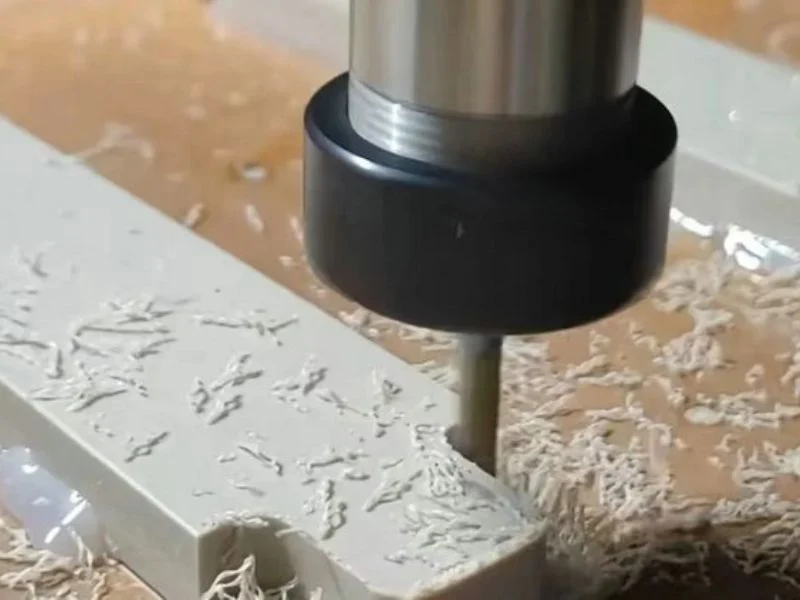
- Send a blank and the drawing. We prove the program on a cheap polymer of the same size, then cut your PEEK once — the way you would actually run it — and send the part back with the tool we used.
- Ask for the part to be gauged before annealing and after. On this material that pair of numbers tells you more about the process than any spindle specification will.

Built by the Factory, Not Resold by a Trader
- MNT machines are built by Hangzhou Chaohan — frame welding, gantry machining and control cabinet assembly in house. We are the manufacturer, not a trading company reselling someone else’s frame. More on the company: About MNT.
- On high-performance polymers the spindle, the extraction and the frame have to be specified together for dry running, and one supplier who can change all three answers faster than three who each change one.
The Factory That Builds Your Polymer Router
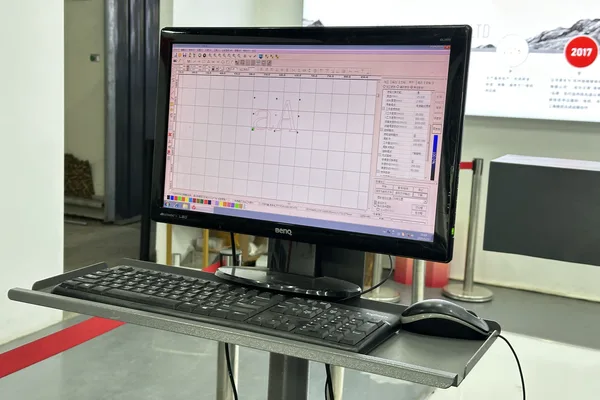
- Every machine is tested and calibrated before it ships and the report goes with it — on parts where the blank costs more than the hour, repeatability is not something to discover after installation.
- Frames are welded, stress-relieved and gantry-milled in one setup in house: the same rough–rest–finish logic that PEEK itself demands, applied to the machine that will cut it.
- It is why the M1631 carries a 3,500 kg frame with C5 ground ballscrews and HIWIN linear guides.
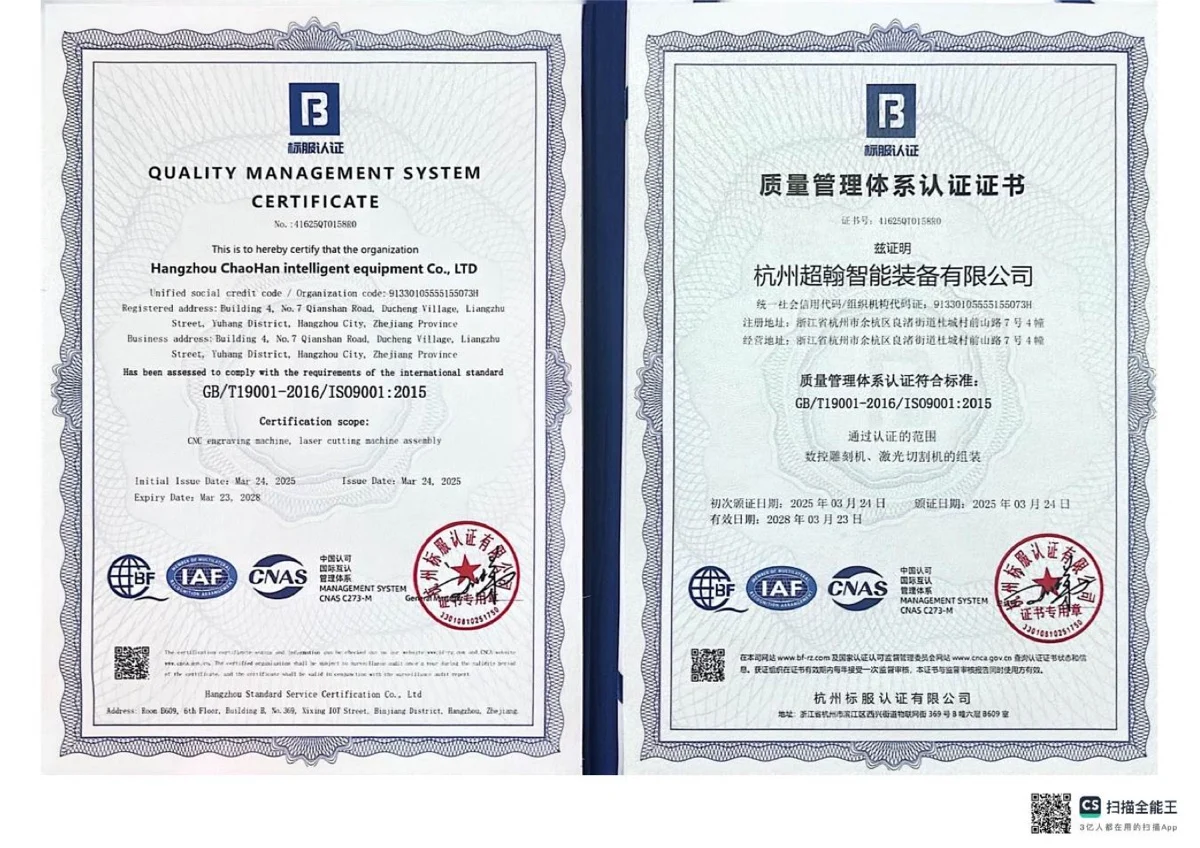
CE + ISO 9001:2015 — and a Machine History You Can Document
- CE marked and built under an ISO 9001:2015 certified quality system — certificates on paper, not a claim on a web page.
- For medical and semiconductor work, ask us to confirm in writing that the machine has never run flood coolant. A dry machine is a shorter validation than a clean one.
- Ask for the extraction airflow figure and filter rating as well: on glass- and carbon-filled grades the dust is abrasive, which makes it a health question and not only a housekeeping one.
CE + ISO 9001:2015. Machines built by Hangzhou Chaohan with in-house frame welding, gantry machining and control cabinets, not traded.
Frequently Asked Questions
What RPM and feed rate should I use for machining PEEK?
Start at 12,000–20,000 RPM and feed high — PEEK tolerates high feed rates and machines better fast than slow. Feeding timidly causes the tool to rub, and rubbing heats a semi-crystalline polymer past the point where its surface crystallinity still matches the datasheet. Take a real chip.
Do you need to anneal PEEK after machining?
For anything with thin walls, a tight tolerance band or a high service temperature, yes — and before finishing as well. Stock carries residual stress, roughing releases it, and a part that measures right on the bench can still move at temperature. Anneal the blank, rough it, anneal again, finish.
Can you laser cut PEEK?
For thin film, lasers are used. For the plate and rod this page is about, no: the beam chars the edge and the heat-affected zone alters the crystallinity that gives PEEK its properties. Machining is the production route for PEEK components at any real thickness.
What tooling lasts on glass-filled PEEK?
Diamond-coated. Virgin PEEK runs fine on sharp polished carbide, but 30% glass filler is abrasive: carbide that lasts a shift on unfilled stock can be worn inside an hour on GF30, and the wear shows up as edge quality on an expensive part. Budget the tooling into the quote for reinforced grades.
How much does a CNC router for PEEK cost?
T5, T6 ATC and M1631 are quoted by configuration. For PEEK, rigidity, repeatability, fixturing and tool changes matter alongside bed size. Send the grade, part drawing, tolerance, expected volume and delivery country for an itemized quote.
Can you machine implant-grade or semiconductor-grade PEEK?
Yes, and the process is the part that matters. These grades are bought for purity and traceability, so they are cut dry with extraction, on dedicated tooling, with no coolant loop anywhere in the process — which makes the machine history a document rather than an argument.
Is Ultem a drop-in substitute for PEEK?
Often, but not always. PEI (Ultem) is cheaper, machines well and is the sensible choice for many parts. It is more notch-sensitive though: a sharp internal corner PEEK shrugs off can start a stress crack in Ultem. If the geometry was designed around PEEK, review the corner radii before switching.
How accurate are these machines on PEEK?
The M1631 holds 0.025 mm positioning accuracy over full travel, but that is machine accuracy, not finished-part tolerance on polymer. On PEEK the limiting factor is usually residual stress and thermal behaviour rather than the machine. Send a blank and the drawing and we will cut it, anneal it and measure it at both stages.
Technical Guides for Plastics Shops
The reasoning behind the parameters on this page, worked through at length.
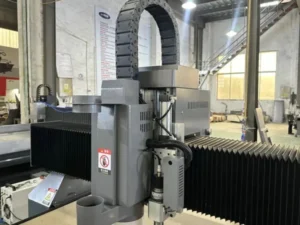
Machinable Plastics: PTFE vs POM vs PEEK vs Nylon
Where PEEK sits among the machinable plastics, and how PTFE, POM and nylon differ from it on tooling, tolerance and cost.
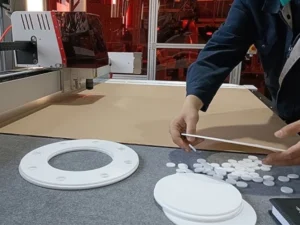
CNC Router vs Waterjet for Thick PTFE Plate
Why a router beats a waterjet on thick engineering plastic — and the one case where it does not.
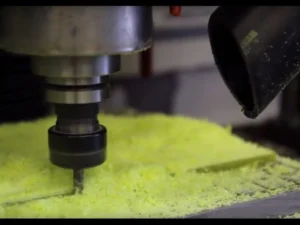
G10 Machining on a CNC Router: Tools, Feeds and Dust Control
The tooling arithmetic on abrasive material, worked through on glass-epoxy laminate — the same maths that applies to filled PEEK.
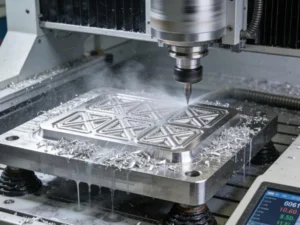
Feeds and Speeds for Aluminum: Why Going Slower Breaks Cutters
The feeds-and-speeds method behind this page, worked through on aluminium where the arithmetic is easier to follow.
Send Us a PEEK Blank — We'll Prove the Program on Scrap First
Tell us the grade, the stock size and the tolerance on the drawing. We prove the program on a cheap polymer blank of the same dimensions, cut your PEEK once, and send it back with the tool we used and the measurements taken before and after annealing.