
CNC Router for Delrin, Acetal and POM
MNT (MEINAITE) CNC routers machine Delrin, acetal and POM dry, with sharp carbide and no coolant — because on this material the tolerance you cut is not the tolerance you measure an hour later.
- The easiest plastic to cut, the hardest to hold size on — POM shears cleanly, then moves as it cools and as internal stress relaxes
- Dry, always — flood coolant thermally shocks acetal and shifts dimensions; extraction at the head clears the long stringy chips instead
- POM-H and POM-C are not interchangeable — homopolymer bar can hide centreline porosity that copolymer does not, and they do not shrink alike
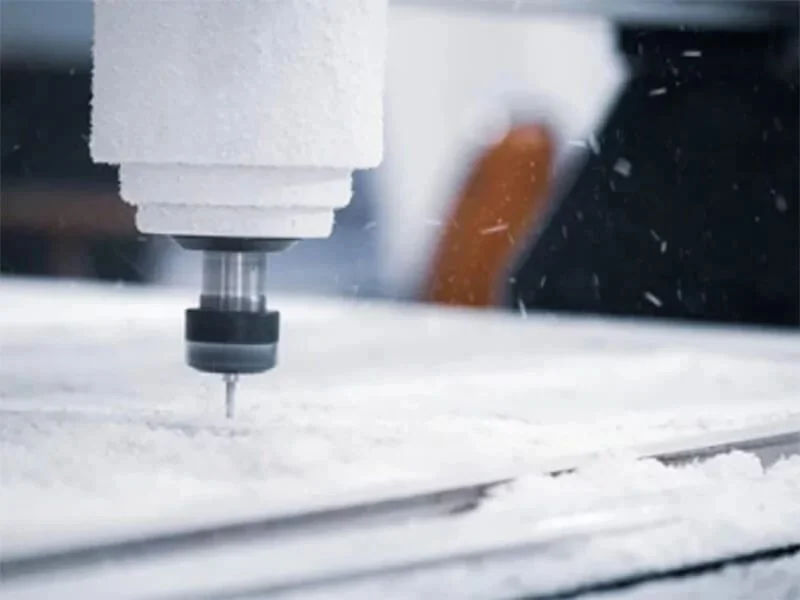
Why POM Is Easy to Cut and Hard to Hold to Tolerance
Acetal is the easiest engineering plastic to machine — every supplier says so, and it is true. End mills shear it cleanly, it does not melt onto the cutter the way acrylic does, and it does not eat tooling the way glass-epoxy laminate does. That is exactly why shops get caught out by it.
The problem is not cutting POM. It is that POM does not stay where you cut it. Its coefficient of thermal expansion is around 110 × 10⁻⁶/K — roughly ten times steel — so a part machined warm and measured cold has already changed size. Extruded rod and thick sheet carry internal stress from the extrusion line; rough out one side and the bar bows. A 0.05 mm band on a drawing is a machining problem on aluminium and a process problem on acetal: it is decided by stress relief, cutting sequence and when you measure, not by the machine’s positioning accuracy alone.
Where a router beats the alternatives. A knife cannot cut it and a laser must not — POM thermally decomposes rather than cleanly vaporising, and what it releases is formaldehyde. Milling is the only production route to a dimensionally accurate acetal part, which is why this page is about routers and machining centres rather than beams or blades. Grade data and machining behaviour for stock shapes are published by Ensinger, whose material we machine regularly.
Machine specifications compared. Acetal is easy to cut and hard to hold to tolerance — the part moves after it comes off the machine, so hold-down and a stated accuracy figure matter more than cutting power. The M1631 is the only one of the three that publishes a positioning figure (0.025 mm) and splits the vacuum into two independently controlled zones, which is what stops a thin POM plate lifting at the edge as the nest opens up.
| Specification | T5 | T6 | M1631 |
|---|---|---|---|
| Working area | 1300 × 2500 mm | 1300 × 2500 mm | 3000 × 1500 mm (X/Y), Z 150 mm |
| Spindle | 5.5 kW water-cooled | 9 kW air-cooled, or 7.5 / 11 kW water-cooled | 11 kW ATC water-cooled |
| Max spindle speed | — | — | 18,000 RPM |
| Tool changer | — | 4-tool linear ATC | 8-position disc, NBT40 |
| Positioning accuracy | — | — | 0.025 mm over full travel |
| Repeatability | — | — | 0.025 mm/m |
| Material hold-down | Vacuum | Vacuum | 2-zone independently controlled vacuum |
| Net weight | 1500 kg | 2000 kg | 3500 kg frame |
Acetal Grades and Trade Names We Machine
One polymer family, two structures and half a dozen brand names. What is written on the purchase order rarely tells you which one you are about to cut — POM-H or POM-C does.
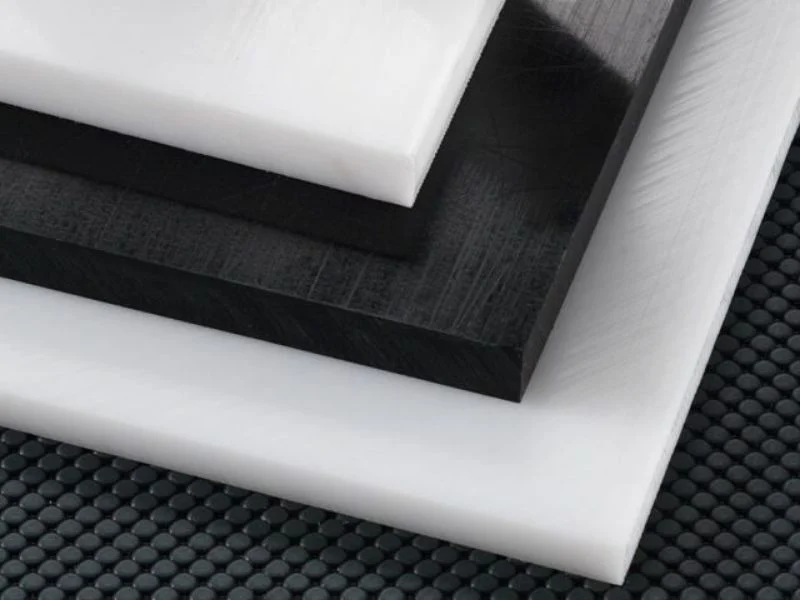
Delrin® & Acetal Homopolymer (POM-H)
- Formats: Rod 6–200 mm, sheet 1–100 mm, natural and black; Delrin 150, 500 and filled variants
- Watch out: Thick homopolymer rod can carry centreline porosity — you find it when the tool reaches the core, on the last and most expensive operation of the job
- How we cut it: Where the drawing allows we open the core early, so a porous bar fails on part one instead of part forty
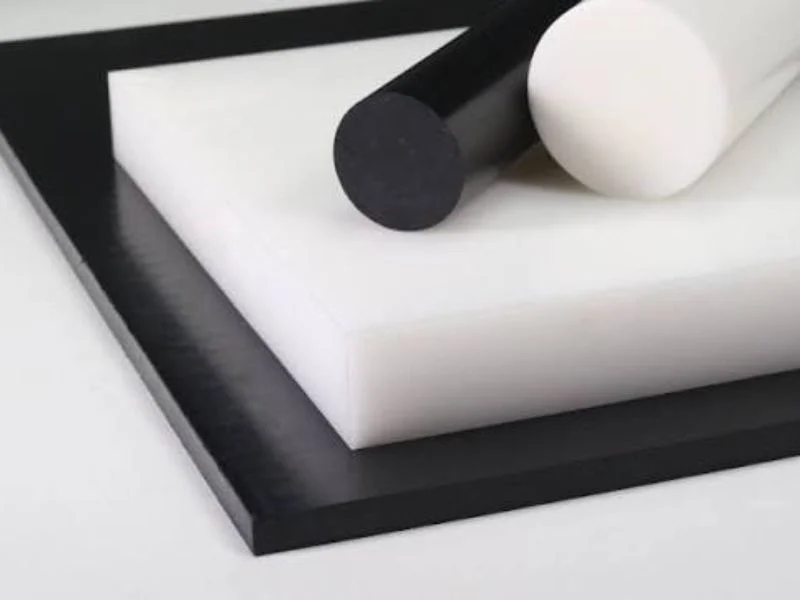
Acetal Copolymer (POM-C)
- Formats: Sheet and rod sold as Celcon, Hostaform, Ultraform, Tecaform and Ertacetal — one polymer, five labels
- Watch out: Slightly less stiff than homopolymer but free of centreline porosity, so swapping POM-H for POM-C to dodge porosity quietly moves every tight dimension
- How we cut it: Same tooling, feed raised a little to keep chip load up; copolymer is the more forgiving of the two on long unsupported features
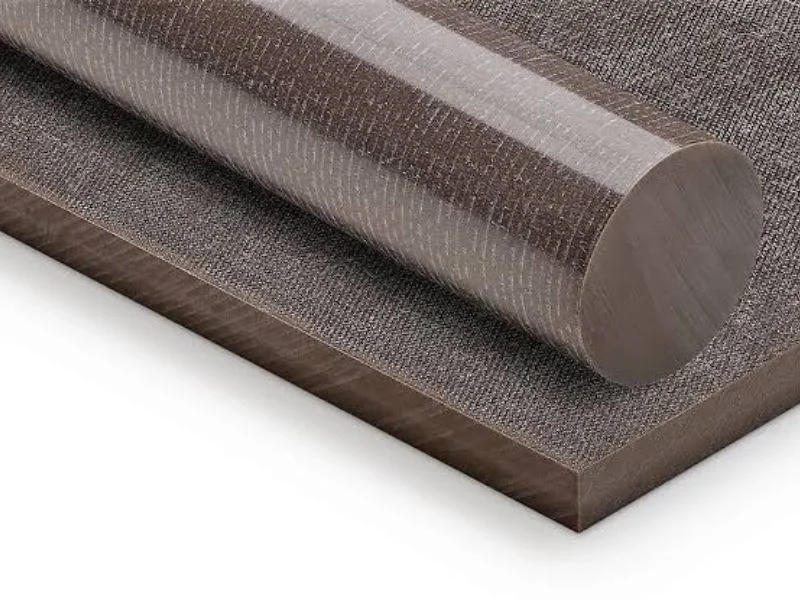
Filled & Modified Grades
- Formats: PTFE-filled (Delrin AF), glass-filled, UV-stabilised and antistatic grades in rod and sheet
- Watch out: Glass filler turns an easy-machining plastic into an abrasive one — tool life drops sharply, and shops that quote these at unfilled rates lose the margin in tooling
- How we cut it: Carbide throughout, with a shortened tool-change interval planned into the job rather than discovered mid-batch
FDA & EU Food-Contact Grades
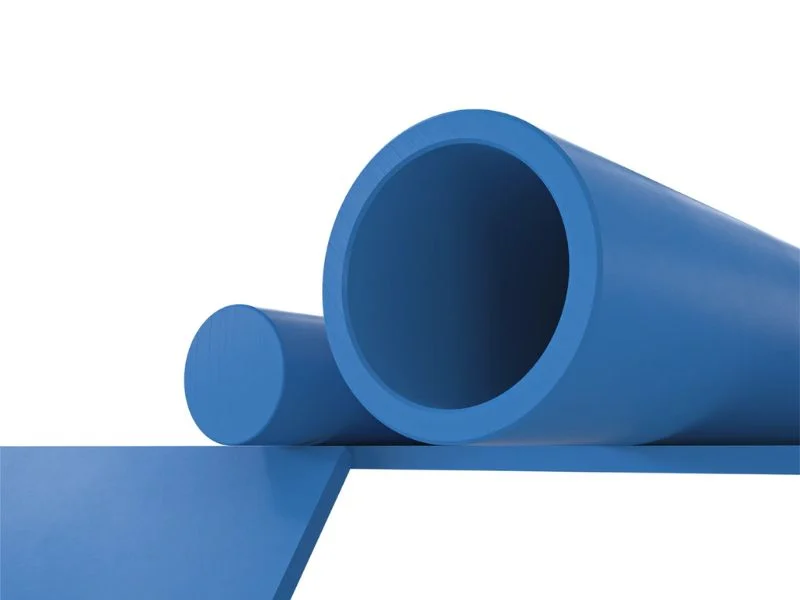
- Formats: Unpigmented and blue metal-detectable acetal certified to FDA 21 CFR and EU 10/2011
- Watch out: Compliance belongs to the material and survives machining only if nothing contaminates it — one cut with an oiled tool and the certificate no longer describes what is on your bench
- How we cut it: Dry, with extraction rather than flood, on a machine that has never run cutting fluid — the condition the certification quietly assumes
Grade and thermal data per DuPont and Ensinger POM datasheets. Feeds and speeds from runs on MNT T5 and M1631, not catalogue figures.
Parts Machined From Acetal and Delrin
What the bar and sheet turn into, and where each one is actually difficult. The enemy is the same in every case: the part moves after you cut it.
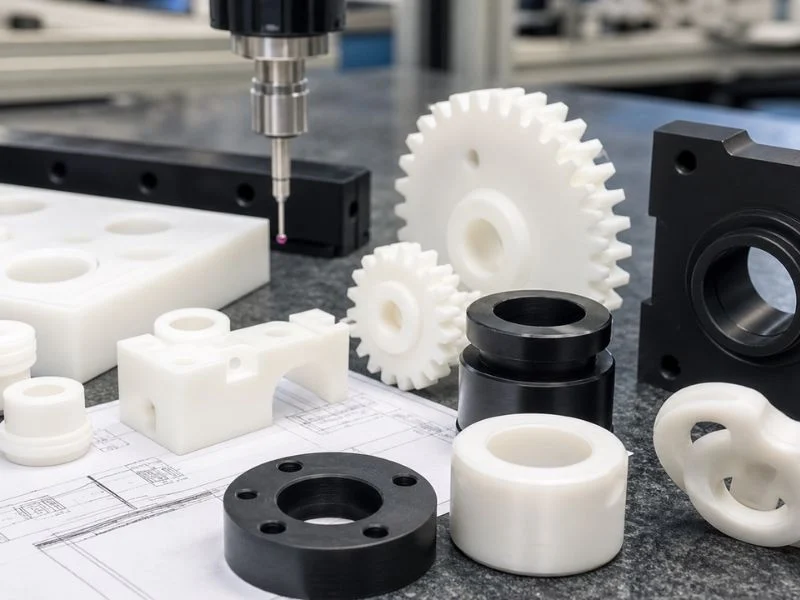
Gears, Bushings and Bearing Parts
- Parts: Spur and helical gears, sleeve bearings, cam followers and slide blocks, typically 20–2,000 off
- The hard part: Tooth form and bore concentricity have to survive stress relaxation after machining — the gear that gauges right on Friday can be outside the band on Monday
- What you get: A rough–rest–finish sequence that lets the stress out before the last cut instead of after the parts ship
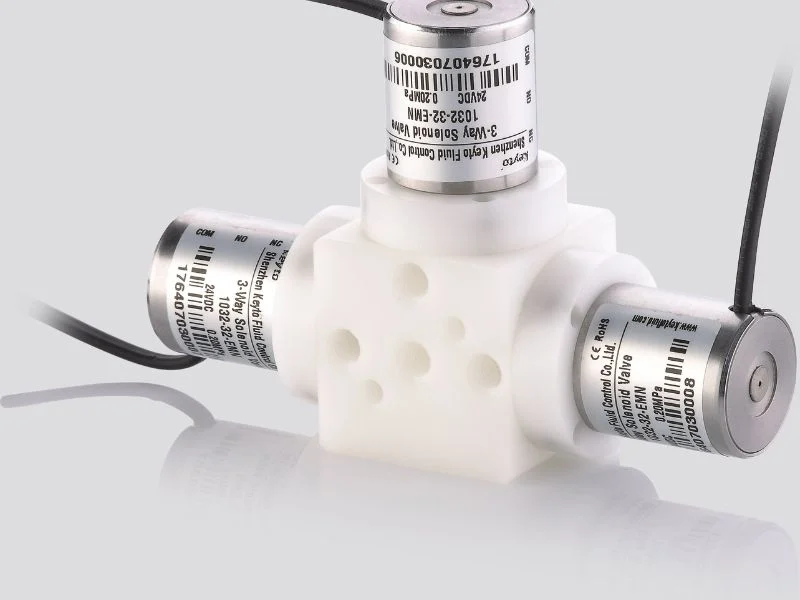
Manifolds, Valve Bodies and Fluid Handling
- Parts: Pump manifolds, valve bodies, fittings and seal seats for water and chemical service
- The hard part: Deep bores and cross-drillings trap the long stringy chip acetal makes; a chip that wraps the tool ruins the bore and the cutter in the same second
- What you get: Peck cycles and extraction sized for stringy swarf, not the chip-breaking assumptions carried over from metal
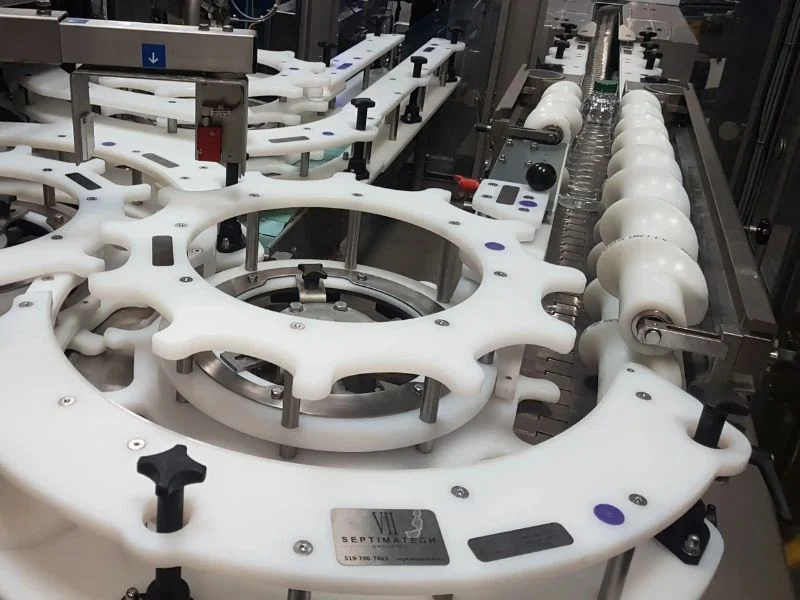
Change Parts, Wear Strips and Conveyor Components
- Parts: Star wheels, guide rails, wear strips, chain guides and change parts for filling and packaging lines
- The hard part: These fit a machine that is already installed, so the tolerance that counts is the fit — and the line stays down until the part is right
- What you get: Same-week turnaround from sheet and rod, cut to your drawing or reverse-engineered from the worn original
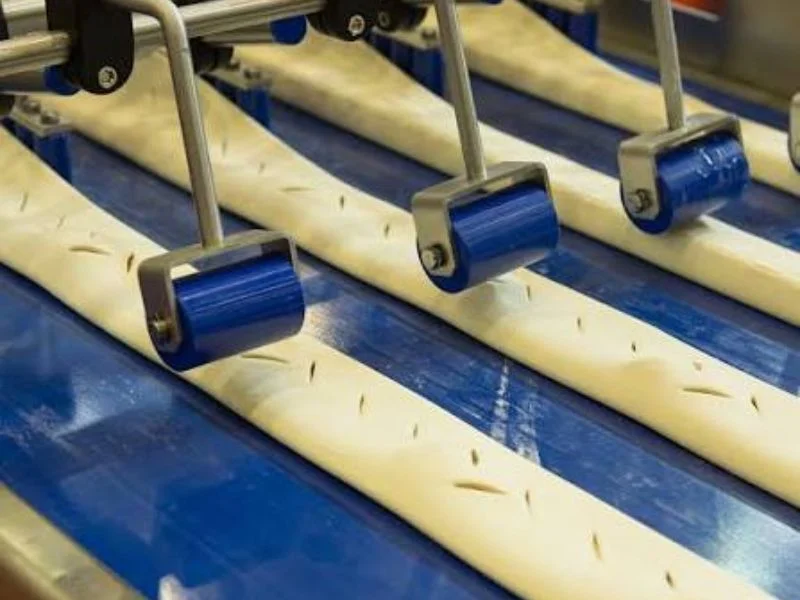
Food, Beverage and Medical Components
- Parts: Portioning plates, product guides, filler nozzles and handling components in certified acetal
- The hard part: Auditors ask how the part was made, not only what it was made from; a dry-cut route is easy to document and a coolant-flooded one is not
- What you get: A process with no cutting fluid anywhere in it, so material certification carries through to the finished part
Part families and failure modes reported by machinists on Practical Machinist and by plastics fabricators, cross-checked against MNT machine runs.
Recommended MNT Routers for Acetal and Delrin
Three machines on one material. Here rigidity and tool changing decide the result, not cutting power — acetal is easy to cut and hard to hold to size.
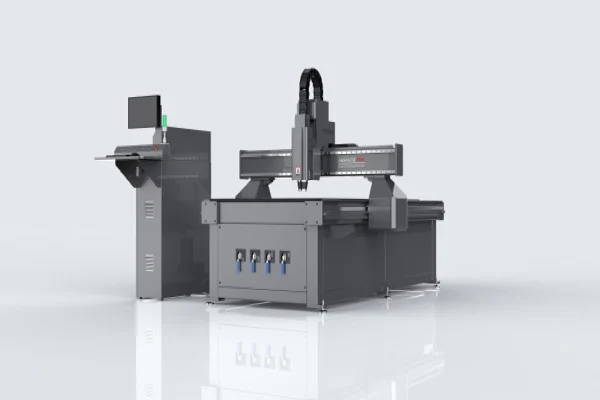
T5 Precision CNC Router
- Cuts: Acetal, Delrin, nylon, PTFE, UHMW and acrylic in sheet and plate
- Specs: Precision gantry · 18,000–24,000 RPM · dry cutting with extraction at the head
- Best for: Shops where the tolerance on the finished plastic part matters more than bed size
- Price: Request a configuration quote
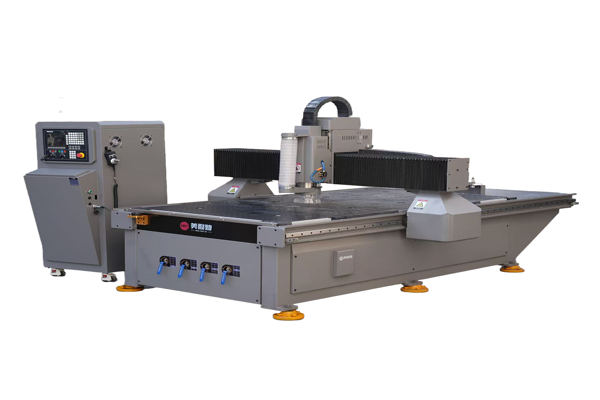
T6 ATC Engraving Processing Center
- Cuts: Acetal and filled grades needing several tools per part — profile, pocket, drill and engrave in one setup
- Specs: Automatic tool change · vacuum table · unattended running through a tool sequence
- Best for: Batches where a mid-part tool change would otherwise mean a second setup and a second datum
- Price: Request a configuration quote
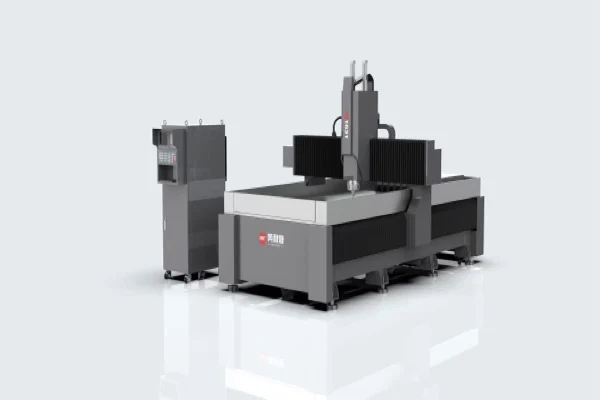
M1631 CNC Machining Center
- Cuts: Thick acetal plate and heavy rod, where rigidity decides whether the part holds size
- Specs: 3,500 kg frame · C5 ground ballscrews · HIWIN linear guides · 0.025 mm positioning accuracy
- Best for: Tight-tolerance production, and shops running metal and plastics on one machine
- Price: Request a configuration quote
Specifications and prices as published on each MNT model page. M1631 accuracy is machine positioning accuracy, not finished-part tolerance on plastic.
Feeds, Speeds and Tooling for Delrin and Acetal
Acetal is forgiving on parameters and unforgiving on process. These are starting points from our own runs — but the two that decide whether you hold tolerance are the last two, and neither of them is a number on the control.
Spindle Speed and Feed Rate
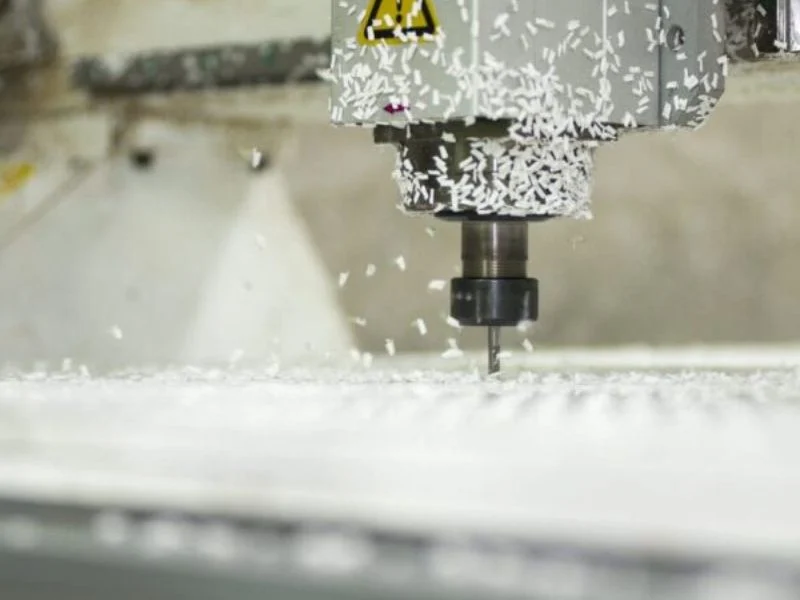
POM wants a real chip, not dust. Too slow and the tool rubs instead of shearing, which heats the part — and that is how a dimensionally stable material stops being dimensionally stable. Raise the feed until clean stringy chips come off: that is the sign the heat is leaving with the swarf instead of staying in the part.
Tooling and Edge Sharpness
Polished carbide, kept sharp. A dull tool on acetal does not announce itself the way it does on steel — the finish still looks acceptable while the part grows a few hundredths from the heat. Change tools on a schedule, not on appearance.
Dry Cutting and Chip Extraction
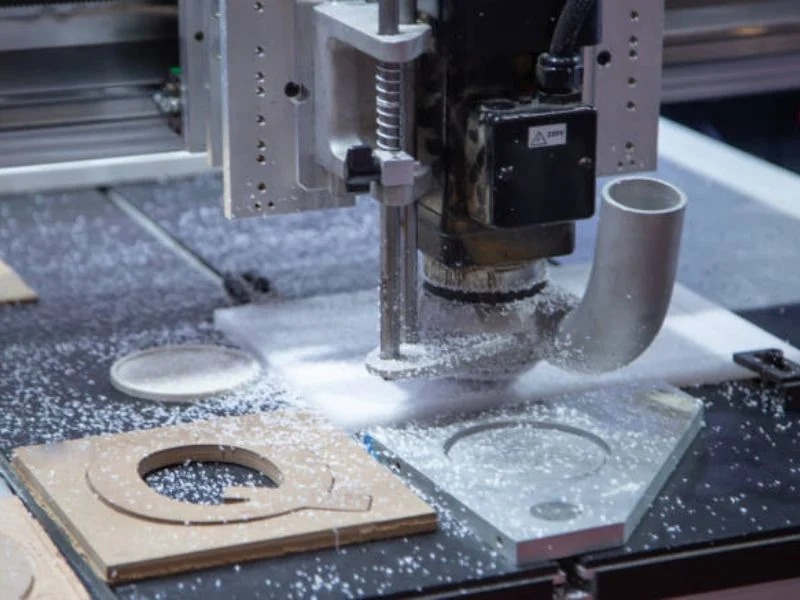
No coolant. Flood coolant thermally shocks acetal and shifts dimensions, and it puts fluid into a material chosen for low moisture absorption. Air blast plus extraction is enough. The real design problem is the chip: acetal makes long strings that wrap the tool, so extraction has to pull them clear of deep pockets and bores.
Stress Relief and When to Measure
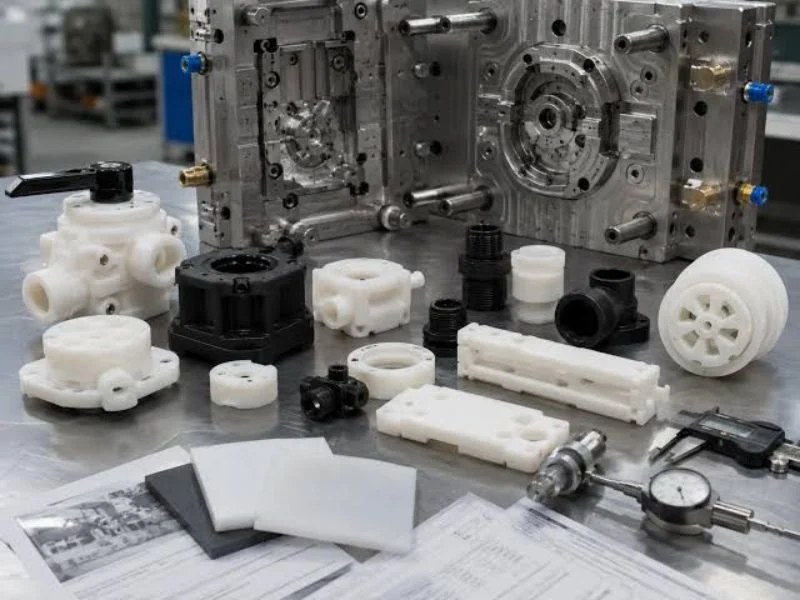
For tight tolerances, rough the part, let it sit, then finish. Extruded stock relaxes when material comes off one side, and the movement happens over hours, not seconds. Measure at a known room temperature — at 110 × 10⁻⁶/K it does not take much of a temperature difference to eat a tight band.
What Goes Wrong When Machining Acetal and Delrin
Five failures we see repeatedly. Four of them cost you the part; one of them is a health issue that shops do not always know about.
Reaching for Coolant Because It Is Standard Practice
Every metal shop floods the cut by default. On acetal it is the fastest way to lose the tolerance you are trying to hold: the material thermally shocks, dimensions shift, and a plastic bought specifically for low moisture absorption spends the cycle sitting in fluid. Cut dry with extraction. If the part is hot enough that you want coolant, the feed is too low — that is the thing to change.
Measuring the Part While It Is Still Warm
Acetal expands roughly ten times as much as steel for the same temperature rise. A part gauged straight off the spindle and again the next morning gives two different numbers, and neither of them is wrong — the temperature was different. Tight-tolerance acetal is measured at a known room temperature or it is not really measured at all.
Finishing Straight After Roughing on Extruded Stock
Extruded rod and thick sheet hold internal stress from the line they were made on. Take a lot of material off one face and the bar moves — over hours. Rough it, leave it, then finish. Shops that skip the rest step find out when the customer gauges the parts, not when they do.
Letting Acetal Overheat — the One That Is a Health Issue
POM thermally decomposes rather than simply melting, and what it gives off is formaldehyde. A dull tool rubbing, a stalled feed or a laser can all take it there. This is why acetal is not a laser material, and why extraction here is doing a ventilation job as well as a housekeeping one — ask any supplier what airflow they are quoting.
Substituting POM-C for POM-H Mid-Job
They are sold as the same material and machine almost identically, so the swap looks free — and copolymer is often the sensible choice for avoiding porosity. But stiffness and shrink are not identical, so every dimension held to a tight band moves. It is a decision for the drawing, not for the storeman on the day the rack is empty.
Why Plastics Shops Buy the Machine From the Factory
On acetal a machine is judged on three things: whether it stays rigid enough to hold a tight band on a material that moves on its own, whether it runs dry all day with extraction that actually clears stringy chips, and whether the supplier will show you any of it on your material. If you sell machines rather than buy them, our terms are on the distributor partnership page.
We Cut Your Acetal Before You Buy the Machine
- Send us your own Delrin or acetal stock with the drawing. We machine it on the model we recommend and send the parts back with the tool we used, so you can gauge the parts and look at the edge yourself.
- Ask us to measure one feature twice — once off the machine, once the next morning. On this material that gap is the conversation, and a supplier who will not do it is telling you something.

Built by the Factory, Not Resold by a Trader
- MNT machines are built by Hangzhou Chaohan — frame welding, gantry machining and control cabinet assembly in house. We are the manufacturer, not a trading company reselling someone else’s frame. More on the company: About MNT.
- It matters on plastics because spindle, extraction and frame have to be specified together for dry cutting. One supplier who can change all three moves faster than three who each change one.
The Factory That Builds Your Plastics Router
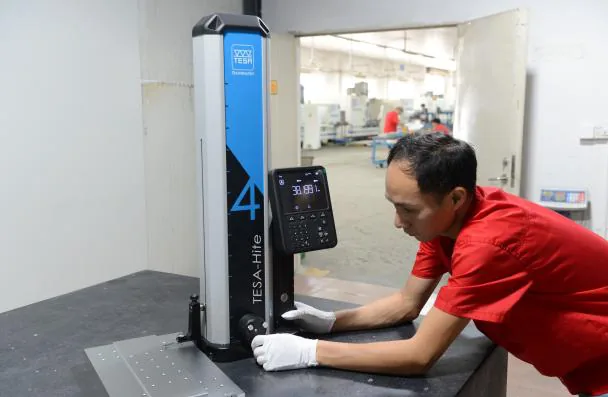
- Frames are welded, stress-relieved and then gantry-milled in one setup in house — the same rough-rest-finish logic we apply to your acetal, applied to the machine that will cut it.
- Rigidity is the parameter you cannot add afterwards, and on a material that moves on its own it is the one link in the tolerance chain you can actually buy.
- It is why the M1631 carries a 3,500 kg frame with C5 ground ballscrews and HIWIN linear guides.
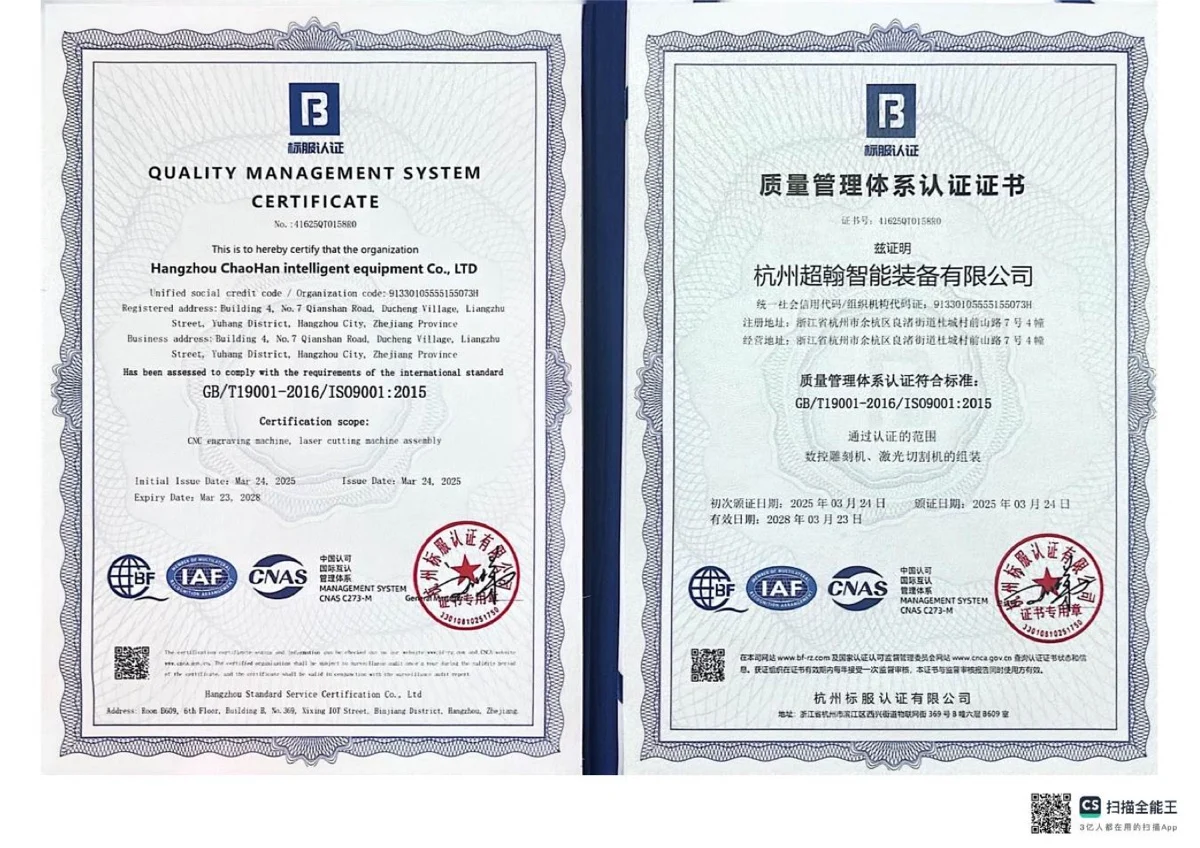
CE + ISO 9001:2015 — and an Extraction Spec You Can Check
- CE marked and built under an ISO 9001:2015 certified quality system — certificates on paper, not a claim on a web page.
- Certificates are the easy part. Ask for the airflow figure and filter rating on the extraction, because on acetal that specification is doing a health job as well as a housekeeping one.
- If you machine to FDA or EU food-contact grades, ask us to confirm the machine has never run flood coolant — we will put it in writing.
CE + ISO 9001:2015. Machines built by Hangzhou Chaohan with in-house frame welding, gantry machining and control cabinets, not traded.
Frequently Asked Questions
Do you need coolant to machine Delrin or acetal?
No — cut dry, with extraction at the head. Flood coolant thermally shocks acetal and shifts dimensions, which defeats the reason most people chose the material. POM generates relatively little cutting heat at normal plastic speeds, so air and extraction are enough. If a part is running hot, raise the feed rather than adding fluid.
What RPM and feed rate should I use for machining POM?
Start at 12,000–18,000 RPM with 100–250 IPM and a chip load of 0.10–0.25 mm, then raise the feed until you get clean stringy chips instead of dust. Feeding too slowly is the most common mistake: the tool rubs, the part heats, and a material chosen for dimensional stability starts moving.
What is the difference between Delrin and acetal?
Delrin is DuPont’s trade name for acetal homopolymer (POM-H). Acetal copolymer (POM-C) is sold as Celcon, Hostaform, Ultraform, Tecaform and Ertacetal. POM-H is slightly stiffer and stronger; POM-C avoids the centreline porosity that thick homopolymer rod can carry. They machine almost identically but do not shrink identically, so they are not a drop-in swap on tight-tolerance parts. Our guide to Delrin vs acetal compares the two in detail, including porosity, hot water and which to specify.
Should I use acetal or nylon?
Use acetal (POM) when the part must hold its size, especially in wet or humid service — it absorbs about 0.2 % moisture against about 3 % for PA6 nylon. Use nylon for heavy, shock-loaded parts where some dimensional change is acceptable. Our comparison of POM vs nylon covers strength, friction, temperature and machining.
Can you laser cut acetal?
No. POM thermally decomposes instead of cleanly vaporising, and it releases formaldehyde when it does. That makes it a material to mill rather than to beam, which is why every route to an accurate acetal part goes through a router or a machining centre.
Why do my acetal parts change size after machining?
Two causes, usually together. Extruded stock carries internal stress that relaxes over hours once you machine one side, and acetal’s thermal expansion is around 110 × 10⁻⁶/K — roughly ten times steel — so a part measured warm reads differently once cool. Rough it, let it rest, finish it, and gauge at a known room temperature.
How much does a CNC router for Delrin and acetal cost?
The quoted price depends on working area, spindle and tool-changing configuration, hold-down, material, output target and delivery country. Send the material, largest part or sheet, drawing and expected volume for an itemized quote.
Can you machine FDA or EU food-contact acetal?
Yes, and the machining route is the part that matters. Compliance belongs to the material, but it only carries through to the finished part if nothing contaminates it — so these parts are cut dry, with extraction rather than flood coolant, on a machine that has not run cutting fluid.
How accurate are these machines on acetal?
The M1631 holds 0.025 mm positioning accuracy over full travel, but that is machine accuracy, not finished-part tolerance on plastic. On acetal the limit is usually the material rather than the machine: stress relaxation and thermal expansion decide what you can actually hold. Send us the drawing and a piece of your stock and we will cut it and measure it twice.
Technical Guides for Plastics Shops
The reasoning behind every number on this page, worked through at length.
Machinable Plastics: PTFE vs POM vs PEEK vs Nylon
Where acetal sits among the machinable plastics, and how PTFE, PEEK and nylon differ from it on tooling, tolerance and cost.
CNC Router vs Waterjet for Thick PTFE Plate
Why a router beats a waterjet on thick engineering plastic — and the one case where it does not.
Feeds and Speeds for Aluminum: Why Going Slower Breaks Cutters
The feeds-and-speeds method behind this page, worked through on aluminium where the arithmetic is easier to follow.
G10 Machining on a CNC Router: Tools, Feeds and Dust Control
The abrasive end of engineering plastics: what changes when the material fights the tool instead of moving on its own.
Send Us a Bar of Acetal — We'll Cut It, Measure It Twice and Send It Back
Tell us the grade, the stock form and the tolerance on the drawing. We machine your part on the model we recommend, gauge a key feature once off the machine and once the next morning, and send you both numbers along with the parts and the tool we used.