The fastest way to pick between the fiber laser X5, X6 and X6040 isn’t comparing spec sheets — it’s describing the part sitting on your bench right now. What shape does it start as, and what does it need to end up as? That question alone eliminates two of the three machines before power level or price ever enters the conversation.
Rather than a feature-by-feature comparison, this guide works backward from common job scenarios — the kind of work order that actually lands on a fabrication floor — to the machine built for it. For a full spec comparison table, see our companion X5 vs X6 vs X6040 comparison.
“I’m cutting flat steel plate for brackets and panels” → X5
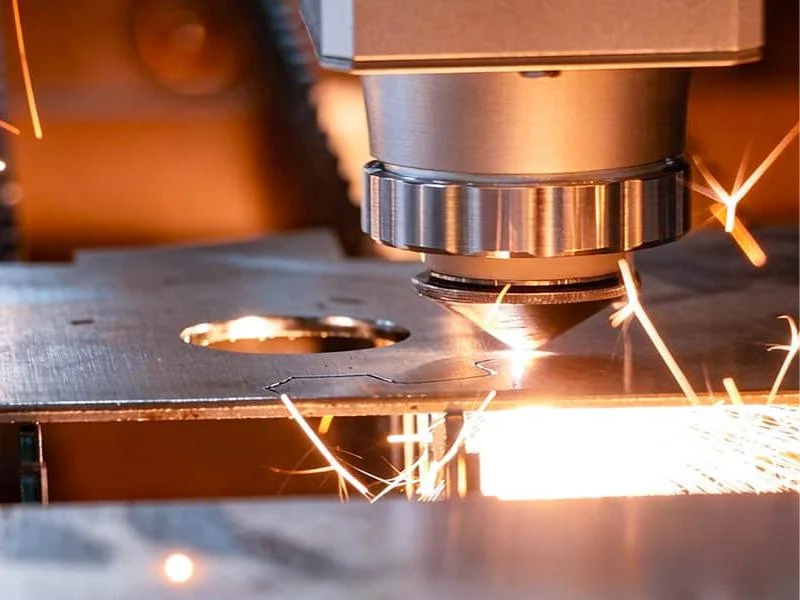
If your job starts as a flat sheet or plate and the part stays flat — brackets, panels, structural gussets, enclosure parts — the X5’s flat-bed platform and rack-and-pinion dual-drive gantry are built for exactly this, regardless of whether you’re running mild steel, stainless, or aluminum.
The follow-up question at this point is power level, not machine choice — see our fiber laser power guide once you’ve confirmed the X5 is the right platform for your part shape.
“I’m building a frame, railing, or anything welded from tube” → X6
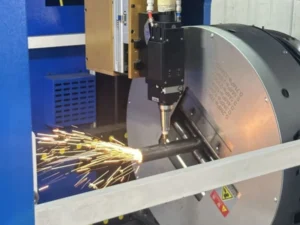
If your job starts as round or square tube, or structural profile, and needs holes, slots, miter joints or weld-prep bevels cut into it — handrail, furniture frames, structural framing, fitness equipment — the X6’s chuck-based tube handling is built for that starting material, not the X5’s flat-bed system.
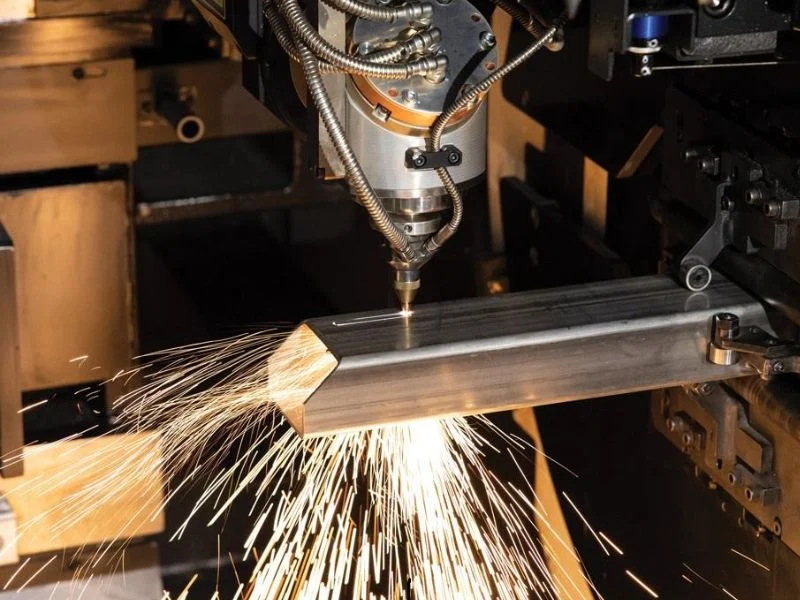
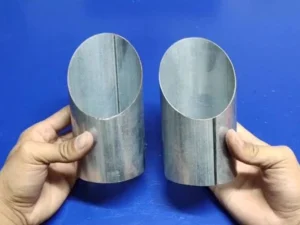
This is the scenario where the biggest efficiency gain shows up: a tube laser cuts the miter joint and weld-prep bevel in the same operation as the length cut, eliminating hand-fitting and grinding a saw-and-notch process would otherwise require. See our tube laser cutting design tips for how to design parts around this capability.
“I’m making small, intricate metal parts with tight tolerance” → X6040
If your part is small — electronics housings, jewelry components, precision hardware — and thin, with fine features and a real tolerance requirement, the X6040’s marble frame and high-acceleration design solve a problem neither the X5 nor X6 is built for: keeping edge quality consistent on fast, constantly-changing-direction cuts at small scale.
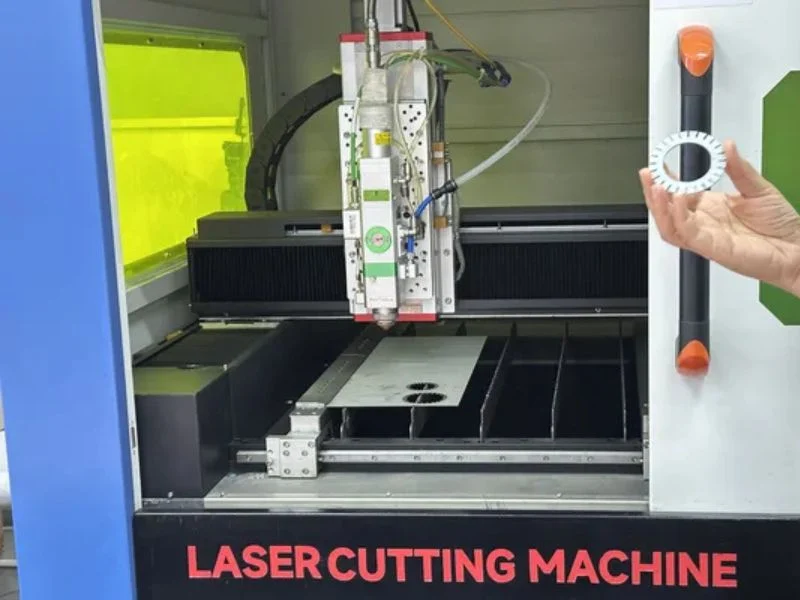
This isn’t about part size alone — a small part cut from thick, forgiving material might still suit the X5 at a lower cost. It’s about the combination of small size, fine features, and tight tolerance together. See our why marble frames matter guide for what specifically makes this machine different.
“I do all three kinds of work” → You likely need two machines, not one
Sheet, tube and precision small-part cutting depend on fundamentally different material handling — a flat bed, a rotating chuck, and a high-acceleration precision platform — so a shop with genuine volume in more than one category is usually better served running separate purpose-built machines than looking for one machine to cover all three.
Prioritize by volume: whichever category represents your highest current volume is the machine to buy first, with the others evaluated as your production in that category grows enough to justify dedicated equipment rather than outsourcing or working around a single general-purpose setup.
Recommended Questions to Bring to Your Supplier
Once you’ve identified which platform fits your part shape, bring these to the configuration conversation: material type and thickness/wall-thickness range, typical part size and batch volume, any tolerance requirements, and downstream process (welded, painted, ship as-cut). These determine power level, assist gas needs, and loading configuration within whichever platform matches your starting material.
See the full X5 vs X6 vs X6040 comparison table for complete specifications side by side, or the fiber laser cutting machine overview.
Frequently Asked Questions
How do I know if my part is “flat sheet” or needs the precision machine?
Ask whether fine tolerance and small feature size are the actual limiting factor, not just part size — a small part on forgiving material may still suit general sheet cutting; tight tolerance on fine features is what specifically calls for precision-focused capability.
Can the X6 cut flat brackets that come off a tube frame?
The X6 is built around chuck-based tube handling — for flat sheet components even within a tube-based assembly, those parts are typically better cut on the X5’s flat-bed platform.
What if my volume is split evenly across sheet and tube work?
Most shops in this position run separate machines for each, since the underlying material handling is different — prioritize whichever category has the higher current volume for your first purchase.
Is there a machine that combines sheet, tube and precision capability?
These three platforms are purpose-built around different material handling rather than combined into one general-purpose machine — evaluate your volume in each category rather than looking for a single all-in-one solution.
What’s the first question to answer when choosing between these three?
What shape does your part start as — flat sheet, tube/profile, or does it need small-scale precision on fine features — before power level or price becomes the relevant comparison.
Should I buy based on my current work or expected future work?
Your current, actual production volume in each category — buying capability for hypothetical future work you may never run adds cost without near-term benefit.