The clearest way to see what a fiber laser actually changes in a metal fabrication shop isn’t a spec sheet — it’s looking at specific parts and assemblies that used to need multiple processes and now come off one machine close to finished.
This guide walks through common metal fabrication workflows — flat sheet parts, tube and profile assemblies, and welded frames and railings — and what changes when the cutting step is done on a fiber laser instead of a saw, punch, or manual notching process.
Sheet Metal Cutting Applications
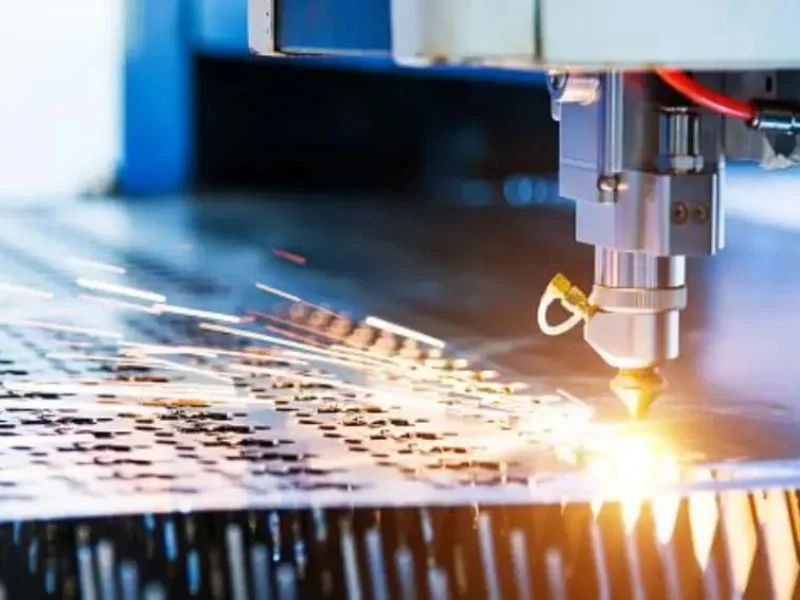
Flat sheet parts — brackets, panels, enclosure components, structural gussets — cut on a fiber laser come off the machine with finished edges and hole patterns already in place, replacing what would otherwise be a punch-and-shear process plus separate drilling for any hole pattern that doesn’t fit standard punch tooling.
The practical difference shows up most on parts with irregular hole patterns or edge profiles that don’t match standard punch dies — a laser cuts any geometry in the file without tooling changes, where a punch press needs a specific die for each distinct shape. For shops running frequent design changes or low-volume custom parts, this eliminates tooling lead time and cost entirely.
Tube and Profile Cutting Applications
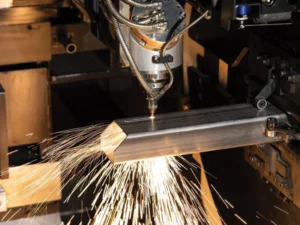
Tube and profile parts — structural framing members, furniture components, fitness equipment frames — cut on a tube laser arrive with holes, slots, miter-angle ends and weld-prep bevels already in place, replacing a saw-cut-then-notch-then-drill sequence that otherwise needs multiple separate operations and manual fitting.
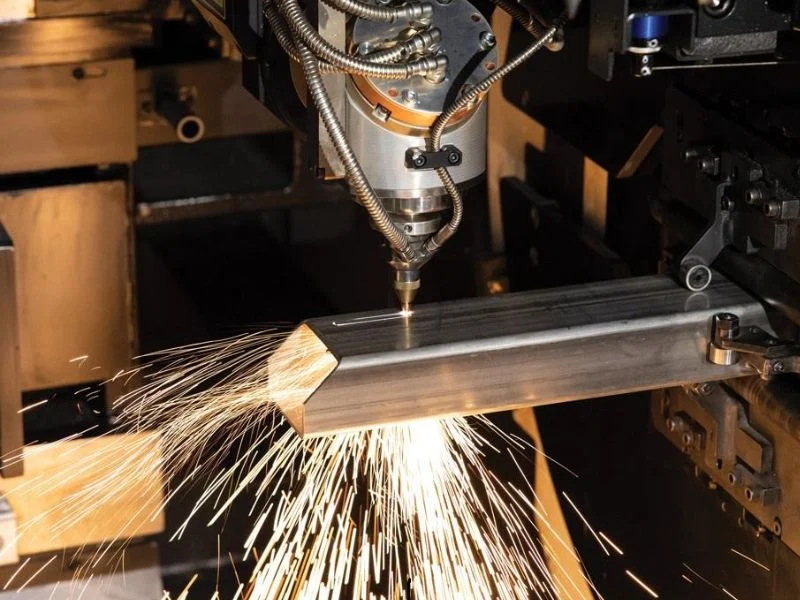
This is where tube laser cutting most clearly changes a workflow rather than just replacing one step: a frame assembly that previously needed each joint hand-fitted after a rough saw cut can have every joint already cut to final geometry, turning the assembly step into straightforward welding rather than fitting-then-welding.
Frames, Railings and Welded Assemblies
Handrail, balustrade and structural frame assemblies benefit specifically from integrated miter and weld-prep cutting, since these products are defined by their joints — how cleanly and accurately each tube meets the next — more than by the raw material itself.
Stainless steel handrail work in particular often specifies a visible, oxide-free weld or clean cut edge for finish reasons — nitrogen assist gas on the laser cut supports that requirement directly, avoiding a secondary polishing or pickling step that would otherwise be needed to remove an oxidized edge. See our assist gas guide for tube cutting for the full breakdown of when nitrogen’s edge quality is worth its added cost on this kind of visible-finish work.
How to Select X5, X6 or X6040
Match the platform to your starting material shape — flat sheet for the X5, tube and profile for the X6, small precision parts for the X6040 — since each of these applications depends on material handling specific to that shape, not on a shared general-purpose capability across all three.
See our full X5 vs X6 vs X6040 comparison for detailed specifications, or our job-scenario guide for matching your specific part to the right machine.
Sample Information Needed for Quotation
Bring these specifics to a quote conversation: material type and thickness/wall-thickness range, typical part geometry (flat, tube, profile, or small precision part), production volume, and downstream process (welded, painted, ship as-cut, visible finish). This determines platform, power level, and assist gas configuration together rather than requiring several rounds of follow-up.
Frequently Asked Questions
Does laser cutting eliminate all secondary operations?
Not entirely — light deburring is often still needed — but integrated hole placement, miter joints and weld-prep bevels eliminate most of the manual fitting, notching and grinding a traditional process would otherwise require.
Why does hole pattern flexibility matter for sheet metal parts?
A laser cuts any geometry directly from the file without tooling changes, unlike a punch press that needs a specific die per shape — this matters most for irregular patterns or frequent design changes where punch tooling cost and lead time would otherwise apply.
Why is nitrogen assist gas common on visible handrail work?
It produces a clean, oxide-free edge that supports the visible finish requirement common on stainless steel handrail and balustrade work, avoiding a secondary polishing or pickling step.
What’s the biggest workflow change tube laser cutting introduces?
Integrated miter and weld-prep cutting turns a fitting-heavy assembly step into straightforward welding, since joints arrive at final geometry rather than needing hand-fitting after a rough saw cut.
How do I decide which of the three platforms fits my shop?
Match your starting material shape to the platform built for it — flat sheet, tube/profile, or small precision parts — since each depends on different material handling rather than a shared general capability.
What information speeds up getting an accurate quote?
Material type and thickness range, part geometry, production volume, and downstream process requirements — providing all of this upfront avoids multiple rounds of follow-up questions.