A large-format CNC machining center exists to solve one problem: parts too big for a standard bed. Everything else about the buying decision — drive architecture, tool changer type, vacuum zoning — flows from that starting point, but shops often evaluate these machines on the same criteria they’d use for a general-purpose router, missing what actually matters at this size class.
Machines built for 4000×2000 mm panels and oversized parts carry different engineering priorities than a compact or precision-focused machine: moving-gantry drive architecture instead of moving-table, rack-and-pinion drive instead of ball screw, and vacuum zoning sized for panels that can be several meters across. Buying based on a spec sheet that doesn’t account for these differences leads to a machine that looks similar to smaller options on paper but performs very differently in production.
This guide covers working area and panel size, drive architecture, ATC and tool changer needs, vacuum zones and workholding, and an RFQ checklist for evaluating large-format machining center quotes.
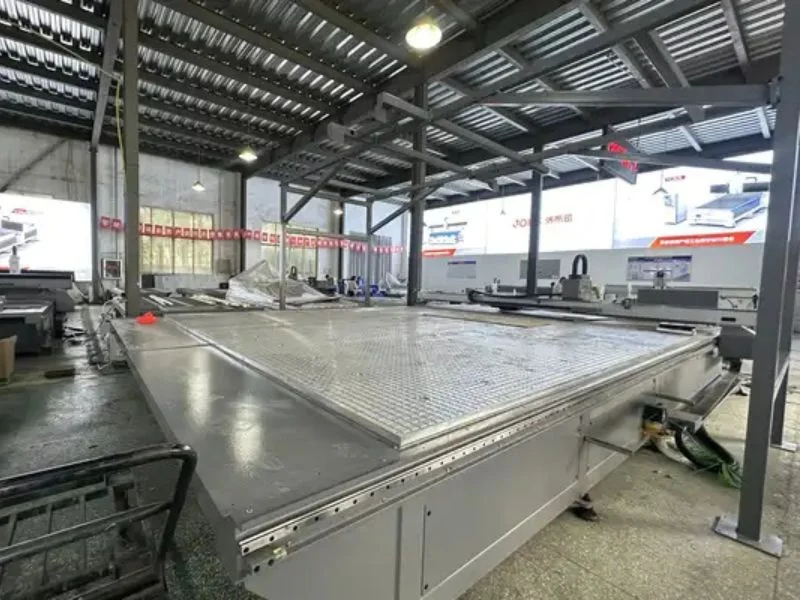
Working Area and Panel Size: The Starting Point
Confirm working travel — not nominal bed size — comfortably covers your largest panel with margin, and check this against your actual production sizes rather than an aspirational future capacity, since oversizing a large-format machine costs meaningfully more than oversizing a smaller one.
A 4000×2000 mm class working envelope covers most large-panel work in signage, composite tooling, and oversized cabinetry or millwork. If your panels are consistently smaller than this, a compact or mid-size machining center likely serves your work better at lower cost — large-format capability that goes unused is expensive capacity sitting idle.
Moving Gantry vs Moving Table
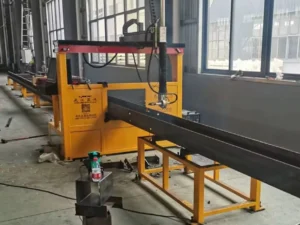
Large-format machines at this working-envelope class consistently use moving-gantry design — keeping the panel stationary and moving the cutting structure over it — because moving a panel this large accurately and repeatably between passes becomes a harder engineering problem than moving the gantry instead.
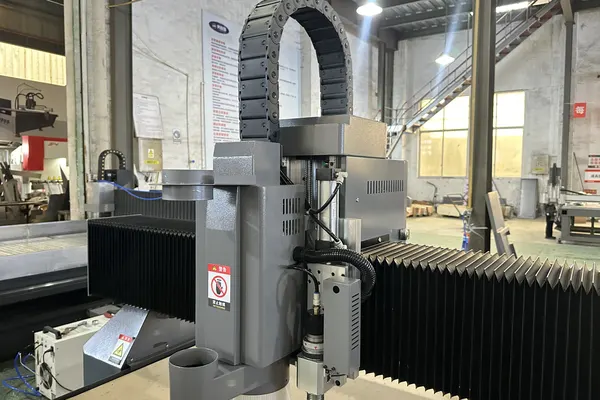
Confirm your candidate machine’s gantry is rack-and-pinion dual-driven with verified synchronization between both sides — this is what keeps the gantry square to the bed across its full travel. See our moving gantry CNC machines guide for a deeper look at why this architecture is standard at large-format scale.
ATC and Tool Changer Needs
An 8-station (or larger) disc-type tool magazine is typical at this machine class, handling a broader tool rotation than a simpler linear changer without an oversized footprint — confirm tool-change cycle time under real conditions, since a slow change multiplies across every tool switch on multi-operation large-panel work.
Ask specifically about ATC spindle power relative to your material — large panels in composite tooling board, aluminum composite panel, or dense engineered material need spindle power matched to sustained cutting across long tool paths, not just peak capability on a short test cut.
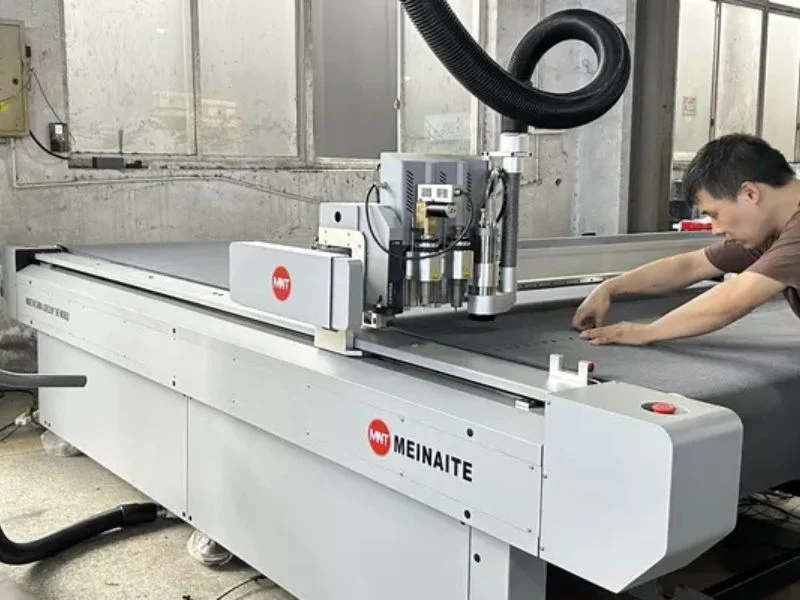
Vacuum Zones and Workholding for Large Panels
Confirm multi-zone vacuum coverage and pump sizing against your densest expected panel layout, not a simplified single-material demonstration — a large-format bed’s zones need to hold significant panel area flat and stable, and undersized pump capacity shows up as part movement or edge lift exactly where it’s most costly on an expensive large panel.
Ask about zone gasket material and replacement cost specifically. Gaskets wear from repeated tool passes and dust exposure across a larger total zone area than a compact machine has, and a table using common, easily sourced gaskets costs less to keep sealed over years of large-panel production.
Speed vs Accuracy: What Large-Format Machines Optimize For
Large-format machines are generally engineered to cover a big working envelope efficiently — fast rapid traverse rates, drive architecture suited to long travel distances — rather than to hold the absolute tightest positioning accuracy a smaller, precision-focused machine can achieve. This isn’t a shortcoming; it reflects a different engineering priority suited to the work this machine class actually does.
If your large panels also need very tight dimensional tolerance, confirm the specific accuracy rating of your candidate machine rather than assuming large-format automatically means lower precision — but recognize that a machine optimized primarily for bed size and speed is a different design than one optimized primarily for tolerance, and the two priorities trade off against each other to some degree at this scale.
Floor Space, Power and Facility Requirements
Confirm floor space, power supply and any facility modifications a large-format machine requires before finalizing a purchase — a machine with a 4000×2000 mm working envelope needs meaningfully more total footprint than its bed size alone suggests, once operator access, material staging and maintenance clearance are factored in.
Ask your supplier for total footprint requirements including clearance, not just bed dimensions, and confirm your facility’s power supply matches the machine’s requirements before delivery — this is a detail easy to overlook until a machine arrives and doesn’t fit the space or power infrastructure as planned.
RFQ Checklist for Large-Format Machining
Bring these specifics to an RFQ conversation rather than a general description of your work:
| Item | Why it matters |
|---|---|
| Largest actual panel dimensions | Determines minimum required working envelope with margin |
| Panel material and typical thickness range | Determines spindle power and tool selection needs |
| Densest typical nest layout | Determines required vacuum zone count and pump sizing |
| Typical tool rotation per job | Determines ATC magazine size and type needed |
| Production volume and shift pattern | Determines whether continuous-duty specification matters |
| Floor space and power/utility availability | Confirms the machine physically and electrically fits your facility |
Suppliers can only quote accurately against specific numbers, not general categories — a vague RFQ produces a vague quote that may not reflect what the machine actually does on your real production.
See our M1631 vs M3015 vs M4020 comparison for how large-format compares to compact and precision-focused options, and the full M4020 Large-Format CNC Machining Center specifications.
Frequently Asked Questions
What working envelope counts as “large-format”?
Machines in the 4000×2000 mm class and larger are generally considered large-format — if your panels are consistently smaller, a compact or mid-size machining center likely serves your work at lower cost.
Why do large-format machines use moving gantry instead of moving table?
Moving a large, heavy panel accurately between passes becomes harder to engineer reliably than moving a lighter gantry structure once bed size reaches this class — moving-gantry design scales better as bed size grows.
What tool magazine size do I need for large-format work?
An 8-station disc-type magazine is typical, though your actual tool rotation per job should determine the specific count — confirm tool-change cycle time under real conditions, not just spec sheet numbers.
How many vacuum zones does a large-format bed need?
Enough independently switched zones to hold your densest expected panel layout — confirm pump sizing against that densest layout specifically, not a simplified single-material demonstration.
What should I bring to a large-format machining center RFQ?
Your largest actual panel dimensions, material and thickness range, densest typical nest layout, typical tool rotation, production volume, and facility floor space and utility availability — specific numbers produce accurate quotes.
Is a large-format machine ever the wrong choice?
Yes — if your panels are consistently smaller than the machine’s working envelope, you’re paying for capacity you don’t use. A compact or precision-focused machine may serve your actual production better and at lower cost.