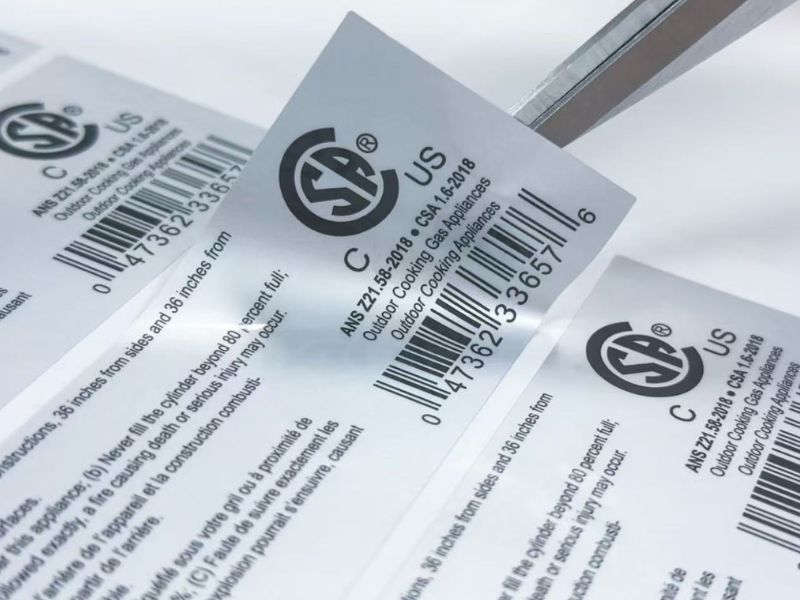
Kiss cutting cuts through the face material and adhesive of a laminated sheet but stops at the release liner. The parts stay on their backing until someone peels them off — a sheet of labels, a foam gasket on release paper, a membrane-switch overlay.
Kiss cutting is all about depth. Cut a few hundredths of a millimetre too deep and parts fall off the liner; too shallow and they will not peel. How you control that depth decides tooling cost, lead time and which materials you can take on.
This guide explains the process, the four kiss cutting methods and the problems that show up on the shop floor. If you are choosing the machine rather than the process, our digital die cutting machine page compares flatbed and roll-to-roll kiss-cut setups.
What Is Kiss Cutting?
Kiss cutting cuts the top layer and its adhesive but leaves the backing liner uncut, so parts stay carried on a continuous sheet or roll. The name describes the blade: it just “kisses” the liner rather than passing through it.
Every material used for kiss cutting is a laminate of at least three layers: a face stock (paper, film, foam, rubber or fabric), a pressure-sensitive adhesive, and a release liner coated so the adhesive lets go cleanly. Label material makers such as Avery Dennison sell the face, adhesive and liner as one engineered construction, and the liner is chosen partly for how well it survives kiss cutting. A glassine label liner is typically around 0.05–0.06 mm thick, while the foam or rubber face above it can be several millimetres.
Because the liner stays whole, kiss-cut parts keep their position and spacing. That is what lets an automatic applicator peel labels in sequence, and what lets an assembler pick an adhesive gasket off a sheet without touching the sticky side.
Kiss cutting also makes weeding possible: the waste around the parts — the matrix — is stripped away while the wanted parts stay on the liner. Rolls of labels and sheets of adhesive pads are made this way.
The opposite is through-cutting, often simply called die cutting: the blade passes through every layer, liner included, and each part comes out loose. Solid rubber, cork and cardboard have no liner, so they are always through-cut.
How Kiss Cutting Depth Is Controlled
Kiss cutting only works if the blade stops inside the liner, which is usually far thinner than the face stock above it — so the real question for any kiss cutting method is what it measures depth from.
There are two references, and every method uses one of them.
Referenced from the anvil or bed. In kiss die cutting — kiss cutting with a physical die — a rotary die sits a gap measured in microns above a hardened anvil roll; a flatbed die closes to a set height against a platen; a knife table sets blade extension relative to its cutting surface. Depth is then correct only if the material is exactly the thickness the setup assumed. A thicker patch of foam or adhesive means a deeper cut into the liner at that spot.
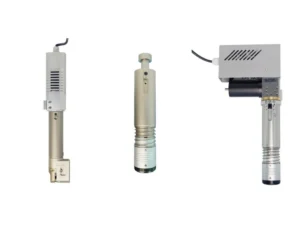
Referenced from the material surface. A dedicated kiss-cut tool on a digital cutter rides on the face of the material and limits how far the blade extends below it, so thickness variation in the stock does not change the cut into the liner. This is why kiss-cut tools on flatbed cutters are separate tools rather than a shallower setting on the standard knife.
A laser has no physical reference at all. Depth comes from power, speed and focus, so any change in material thickness or density shows up directly as a change in cut depth.
Whichever kiss cutting method you use, the liner is part of the specification. A thicker or film-based liner gives the process more room than thin paper; if you are designing a kiss-cut part, ask the material supplier which liner is meant for converting, not just for the adhesive.
Changing from kiss cut to die cut follows the same logic. On a digital cutter it is a per-path setting: switch those lines to the through-cut tool or depth and the part drops free. On a die line it usually means a different die or cutting station, because a die built to stop at the liner is not meant to be driven into the anvil.
Kiss Cut vs Die Cut vs Contour Cut
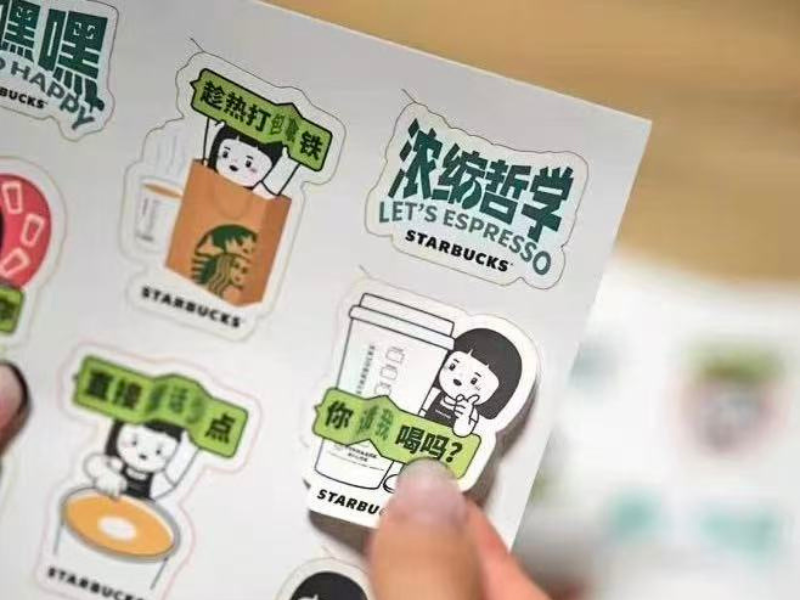
Kiss cut and die cut describe how deep the blade goes; contour cut describes the path it follows. A contour cut simply traces the outline of the printed artwork or part shape, and it can be either a kiss cut or a through-cut.
| Factor | Kiss cut | Die cut (through-cut) | Contour cut |
|---|---|---|---|
| What the term describes | Depth: face and adhesive only | Depth: every layer, including liner | Path: follows the artwork or part outline |
| Output | Parts on a continuous liner | Individual separated parts | Either, depending on depth |
| Needs a liner? | Yes | No | Only if kiss-cut |
| Waste removal | Weeding the matrix | Parts drop out | Depends on depth |
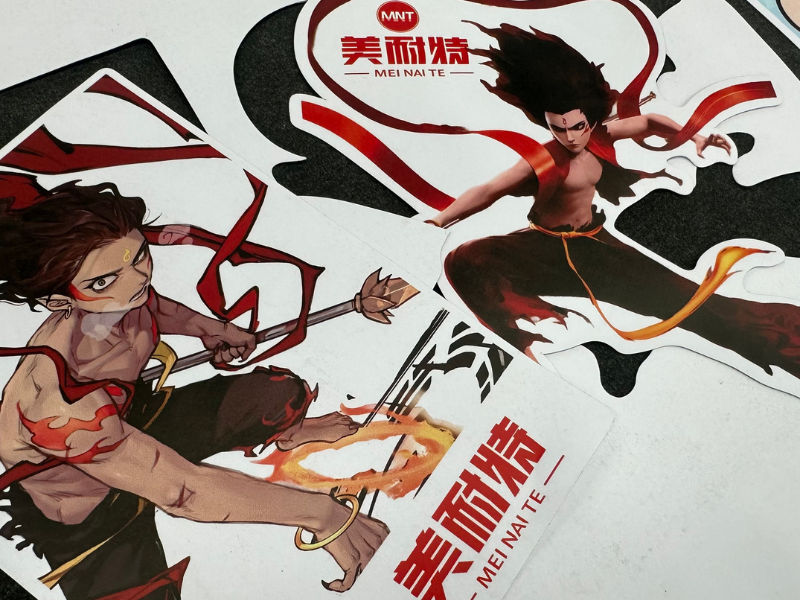
| Typical parts | Labels, adhesive gaskets, overlays, foam pads on a sheet | Solid gaskets, inserts, cartons, tags | Printed stickers and decals cut to shape |
Read the table as a question about what happens after the cut. If the part is peeled from a backing, kiss-cut it. If it is handled on its own, through-cut it. Many parts use both: a sticker sheet is kiss-cut around each design and through-cut around the sheet edge.
On a digital cutter, “contour cut” usually also implies registration — a camera reads marks printed with the artwork so the cut follows the print rather than the sheet edge.
Four Kiss Cutting Methods Compared: Rotary Die, Flatbed Die, Laser and Digital Knife
Four methods cover almost all industrial kiss cutting, and they split on one trade-off: tooling cost and lead time against cost per part at volume. Most suppliers explain only the method they sell; the table sets all four side by side.
| Method | How depth is set | Tooling per shape | Best volume | Watch out for |
|---|---|---|---|---|
| Rotary die | Precision gap between die and anvil roll | Rotary die per shape; highest tooling cost | Long roll runs of one shape | Die cost and lead time; every design change is a new die |
| Flatbed (platen) die | Die height against the platen, set in make-ready | Steel-rule die per shape | Medium runs in sheets | Uneven depth across a large die; make-ready time |
| Laser | Power, speed and focus; no physical reference | None | Short to medium runs of film and paper labels | Heat on the edge; fumes from some films and adhesives; depth drifts with thickness |
| Digital knife | Kiss-cut tool referenced from the material surface, or blade extension from the bed | None | Samples, short and medium runs, thick or heat-sensitive stock | Slower per part than a die at high volume |
Rotary kiss die cutting is the production answer for labels on the roll: once the die is made, a web runs through at press speed and every label is identical. The cost is the die itself and the weeks it takes to arrive, repeated for every new shape.
Flatbed dies do the same job in sheets. They are cheaper than rotary tooling, but holding a consistent kiss depth across a large die takes careful make-ready, and thick foams resist being cut cleanly in one press.
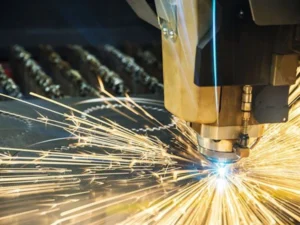
Laser kiss cutting removes tooling entirely and suits thin film and paper labels. The limits are heat — a sealed or discoloured edge, and fumes from some adhesives and PVC films — and the lack of a physical depth reference.
A digital kiss cutter also removes tooling, and it is the kiss cutting method that copes with thick foam, rubber and fabric laminates, because the blade cuts cold. Where a job mixes kiss-cut and through-cut lines, the knife does both in the same pass.
Where Kiss Cutting Is Used Beyond Stickers
In manufacturing, kiss cutting is how adhesive-backed parts are delivered ready to apply — gaskets, foam pads, tapes and overlays — not only labels and decals. This is where the choice of method earns or costs real money.
- Adhesive-backed gaskets: kiss-cut on a liner so assemblers peel and place each gasket without handling the adhesive; see our gasket cutting machine page for the materials involved.
- Foam pads and cushioning: EVA, PE and PU foam with adhesive backing, kiss-cut for peel-and-stick bumpers, seals and anti-rattle pads in electronics and appliances.
- Double-sided tape shapes: transfer tapes and double-coated foam tapes cut to shape for bonding panels, displays and trim.
- Membrane switch and graphic overlays: kiss-cut windows and adhesive layers with a through-cut outer profile in the same part.
- Medical and wearable components: adhesive-backed pads and dressings cut to shape on a liner for automated assembly.
- Pressure-sensitive labels: kiss-cut on rolls so an applicator peels them in sequence.
The common thread in industrial kiss cutting is that the part is applied from a backing. Industrial parts are also thicker and more varied than labels, which is why foam and rubber laminates push shops toward knife cutting rather than lasers.
Common Kiss Cutting Problems and What Causes Them
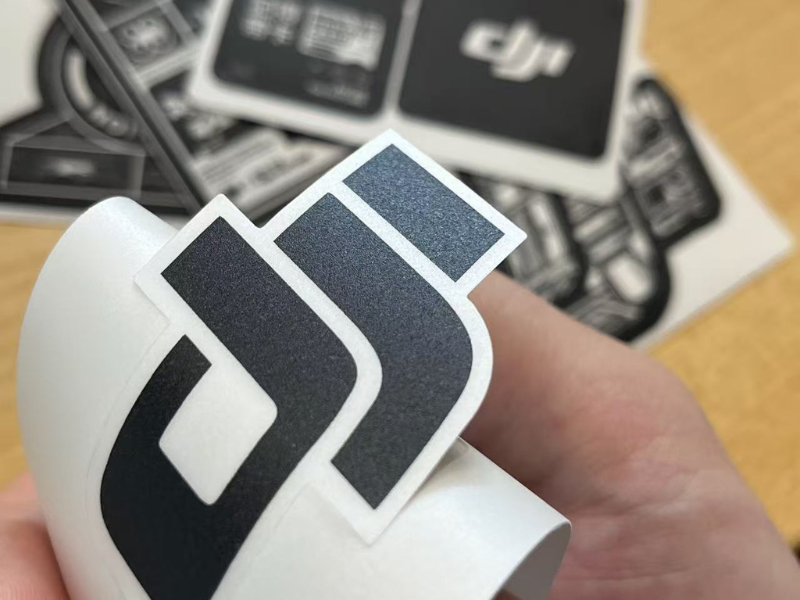
Most kiss cutting problems trace back to depth — the cut going into the liner, or stopping short of it — and depth problems usually come from material variation, not machine error.
| Problem | What you see | Usual cause |
|---|---|---|
| Cutting through the liner | Parts fall off in the machine; roll or sheet tears when handled | Depth set from the bed on stock of varying thickness; liner too thin for the process |
| Not cutting through the face | Parts will not peel, or tear at the corners | Worn blade or die; a thicker patch of face stock or adhesive |
| Matrix breaking during weeding | Waste snaps and stays on the liner | Waste bridges between parts too narrow; weeding too fast |
| Parts lifting with the matrix | Small parts pulled off with the waste | Incomplete cut at corners; adhesive flowing back into the cut |
| Edges sticking to each other on the liner | Parts peel with a stringy adhesive edge | Adhesive ooze at the cut line, often from heat or long storage |
In kiss cutting, the fix follows the cause. Where depth wanders with material thickness, a surface-referenced kiss-cut tool removes the variable; where the liner is marginal, the material specification is the problem, not the machine.
Weeding problems are usually design problems. Wider bridges between parts, rounded inside corners and a sensible weeding direction solve more than any machine setting.
When Kiss Cutting Needs a Die — and When It Doesn’t
A die pays for kiss cutting when one shape runs in long, repeated volume; for samples, short runs and designs that change, die-less kiss cutting is cheaper and faster.
A rotary or flatbed die is a fixed cost per shape. Spread across a long run of labels it becomes a fraction of a cent per part, and nothing matches a rotary line for speed on the roll. Spread across a 200-piece sample order or a design that changes every quarter, the same die is most of the job cost.
Die-less methods — laser and digital knife — remove that fixed cost and the wait for tooling. The trade is a higher cost per part at volume, because the cutter traces each path rather than stamping the whole outline at once.
The crossover depends on your die price, part size and run length, and it moves every time a design changes. We work through the arithmetic in our comparison of digital die cutting vs steel-rule dies.
Many converters run both kinds of kiss cutting: rotary dies for the stable, high-volume labels and a digital cutter for samples, short runs and the thick or awkward laminates a die handles badly. MNT does not build rotary die lines: if your work is long runs of one label shape, a rotary press is the right equipment, and we will tell you so rather than sell you a flatbed for it.
How a Digital Cutter Kiss-Cuts and Through-Cuts in One Pass
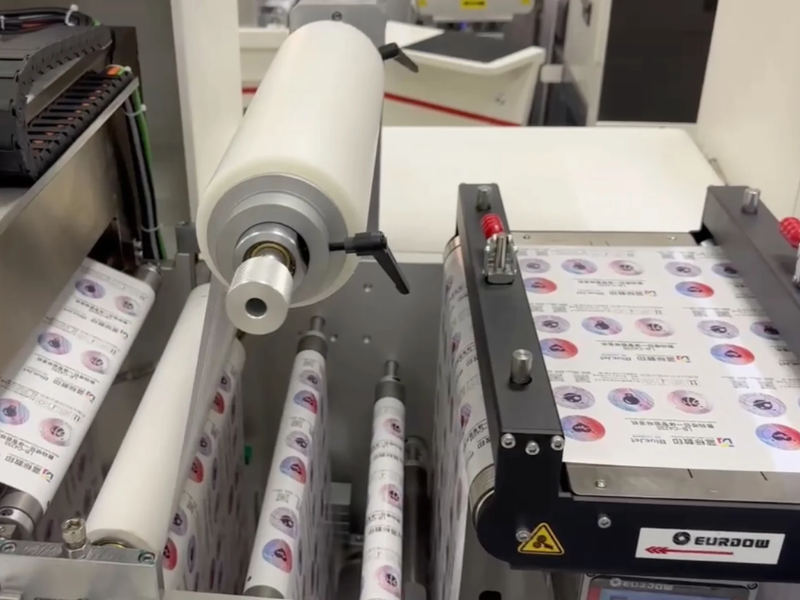
A digital die cutting machine assigns a tool and depth to each path, so it kiss-cuts and through-cuts in the same job from one file — no die and no second machine.
The operator puts kiss-cut lines and through-cut lines on separate layers of the same file. A membrane overlay can have kiss-cut windows and a through-cut outer edge; a sheet of foam pads can be kiss-cut around each pad and through-cut around the sheet.
On MNT C-series flatbed cutters an optional kiss-cut tool sits alongside the oscillating knife and creasing wheel, and the C6090 handles sheet labels and small adhesive parts. For labels on the roll, the C4235 prints, registers to the print and kiss-cuts in one pass, then strips the waste. If you need depth on the knife itself rather than a separate kiss tool, our guide to oscillating, rotary and drag knives explains which blade suits which laminate.
This is the practical case for die-less kiss cutting on a digital kiss cutter: mixed depths in one part, new designs cut the same day, and thick or heat-sensitive laminates cut cold. See how a die-less setup handles labels, gaskets, foam and packaging on our digital die cutting machine page.
Frequently Asked Questions
What does kiss cut mean?
A kiss cut is a cut that goes through the face material and adhesive of a laminated sheet but stops at the release liner, so the part stays on its backing until it is peeled off. Labels, adhesive gaskets and sticker sheets are kiss-cut.
Is kiss cut or die cut better?
Neither is better in general — they do different jobs. Kiss cut suits parts that are peeled from a liner, such as labels, adhesive gaskets and foam pads. Die cut (through-cut) suits standalone parts such as solid gaskets, inserts and cartons. Many parts use both.
What is the difference between a kiss cut and a contour cut?
Kiss cut describes depth; contour cut describes the path. A contour cut follows the outline of the artwork or part, and it can be made as a kiss cut (part stays on the liner) or as a through-cut (part comes out loose).
How do you change from kiss cut to die cut?
Cut deeper, through the liner as well as the face. On a digital cutter that is a per-path setting — switch those lines to the through-cut tool or depth in the same file. On a rotary or flatbed die line it usually means a different die or cutting station, because a kiss-cut die is built to stop at the liner.
Why is it called a kiss cut?
Because the blade only “kisses” the liner: it cuts through the face stock and adhesive and touches the release liner without cutting through it, leaving the backing intact.
Can a gasket be kiss-cut?
Yes. Adhesive-backed gaskets are commonly kiss-cut on a release liner so assemblers can peel and place each one. Solid gaskets with no adhesive backing are through-cut instead.
How much does a kiss cutting machine cost?
A digital flatbed cutter that kiss-cuts sheet stock starts around USD 12,000 for a compact MNT C6090 and runs to about USD 25,000 for the 1600 × 2500 mm C2516T, depending on tools fitted. A roll-to-roll print-and-kiss-cut label line such as the C4235 starts from USD 33,000. Rotary die lines cost more up front and add a die for every shape.
Kiss cutting is easier to judge on your own material than on paper. Send us your laminate — face stock, adhesive and liner — with a drawing, and we will kiss-cut a free sample on a C-series table and return it with the tool and depth settings used. Contact our engineering team to arrange it.