
Oscillating Knife Cutting Machine — CNC Digital Cutter for Rubber, Foam & Textile
MNT (MEINAITE) C-series oscillating knife cutting machines shear soft and semi-rigid material cold — no heat, no kerf, no die.
- The blade oscillates, it does not drag — thick and springy material is sheared instead of pushed, so the cut does not wander
- Zero kerf, zero heat — nothing is burned away and no polymer is degraded at the edge
- Interchangeable heads — electric oscillating, pneumatic, drag and creasing tools on one gantry
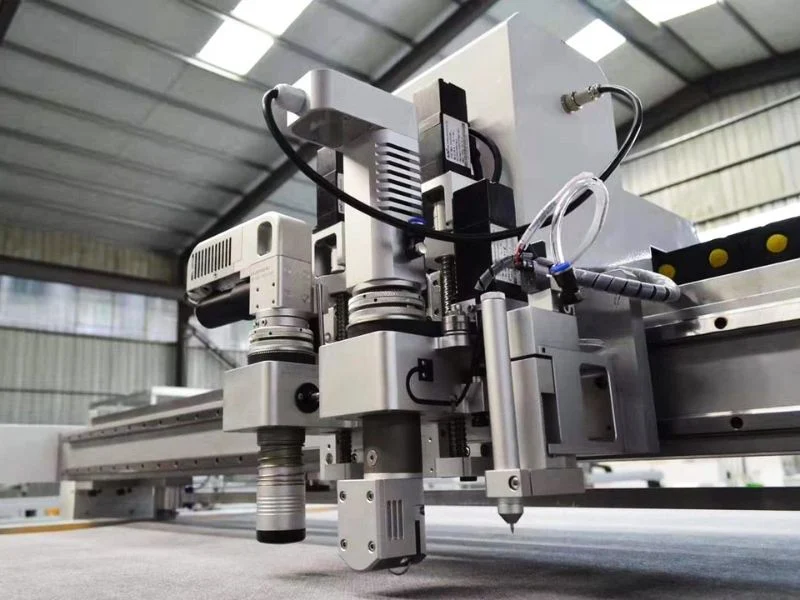
What an Oscillating Knife Does That Other Blades Cannot
A drag knife is pulled through material, so the material has to be soft enough to part under sideways pressure. Push it into anything thick, dense or springy and the blade deflects: the cut wanders, the top face and bottom face no longer line up, and the part comes out of tolerance without ever looking obviously wrong.
An oscillating knife removes the sideways pressure. The blade moves up and down thousands of times a minute while the gantry advances, so each stroke shears a small amount of material instead of forcing through all of it at once. That is why the same machine can cut 0.2 mm film and 50 mm foam — and why it holds a vertical edge in rubber that a drag blade would round over.
Why the whole category moved off dies and lasers
- No tooling. A steel-rule die costs money and weeks, and a design change writes it off. A knife cuts from the file, so a batch of one costs the same per part as a batch of five hundred.
- No heat. A laser burns, melts and carbonises — fatal on rubber, foam, prepreg and any material that later has to be bonded. A cold blade leaves the polymer chemistry untouched.
- No kerf. A blade removes nothing, so nested parts can share a cut line and expensive material is not vaporised into extraction.
- No fumes. PVC and PTFE release corrosive or toxic gas under a laser. A knife makes dust at worst.
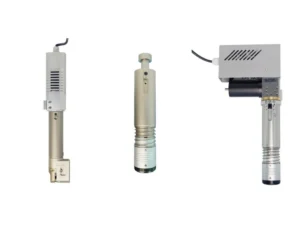
Three heads, three jobs
| Head | What it is | Where it belongs |
|---|---|---|
| EOT — electric oscillating | Motor-driven blade, high frequency, short stroke | The workhorse: rubber, foam, leather, textile, composite, gasket sheet |
| POT — pneumatic oscillating | Air-driven, longer stroke, more force per stroke | Thick and reinforced stock — insertion rubber, heavy foam, stacked material |
| DRT — drag knife | Passive blade, no power | Thin film, vinyl, paper, single-ply fabric — fastest where force is not needed |
Creasing wheels, V-cut tools, milling spindles and marking pens run on the same head carriage, which is what lets one table replace a die cutter, a plotter and a bandsaw in a converting shop.
This page is about the cutting principle — how the head works and which material suits which blade. If your material arrives printed and the cut has to follow the artwork rather than the sheet edge, that is a different configuration with camera registration: see the flatbed cutter page. Same gantry, same vacuum bed — different heads and a camera.
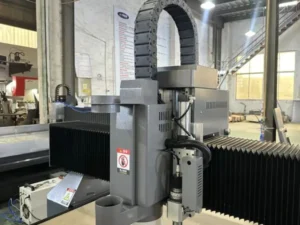
Machine specifications compared. One carriage, different standard tool sets. The C6090 ships with the electric oscillating tool and creasing tool; the C2516T adds a milling spindle for rigid board; the C3232 makes the pneumatic oscillating tool standard, which is what you want if thick rubber is the daily job rather than the occasional one.
| Specification | C6090 | C2516T | C3232 |
|---|---|---|---|
| Cutting area | 600 × 900 / 600 × 1200 / 900 × 1200 mm | 2500 × 1600 mm | 3200 × 3200 mm |
| Rubber, silicone, gasket sheet | ≤ 20 mm | ≤ 30 mm | ≤ 30 mm |
| Foam, honeycomb, rigid foam | ≤ 50 mm | ≤ 50 mm | ≤ 50 mm |
| Leather, felt, technical textile | ≤ 10 mm | ≤ 10 mm | ≤ 10 mm |
| Corrugated & board stock | ≤ 20 mm | ≤ 20 mm | ≤ 20 mm |
| Pneumatic oscillating tool (POT) | Optional | Optional | Standard |
| Milling spindle | — | Standard · 800 W / 1.8 kW / 4 kW | Optional |
| Cutting speed | 300–1800 mm/s | 300–1800 mm/s | 300–1800 mm/s |
| Continuous belt feeding | Yes | Yes | Yes |
Materials an Oscillating Knife Cuts
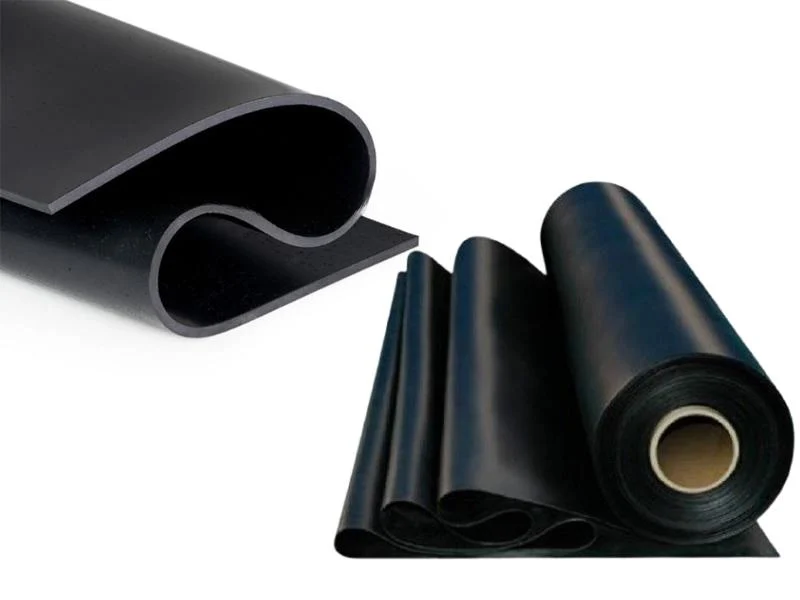
Rubber & Elastomers
- Formats: EPDM, nitrile, silicone, neoprene and sponge, 1–50 mm, plain or fabric-reinforced
- Watch out: Elastomers stretch ahead of a passive blade, so the cut wanders and the part is undersized — and a laser hardens the edge, destroying the elasticity the seal depends on
- How we cut it: High-frequency oscillation cuts before the sheet can stretch; the pneumatic head holds force through reinforcing plies
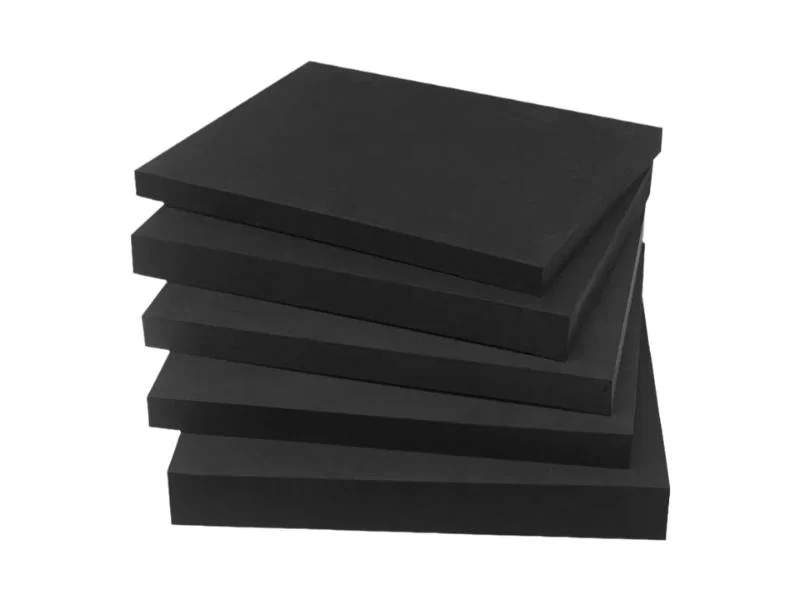
Foam & Cellular Material
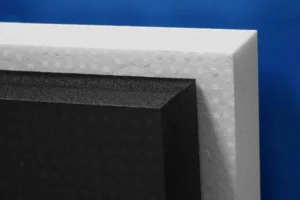
- Formats: EVA, PE, PU, XPE and cross-linked foam, 2–50 mm
- Watch out: Soft foam compresses under a dull or slow blade, so the finished part comes out smaller than the pattern — the classic reason hand-cut cushions never match the cover
- How we cut it: Each oscillation shears before the foam has time to compress, holding the contour to the file
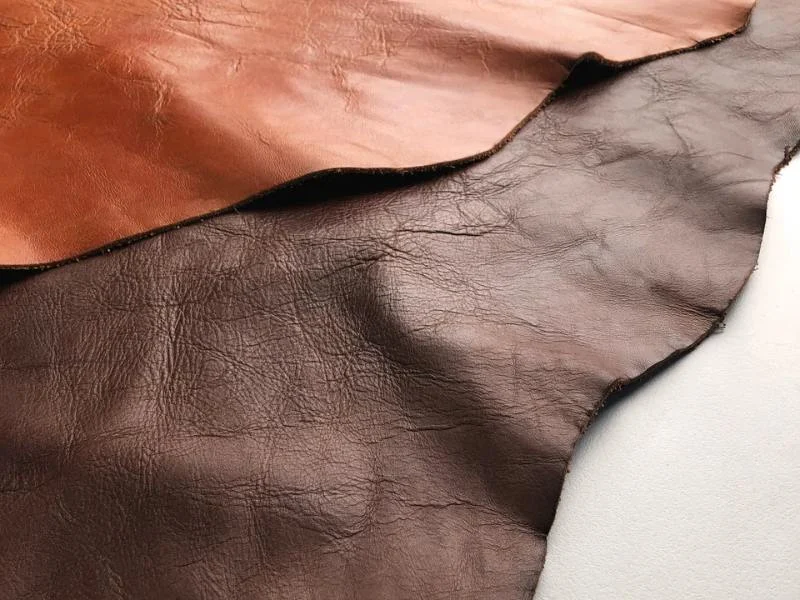
Textile, Leather & Composite Ply
- Formats: Woven and non-woven fabric, hide, coated marine cloth, carbon and glass reinforcement
- Watch out: These move. Bias-cut fabric distorts if it shifts a millimetre, and a frayed selvedge or a scorched laser edge ruins a ply before it reaches the mould
- How we cut it: Zoned vacuum plus a conveyor keeps the material still; the blade shears rather than pulls, so the weave stays intact
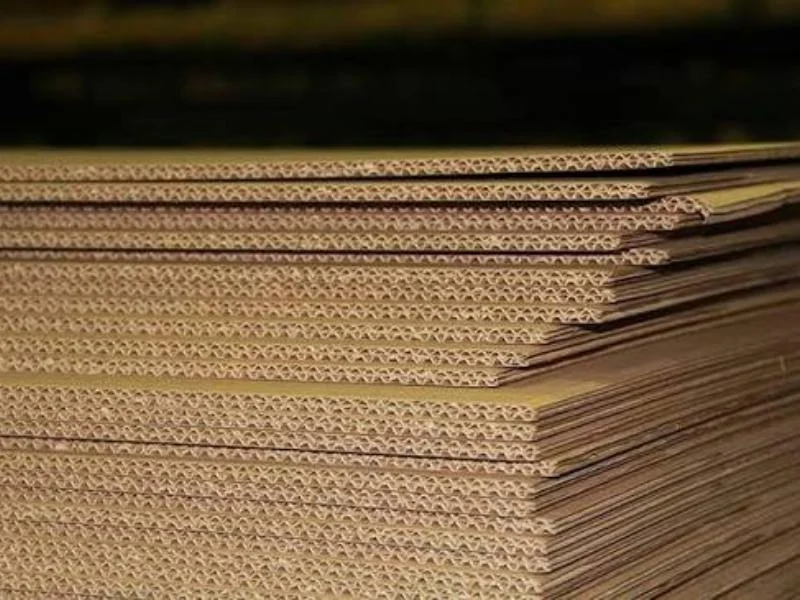
Board, Film & Packaging Stock
- Formats: Corrugated, greyboard, foam core, PVC board, PET and PP film, 0.2–25 mm
- Watch out: Board needs creasing as well as cutting, and film needs kiss-cutting through the face but not the liner — two jobs a single fixed blade cannot do
- How we cut it: Creasing wheel and depth-controlled kiss-cut run from the same head carriage, in the same program
What Converters Cut on a Knife Table
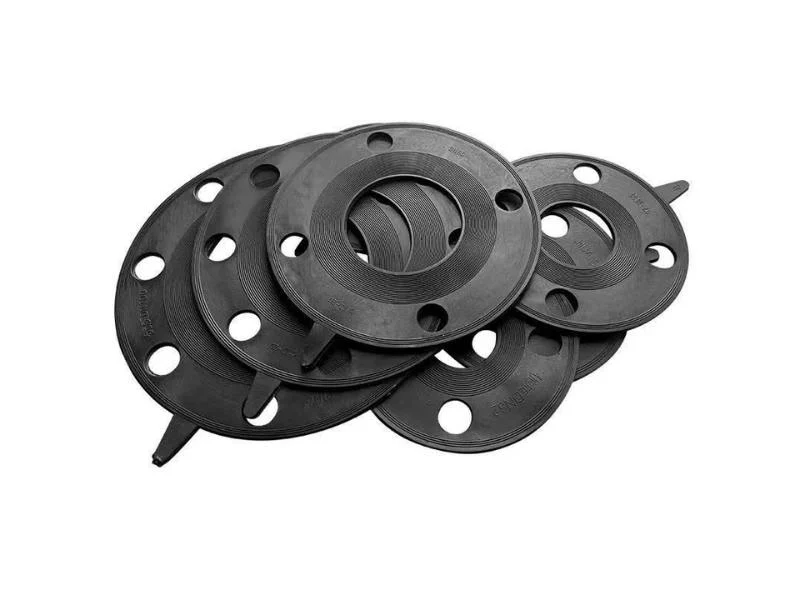
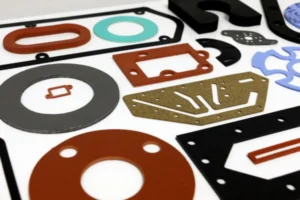
Gaskets & Sealing Parts
- Parts: Flange rings, custom profiles and sealing washers straight from DXF
- The hard part: A steel-rule die for a one-off flange costs more than the gasket and takes longer than the job allows
- What you get: One-off and production cost the same per cut — see the dedicated gasket cutting machine page
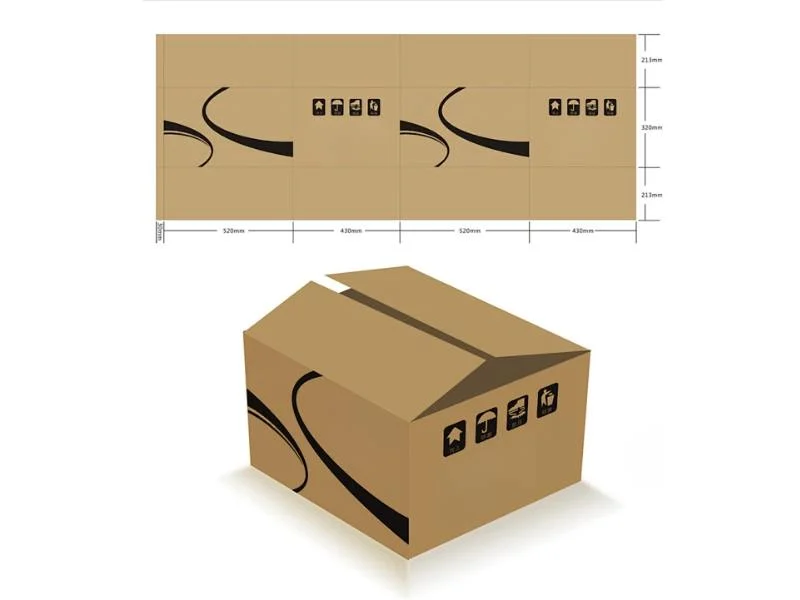
Packaging Samples & Short Runs
- Parts: Cartons, inserts, displays and protective packaging, single samples upwards
- The hard part: Sampling on a die-cutter means tooling for a design that may never go to production — the cost lands before the customer has approved anything
- What you get: Cut and crease from the CAD file the same day, so the sample ships before the competitor has quoted tooling
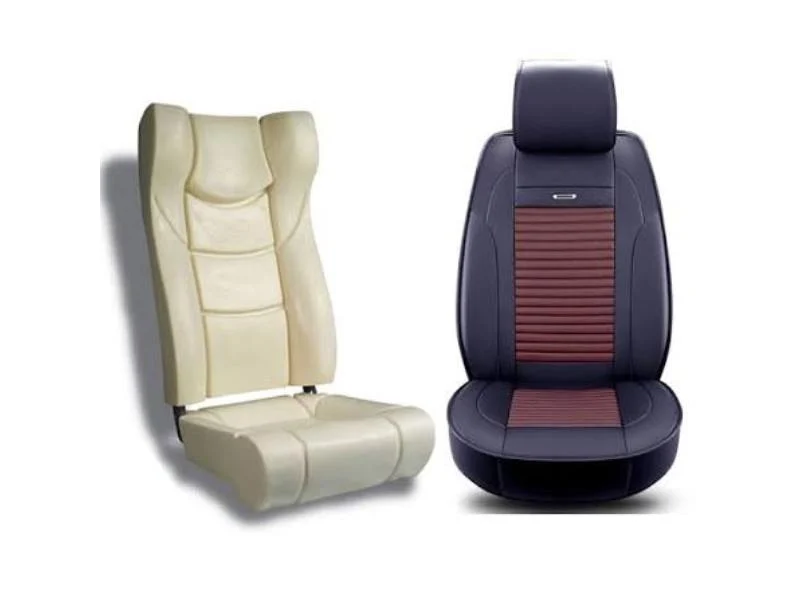
Interior, Upholstery & Trim
- Parts: Seat foam, headliners, door-card fabric, carpet and leather panels
- The hard part: Interiors are audited and every piece has to match the last — a hand-cut blank cannot prove that it does
- What you get: ±0.1 mm repeatability from the released file, with parts labelled in assembly order
Technical & Industrial Parts
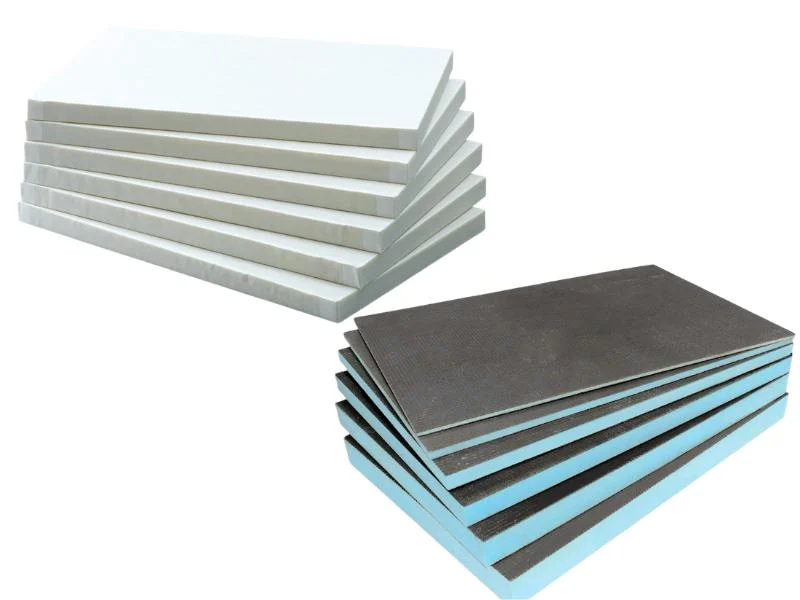
- Parts: Insulation, filter media, conveyor belting, liners and wear parts
- The hard part: These materials are abrasive, thick or reinforced — the exact combination that dulls hand blades within a few parts and tears at fixing holes
- What you get: Pneumatic head with the right blade geometry cuts through reinforcement without tearing it
Recommended MNT Oscillating Knife Machines
All C-series machines share the same platform, software and tool range — the difference is working size and which heads come fitted as standard.
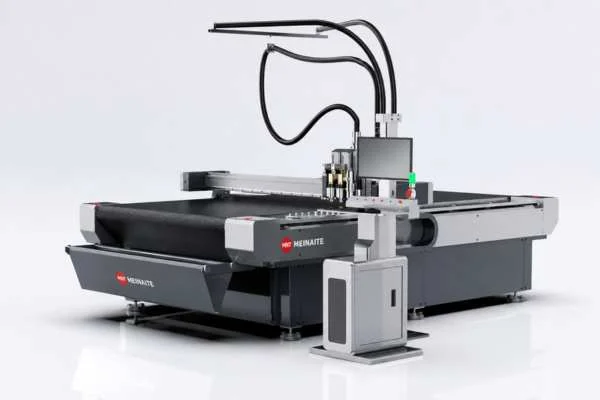
C2516T Digital Cutting Machine
- Cuts: Rubber, foam, leather, textile, composite ply and gasket sheet
- Specs: 2500 × 1600 mm · EOT oscillating knife + drag knife + milling spindle · zone vacuum · conveyor
- Best for: Production converting where roll goods feed continuously
- Price: From $16,900
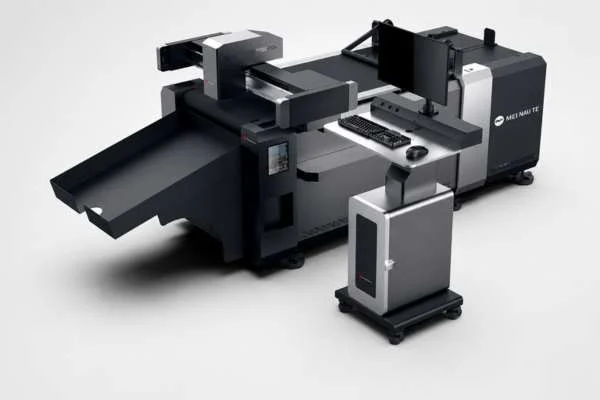
C6090 Digital Cutting Machine
- Cuts: Single-ply and sample work across the same material range
- Specs: 600 × 900 / 600 × 1200 / 900 × 1200 mm · EOT + creasing · vacuum table
- Best for: Sample rooms, R&D and short-run work rather than the production floor
- Price: From $12,000
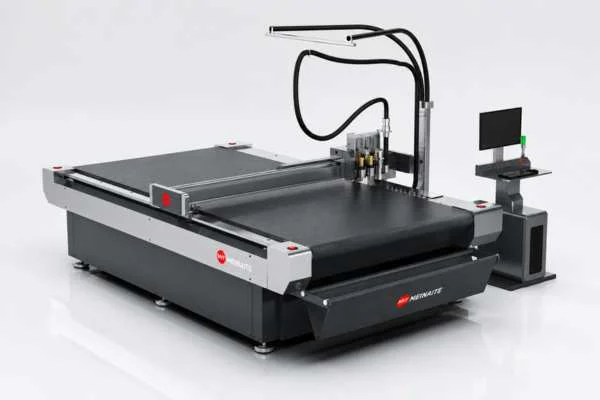
C3232 Digital Cutting Machine
- Cuts: Wide-roll and oversized stock — matting, marine fabric, large composite ply
- Specs: 3200 × 3200 mm · POT pneumatic knife + EOT oscillating knife · zone vacuum
- Best for: Anything too wide for a 1600 mm table
- Price: From $11,555
When an Oscillating Knife Is the Wrong Tool
A knife table is the right answer for most soft and semi-rigid material, and the wrong answer for a few specific jobs. Here is the honest split.
| Your material | Right process |
|---|---|
| Rubber, foam, leather, textile, gasket sheet | Oscillating knife — this machine |
| PVC, PTFE, prepreg, anything to be bonded | Oscillating knife — heat would ruin it |
| Board and packaging needing creases | Oscillating knife with creasing wheel |
| Acrylic, wood panel, solid plastic | Router spindle — a blade cannot enter rigid stock |
| Sheet metal and tube | Fiber laser |
| Cured composite laminate | Diamond-coated router or waterjet |
| Millions of identical simple parts | Rotary die — at that volume tooling amortises |
The volume boundary is the one people get wrong. A knife wins on short runs, frequent changes and expensive material. Once you are producing the same simple shape by the million, a rotary die is faster per part and the tooling cost disappears into the volume — and we will say so rather than sell you a table you will outgrow.
Two things buyers underestimate
- Blades are a consumable and material decides the rate. Aramid, carbon and abrasive reinforced rubber consume edges quickly. Budget blade replacement the way you would budget gas on a laser; anyone who tells you blade life is a non-issue has not cut aramid. Blade suppliers publish geometry and life data per material — Sollex is the reference most converting shops work from when specifying edges.
- Vacuum capacity, not blade power, sets what you can hold. Light film lifts, thick foam leaks, and the last small part on a nest is held by suction alone. Tell us your lightest and your thickest material — the pump is specified from both.
Why Converters Choose MNT Oscillating Knife Machines
On knife work the table and the head carriage matter more than headline speed. About MNT (MEINAITE) — who builds it and where.
Distributor or OEM partner? Territory, spare-parts commitment and technical training are what decide whether a machine is worth carrying. Talk to us about partnership.
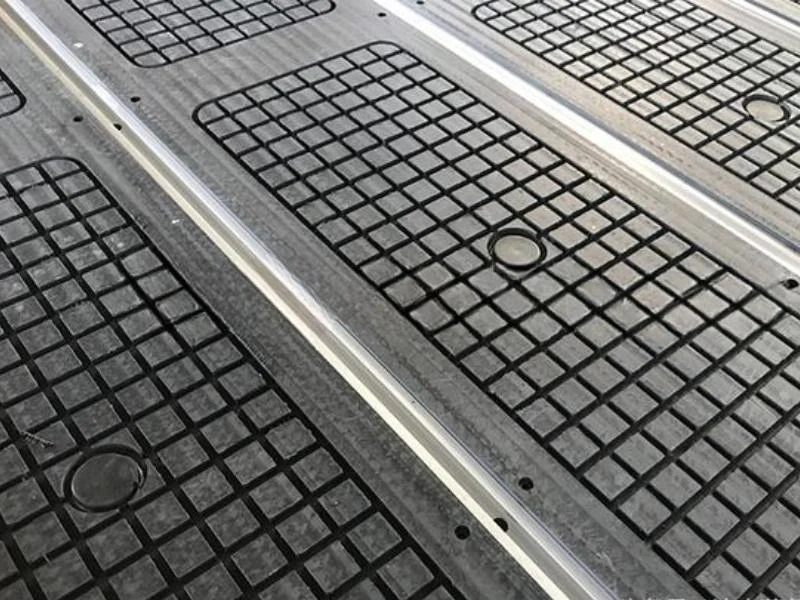
Hold-Down Built for Difficult Material
- Zoned vacuum — suction only where the material is, so it holds instead of leaking
- Conveyor feed for roll goods; the material is never lifted and repositioned mid-cut
- Specified from your lightest film and your thickest stock, not from a catalogue default
- For distributors: this is the widest application base you can carry — one platform reaches rubber, foam, leather and packaging, so your customer list is not hostage to any single industry’s cycle
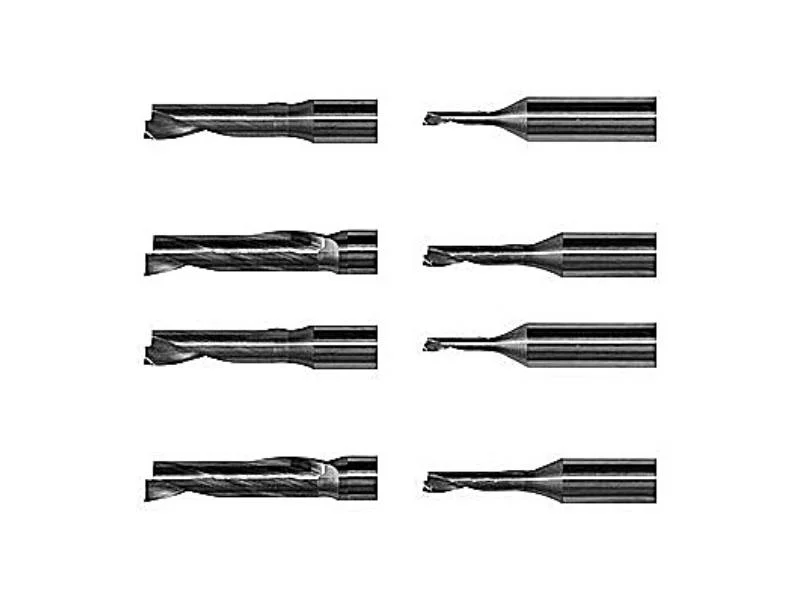
One Carriage, Every Head
- EOT electric, POT pneumatic, drag knife, creasing wheel, V-cut and milling spindle
- Tools swap without re-datuming, so a job that needs cut plus crease runs as one program
- Blade geometry recommended per material, with consumable rates quoted honestly up front
- For distributors: spare-parts commitment, territory and technical training are the three things that decide whether a machine is worth carrying — all three are set out on our partnership page
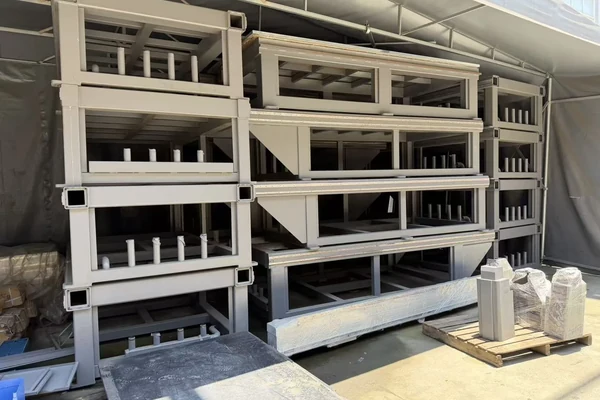
The Factory That Builds Your Knife Table
- Frames, gantries and vacuum tables built in-house by Hangzhou Chaohan
- Every machine run-tested and calibrated before shipping
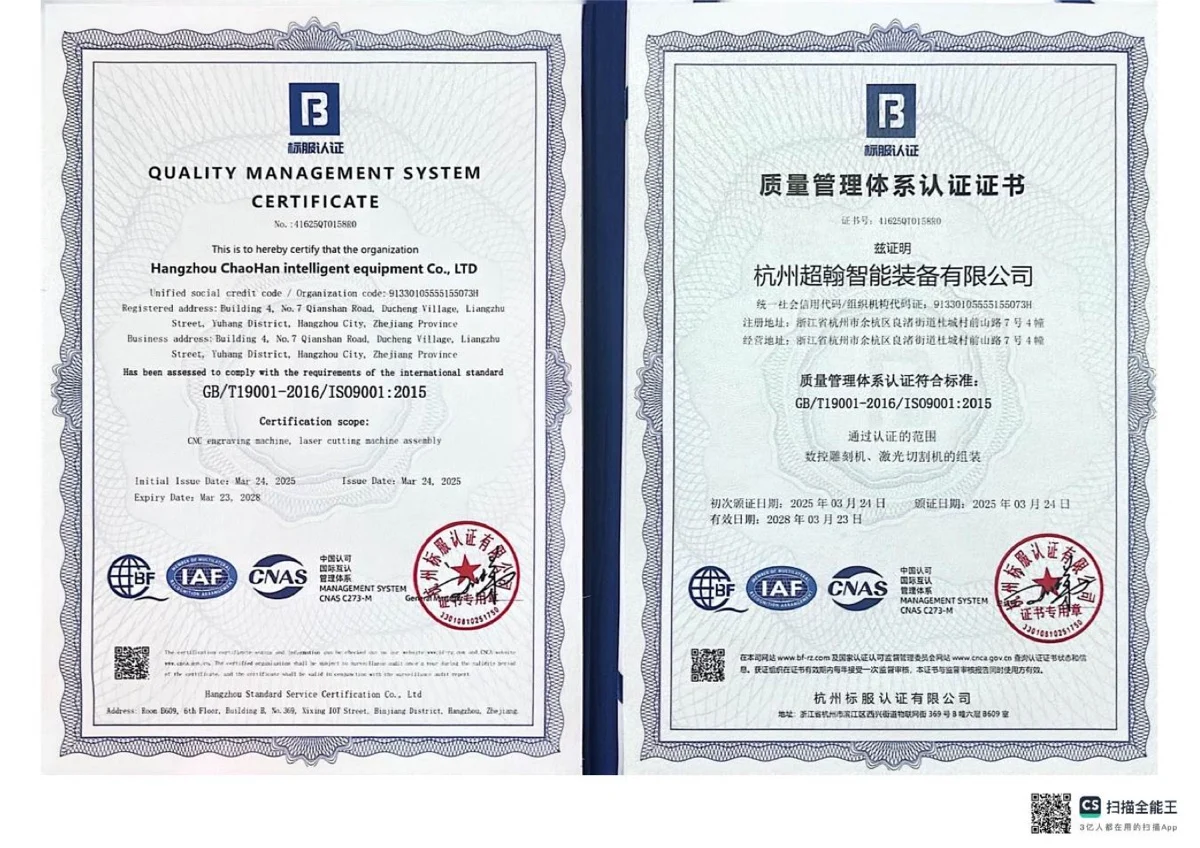
CE + ISO — Send Your Material for a Free Test Cut
- CE-marked and ISO 9001:2015 certified, built by Hangzhou Chaohan
- Send your material and a drawing — we cut it free and return the parts with edge photos
- 12-month warranty, lifetime software updates, on-site commissioning and training
Blade and frequency are set per material from our own test cuts. Send the material and we cut a sample on the same C-series build we ship.
Frequently Asked Questions
What is an oscillating knife cutting machine?
A CNC table with a powered blade that moves up and down thousands of times a minute while the gantry follows the toolpath. Each stroke shears a small amount of material rather than forcing through all of it, which is what lets one machine cut 0.2 mm film and 50 mm foam without the blade deflecting. The material is held on a zoned vacuum bed and cut cold — no heat, no kerf, no die.
How is it different from a drag knife?
A drag knife is passive — it is pulled through the material, so the material must be soft enough to part under sideways pressure. In anything thick, dense or springy the blade deflects and the cut wanders. An oscillating blade removes that sideways force, which is why it holds a vertical edge in 20 mm rubber where a drag knife would round it over. Both heads fit the same machine; we use whichever suits the material.
Oscillating knife or laser?
Knife, for anything that heat damages — which is most soft material. A laser melts foam, hardens and carbonises rubber, scorches prepreg resin, and releases corrosive gas from PVC and PTFE. It also burns away a kerf, which costs real money on expensive stock. A laser wins on rigid non-metal that a blade cannot enter, and on very fine detail in thin sheet; everywhere else on this page, a cold blade is better.
How thick can it cut?
Up to about 50 mm with the pneumatic head, depending on density — soft foam goes deeper than dense rubber at the same blade length. Thin material has no lower limit that matters; 0.2 mm film is routine with a drag blade or a depth-controlled kiss cut. Send your thickest and thinnest material and we confirm the head and blade before quoting.
How much does an oscillating knife cutting machine cost?
Roughly USD 12,000 to 45,000 depending on table size, how many tool heads are fitted, conveyor feed and whether camera registration is included. A sample-room table sits near the bottom; a 3200 mm production table with multiple heads near the top. Tell us your material, part sizes and monthly volume for a factory-direct quote.
What is the running cost?
Blades, the cutting underlay and vacuum-pump electricity. There is no gas, no abrasive and no consumable optic, so total running cost lands well below a laser or waterjet on the same parts. Blades are the line item people underestimate — aramid, carbon and abrasive reinforced rubber consume edges far faster than foam or textile does.
Can it crease and kiss-cut as well as cut through?
Yes. A creasing wheel folds board without cracking the liner, and depth-controlled kiss-cutting parts the face material while leaving the backing intact — both run from the same head carriage in the same program. That combination is why one table can replace a die cutter, a plotter and a bandsaw in a converting shop.
Which materials should <em>not</em> go on a knife table?
Rigid stock — acrylic, wood panel, solid plastic, metal, cured composite laminate. A blade cannot enter them; those need a router spindle, a fiber laser or diamond tooling. Also, once you are producing millions of identical simple shapes, a rotary die beats a knife on cost per part. We would rather tell you that than sell you a machine you will outgrow.
Oscillating Knife Cutting — Technical Guides
Head selection, blade choice and process comparison for knife cutting.
Oscillating Knife vs Rotary Knife vs Drag Knife: Which Tool for Which Material
Three knives, three jobs — which head for which thickness and hardness, and what happens when you pick the wrong one.
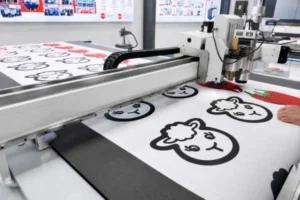
Oscillating Knife vs Laser Cutting for Leather: Which Should You Choose?
Knife versus laser on edge quality, worked through on leather — the same argument that rules a laser out for rubber and prepreg.
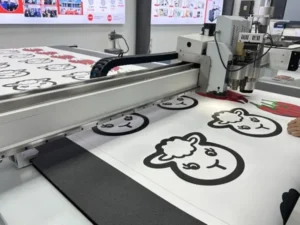
How to Choose a Digital Cutting Table: 12 Questions to Ask Before You Buy
Twelve questions to ask before buying: vacuum zoning, conveyor, tool heads and the specs that quietly decide throughput.
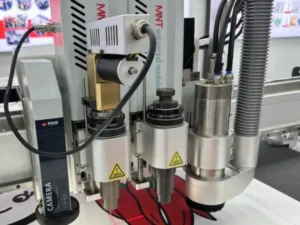
Oscillating Knife Blade Selection Chart by Material & Thickness
Blade geometry and depth by material and thickness, including the grades that consume edges fastest.
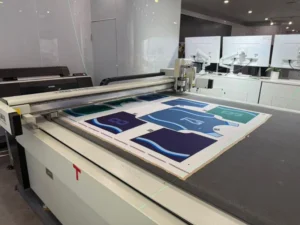
Digital Die Cutting vs Steel-Rule Die: Cost, Speed, and When to Switch
Cost, speed and the volume at which a die finally beats a knife.
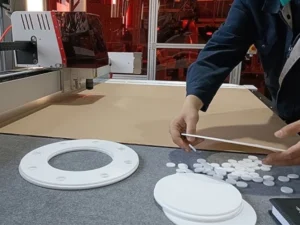
CNC Router vs Waterjet for Thick PTFE Plate
How process choice shifts with material and thickness, on the rigid side of the same question.
Send Your Material for a Free Oscillating Knife Test Cut
Send your material and a drawing — we cut it on a C-series, return the parts with edge photos, and tell you honestly if a knife is the wrong process for your job.