Laser cutting machine maintenance starts at the cutting head, not the guide rails.
The nozzle and protective lens of a fiber laser sit in the path of molten spatter on every cut, so they wear fastest and degrade edge quality long before any alarm. Shops often maintain the moving parts and check the head, chiller and gas lines only when cuts go wrong.
This fiber laser maintenance checklist covers the head, focus, chiller, gas lines, rails and guarding, organised by frequency.
Check the Nozzle and Protective Lens Daily
Inspect the nozzle for spatter buildup and damage at the start of every shift, and check the protective lens for contamination — a nozzle with spatter buildup disrupts the assist gas flow pattern around the beam, and a contaminated lens reduces beam quality, both of which show up as degraded edge quality before any alarm triggers.
Clean or replace the nozzle on the interval your cutting volume and material mix require — a nozzle that’s cutting a lot of oxide-heavy material or running at high duty cycle wears faster than one running lighter jobs. Check the protective lens for pitting or a film of contamination, and replace it before it degrades beam quality enough to affect cut consistency, not after edge quality has already visibly suffered.
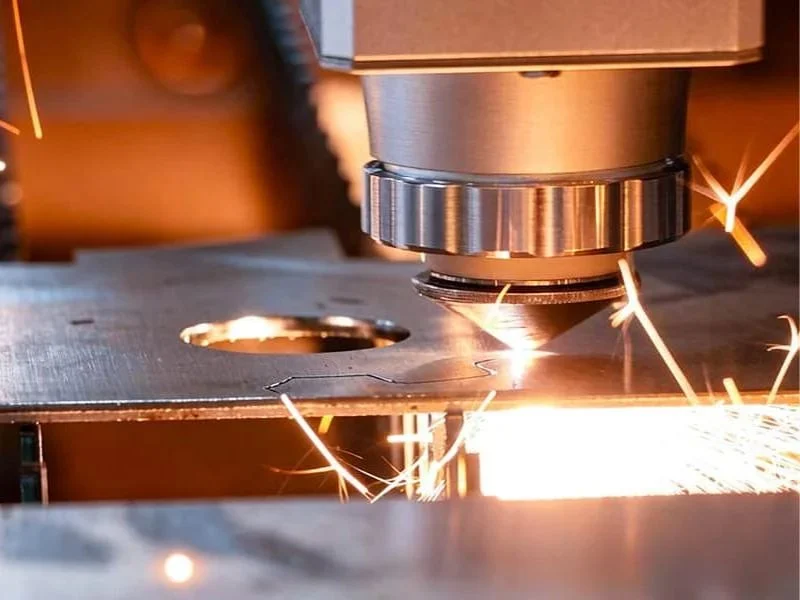
Maintain the Cutting Head and Focus
Verify focus position periodically, especially after a nozzle change or any cutting head service — an out-of-focus beam produces wider kerf, rougher edges, and inconsistent cut-through, and this drift can be gradual enough that operators adjust other settings to compensate rather than catching the actual root cause.
Check cutting head alignment and confirm the nozzle is centered relative to the beam — a nozzle that’s slightly off-center produces asymmetric gas flow around the cut, which shows up as inconsistent edge quality on one side of a cut versus the other. This is a common, easy-to-miss cause of edge quality that’s fine on some cuts and rough on others within the same job.
Check the Water Chiller and Gas Lines
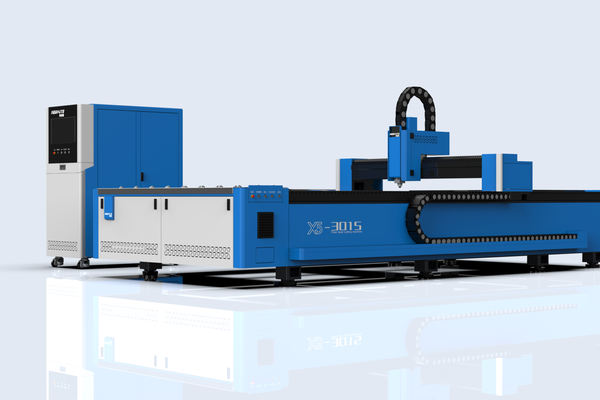
The laser source on a machine like the X5 is rated for a long service life — the source fitted is specified at 100,000 hours — but only if the chiller keeps it at a stable temperature. That makes chiller checks part of laser cutter maintenance, not an extra.
Check chiller coolant level, flow and temperature daily, and inspect gas supply lines and fittings weekly for leaks — the laser source’s temperature stability depends on consistent chiller performance, and gas supply inconsistency shows up directly as edge quality and cutting speed variation.
Flush and replace coolant on the schedule your chiller manufacturer specifies. Check gas line fittings and regulators for leaks, since a slow leak can reduce assist gas pressure enough to affect cut quality without an obvious alarm — pressure drift is often caught by inconsistent cut quality before it’s caught by a gauge reading, so periodic manual checks matter alongside any automated monitoring.
Manage Guide Rails, Rack Drive and Dust Removal
Lubricate guide rails and rack drive components on the schedule your manufacturer specifies, and check dust and spatter removal systems daily — metal spatter and dust that accumulates on guide rails or drive components accelerates wear, and inadequate removal near the cutting head can also affect gas flow and cut quality.
Check for even lubrication coverage across the full travel range, and clear accumulated debris from the machine bed and guide areas between jobs. This is a basic housekeeping item that has an outsized effect on both mechanical longevity and cut quality on a machine handling metal spatter continuously.
Back Up Controller Files and Machine Parameters
Back up job files, cutting parameters and machine settings weekly, and immediately after any parameter change — dialed-in cutting parameters for specific materials and thicknesses take real time to develop, and losing them to an unplanned reset costs significantly more time to rebuild than a scheduled backup would have.
Keep at least two backup generations rather than relying on the most recent one alone.
Review Machine Guarding Monthly
Inspect guards, interlocks, and emergency stops monthly, and immediately after any guard has been removed for service — laser cutting carries specific hazards beyond mechanical ones, and guarding integrity matters accordingly. OSHA’s machine-guarding rules set the general standard most shops already work to, and the laser-specific hazards are summarised under laser safety.
Signs Your Laser Cutting Machine Needs Maintenance
On an X5 with a 3000 × 1500 mm bed and 0.05 mm positioning accuracy, a small maintenance lapse shows up quickly in large nests, so these symptoms are worth learning.
A fiber laser usually tells you it needs maintenance through the cut before it raises an alarm — rougher edges, dross, a wider kerf or cuts that do not fully part are the early signs. Matching the symptom to its usual cause saves hours of adjusting cutting parameters that were never the problem.
| Symptom | Usual cause | First check |
|---|---|---|
| Edge quality rough on one side of the cut only | Nozzle off-centre to the beam | Nozzle centring |
| Edges gradually rougher across all parts | Spatter on the nozzle or a contaminated protective lens | Nozzle and protective lens |
| Wider kerf, tapered or incomplete cuts | Focus position drifted, often after a nozzle change | Focus verification |
| Dross on the underside that was not there before | Assist gas pressure lower than set, often a slow leak | Gas lines, fittings and regulator |
| Cut quality varies through the day | Chiller temperature or flow unstable | Chiller level, flow and temperature |
| Parts slightly out of position on large sheets | Dry guide section or rack wear | Lubrication coverage over full travel |
Work through the table in order of cost. Cleaning a nozzle or swapping a protective lens takes minutes; retuning cutting parameters to hide a dirty lens wastes material and time, and the problem comes back as soon as the parameters are used on clean optics.
If the checks are clean and the symptom stays, record what you have tried and contact service. The same log that tracks daily laser cutting machine maintenance is what lets a technician find the cause quickly. Machines used for thin, detailed work, such as those on our sheet metal laser cutting machine page, show these symptoms earliest because small parts leave the least margin for error.
Laser Cutting Machine Maintenance Schedule at a Glance
| Task | Daily | Weekly | Monthly |
|---|---|---|---|
| Nozzle inspection / cleaning | ✔ | ||
| Protective lens check | ✔ | ||
| Focus position verification | After nozzle change / service | ||
| Chiller coolant / flow check | ✔ | ||
| Gas line / fitting leak check | ✔ | ||
| Guide rail / rack lubrication | Per manufacturer schedule | ||
| Dust / spatter removal check | ✔ | ||
| Controller / parameter backup | ✔ | ||
| Guarding & interlock review | ✔ |
An out-of-focus beam or worn nozzle also widens the cut — see our guide to kerf in laser cutting — and drifting edge quality eats into the laser cutting tolerances you can hold. For assist gas selection by material, see our assist gas guide for sheet metal fiber laser cutting. For buying guidance, see our sheet metal fiber laser cutter buying guide. Specifications and service support for the X5, X6 and X6040 are on our sheet metal laser cutting machine page.
Frequently Asked Questions
How often should the nozzle be replaced?
This depends on cutting volume and material mix rather than a fixed calendar interval — inspect daily for spatter buildup and damage, and replace before degraded gas flow starts affecting edge quality, not after.
What causes inconsistent edge quality on one side of a cut?
A nozzle that’s slightly off-center relative to the beam produces asymmetric assist gas flow, which is a common, easy-to-miss cause of this specific symptom — check nozzle centering before adjusting other cutting parameters.
How do I know if the chiller is affecting cut quality?
Laser source temperature stability depends on consistent chiller performance — check coolant level, flow and temperature daily, since drift here can affect output stability before triggering an obvious alarm.
Can a slow gas leak affect cutting without an obvious alarm?
Yes — a slow leak can reduce assist gas pressure enough to affect cut quality before a gauge reading clearly shows the problem, which is why periodic manual line and fitting checks matter alongside automated monitoring.
Why does dust and spatter removal affect cut quality, not just cleanliness?
Inadequate removal near the cutting head can affect assist gas flow around the beam, connecting housekeeping directly to cut quality rather than being a purely cosmetic concern.
What should be backed up before changing cutting parameters?
Job files and dialed-in cutting parameters for specific materials and thicknesses — these take real time to develop and are costly to lose to an unplanned reset.
How do you maintain a laser cutter?
Maintain a fiber laser cutter on three rhythms: daily, inspect the nozzle and protective lens and check the chiller and dust removal; weekly, check gas lines for leaks and back up cutting parameters; monthly, review lubrication of guides and rack, and test guards and interlocks. Follow the machine maker’s intervals where they differ.
What are the most common problems with laser cutting machines?
Most day-to-day problems start at the cutting head: spatter on the nozzle, a contaminated protective lens, an off-centre nozzle or a focus position that has drifted. They show up as rough or uneven edges, dross or incomplete cuts long before an alarm, which is why the daily head check matters more than any other laser cutting machine maintenance task.
Laser cutting machine maintenance is easier with the right spare parts on the shelf and operators trained on the daily checks. If you run an MNT fiber laser, contact our engineering team for a spare-parts list — nozzles, protective lenses and seals — sized to your production run, and for operator training on the maintenance routine.